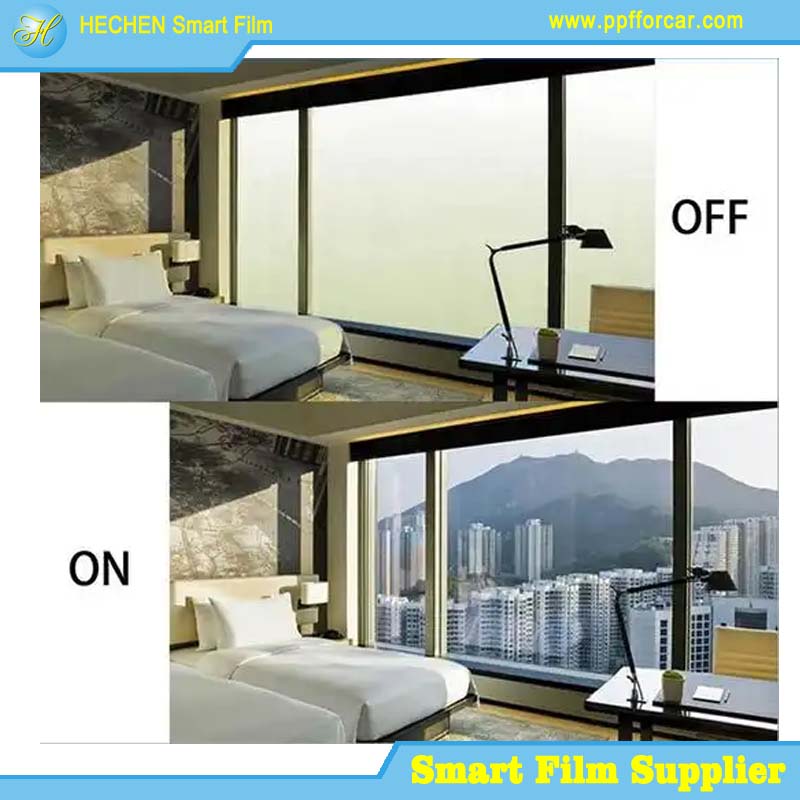
Electric Tint Film for Car Window: The Next Frontier in Automotive Glazing Technology
The automotive industry is in the midst of a profound transformation, driven by electrification, connectivity, and advanced material science. Within this evolution, a seemingly simple component—the car window—is undergoing a radical reimagining. Moving beyond static tints and manual shades, the electric tint film for car window represents a sophisticated, integrable technology poised to redefine in-cabin experience, energy efficiency, and vehicle design. This article delves into the technical principles, construction, benefits, and future trajectory of this groundbreaking innovation.
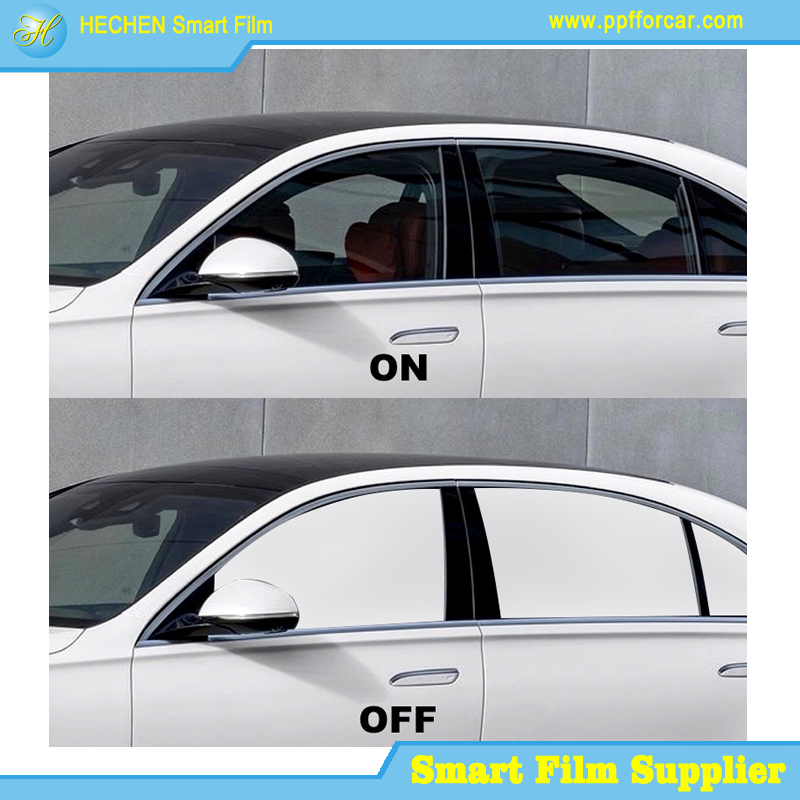
Understanding the Core Technology: Electrochromism
At the heart of an electric tint film for car window lies the principle of electrochromism. Electrochromic materials can reversibly change their optical properties—specifically their transmittance of visible light and infrared (IR) radiation—in response to an applied electrical voltage. This change is persistent, meaning it requires energy only to initiate the transition, not to maintain a given state, making it highly energy-efficient.
A typical multi-layer electric tint film for car window is constructed as follows, often applied as a laminate to the interior surface of existing glass:
Transparent Conductive Layers (TCOs): The outermost layers, usually made of Indium Tin Oxide (ITO) or a newer, more flexible alternative like Silver Nanowire (AgNW) or conductive polymers. These serve as the electrodes, facilitating the uniform application of a low-voltage DC current (typically 1-5V) across the device.
Electrochromic Layer: This is the active layer where the colouration change occurs. Common materials include tungsten oxide (WO₃). In its bleached state, it is highly transparent. Upon ion insertion, it darkens to a blue or grey tint.
Ion Conductor/Electrolyte Layer: Sandwiched between the electrochromic layer and the ion storage layer, this solid-state or gel-like layer allows for the movement of ions (commonly Lithium ions, Li⁺) while being an electronic insulator. It is crucial for the device's safety and longevity.
Ion Storage Layer (Counter Electrode): This layer, often made from materials like nickel oxide (NiO) or cerium oxide (CeO₂), reversibly stores and releases ions to balance the charge during the electrochromic cycle. It may also exhibit complementary colouration.
The Working Cycle:
Darkening (Colouration): When a small voltage is applied, lithium ions (Li⁺) and electrons (e⁻) are driven from the ion storage layer, across the electrolyte, and into the electrochromic layer (e.g., WO₃). The concurrent insertion of ions and electrons causes a reduction in the tungsten oxide, forming a coloured tungsten bronze (LiₓWO₃), which absorbs visible light. The window darkens.
Lightening (Bleaching): Reversing the voltage polarity extracts the ions and electrons from the electrochromic layer, returning it to its transparent, oxidised state. The ions migrate back to the storage layer.
For an electric tint film for car window, this entire stack is microscopically thin (often less than 100 microns total) and laminated between protective polymer sheets, allowing it to be retrofitted or integrated into new glazing assemblies.
Technical Advantages and Applications in Automotive Context
The integration of electric tint film for car window systems offers a multitude of technical and user-centric benefits:
Dynamic Solar Heat Gain Control & HVAC Efficiency: This is arguably the most significant advantage. By dynamically modulating the tint, the film can reject a substantial portion of solar infrared radiation. Studies indicate that smart glazing can reduce solar heat gain by over 50%. This directly reduces the thermal load on the vehicle's Heating, Ventilation, and Air Conditioning (HVAC) system. In electric vehicles (EVs), this translates directly to extended battery range, as less energy is diverted to cabin cooling. The precise control afforded by an electric tint film for car window allows for optimization based on ambient temperature, sun angle, and cabin occupancy.
Glare Reduction and Visual Comfort: Automated or driver-controlled tinting can eliminate glare from the sun or headlights of following vehicles, enhancing driving safety and comfort. This is particularly valuable for panoramic sunroofs, where traditional static tints may be too dark at night or insufficient during midday.
On-Demand Privacy: With a simple switch, rear side windows and rear windshields can transition from transparent to deeply tinted, providing immediate privacy for passengers without the permanence or legal incompliance of dark static films.
Aesthetic Integration and User Experience: The technology enables sleek, button-controlled or automated window management. It can be integrated with vehicle telematics and GPS to link tint levels to the sun's position (e.g., darkening only the section of the sunroof directly under the sun). Integration with biometric or user profiles can set preferred tint levels automatically.
UV Protection and Material Preservation: Like high-quality static films, a high-performance electric tint film for car window blocks 99%+ of harmful ultraviolet (UV-A and UV-B) radiation, protecting occupants' skin and preventing the fading and degradation of interior materials such as dashboard plastics, leather, and upholstery.
Manufacturing, Integration, and Key Challenges
Manufacturing high-quality electric tint film for car window involves precision roll-to-roll coating processes like magnetron sputtering for depositing the thin inorganic layers (WO₃, ITO). The challenge lies in achieving uniform colouration over large areas, ensuring fast switching speeds (from clear to dark and back, ideally within 30-120 seconds for large panels), and guaranteeing exceptional cycle life (tens of thousands of cycles).
Integration presents its own set of challenges:
Power and Wiring: Each window element needs a low-voltage electrical connection, adding complexity to the door and roof harnesses.
Control Systems: A dedicated Electronic Control Unit (ECU) or integration into a body control module is required to manage voltage application, switching logic, and user inputs.
Durability: The film must withstand decades of exposure to automotive environmental stresses: extreme temperature cycles (-40°C to +85°C), high humidity, mechanical vibration, and UV exposure without delamination, haze formation, or performance degradation.
Cost: While prices are falling, electric tint film for car window technology remains a premium feature due to complex materials and manufacturing. Economies of scale from wider adoption are crucial for mainstream penetration.
The Road Ahead: Future Developments
The future of electric tint film for car window technology is vibrant and points towards greater intelligence and integration:
Suspended Particle Device (SPD) and Polymer Dispersed Liquid Crystal (PDLC) Alternatives: While electrochromic films dominate for gradual tinting, SPD films offer faster, milky-to-clear transitions, useful for instant privacy dividers.
Self-Powered and Energy-Harvesting Systems: Research is exploring the integration of transparent photovoltaic elements around the edges of the film to harness solar energy to power the tinting cycle itself.
Smart Sensor Integration: Future systems will be directly linked to advanced light sensors, thermal cameras, and occupant monitoring systems to create a fully autonomous, responsive cabin climate and lighting environment.
Flexible and Conformal Films: Development of organic electrochromic materials on flexible polymer substrates will enable application on complex curved glass surfaces, which are increasingly common in modern automotive design.
In conclusion, the electric tint film for car window is far more than a luxury convenience item. It is a compelling convergence of nanomaterials science, electronics, and energy management. By providing dynamic control over light and heat, it addresses critical challenges in EV efficiency, passenger comfort, and aesthetic design. As the technology matures, scales, and becomes more deeply integrated with vehicle intelligence systems, it is set to transition from a high-end novelty to a standard, vital component in the smart, sustainable vehicles of the future. The journey from fixed transparency to programmable vision is well underway, and the electric tint film for car window is leading the charge.
For more about what is electric tint film for car window? Everything you need to know, you can pay a visit to Hechen PDLC Smart Film Manufacturers for more info.