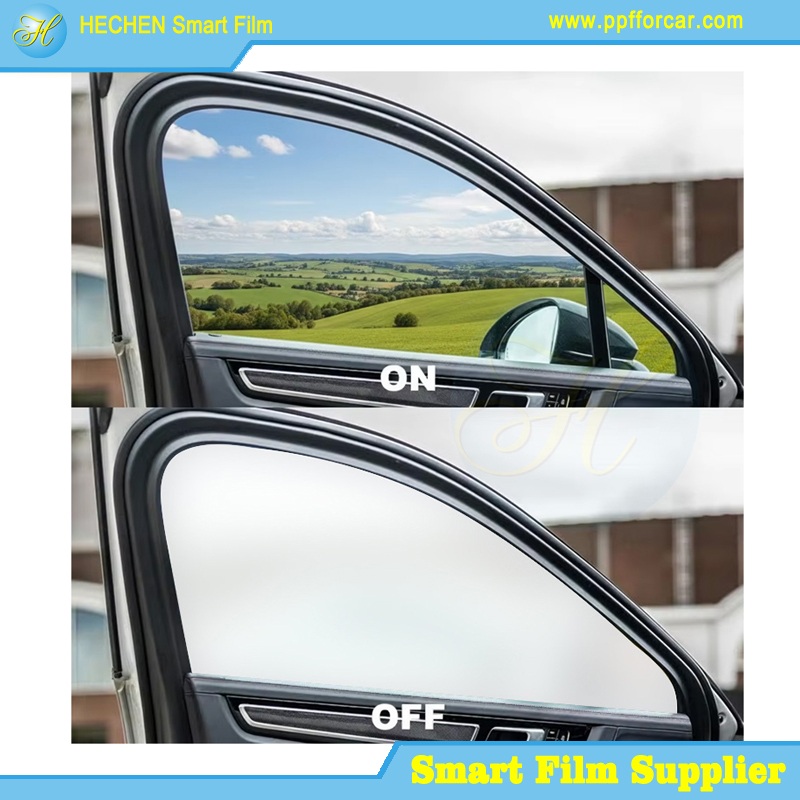
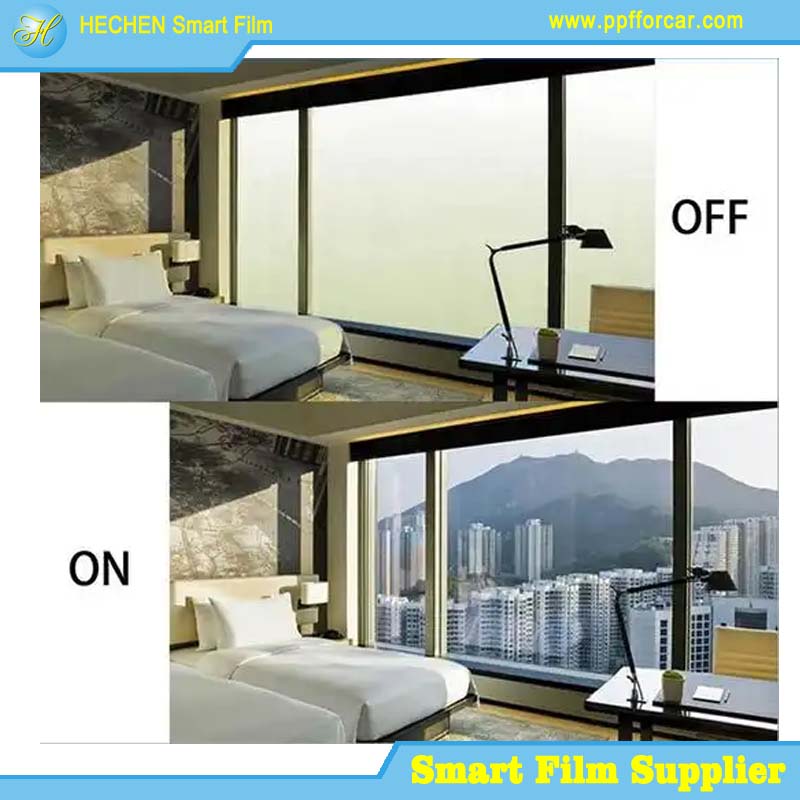
The automotive industry is witnessing a paradigm shift with the integration of smart materials that enhance functionality, safety, and user comfort. Among these innovations, PDLC film for car applications stands out as a transformative technology. Polymer Dispersed Liquid Crystal (PDLC) film enables car windows to dynamically switch between transparent and opaque states, providing on-demand privacy, glare reduction, and thermal control. This smart film, often referred to as switchable tint or electric privacy film, is applied to vehicle glass surfaces, offering a modern alternative to traditional static window tints. As vehicles evolve towards greater connectivity and personalization, PDLC film for car use is becoming increasingly popular in luxury models, electric vehicles (EVs), and aftermarket modifications.PDLC film operates on electro-optical principles, allowing users to control light transmission with a simple switch or remote. Companies like Filmbase, Smart Tint, and Ghost Glass are at the forefront, producing films tailored for automotive environments. The global smart glass market, including PDLC variants, is projected to expand significantly, driven by demands for energy efficiency and enhanced privacy in urban driving scenarios. This article explores the technical aspects of PDLC film for car, covering its composition, working mechanisms, applications, benefits, limitations, and emerging trends. By delving into materials science and engineering perspectives, we aim to provide a thorough understanding of how this technology is reshaping automotive design.
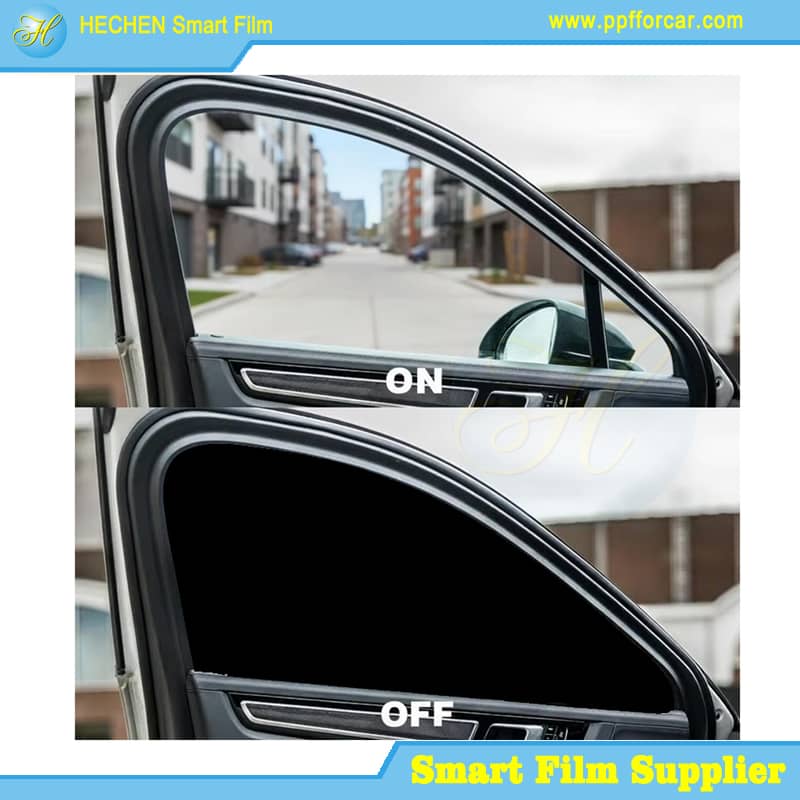
Fundamentals of PDLC TechnologyPDLC film for car is rooted in the science of liquid crystals and polymer matrices. The film consists of microscopic liquid crystal droplets dispersed within a polymer network, sandwiched between two transparent conductive layers, typically indium tin oxide (ITO) coated on polyethylene terephthalate (PET) substrates. This structure, with a thickness of about 0.3 to 0.5 mm, allows the film to be flexible and adaptable to curved car windows.In its default (off) state, without electrical input, the liquid crystals are randomly aligned, causing light to scatter diffusely. This results in an opaque or frosted appearance, blocking direct visibility while permitting ambient light to enter the vehicle. When an alternating current (AC) voltage—ranging from 12V to 65V—is applied, the electric field aligns the liquid crystals, allowing light to pass through unimpeded, rendering the film transparent. The switching time is remarkably fast, often under 100 milliseconds, making it ideal for real-time adjustments in driving conditions.Key technical parameters for PDLC film in automotive use include visible light transmittance (VLT) of up to 85-90% in the transparent state, haze levels below 5%, and UV rejection rates exceeding 99%. The film's power consumption is low, typically 1-5 W/m² when activated, drawing from the car's 12V battery system via a step-up transformer. Unlike electrochromic technologies that rely on ion intercalation for color changes, PDLC focuses on light scattering, offering quicker responses but requiring continuous power to maintain transparency.For car-specific adaptations, PDLC films are often self-adhesive, with a protective liner for easy application. Automotive-grade films incorporate enhancements like anti-UV coatings and thermal stabilizers to withstand temperature fluctuations from -40°C to 85°C, vibrations, and humidity. Some variants include dimmable features, where voltage modulation allows intermediate opacity levels, simulating variable tint percentages. Integration involves connecting electrodes to a controller, which can be wired to switches, remotes, or smartphone apps for seamless operation.Applications of PDLC Film in AutomobilesPDLC film for car extends beyond mere aesthetics, finding practical uses in various vehicle types. Primarily applied to side windows, rear windshields, and sunroofs, it provides instant privacy for passengers, shielding them from external views in traffic or parking lots. In luxury sedans and limousines, this technology enables discreet travel, while in family vehicles, it protects children from sun exposure without permanent darkening.In electric and hybrid vehicles, PDLC film contributes to energy management by blocking up to 90% of infrared radiation in opaque mode, reducing cabin heat and alleviating the load on air conditioning systems. This can extend battery range by 5-10% in hot climates. Sunroofs equipped with PDLC eliminate the need for mechanical shades, offering panoramic views that can be opaqued to prevent glare during drives.Commercial applications include ambulances and delivery vans, where PDLC film creates on-demand partitions for patient privacy or cargo security. In RVs and campers, it enhances living spaces by controlling light and privacy without bulky curtains. Aftermarket kits, such as those from Smart Tint, allow retrofitting on existing glass, with trimmable films fitting curved surfaces.Advanced integrations link PDLC with vehicle systems like CAN bus for automated responses—e.g., opaquing windows when parked or in high-sunlight areas via sensors. Voice-activated controls through assistants like Siri further simplify usage, aligning with the Internet of Things (IoT) in modern cars.Advantages of PDLC Film Systems in VehiclesThe technical merits of PDLC film for car make it superior to conventional tints in several ways. Foremost is customizable privacy: legal restrictions on tint darkness vary by region, but PDLC allows transparency during operation and opacity when stationary, ensuring compliance while maximizing utility.Thermal efficiency is a standout benefit. By rejecting UV and IR rays, the film minimizes interior fading of upholstery and dashboards, prolonging material life. In opaque mode, it reduces solar heat gain by up to 80%, lowering fuel consumption for cooling and enhancing comfort.Safety enhancements include reduced glare for drivers, improved visibility from inside even when opaque (due to diffuse light), and shatter-resistant properties from the laminated structure, which holds glass fragments during impacts. Acoustic insulation is another plus, damping external noise for a quieter ride.Aesthetically, PDLC film offers versatility with options in colors like black, grey, or white, and patterns for branding. Its slim profile maintains the vehicle's sleek design without adding weight. Economically, while upfront costs are higher, long-term savings from energy efficiency and reduced maintenance offset expenses, especially in fleet operations.Installation is user-friendly for professionals, involving surface cleaning, film application, and electrical wiring—often completed in hours without disassembling windows.Challenges in Implementing PDLC FilmDespite its advantages, PDLC film for car faces technical and practical obstacles. Cost is a significant barrier; premium films range from $50 to $150 per square foot, plus installation, making it accessible mainly to high-end markets.Durability concerns arise in harsh automotive conditions. Exposure to extreme temperatures, UV radiation, and mechanical stress can degrade the polymer matrix or ITO layers over time, potentially causing yellowing or reduced switching efficiency. While stabilizers help, longevity is typically 5-10 years, shorter than static tints.Power requirements pose issues; the film needs constant voltage for transparency, which could drain batteries if left on inadvertently. Integration with vehicle electronics demands careful wiring to avoid short circuits or interference.Application challenges include achieving bubble-free adhesion on curved glass, often requiring specialized tools and expertise. Regulatory variances—some jurisdictions prohibit switchable tints due to visibility concerns for police—add complexity.Environmental considerations involve the use of rare materials like indium, prompting shifts to sustainable alternatives such as graphene-based conductors.Future Trends and InnovationsThe trajectory of PDLC film for car is promising, intersecting with advancements in autonomous and electric mobility. Future iterations may incorporate bistable PDLC, which maintains states without ongoing power, addressing energy drawbacks.Hybrid films combining PDLC with photochromic or thermochromic elements could enable passive switching based on light or temperature, enhancing adaptability. In EVs, AI integration might automate film states using data from cameras and sensors for optimal comfort and efficiency.Market growth forecasts suggest the automotive smart film sector will reach billions by 2030, fueled by declining costs and broader adoption. Research focuses on flexible, high-transmittance films for panoramic roofs and heads-up displays.Sustainability efforts include recyclable polymers and eco-friendly production, aligning with green automotive standards. As 5G enables better connectivity, PDLC could sync with smart city infrastructures for context-aware tinting.ConclusionPDLC film for car represents a leap in automotive innovation, blending materials science with practical engineering to deliver dynamic window solutions. From its liquid crystal mechanics to versatile applications, it offers enhanced privacy, efficiency, and safety. While challenges like cost and durability remain, ongoing developments promise broader accessibility. As vehicles become more intelligent, PDLC film will play a pivotal role in creating personalized, efficient driving experiences.For more about what is electric car window tint? Everything you need to know, you can pay a visit to Hechen PDLC Smart Film Manufacturers for more info.