Current Technical Bottlenecks Limiting the Large-Scale Adoption of Remote-Control Car Tint
The new generation NIO ES8 features electrochromic windows that slowly transition from transparent to dark blue under sunlight. Behind this seemingly simple piece of tint lies the difficult balance the Chinese remote-control car tint industry is striking between technology and cost.
China's over 40% share of the global market is driving innovation in car tint technology. Four main technical pathways—Electrochromic (EC), Polymer Dispersed Liquid Crystal (PDLC), Dye Liquid Crystal (DLC), and Suspended Particle Device (SPD)—are evolving along different performance curves.
Despite a projected global market size of $4.8 billion by 2025, the car tint market faces the awkward reality of a less than 5% penetration rate in automotive panoramic roofs.
Market Potential vs. Adoption Reality
The rapid adoption of automotive panoramic tint roofs has created unprecedented market opportunities for car tint technology. By 2024, the penetration rate of panoramic roofs in vehicles has reached 18%, a growth primarily driven by their significant advantages in aesthetic design and sense of space.
However, with the popularity of panoramic roofs, pain points such as sun exposure, lack of privacy, and difficulty in temperature control have become increasingly prominent.
Car tint is the ideal solution to address these challenges, theoretically capable of providing sun protection, privacy, and energy savings through electrically adjustable light transmission. Yet, market data reveals a harsh reality: among vehicles already equipped with panoramic roofs, the proportion adopting car tint solutions is still less than 5%.
Guosen Securities predicts that by 2030, the market size for smart panoramic roofs could reach 14 billion yuan. This growth prospect is based on the dual foundations of technological breakthroughs and cost reduction. Currently, car tint remains largely confined to luxury models and has not yet achieved large-scale adoption in the mid-to-low-end market.
Comparative Analysis of Technical Pathways
There are three mainstream technical pathways for remote-control car tint, each with its unique principles, advantages, and limitations.
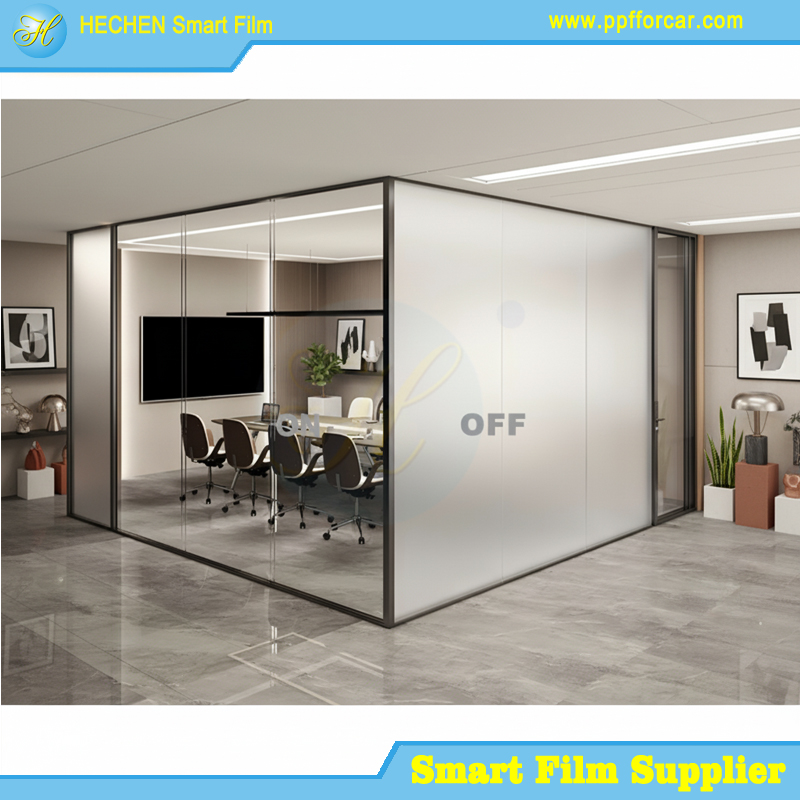
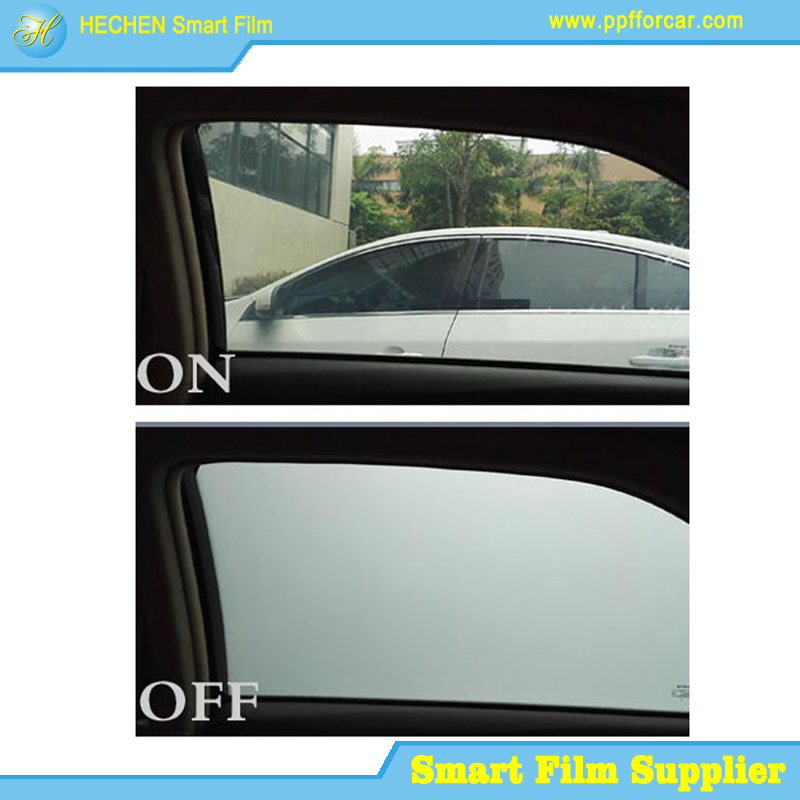
PDLC/PDCLC Technology employs a physical mechanism where voltage drives the alignment of liquid crystal molecules. It offers fast response times in the millisecond range but is limited to only two states: "fully transparent" and "fully opaque" (frosted). Visually, it presents a milky white, frosted effect and cannot achieve gradual dimming.
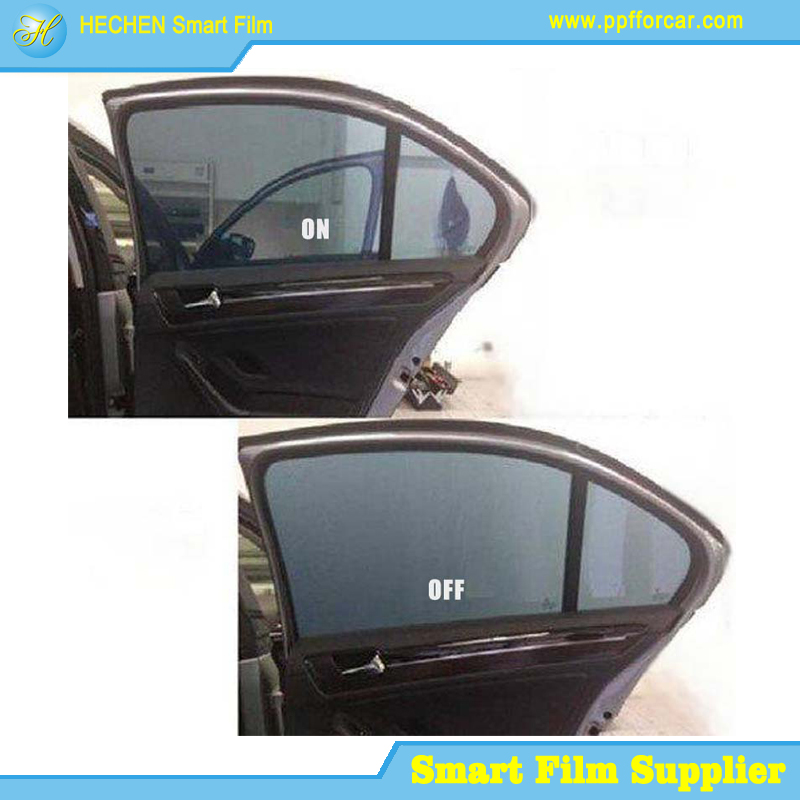
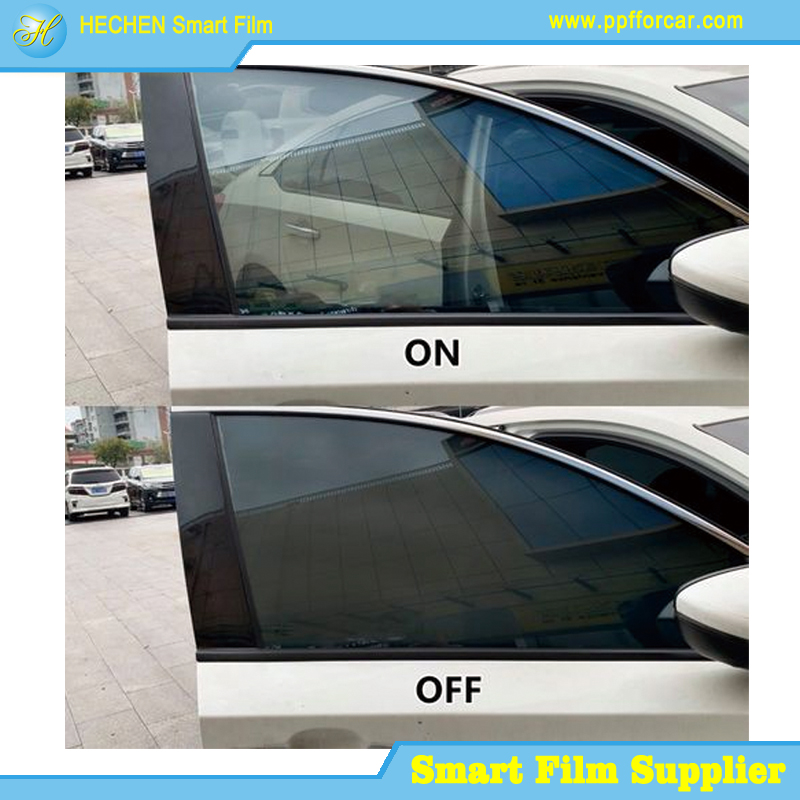
EC (Electrochromic) Technology is based on an electrochemical reaction principle. When voltage is applied, the tint gradually changes from transparent to dark, reverting to transparent when the power is off. Its advantage lies in continuously adjustable light transmission, typically ranging from 1% to 60%, with very low power consumption. However, traditional EC solutions have slower response times, often requiring 2-3 minutes to complete a full transition.
SPD (Suspended Particle Device) Technology uses an electric field to control the alignment of suspended particles, achieving over 99% shading. However, it requires a high driving voltage of about 110V AC and is extremely costly. It is primarily used in top-tier luxury models like the Mercedes-Benz S-Class and Rolls-Royce Spectre.
Technical Pathway | Principle | Response Time | Light Transmission Range | Visual Characteristics | Main Bottlenecks |
PDLC/PDCLC | Voltage aligns liquid crystals | Milliseconds (~50ms) | Two-state (clear/frosted), not continuous | Milky white, frosted | Only two states, white visual effect |
EC | Electrochemical redox reaction | Traditional: 2-3 min; New gen: ~90 sec | 1%-60%, continuous | Early versions: bluish tint; New gen: neutral black | Slow response, material stability |
SPD | Electric field aligns particles | 1-3 seconds | 0.1%-99%, continuous | Neutral color | High voltage required (110V AC), high cost |
Key Performance Bottlenecks and Material Challenges
At the technical performance level, car tint faces multiple challenges that directly impact user experience and market acceptance.
Response speed is a critical indicator of car tint practicality. Although EC technology enables stepless dimming, traditional solutions require 2-3 minutes to switch from fully transparent to dark, a process that can extend to several minutes in low-temperature environments. This slow response significantly affects user experience in scenarios requiring quick shading. While companies like Guangyi Tech have reduced the response time to 90 seconds, it still cannot match the millisecond response of PDLC technology.
Regarding visual experience, PDLC-type technology presents a milky white, frosted-tint-like appearance in its opaque state, reducing visual clarity. This is a significant drawback in applications like automotive roofs that demand high visual transparency. Early EC technology, due to material limitations, produced a bluish tint when darkened, making it difficult to meet the aesthetic requirements of high-end scenarios.
Color accuracy is also a concern. Academic research has found that most electrochromic tint products exhibit varying degrees of brownish tint in their transparent state. This originates from commonly used anode materials like titanium-vanadium oxide or nickel oxide, which are difficult to render completely transparent even in their reduced state. This color shift affects the true color of objects viewed through the tint, limiting its application in scenarios requiring precise color reproduction.
High Costs and Supply Chain Constraints
Cost is the most direct barrier to the large-scale adoption of car tint.
Currently, the unit price for an automotive smart panoramic roof ranges from 3,000 to 10,000 RMB, significantly higher than that of traditional panoramic roofs with heat-insulating chemical coatings (around 1,500 RMB). Even the lower-cost PDLC solution is several times more expensive than standard tint.
The reasons for the high cost are multifaceted: the high-purity functional materials required for EC and SPD technologies, precision coating processes, and complex drive control systems all increase manufacturing costs. For example, core patents for SPD technology are held by the American company Research Frontiers, with a limited number of global suppliers, further restricting cost reduction. Challenges like ensuring large-area uniformity and long-term stability in EC technology also add to manufacturing cost and difficulty.
The maturity of the industrial chain is another constraint. Although Chinese companies have established certain advantages in PDLC and EC fields and are gradually entering the core supply chains of global automakers, the car tint industrial chain as a whole remains in its early stages and has not yet achieved economies of scale. Supporting components like power management systems and control modules also lack standardized solutions, further increasing system integration costs and complexity.
Lack of Standards and Long-Term Reliability
Standardization and long-term reliability are hurdles that must be overcome for industrial scaling.
In August 2025, China released the national standard "GB/T 46023.3-2025 Smart-Tinting Tint for Automotive Vehicles — Part 3: Suspended Particle Device Dimming Tint," providing specifications for the SPD pathway. Relevant standards have also been introduced in the construction sector, such as the "Technical Specification for Application of Thermochromic Insulating Tint."
However, the national standard system for other technical pathways like EC and PDLC remains incomplete, especially lacking unified evaluation methods for key performance indicators like durability and environmental adaptability.
Issues of long-term reliability cannot be ignored. Research indicates that electrochromic devices based on polymer electrolytes may experience delamination in practical use. This delamination not only affects appearance but can also lead to functional failure—a potential risk often not fully exposed in standard durability tests but which emerges in real-world environments.
Furthermore, temperature adaptability poses a technical challenge. The response speed of traditional EC solutions decreases significantly in low-temperature environments, while high temperatures may accelerate material aging, affecting service life. Automotive applications impose stringent automotive-grade requirements, including a wide operating temperature range, resistance to vibration and shock, and long-term stability, which further raise the technical threshold and validation costs.
Paths to Breakthrough: Technological Integration and Industrial Advancement
Confronted with multiple technical bottlenecks, the industry is actively exploring various breakthrough paths, with technological integration becoming a significant trend.
The PDCLC technology developed by the Chinese materials company Haiyou New Material combines the advantages of PDLC and DLC technologies, achieving richer color options and better thermal insulation while maintaining fast response times. This approach of technological integration offers a possibility to overcome the inherent defects of single technical pathways. Companies like Israel's Gauzy and China's Jingyi Technology are exploring composite solutions combining SPD and PDLC, aiming to reduce costs and voltage requirements while ensuring shading performance.
In terms of industrialization, Chinese companies are driving cost reduction through scaled production and process optimization. Guangyi Tech, through innovation in solid-state electrochromic film technology, has not only shortened the response time from the traditional 2-3 minutes to 90 seconds but also maintained good performance in low-temperature environments.
The cost reduction curve is already materializing. With technological breakthroughs and increased production capacity from domestic suppliers, the application of car tint has expanded from being exclusive to million-RMB luxury cars to models in the 200,000 RMB range. For instance, the IM L6 now comes standard with a smart panoramic roof.
As manufacturing technology advances and economies of scale take effect, the cost of car tint is expected to decrease further in the coming years. Simultaneously, the improvement of technical standards and the establishment of testing and evaluation systems will provide quality assurance and accelerate market promotion.
For more about the current technical bottlenecks limiting the large-scale adoption of remote-control car tint, you can pay a visit to Hechen PDLC Smart Film Manufacturers for more info.