PDLC Film FAQ: How It Works, Power Consumption, and Lifespan Answered
As PDLC smart film gains popularity in residential, commercial, and automotive applications, homeowners and business owners alike are asking the same fundamental questions. How does this technology actually work? How much electricity does it consume? How long will it last before needing replacement? This article answers these questions and more, providing a comprehensive technical overview of PDLC film for anyone considering this versatile solution.
How Does PDLC Film Work?
The Basic Principle
PDLC stands for Polymer Dispersed Liquid Crystal. At its core, the technology is surprisingly elegant. The film consists of a thin layer of liquid crystal droplets suspended within a polymer matrix, all sandwiched between two transparent conductive layers. This entire assembly is then bonded between durable polyester substrates to create a flexible, self-adhesive film that can be applied to glass surfaces.
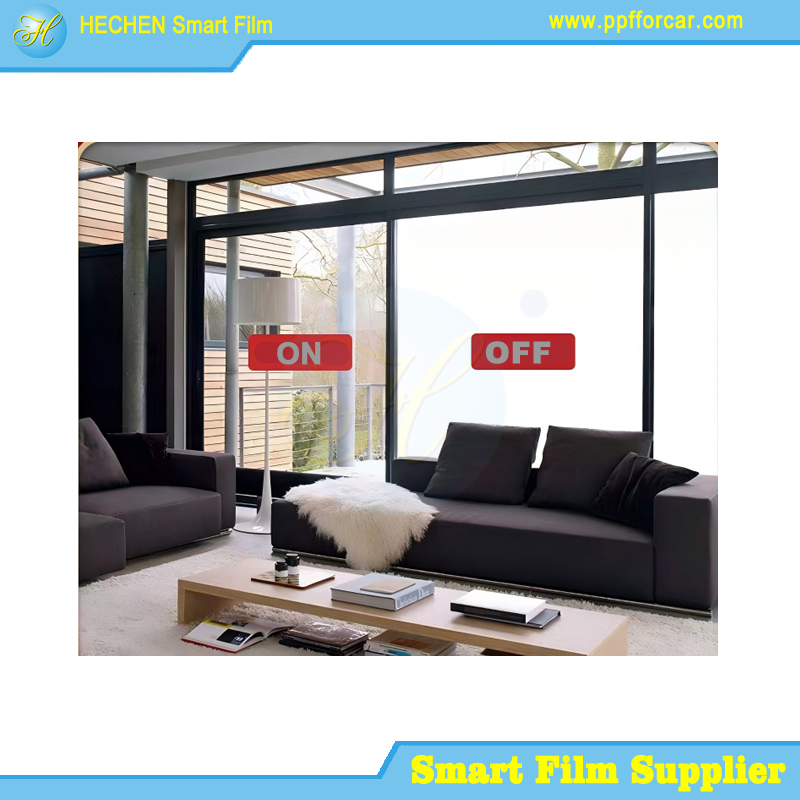
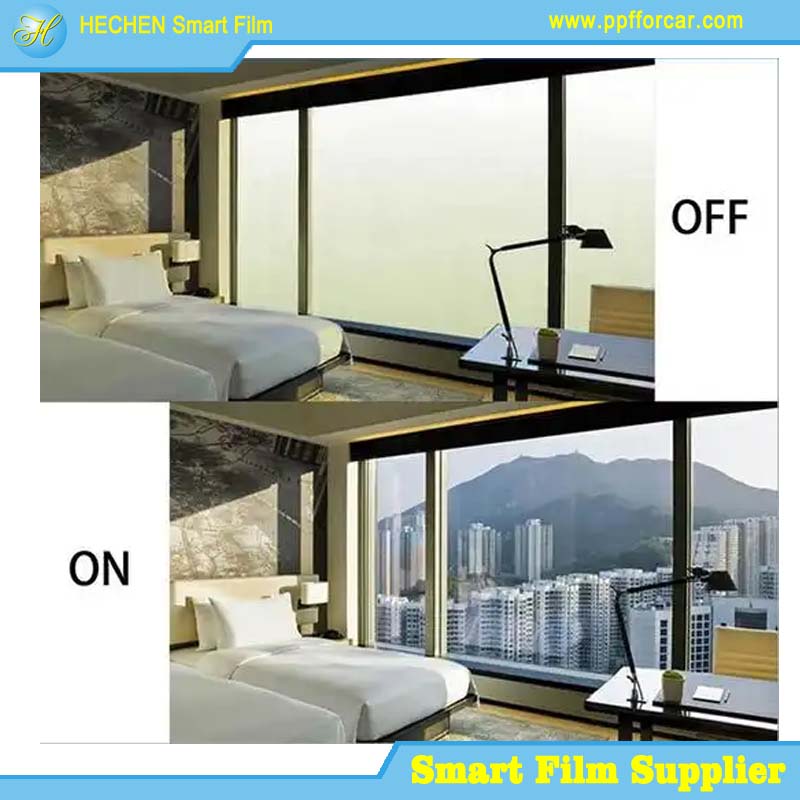
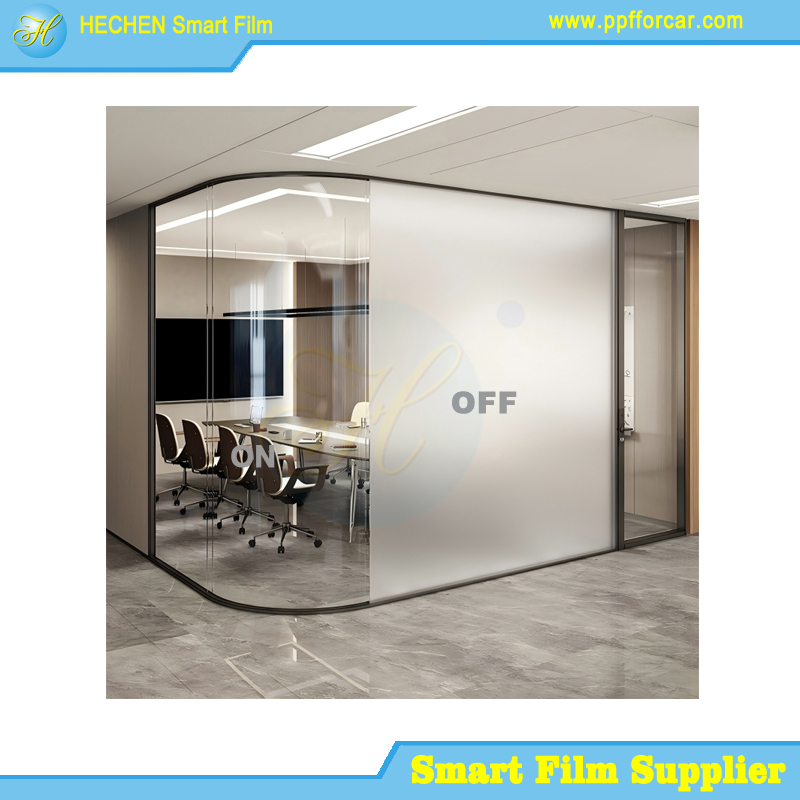
The "magic" happens when electricity is applied or removed. In its natural state—with no electrical current—the liquid crystal droplets are randomly oriented. This random arrangement scatters light that passes through the film, creating a frosted, opaque appearance. This is commonly referred to as the privacy state.
When an electrical current is applied through the transparent conductive layers, the liquid crystal droplets align uniformly. In this aligned state, light passes straight through the film without scattering, rendering it transparent. This transformation occurs almost instantaneously—typically within milliseconds—and is completely silent.
The Role of Electricity
The electrical requirement for PDLC film is low-voltage alternating current. When the film is in its transparent state, it continuously consumes a small amount of electricity to maintain the alignment of the liquid crystals. When the film is in its opaque state, it consumes no electricity at all. This is because the opaque state is the natural, unpowered state of the material.
Optical Characteristics
In the transparent state, quality PDLC film achieves visible light transmission between 75% and 85%. While this is remarkably clear, there is always a slight haze—typically between 2% and 5%—due to the inherent properties of the polymer matrix. This slight haze is barely noticeable in most applications but can be detected under critical viewing conditions.
In the opaque state, the film scatters light uniformly, creating a frosted appearance that provides complete visual privacy. The opacity is such that details on the other side of the glass become completely obscured, while still allowing ambient light to pass through. This means that even when privacy is activated, the space remains bright and does not rely on artificial lighting.
How Much Power Does PDLC Film Consume?
Typical Power Consumption
One of the most common questions about PDLC film concerns its energy use. The answer is reassuring: PDLC film is remarkably energy-efficient. Typical power consumption ranges from 3 to 5 watts per square meter when the film is in its transparent state. To put this in perspective, a large residential window measuring 2 square meters would consume between 6 and 10 watts when transparent—roughly equivalent to a single LED light bulb.
Calculating Operating Costs
To understand the real-world cost, consider a typical installation. A home office with four large windows totaling 5 square meters of PDLC film, operating in transparent mode for 10 hours each day, would consume approximately 50 watt-hours daily. Over a year, this amounts to about 18 kilowatt-hours. At average electricity rates, the annual operating cost would be approximately $2 to $3. For most homeowners, the power consumption of PDLC film is negligible compared to other household appliances.
Factors Affecting Power Consumption
Several factors can influence actual power consumption. The size of the film area directly correlates with total power draw—larger installations naturally consume more electricity. The quality of the film and its manufacturing tolerances also play a role; higher-quality films tend to operate at the lower end of the power consumption range. Additionally, the power supply unit itself has a small efficiency loss, typically around 10% to 15%, which should be factored into total energy calculations.
Standby Power and Efficiency
When PDLC film is in its opaque state, it consumes no power at all. This is a significant advantage over other smart glass technologies that require power to maintain their tinted state. For applications where the film is primarily used for occasional privacy—such as conference rooms or bathroom windows—the total energy consumption remains extremely low.
What Is the Lifespan of PDLC Film?
Expected Operational Life
Quality PDLC film is designed for long-term reliability. Under normal operating conditions, the film is rated for 100,000 or more switching cycles. For a typical residential or commercial installation where the film might be switched several times per day, this translates to 10 to 15 years of reliable service. Some premium formulations can achieve even longer lifespans with proper care and maintenance.
Factors That Affect Longevity
Several environmental and operational factors influence how long PDLC film will last. Exposure to ultraviolet radiation is one of the primary degradation factors. While the film itself blocks UV rays effectively, prolonged exposure can eventually cause yellowing of the polymer layers. Quality films incorporate UV stabilizers to minimize this effect.
Temperature extremes can also impact lifespan. The film is designed to operate within a specified temperature range, typically between -20°C and 70°C. Operating outside this range for extended periods can accelerate degradation of the liquid crystal materials and adhesives.
Moisture is perhaps the greatest threat to PDLC film longevity. If moisture penetrates the edges of the film, it can damage the liquid crystal layer and the conductive coatings. Proper edge sealing with neutral-cure silicone is essential to prevent moisture ingress and ensure the film achieves its expected lifespan.
Signs of Aging
As PDLC film approaches the end of its useful life, several signs may become apparent. The most common indicator is a gradual decrease in contrast between the transparent and opaque states. The film may appear slightly hazy when powered on, or may not achieve full opacity when powered off. Yellowing of the film, particularly around the edges or in areas exposed to direct sunlight, is another sign of aging. In some cases, switching speed may slow noticeably, or the film may develop non-switching areas, often called "dead spots."
Replacement Considerations
When PDLC film reaches the end of its life, replacement is the only option. Unlike some electronic components, the film cannot be repaired. Replacement involves removing the old film, cleaning the glass surface thoroughly, and applying new film. For laminated smart glass units, replacement requires removing and reinstalling the entire glass assembly. Planning for eventual replacement should be part of any long-term facility management strategy.
Additional Frequently Asked Questions
Can PDLC Film Be Used Outdoors?
Standard self-adhesive PDLC film is designed for interior use only. It is not intended for exterior applications because prolonged exposure to weather, UV radiation, and temperature extremes can cause premature failure. For outdoor applications, laminated smart glass units with the PDLC layer sealed between glass panes offer better protection and are more suitable for exterior use.
Does PDLC Film Block UV Radiation?
Yes, PDLC film effectively blocks 98% to 99% of harmful ultraviolet radiation. This protection is active in both the transparent and opaque states, providing continuous protection for furnishings, artwork, and occupants. This UV-blocking capability is one of the film's significant benefits beyond privacy control.
Can PDLC Film Be Cut to Any Shape?
PDLC film can be cut to virtually any shape, making it suitable for non-rectangular windows, curved glass, and custom designs. However, the electrical connections must be made along the edge where the conductive busbar is located. Complex shapes may require custom manufacturing to ensure proper electrical connectivity.
What Happens if the Power Fails?
In the event of a power failure, PDLC film defaults to its natural opaque state. This is an intentional design feature that ensures privacy is maintained even during electrical outages. This fail-safe characteristic makes the film particularly suitable for applications where privacy cannot be compromised.
Can PDLC Film Be Used with Smart Home Systems?
Yes, PDLC film can be integrated with most smart home platforms. The film's power supply can be connected to smart switches, relays, or controllers, allowing integration with voice assistants, home automation scenes, and scheduling. This integration enables sophisticated control scenarios, such as automatically switching to privacy mode during scheduled meetings or at specific times of day.
How Does Temperature Affect Performance?
PDLC film is designed to operate within a defined temperature range. In very cold conditions, switching speed may slow slightly, but normal operation resumes as temperatures return to the operating range. In extreme heat, the film may require slightly higher voltage to maintain full transparency. Quality films are formulated to maintain consistent performance across the specified temperature range.
Is PDLC Film Safe for Residential Use?
PDLC film operates at low voltage and is designed with safety as a priority. The power supply units are typically certified to safety standards, and the film itself poses no electrical hazard when properly installed. Edge sealing and proper wire management ensure that all electrical components are safely isolated.
Conclusion
PDLC film represents a mature, reliable technology that delivers instant privacy control with minimal energy consumption and long operational life. Understanding how the technology works, what to expect in terms of power use, and the factors that influence lifespan enables informed decisions when considering PDLC film for home, office, or automotive applications.
With typical power consumption of just 3 to 5 watts per square meter and an expected lifespan of 10 to 15 years under normal use, PDLC film offers an excellent balance of performance and durability. When properly installed and maintained, this versatile technology provides years of reliable service, transforming ordinary glass into intelligent, switchable surfaces that respond instantly to user needs.
For more about PDLC Film FAQ: How It Works, Power Consumption, and Lifespan Answered. Everything you need to know, you can pay a visit to https://www.ppfforcar.com/product/PDLC-Smart-Film/ for more info.