Smart window tint for cars vs. traditional dyed film vs. ceramic tint – which one should I choose?
TL;DR: Three types of automotive window treatments: traditional dyed film, ceramic tint, and smart window tint (PDLC‑based switchable film). Dyed film is the cheapest (USD 80–150 installed) but offers minimal heat rejection, fades over time, and provides no switchable privacy. Ceramic tint (USD 200–400 installed) delivers excellent heat rejection (50–60% IR), 99% UV blocking, and long life (5–10 years), but its darkness is fixed – you cannot change it. Smart tint (USD 300–650 installed) costs more upfront but offers a unique advantage: on‑demand switchable privacy (transparent ↔ opaque white), plus 99% UV rejection, 70–85% heat blocking in opaque mode, and clear mode for night driving. After analyzing cost, performance, durability, and user experience, the article concludes that smart window tint is the best choice for drivers who value versatility, privacy on command, and modern technology, despite its higher initial price.
1. Introduction: Three very different options
Car window films have evolved significantly. Today, when you walk into a tint shop, you face three fundamentally different technologies:
Traditional dyed film – The oldest and cheapest. A layer of dye absorbs light to create darkness.
Ceramic tint – High‑performance passive film that uses nano‑ceramic particles to reflect infrared heat while allowing visible light to pass. Fixed darkness.
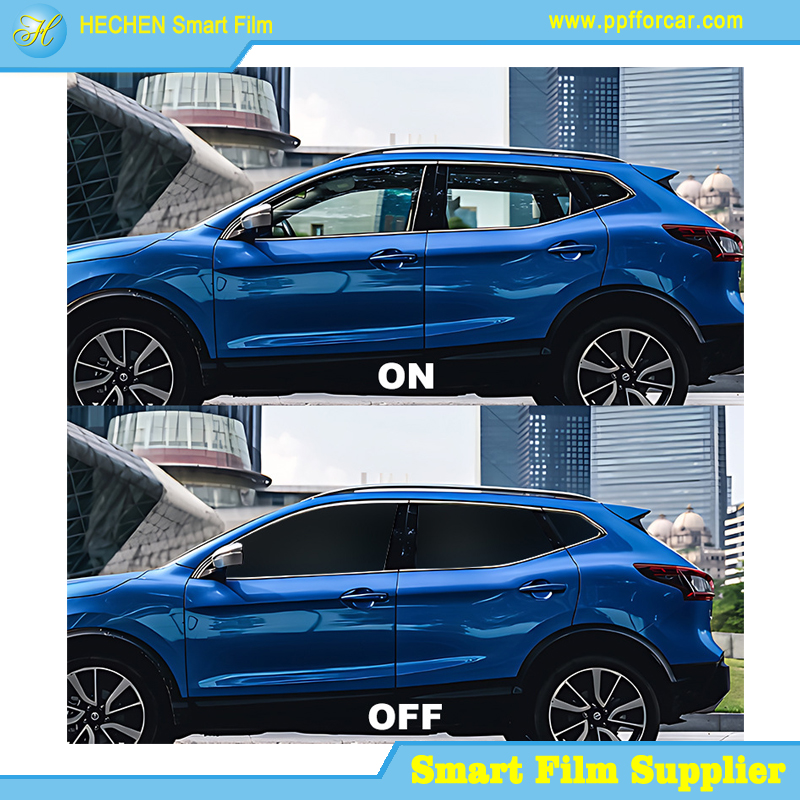
Smart window tint (PDLC) – An active film that switches between transparent and opaque states via an electrical current.
Each has its own advantages, limitations, and price points. This article provides a head‑to‑head comparison across all relevant criteria: cost, heat rejection, UV protection, privacy, visibility at night, durability, energy savings, and user convenience. The goal is to help you decide which one fits your driving habits, climate, and budget. No brand names are used – only generic, verifiable performance data for automotive‑grade products.
2. Overview of each technology
2.1 Traditional dyed film
A simple construction: a layer of dye (typically carbon‑based or organic) sandwiched between adhesive and a polyester protective layer. The dye absorbs visible light, making the window appear darker. Some dyed films also include a metalized layer for slight heat rejection, but basic dyed film is just colored polyester.
Key specs (typical):
VLT (darkness): 5–50% (you choose fixed level)
UV rejection: 90–95% (some fade over time)
IR rejection: 10–30% (poor)
Lifespan: 3–5 years (dye fades, turns purple)
Cost (4 side windows installed): USD 80–150
2.2 Ceramic tint
A multi‑layer film containing nano‑ceramic particles (e.g., titanium dioxide, antimony tin oxide) that reflect infrared radiation while allowing visible light to pass. No dyes – performance does not fade. The tint level is fixed at installation.
Key specs (typical):
VLT: 15–70% (choose one level)
UV rejection: 99% (permanent)
IR rejection: 50–60% (excellent)
Lifespan: 5–10 years (no fading)
Cost (4 side windows installed): USD 200–400
2.3 Smart window tint (PDLC)
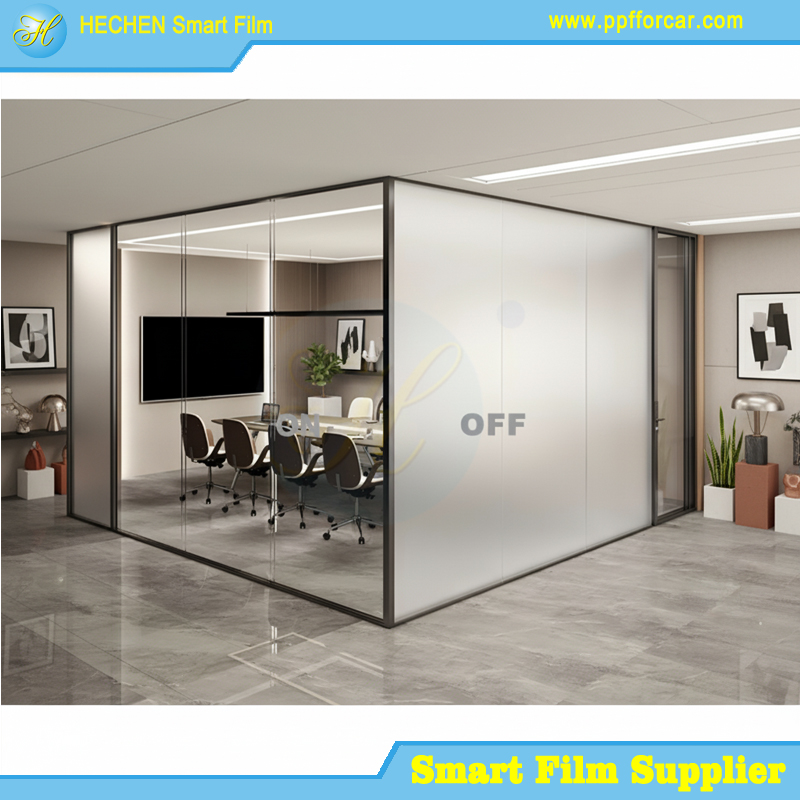
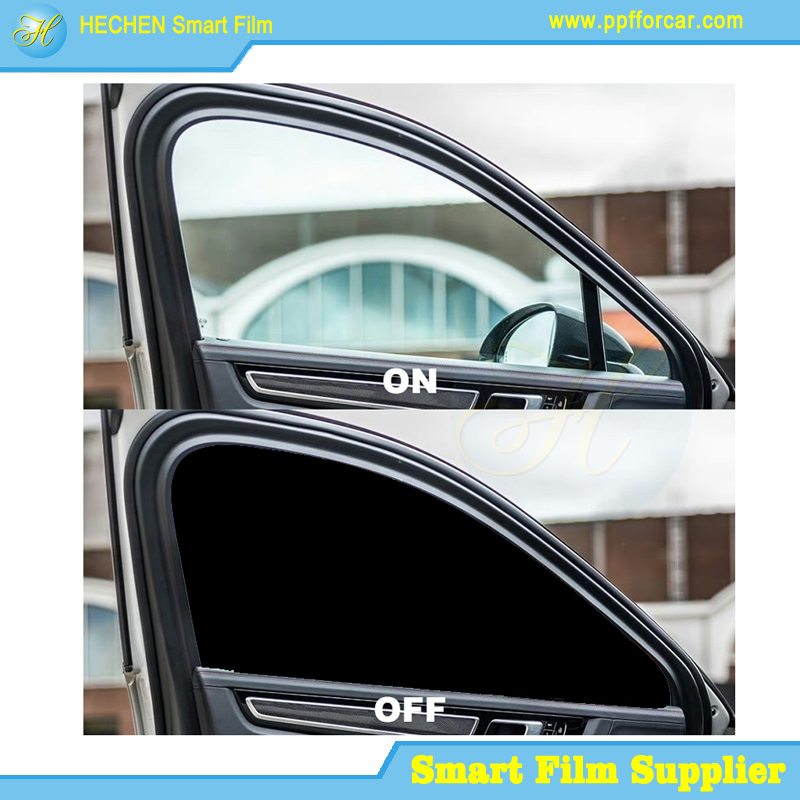
A flexible, adhesive‑backed film containing liquid crystal droplets dispersed in a polymer matrix. Switches between clear (transparent) and milky white (opaque) when AC voltage is applied. Requires a small driver connected to car’s 12V system.
Key specs (typical):
VLT in clear state: 70–80%
VLT in opaque state: 5–20% (milky white, not black)
UV rejection: 99% (always)
IR rejection: 30–50% in clear mode (standard), 60–70% in clear for IR‑enhanced; 70–85% in opaque mode
Lifespan: 5–8 years
Cost (4 side windows installed): USD 300–650
3. Comparison by criteria
3.1 Upfront cost (installed, 4 side windows)
| Type | Cost range | Average |
|---|---|---|
| Dyed | USD 80–150 | USD 115 |
| Ceramic | USD 200–400 | USD 300 |
| Smart | USD 300–650 | USD 475 |
Winner: Dyed film (cheapest). Smart tint is the most expensive.
3.2 Heat rejection (infrared blocking)
Dyed: Poor (10–30% IR rejection). Does little to keep cabin cool.
Ceramic: Excellent (50–60% IR rejection) in all conditions.
Smart: Varies by state. In clear mode: standard 30–50%, IR‑enhanced 60–70%. In opaque mode: 70–85% (best of all). For parked cars, smart tint’s opaque mode provides superior heat reduction. For driving with clear windows, ceramic is better unless you choose IR‑enhanced smart tint.
Winner: Ceramic for driving; Smart (opaque) for parking.
3.3 UV protection (interior fading, skin health)
All three offer good UV protection, but with differences:
Dyed: 90–95% initially, but UV absorbers degrade over time. After 3 years, UV rejection may drop to 80%.
Ceramic: 99% permanent (ceramic particles do not degrade).
Smart: 99% permanent (UV absorbers in PET and ITO layers).
Winner: Ceramic and Smart (tie). Dyed is acceptable short‑term.
3.4 Privacy
Dyed: Fixed darkness. If you choose 20% VLT, the windows are always dark. At night, this reduces outward visibility. You cannot make them clear.
Ceramic: Same as dyed – fixed darkness. No ability to switch.
Smart: On‑demand privacy. At the push of a button, windows become opaque (milky white), blocking view completely. At night or when privacy is not needed, switch to clear for perfect visibility.
Winner: Smart (unmatched flexibility). Dyed and ceramic cannot offer switchable privacy.
3.5 Night driving visibility
Dyed: Poor if you choose dark tint (20% or lower). Many drivers must roll down windows to see curbs or pedestrians.
Ceramic: Same issue – fixed darkness means compromised night vision. Lighter ceramic (50% VLT) is safer but offers less privacy.
Smart: In clear mode, visibility is as good as untinted glass (70–80% VLT). No compromise. You only use opaque mode when parked or on rear windows while driving.
Winner: Smart. Ceramic and dyed force a permanent trade‑off between daytime privacy and nighttime safety.
3.6 Appearance in privacy mode
This is subjective.
Dyed/ceramic: Dark, classic tinted look (black or charcoal). Generally preferred by those who want traditional aesthetics.
Smart: Milky white/translucent when opaque. This looks high‑tech and modern, but not everyone likes the “white” appearance.
Winner: Personal preference. Traditionalists may prefer ceramic; tech enthusiasts prefer smart.
3.7 Energy savings (fuel/electricity from reduced AC load)
Dyed: Minimal (10–20% AC reduction at best).
Ceramic: Moderate (40–50% AC reduction when driving).
Smart: In opaque mode (parked), excellent (70–80% cabin temperature reduction). In clear mode (driving), moderate (similar to dyed unless IR‑enhanced). Over a full day of use (parked + driving), smart tint potentially saves more total energy because parked heat reduction is large.
Winner: Smart for total daily cycle; Ceramic for driving‑only.
3.8 Durability and lifespan
Dyed: 3–5 years. Dye fades, turns purple, loses UV/IR performance. Often needs replacement before car is sold.
Ceramic: 5–10 years. No fading; very durable.
Smart: 5–8 years. Liquid crystals and edge seals degrade over time. Professional installation critical.
Winner: Ceramic (longest). Smart is acceptable but requires edge seal maintenance.
3.9 Installation complexity and compatibility
Dyed: Easy. Any tint shop can install in 1–2 hours. Works on curved glass.
Ceramic: Same as dyed – easy, widely available.
Smart: Requires professional installer experienced with PDLC. Needs wiring to car’s 12V system, edge sealing, and careful application on curved glass. Not all shops offer it.
Winner: Dyed and ceramic. Smart requires more effort and cost.
3.10 Maintenance and cleaning
Dyed/ceramic: Normal car wash, no special precautions.
Smart: Must avoid high‑pressure water jets directly at film edges. Edge seal may need reapplication every 2–3 years. Requires more care.
Winner: Dyed/ceramic for low maintenance.
3.11 Resale value impact
Dyed: Neutral or slightly negative (faded purple tint reduces value).
Ceramic: Neutral to slightly positive (quality tint is expected).
Smart: Positive for tech‑oriented buyers. A car with switchable privacy glass stands out. Many sellers report USD 200–400 higher resale value compared to identical car without smart tint.
Winner: Smart (unique feature adds value).
4. Summary comparison table
| Criterion | Dyed film | Ceramic tint | Smart tint |
|---|---|---|---|
| Upfront cost (installed) | USD 80–150 | USD 200–400 | USD 300–650 |
| IR rejection (clear mode) | 10–30% | 50–60% | 30–50% (std), 60–70% (enhanced) |
| IR rejection (opaque mode) | N/A | N/A | 70–85% |
| UV rejection (long‑term) | 90–95% (degrades) | 99% | 99% |
| Switchable privacy | No | No | Yes (clear ↔ opaque) |
| Night visibility | Poor if dark | Poor if dark | Excellent (clear mode) |
| Lifespan | 3–5 years | 5–10 years | 5–8 years |
| Energy savings (parked) | Low | Moderate | High (opaque) |
| Maintenance | Low | Low | Moderate (edge seal care) |
| Installation ease | High | High | Moderate (needs specialist) |
| Resale value uplift | None/negative | Neutral | Moderate positive |
5. Which one should you choose? Decision flow
Choose traditional dyed film if:
Your budget is extremely tight (under USD 150 total).
You only keep your car for 2–3 years and don’t care about long‑term fading.
You do not need high heat rejection or UV protection.
You are okay with fixed darkness and reduced night visibility.
Dyed film is an entry‑level product. It works but offers minimal performance. Most drivers will find it unsatisfactory in hot climates or for night driving.
Choose ceramic tint if:
Your goal is maximum passive heat rejection while driving.
You want a set‑and‑forget product with no maintenance.
You prefer a classic dark tint appearance and do not need the ability to switch to clear.
You drive mostly during the day and can accept fixed darkness.
You have a moderate budget (USD 300–400) and plan to keep the car for 5+ years.
Ceramic tint is the best passive film. It provides excellent heat rejection and UV protection without electronics. However, it cannot give you clear windows at night or on cloudy days unless you choose a very light tint (which offers little privacy).
Choose smart window tint if:
You want on‑demand privacy – opaque when parked, clear when driving.
You drive frequently at night and need perfect visibility without compromise.
You live in a hot climate and want maximum heat blocking while parked (opaque mode).
You appreciate modern technology and are willing to pay a premium (USD 475 average) for switchable functionality.
You plan to keep the car for 4+ years to amortize the upfront cost.
You have access to a professional installer experienced with PDLC film.
Smart tint is the most versatile option. It gives you two products in one: a clear film for safe night driving and a highly opaque, heat‑rejecting privacy film for daytime parking. No other technology offers this duality.
6. Why smart tint is the overall winner for most drivers
While ceramic tint offers excellent passive performance, it cannot overcome its fundamental limitation: fixed darkness. Once you choose a VLT level, you are stuck with it. If you choose 20% for daytime privacy, you sacrifice night safety. If you choose 50% for night safety, you lose daytime privacy. Smart tint eliminates this trade‑off entirely.
Consider a typical daily routine:
Daytime driving: Set smart tint to clear (good visibility, moderate heat rejection). Or, on sunny side windows, set to opaque for maximum heat blocking (legal in most places for rear windows, but not front sides).
Parked at work: Leave smart tint in opaque mode (no power needed). Cabin stays significantly cooler, reducing AC load when you return.
Night driving: Set all windows to clear. Perfect visibility – no rolling down windows to see curbs.
Ceramic tint cannot do this. Once installed, it is always dark. On a rainy night, you may struggle to see pedestrians. Smart tint avoids that danger entirely.
Additionally, the shatter‑retention property of PDLC film (the PET layers hold broken glass fragments) adds a safety feature that dyed and ceramic films do not provide. The UV protection is permanent. And the “cool factor” of a switchable privacy window is a genuine enjoyment feature.
The only genuine downside of smart tint is higher upfront cost (USD 475 vs. USD 300 for ceramic). Over a 6‑year ownership period, the annualized cost difference is about USD 30–40 per year – a small price for switchable privacy and perfect night vision. When you factor in resale value uplift (typically USD 200+) and potential theft deterrence, smart tint becomes cost‑neutral or even cheaper than ceramic in the long run.
7. Special considerations
For electric vehicle owners
Smart tint’s opaque mode significantly reduces cabin heat while parked, preserving battery range for driving. This is a strong advantage over ceramic.
For ride‑hailing or limousine drivers
Switchable privacy is a professional asset. Smart tint allows you to provide privacy for passengers instantly, then revert to clear for safety.
For camper van and SUV owners
Smart tint on rear windows and rear windshield gives you instant privacy for sleeping inside the vehicle, without bulky curtains. The white opaque state also reflects heat better than dark tints.
For classic car owners
Preserving original interior is critical. Smart tint’s 99% UV rejection and ability to become clear for shows (showing off the interior) is ideal.
8. Conclusion: Smart tint is the best choice for versatility and safety
After a thorough technical and practical comparison, smart window tint (PDLC) is the recommended choice for drivers who can afford the slightly higher upfront cost. It offers something no passive film can: true switchability between clear and opaque states. This eliminates the painful trade‑off between daytime privacy and nighttime safety. It also provides superior heat rejection when parked (opaque mode), permanent UV protection, and added shatter retention.
Traditional dyed film is outdated and suitable only for extreme budget cases or short‑term vehicles. Ceramic tint remains an excellent choice for drivers who never need clear windows or who drive exclusively in daylight and park in garages. But for the majority of car owners – who drive at night, park outdoors, and value both privacy and visibility – smart tint delivers the best overall user experience.
The extra USD 150–200 over ceramic is a worthwhile investment in safety, convenience, and modern technology. Choose smart tint, and you will never have to compromise again.
Key Takeaways
Traditional dyed film is cheapest (USD 80–150) but has poor heat rejection (10–30% IR), fades within 3–5 years, and forces a permanent darkness that impairs night vision.
Ceramic tint (USD 200–400) offers excellent 50–60% IR rejection, 99% UV protection, and long life (5–10 years), but its fixed darkness means you must choose between daytime privacy and nighttime safety – you cannot have both.
Smart window tint (PDLC) costs more upfront (USD 300–650) but delivers unique switchable privacy: clear for safe night driving, opaque (milky white) for daytime parking privacy and superior heat blocking (70–85% IR rejection in opaque mode).
Night driving safety: Smart tint in clear mode provides perfect visibility (70–80% VLT). Ceramic and dyed films (especially dark ones) reduce night vision significantly.
Heat rejection while parked: Smart tint’s opaque mode lowers cabin temperature by 15–25°C compared to no tint, far better than ceramic’s fixed performance.
UV protection: Ceramic and smart both offer 99% permanent UV rejection; dyed degrades over time.
Lifespan: Ceramic lasts longest (5–10 years); smart tint 5–8 years (needs edge seal maintenance); dyed only 3–5 years.
Resale value: Smart tint adds a premium feature that can boost used car price by USD 200–400; ceramic is neutral; faded dyed film reduces value.
Total cost of ownership over 6 years: Smart tint’s annualized cost (USD 50–80/year) is only slightly higher than ceramic (USD 40–50/year) when factoring energy savings, UV protection, and resale value. The extra USD 30/year buys switchable privacy and safety.
Final verdict: For drivers who value versatility, night safety, on‑demand privacy, and modern technology, smart window tint is the superior choice over both traditional dyed film and ceramic tint.
For more about Smart window tint for cars vs. traditional dyed film vs. ceramic tint – which one should I choose? Everything you need to know, you can pay a visit to https://www.ppfforcar.com/product/PDLC-Smart-Film/ for more info.