Smart Film for Reception Rooms: A Practical Guide to Instant Privacy Without Losing Light Direct An
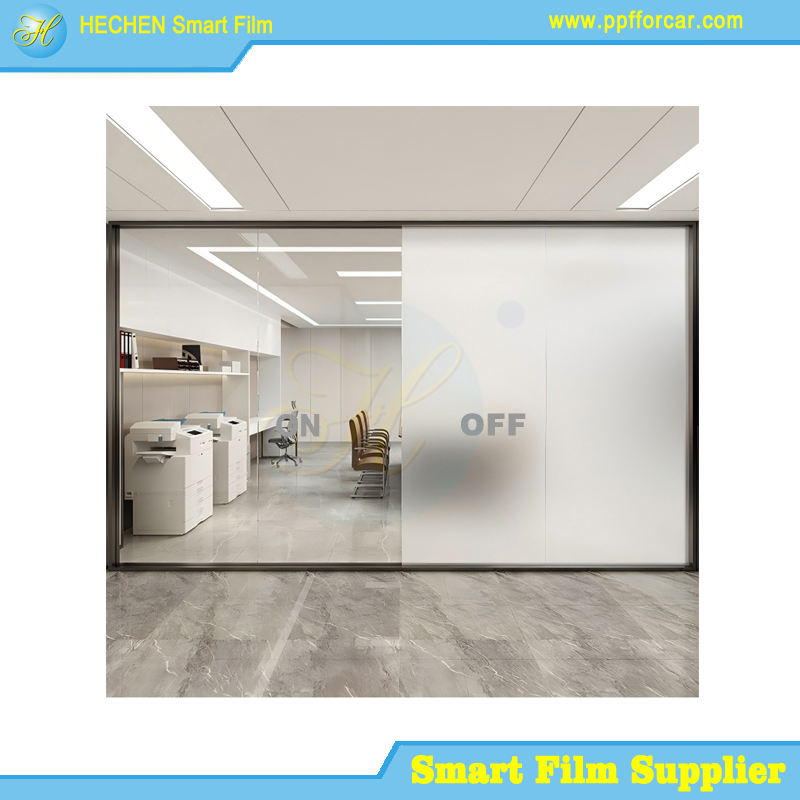
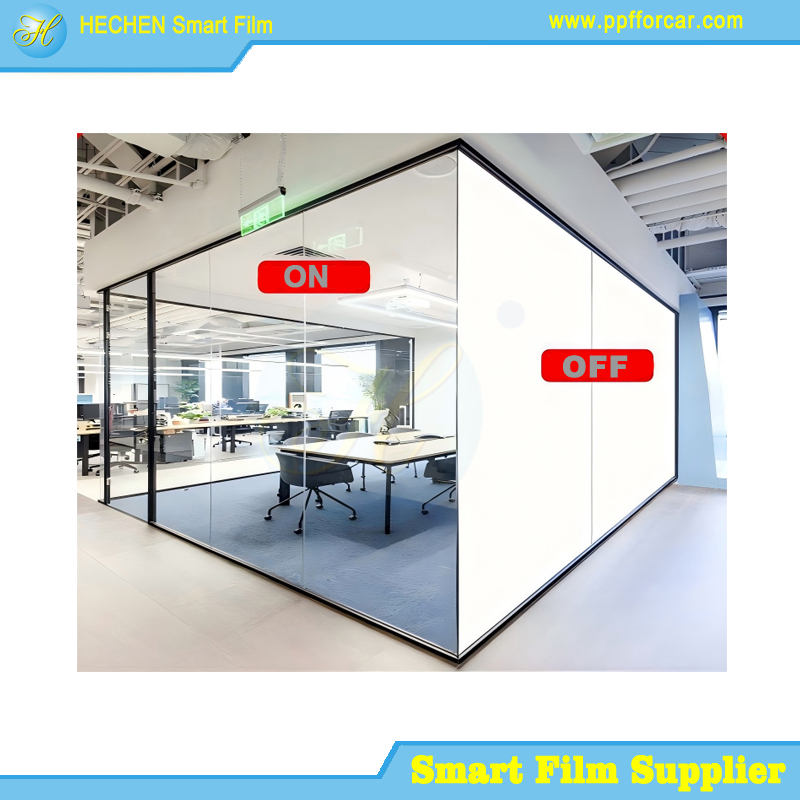
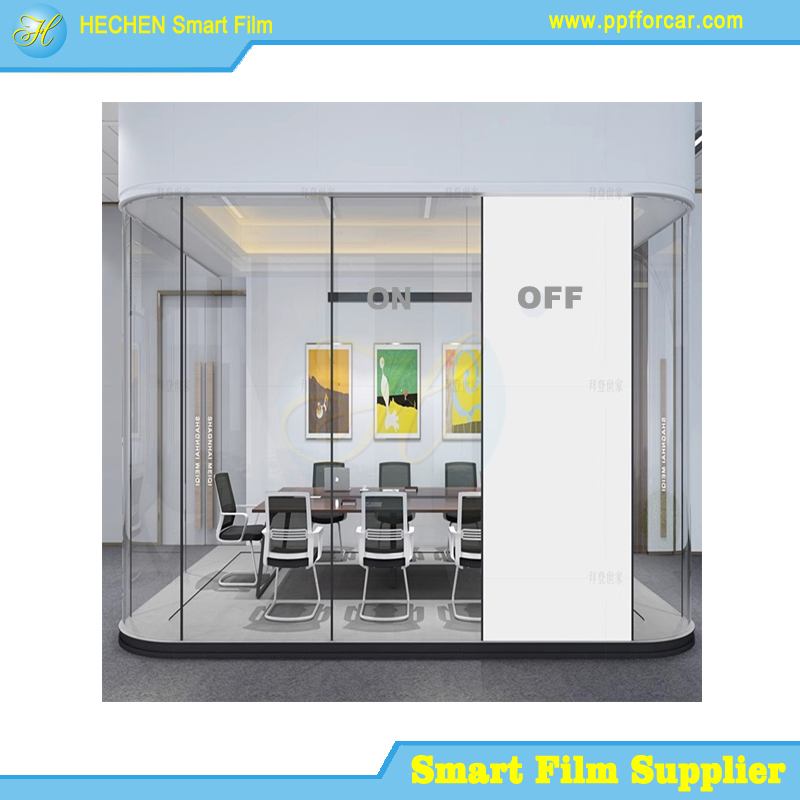
Smart film for a reception room is a retrofittable PDLC (polymer dispersed liquid crystal) smart film applied to the interior face of existing glass, which switches between a transparent powered state and an opaque, light-scattering unpowered state in under one second. Its functional logic is inverted relative to most architectural glass products: privacy is the default, and transparency is the condition that must be actively maintained. For a reception room, this inversion is the entire point. The space can remain visually open and welcoming for most of the working day, then become fully opaque the moment a client file is opened, an interview begins or a confidential call connects—without blinds to adjust, film to replace or walls to build.
The Reception Room as a Distinct Privacy Problem
A reception room is not a generic office enclosure. It sits on the threshold between public arrival and internal operations, and its architectural brief is almost always contradictory. It must project openness, daylight and arrival—the visual signals of a functioning, accessible organization. It must also, at irregular and often unpredictable intervals, prevent anyone on the public side from seeing documents, screens, whiteboards or people on the internal side.
Conventional privacy interventions resolve this contradiction by choosing one state permanently. Blinds and shades close the room down and introduce a mechanical layer that must be operated, cleaned and repaired. Static frosted film removes the clear view irrevocably; the glass becomes a permanently diffused surface, and the openness that justified specifying glass in the first place is lost. A solid partition eliminates both the view and the daylight, turning a threshold into a wall. Each solution buys privacy by surrendering a property the reception was designed to possess.
PDLC film does not surrender that property. In the unpowered state, the liquid crystal droplets dispersed in the polymer matrix scatter light in all directions, producing a milky, opaque appearance with haze typically above 90% and parallel-light transmittance falling to low single digits. Direct sightlines are blocked. When a low AC voltage—commonly in the 40–65 V range—is applied, the liquid crystals align and the film becomes transparent, with visible-light transmittance in the low-to-mid 80% range and haze in the transparent state commonly between 3% and 6% for quality film. Switching is measured in milliseconds to fractions of a second, and power is drawn only in the clear state, typically at 3–5 W/m².
Reception Room vs. Traditional Privacy Options
The comparison below isolates the dimensions that matter in a reception context: whether openness survives, whether privacy can change state, how much upkeep the solution imposes, what happens to daylight, and whether the glass line remains architecturally clean.
| Dimension | PDLC Smart Film | Blinds / Shades | Static Frosted Film | Solid Partition |
|---|---|---|---|---|
| Visual openness retained | Yes—clear state restores the original transparency of the glass | Partial—slats or fabric remain in the sightline even when open | No—the glass is permanently diffused; the clear view is gone | No—the glass span is replaced by an opaque wall |
| Privacy switching speed | Under 1 second; unpowered state is private (fail-safe default) | Manual, corded or motorised; operation takes seconds to minutes | Not switchable; privacy is continuous | Not switchable; privacy is continuous |
| Maintenance burden | Low—no moving parts, no dust-collecting surfaces; wipe the glass face as normal | Moderate to high—dust accumulation, cord wear, slat damage, cleaning behind hardware | Very low—clean as glass | Very low, but irreversible |
| Daylight impact | Diffuses rather than blocks light in the private state; clear state restores full transmission | Reduces or blocks daylight depending on deployment | Transmits a large share of daylight but permanently removes clarity | Eliminates daylight through the replaced span |
| Design cleanliness | Flat, frameless, hardware-free; the glass line reads as glass in both states | Introduces headrails, cords, slats or fabric into a detail that was designed to be minimal | Film edge and permanent opacity become part of the visual language | Structural intervention; the glass threshold becomes a wall |
The maintenance dimension deserves emphasis because it is frequently underweighted in reception specifications. Blinds in a reception area collect dust on horizontal surfaces that are visible to every visitor, and the hardware introduces a failure mode that has no equivalent in a film system. Static frosted film has almost no maintenance burden, but it achieves that burden reduction by permanently eliminating the clear state—which is precisely the state the reception needs most of the time. PDLC film occupies the only position in the matrix where on-demand privacy and a persistent clean glass line coexist.
Cost should be positioned honestly rather than as the primary argument. In 2026 reference terms, installed PDLC film for commercial applications commonly falls in the $75–$245 per square metre range depending on film grade, electrical complexity and market labor costs; mid-range installed performance typically sits around $115–$165/m² in Western markets. Quality motorised blinds can fall in a comparable or lower installed band, and static frosted film is materially cheaper. The premium for PDLC buys switchability, the elimination of mechanical hardware, and the retention of the glass line—not a lower first cost than every alternative.
When Smart Film Is the Right Fit for a Reception Room
The following conditions function as a fit test. A reception room that satisfies three or more is a strong candidate for PDLC retrofit.
Condition 1 — Privacy is intermittent rather than continuous. The room must be visually open during normal arrival, waiting and transition periods, but private during document review, client consultations, interviews or sensitive calls. PDLC is engineered for an “open by default, private on demand” duty cycle; it is a poor match for a space that must be opaque all day.
Condition 2 — Existing glass must be retained. The reception already has glass partitions, a glazed entrance screen or an internal window, and replacing that glass would be disruptive, costly or structurally awkward. Self-adhesive retrofit film is applied to the accessible interior surface of the existing pane; it does not require new glazing, frame demolition or a sealed-unit replacement. Toughened and laminated interior glass are frequently suitable, but suitability is project-specific: surface condition, coatings, edge constraints and dimensions must be checked by the supplier rather than assumed.
Condition 3 — Daylight and visual connection carry real value in the space. The reception depends on borrowed light or an open, transparent aesthetic. PDLC in the private state scatters light rather than extinguishing it, so the room remains luminous even when direct sightlines are blocked. A solid partition or fully opaque blind in the same position would remove that luminous quality entirely.
Condition 4 — The reception boundary must be managed without a fixed barrier. The design intent is a threshold that can shift between “visible and connected” and “visually separated” without altering the physical plan. This is the specific operational logic of PDLC in a reception: it creates a boundary condition that is programmable rather than architectural. The glass stays in place; the relationship across it changes.
Condition 5 — A secondary surface function has value in the private state. The light-scattering frosted state is optically compatible with rear projection, and PDLC film can function as a projection surface for branded content, wayfinding or visual displays when privacy is engaged. This is not the primary justification for the specification, but in a reception room it converts the private state from a dead surface into a communication asset—a detail that is difficult to replicate with blinds or permanent frost.
Installation and Operational Reality
Retrofit PDLC installation is non-structural and sequenced around the existing glazing. The film is cut to the pane dimensions, applied to a clean interior surface, and connected to a low-voltage supply through a transformer and controller. Typical commercial installations in occupied premises are completed in one to two days per floor or zone, and work can be scheduled outside reception hours to avoid interrupting front-of-house operations. A documented single-room reception installation of approximately 9 m² was completed in one day.
The electrical design should be resolved before film is cut. Cable routes, transformer location and control strategy—wall switch, remote, room-booking integration or building management system—all affect the installation sequence. In regulated markets, the electrical work falls under the applicable wiring standard for the jurisdiction, and the glass itself must continue to satisfy the relevant safety-glazing requirements; the film does not alter the compliance status of the existing pane but adds a surface that must be installed without compromising it.
Maintenance is deliberately minimal but specific. The film surface is cleaned with a damp, lint-free microfibre cloth; abrasive materials and ammonia-based cleaners should be avoided, and liquid should never be sprayed directly onto the film because runoff can enter the electrical connections at the film edge. Operationally, a rest cycle of at least four hours in the unpowered state every 24 hours is recommended to allow the liquid crystals to relax and to support long-term optical stability. Quality PDLC systems are rated for 100,000 hours or more of operation and hundreds of thousands of switching cycles under normal conditions. Power consumption in the clear state is low—typically 3–5 W/m²—and zero in the private state, which means the default condition of a reception outside working hours is both private and electrically dormant.
FAQs
Does smart film work on existing reception glass?
In many cases, yes, but no blanket answer is technically reliable. Self-adhesive PDLC smart film is designed to be applied to the accessible interior surface of existing glass, including reception partitions and glazed screens, without replacing the pane or frame. Suitability depends on the glass type, surface condition, coatings, edge details and dimensions. Toughened glass is often compatible, and laminated glass may be compatible subject to system review, but the supplier should confirm the specific pane rather than the installer assuming it. Heavily textured, patterned, damaged or curved glass requires individual assessment and may not accept standard flat film cleanly.
Can you still see through smart film when it’s on?
In the powered “on” state, the liquid crystals align and the film becomes transparent, restoring a clear view through the glass. In the unpowered “off” state—the default state for a reception—the liquid crystals scatter light and the film appears frosted; direct sightlines are blocked, although diffused daylight still passes through. This is the inverse of some switchable glazing products that are clear when unpowered and private only when powered. The fail-safe logic of PDLC matters in a reception: if the power supply is interrupted, the glass becomes private rather than transparent.
How does smart film compare with frosted film for a reception?
Static frosted film is cheaper and requires almost no maintenance, but it is permanently private. It eliminates the clear state that a reception typically needs for most of the day. PDLC film costs more and introduces an electrical layer, but it preserves the clear state and makes privacy an on-demand condition rather than a permanent architectural decision. For a reception where the glass must perform both an open and a private role, frosted film removes one of those roles; PDLC is specified precisely because both roles are required.
Does smart film replace blinds for glare and solar control?
No, and it should not be specified as though it does. PDLC’s primary function is visual privacy switching. Its frosted state diffuses light and contributes some UV and infrared reduction, but the control of direct solar gain, glare and room darkening belongs to blinds, external shading or a dedicated solar-control strategy. In a reception with strong solar exposure on the same glass, the specification should separate the privacy layer from the solar-control layer rather than expecting one film to carry both duties.
How much power does smart film draw, and what is the expected service life?
Power is drawn only in the clear state, typically at 3–5 W/m²; the unpowered private state draws nothing. Quality PDLC smart film is rated for 100,000 hours or more of operation and several hundred thousand switching cycles, which corresponds to a service life well beyond a decade under normal reception duty cycles. The practical variables that affect realized life are film grade, installation quality, edge sealing and adherence to the recommended power-cycling discipline rather than the switching count alone.
The reception room is a useful test case for smart film because it exposes the weakness of every fixed privacy solution. Blinds, frost and walls each resolve the privacy problem by removing a property the reception was designed around—openness, clarity or daylight. PDLC does not remove any of those properties; it makes privacy a state the glass can enter and leave. That is a narrower claim than “the best privacy solution,” and it is the claim that actually holds under technical scrutiny.
Empfohlene Verlinkung:
Empfehlen Sie ähnliche Produkte:
Intelligente Sichtschutzfolie für Badezimmerglas