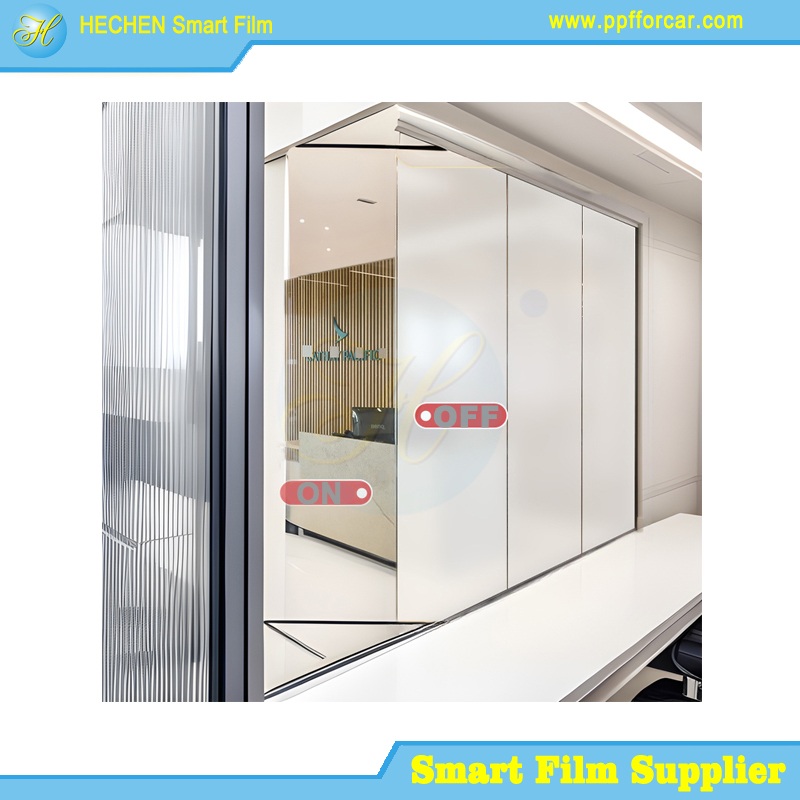
Is Smart Privacy Film Waterproof? A Technical Guide for Bathroom and Shower Glass
Is smart film waterproof for bathroom applications? Not necessarily. Standard PDLC smart film should not automatically be considered waterproof. Although some products can tolerate humid indoor environments, direct water exposure may damage exposed edges, conductive busbars, adhesive layers, and electrical connections. For shower glass, a purpose-designed moisture-protected assembly or laminated smart glass is generally a more appropriate option.
Understanding the difference between moisture resistance and waterproof protection is essential when selecting PDLC smart film for bathrooms. Film construction, edge sealing, electrical insulation, installation location, and maintenance all influence long-term performance.
This guide explains how moisture affects smart film, when it can be installed in bathrooms, and what technical precautions are necessary for wet-area applications.

Is Smart Privacy Film Waterproof?
The answer depends on the specific product construction and its intended application.
PDLC smart film is an electrically controlled optical material consisting of liquid crystal droplets dispersed within a polymer matrix. The functional layer is positioned between transparent conductive layers, allowing the film to switch between transparent and frosted states.
However, the presence of laminated or coated layers does not automatically make the complete film assembly waterproof.
Moisture Resistance vs. Waterproof Protection
These two terms describe different levels of environmental protection.
Moisture resistance: The material can tolerate certain levels of humidity or occasional moisture exposure without immediate performance degradation.
Water resistance: The assembly can resist water penetration under specified test conditions.
Waterproof protection: The complete system is designed and tested to prevent water ingress under defined exposure conditions.
A PDLC film may perform reliably in a dry indoor environment while being unsuitable for continuous water contact.
For bathroom applications, the relevant question is not simply whether the film is waterproof. Buyers should determine whether the complete installation system can withstand the actual humidity, condensation, cleaning procedures, and water exposure at the intended location.
Why Standard PDLC Film May Not Be Waterproof
Several components can be vulnerable to moisture:
Exposed conductive edges.
Electrical busbars and connection terminals.
Adhesive interfaces between the film and glass.
Cut edges where protective layers are interrupted.
Cable connections and insulation materials.
Moisture entering these areas may cause electrical instability, adhesive deterioration, corrosion, or localized switching failure.
Therefore, standard self-adhesive smart film should not be installed in direct shower exposure unless the manufacturer has specifically validated the complete system for that application.
Can PDLC Smart Film Be Used in Bathrooms?
Yes. PDLC smart film can be used in many bathroom environments when the installation location and environmental conditions are properly evaluated.
However, different bathroom areas create different moisture risks.
1. Bathroom Windows
Bathroom windows are generally suitable candidates for smart film when installed on compatible interior glass.
Although these windows may experience high humidity, they are usually not exposed to continuous direct water contact.
Important considerations include:
Condensation on the glass surface.
Ventilation and humidity control.
Adhesive compatibility.
Protection of conductive edges.
Safe routing of electrical connections.
A properly installed system can provide adjustable privacy while maintaining natural daylight.
2. Internal Bathroom Glass Partitions
Smart film can also be applied to glass partitions separating bathroom spaces from bedrooms, dressing areas, or other interior rooms.
These installations usually experience less direct water exposure than shower enclosures.
Nevertheless, cleaning water, condensation, and high humidity can still affect exposed edges and electrical connections.
The film should be installed with appropriate protection based on the actual environmental conditions.
3. Bathroom Doors
Glass bathroom doors are another potential application.
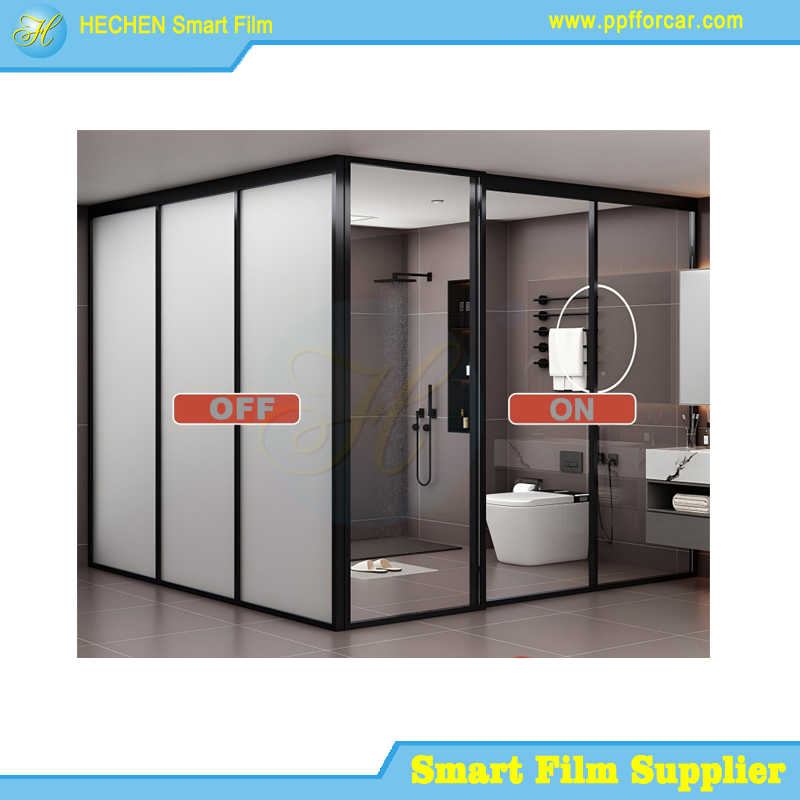
PDLC film allows users to switch between transparent and frosted modes, providing privacy without permanently obscuring the glass.
For these installations, the film should be protected from repeated water contact, especially around door edges, handles, and electrical connection points.
Understanding Bathroom Installation Zones
| Bathroom location | Moisture exposure | Application considerations |
|---|---|---|
| Bathroom window | Low to moderate | Suitable film and edge protection |
| Internal glass partition | Low to moderate | Protect electrical connections |
| Glass bathroom door | Moderate | Protect exposed edges and wiring |
| Area near washbasin | Moderate | Evaluate splashing and cleaning exposure |
| Shower enclosure | High | Requires specifically validated wet-area system |
The key principle is to select the product according to the actual installation environment rather than assuming that all bathroom glass applications have identical requirements.
Can Smart Film Be Installed on Shower Glass?
Smart film for shower glass requires more careful technical evaluation than ordinary bathroom window installations.
Shower enclosures are exposed to direct water spray, hot steam, condensation, temperature changes, and frequent cleaning. These conditions create additional risks for adhesive films and electrical components.
Challenges of Shower Glass Installation
1. Direct Water Contact
Repeated water exposure can penetrate poorly protected edges and electrical connections.
Over time, moisture ingress may compromise conductive layers, busbars, and adhesive bonding.
2. High Humidity and Steam
Hot showers create rapid changes in temperature and humidity.
Repeated exposure to humid air may accelerate deterioration if the film's materials and sealing system are not designed for these conditions.
3. Temperature Fluctuations
Shower glass can experience alternating hot and cold conditions.
Differences in thermal expansion between the glass, adhesive, and film layers may create mechanical stress at interfaces.
4. Cleaning Chemicals
Some bathroom cleaning products contain aggressive chemicals that may damage protective coatings, adhesives, or exposed film edges.
Cleaning compatibility should be confirmed before installation.
When Is Smart Film Suitable for Shower Glass?
A shower application should only proceed when the complete product assembly has been evaluated for the intended wet-area exposure.
Suitable solutions may include:
Purpose-designed laminated PDLC smart glass.
Specialized smart film systems with verified wet-area protection.
Factory-integrated electrical connections.
Properly protected edges and cable interfaces.
Standard self-adhesive PDLC film should not be assumed suitable for direct shower exposure simply because it is advertised as suitable for indoor applications.
For projects requiring adjustable privacy inside shower enclosures, laminated smart glass is often the more reliable design approach.
How Does Moisture Affect Smart Film?
Moisture can affect several layers and components of a PDLC smart film system.
Understanding these failure mechanisms helps prevent premature deterioration.
1. Adhesive Layer Degradation
Self-adhesive PDLC film relies on a pressure-sensitive adhesive layer to bond with the glass surface.
Prolonged exposure to moisture, especially at exposed edges, may reduce adhesive stability.
Possible symptoms include:
Edge lifting.
Localized bubbles.
Adhesive discoloration.
Uneven film bonding.
Progressive separation from the glass.
2. Conductive Layer Damage
PDLC film uses transparent conductive layers to distribute the electrical field across the liquid crystal layer.
If moisture reaches vulnerable conductive areas, it may contribute to corrosion or electrical instability.
This can cause uneven switching or localized areas that fail to become transparent.
3. Busbar and Electrical Connection Failure
Busbars distribute electrical power across the film.
Moisture exposure may cause corrosion at electrical interfaces, increasing resistance and disrupting current distribution.
In severe cases, electrical connections may fail completely.
4. Optical Performance Deterioration
Moisture-related damage may also affect the film's optical appearance.
Potential problems include:
Uneven transparency.
Permanent cloudy areas.
Visible edge discoloration.
Localized switching defects.
These problems can reduce both appearance and functionality.
Why Is Edge Sealing Important for Smart Film?
Smart film edge sealing is one of the most important considerations for installations exposed to humidity or occasional water contact.
The edges of PDLC film contain interfaces between multiple functional layers. These areas may expose vulnerable conductive components and connection points.
What Is Smart Film Edge Sealing?
Edge sealing refers to the use of suitable protective materials and installation methods to reduce moisture penetration into vulnerable film interfaces.
A properly designed protection system may include:
Insulating edge materials.
Moisture-resistant sealing compounds.
Protected busbar connections.
Insulated cable terminals.
Appropriate electrical enclosures.
The exact sealing method must be compatible with the film construction.
Why Are Busbars Particularly Vulnerable?
Busbars connect the conductive layers to the electrical power supply.
They are essential for distributing voltage across the film, but their connection areas may be more vulnerable to environmental exposure than the central optical area.
If water reaches these connections, corrosion or electrical leakage may occur.
For this reason, busbars should be positioned and protected according to the manufacturer's installation requirements.
Can Edge Sealing Make Standard Smart Film Waterproof?
Not necessarily.
Edge sealing reduces the risk of moisture ingress, but it does not automatically convert a standard indoor smart film into a waterproof product.
The complete assembly must be evaluated, including the film layers, adhesive, glass interface, electrical connections, and cable routing.
For direct shower exposure, a purpose-designed laminated system is generally preferable to relying on additional sealant applied during installation.
Smart Film vs. Laminated Smart Glass for Wet Areas
Both self-adhesive smart film and laminated smart glass use PDLC technology, but their construction and moisture protection capabilities differ.
Self-Adhesive Smart Film
Self-adhesive PDLC film is designed to be applied directly to compatible existing glass.
Its primary advantage is retrofit flexibility.
It can reduce the need to remove existing glass and is suitable for many interior privacy applications.
However, the film's exposed edges, adhesive layer, and electrical connections require appropriate protection.
Its suitability for wet environments depends heavily on the specific product specification.
Laminated Smart Glass
Laminated smart glass integrates the PDLC functional layer within a glass assembly.
The switchable layer is protected between glass sheets, with electrical connections designed as part of the glazing system.
Potential advantages include:
Better protection of the functional layer.
Reduced exposure of internal components.
More controlled edge construction.
Greater design flexibility for new shower installations.
Factory-managed assembly quality.
However, laminated smart glass is not automatically waterproof. Edge seals, cable exits, glazing interfaces, and electrical connections still require appropriate design and testing.
Technical Comparison
| Comparison | Self-Adhesive PDLC Film | Laminated Smart Glass |
|---|---|---|
| Construction | Applied to existing glass | Integrated between glass layers |
| Retrofit suitability | High | Usually requires glass replacement |
| Functional layer protection | Depends on film construction and edge protection | Protected within glazing assembly |
| Edge protection | Requires careful installation | Designed into glazing system |
| Direct water exposure | Requires specific validation | Requires specific validation |
| Installation | Film application and wiring | Glazing installation and electrical connection |
| Initial project cost | Often lower | Generally higher |
| Best application | Windows and internal partitions | Specialized glazing and suitable wet-area projects |
For bathroom windows and internal partitions, self-adhesive smart film can be a practical retrofit option.
For shower enclosures, laminated smart glass is often preferable because the functional layer can be protected within a purpose-designed glazing assembly.
Electrical Safety Requirements for Bathroom Smart Film
Electrical safety is essential when installing PDLC smart film in bathrooms.
Although the film generally operates using a low-voltage AC supply, the power system still requires proper electrical design and protection.
1. Transformer and Power Supply Location
The transformer or power supply should be installed in a suitable dry and accessible location.
It should not be positioned where direct water contact, excessive condensation, or unsuitable bathroom-zone conditions could compromise safety.
2. Correct Operating Voltage
The electrical output must match the PDLC film's rated operating voltage and frequency.
Incorrect voltage may cause unstable switching, excessive heating, or premature component failure.
Always verify the electrical datasheet before installation.
3. Cable Protection
All wiring should be routed through appropriate protective pathways.
Cable connections must be insulated and protected against moisture according to the installation design.
4. Professional Installation
In the United Kingdom, bathroom electrical installations should comply with applicable requirements of BS 7671, including the relevant provisions for bathroom locations.
A qualified electrical professional should assess the installation, protection devices, isolation arrangements, and location of electrical equipment.
The entire system must be considered rather than treating the PDLC film as an isolated low-voltage component.
How to Maintain Smart Film in Humid Environments
Proper maintenance helps preserve optical performance, adhesive stability, and electrical reliability.
The following practices are recommended for bathroom smart film installations.
1. Use Suitable Cleaning Materials
Clean the film surface with a soft microfiber cloth and a compatible, non-abrasive cleaning solution.
Avoid aggressive solvents, abrasive pads, and cleaning chemicals that may damage the film's protective layers.
2. Avoid Excessive Water Exposure
Do not direct high-pressure water onto film edges, electrical connections, or cable exits.
For installations near sinks or other wet areas, minimize repeated water accumulation around the glass perimeter.
3. Inspect Edge Sealing Regularly
Check for signs of:
Edge lifting.
Sealant cracking.
Discoloration.
Water penetration.
Adhesive separation.
Any deterioration should be evaluated before it develops into more serious damage.
4. Check Electrical Connections
Inspect accessible electrical connections and control components for signs of corrosion, overheating, or unstable operation.
Electrical inspections should be carried out by qualified personnel.
5. Maintain Bathroom Ventilation
Adequate ventilation helps reduce condensation and excessive humidity.
Using suitable extraction ventilation can reduce the environmental stress placed on bathroom glazing and its electrical components.
Frequently Asked Questions
1. Is PDLC Smart Film Waterproof?
Not all PDLC smart film is waterproof. Standard self-adhesive products may tolerate normal indoor humidity but should not automatically be used in direct water exposure. Always verify the complete system's moisture protection rating and intended application.
2. Can Smart Film Get Wet?
The answer depends on its construction and installation. Occasional surface moisture may be acceptable for some products, but water should not reach exposed edges, busbars, or electrical connections unless the system is specifically designed for that exposure.
3. Can I Install Smart Film Inside a Shower?
Only if the complete film or glazing assembly has been specifically validated for direct shower exposure. Standard self-adhesive PDLC film is generally not the preferred solution for this environment.
4. Is Laminated Smart Glass Waterproof?
Laminated smart glass offers better protection for its internal functional layer, but the complete assembly is not automatically waterproof. Edge sealing, electrical connections, and cable exits must also be properly designed.
5. Does Bathroom Humidity Damage Smart Film?
High humidity alone does not necessarily damage a suitable indoor smart film installation. However, prolonged condensation and moisture penetration into exposed edges may cause adhesive deterioration, corrosion, and switching problems.
6. What Is Smart Film Edge Sealing?
Edge sealing is a protective installation method designed to reduce moisture penetration into vulnerable film layers, conductive connections, and busbar areas.
7. Does Smart Film Need a Waterproof Transformer?
The power supply must have an enclosure rating and installation location suitable for its actual environment and applicable electrical regulations. It should not be exposed to direct water unless specifically rated and permitted for that installation.
8. Which Is Better for Shower Glass: Smart Film or Smart Glass?
For direct shower applications, purpose-designed laminated smart glass is generally preferable because its functional layer is protected within the glazing assembly. However, the complete system must still be validated for wet-area use.
9. Can Smart Film Be Installed on Bathroom Windows?
Yes. Suitable bathroom windows are common retrofit applications, provided that the film, adhesive, electrical connections, and installation environment are compatible.
10. How Long Does Smart Film Last in Humid Environments?
Service life depends on film quality, electrical stability, moisture protection, installation conditions, and maintenance. Buyers should request documented durability testing and warranty conditions covering the intended bathroom environment.
Conclusion
Smart privacy film can be an effective solution for bathroom windows and internal glass partitions, but waterproof performance should never be assumed.
Standard PDLC smart film is primarily a switchable optical material, not automatically a waterproof glazing system. Its long-term reliability depends on moisture exposure, edge sealing, adhesive compatibility, conductive connections, and electrical protection.
For ordinary bathroom applications, properly specified self-adhesive smart film can provide adjustable privacy while maintaining natural light. For direct shower exposure, purpose-designed laminated smart glass is often the more appropriate choice.
Before selecting a product, buyers should verify its environmental specifications, installation requirements, edge protection, and electrical safety documentation. Choosing the correct system for the actual wet-area conditions is essential for achieving reliable switching performance and long-term durability.
Recommended linking:
Smart Privacy Film for Bathroom Glass: The Complete Guide to Switchable Bathroom Privacy
Recommend related products: