The Ultimate Guide to Smart Film for Residential Windows
What is residential smart film?
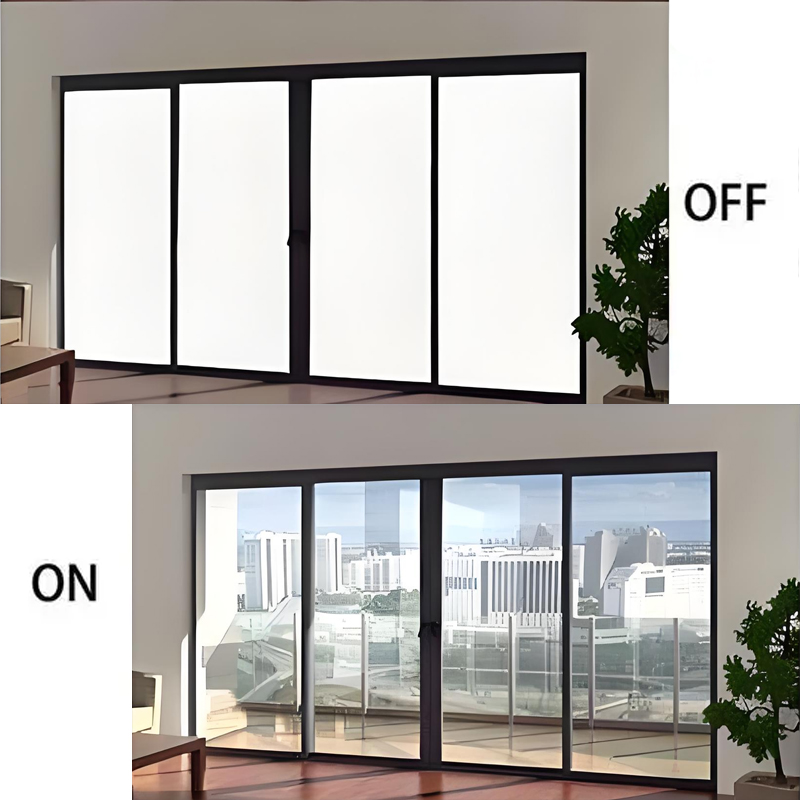
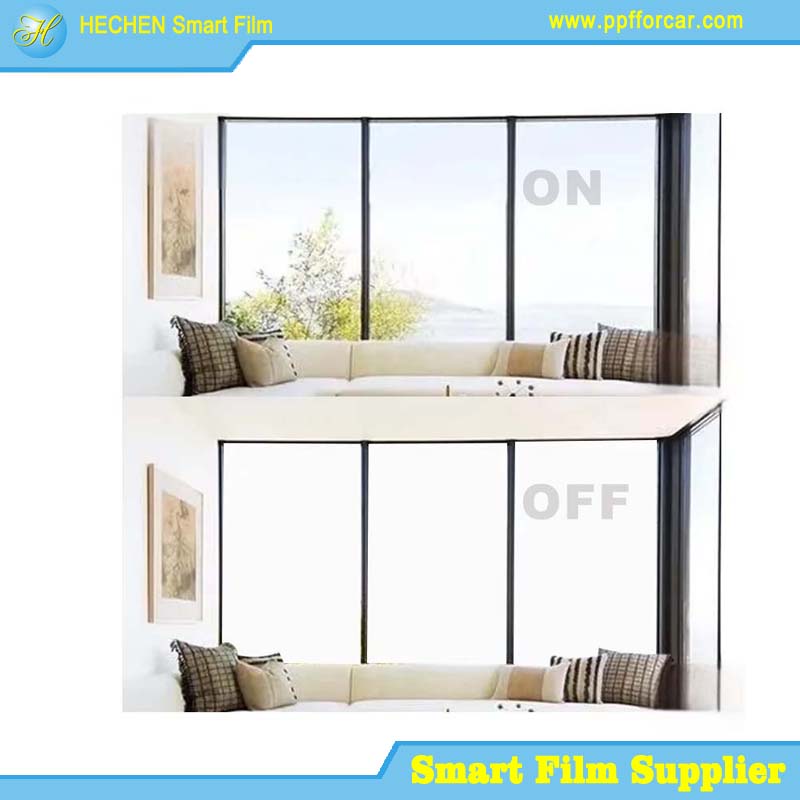
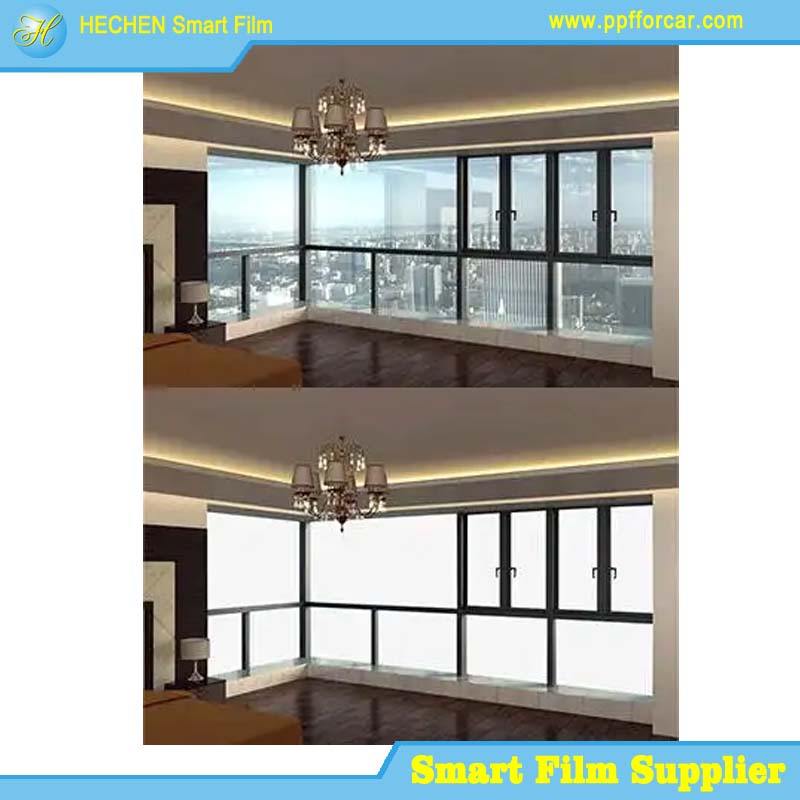
Residential smart film is an electrochromic self-adhesive film—typically utilizing Polymer Dispersed Liquid Crystal (PDLC) technology—applied directly to existing window glass. When an electrical current is applied, liquid crystal molecules align to instantly switch the glass from an opaque, frosted state to optically clear transparency.
Executive Summary & Technical Specifications
Smart film technology represents a major shift in architectural glazing and modern residential design. By integrating conductive layers with liquid crystal chemistry, homeowners and architects can achieve instant, on-demand privacy and glare control without compromising natural daylight or relying on motorized blinds.
Below is an overview of the core technical parameters for high-performance residential smart film:
| Specification Parameter | Standard Industry Value |
| Technology Type | Polymer Dispersed Liquid Crystal (PDLC) |
| Operating Voltage | 48V – 60V AC (via low-voltage step-down transformer) |
| Power Consumption | Approx. 3 to 5 Watts per square meter (ON state) |
| Response Time | < 100 ms (Off to On / On to Off) |
| Luminous Transmittance (ON State) | 85% |
| Privacy / Opacity Level (OFF State) | > 99% privacy diffusion |
| UV Protection | 99% blocking (200–380 nm spectrum) |
| Infrared (IR) Rejection | Up to 70% - 85% (in off/opaque state) |
| Operating Temperature Range | -20 ℃ to +70 ℃ (-4 ℉ to 158 ℉) |
| Expected Lifespan | > 80,000 perational hours (> 10 years under standard usage) |
How Switchable Smart Film (PDLC) Works
1. Structure and Layers
A standard smart film sheet consists of a multi-layer sandwich construction:
Outer Protective Layers: Optical-grade Polyethylene Terephthalate (PET) films coated with hard anti-scratch compounds.
Conductive Layers: Indium Tin Oxide (ITO) micro-coatings sputtered onto the inner surfaces of the PET sheets.
Core Matrix: A polymer matrix embedded with micro-droplets of nematic liquid crystals.
2. The Physical Mechanism
OFF State (Unpowered): When no electrical power is supplied, the liquid crystal molecules are randomly oriented inside the polymer matrix. Light entering the film strikes these randomly angled crystals and scatters in all directions. This creates a frosted, completely opaque appearance that diffuses light while completely blocking visibility.
ON State (Powered): Applying an alternating current (AC) voltage across the ITO layers creates an uniform electric field. This forces the liquid crystal molecules to line up parallel to the direction of the light waves. Light passes directly through the matrix without scattering, transforming the glass into a highly transparent surface within milliseconds.
Key Benefits for Residential Properties
1. Instant, On-Demand Privacy
Unlike traditional curtains or motorized shade systems that take several seconds to operate and accumulate dust, smart film toggles between total privacy and total transparency in less than 100 milliseconds.
2. UV Protection & Interior Preservation
Ultraviolet rays (UV) are the primary cause of fading and solar degradation in indoor wood flooring, artwork, custom cabinetry, and high-end upholstery. Premium PDLC smart film inherently blocks over 99% of UV radiation ( wavelengths between 200–380 nm), acting as a continuous barrier even in its transparent state.
3. Thermal Insulation & Energy Savings
Smart film reduces total Solar Heat Gain Coefficient (SHGC) by reflecting and scattering non-visible spectrums:
In the OFF (opaque) state, the film reflects up to 85% of infrared (IR) energy, significantly reducing indoor solar heat buildup during hot summer months.
The added double-layer PET membrane contributes an incremental thermal barrier (increasing winter heat retention).
By minimizing HVAC heat load during peak sunlight hours, homeowners can cut cooling costs by 15% to 25%.
4. Modern Aesthetics & Spatial Efficiency
Traditional window coverings take up wall and sill space, disrupt clean lines, and collect dust and allergens. Smart film creates a sleek architectural profile suited to modern minimalism, open-concept floor plans, and expansive curtain-wall glazing.
Room-by-Room Residential Applications
1. Bathrooms & Wet Zones
Use Case: Frosted glass shower doors, floor-to-ceiling privacy windows above soaking tubs.
Technical Considerations: Wet zones require wet-rated edge sealing (acid-free silicone or specialized butyl edge sealant) to keep moisture from seeping into the ITO conductive layers. Power supplies should be housed in remote, dry enclosures following local electrical codes (e.g., GFCI protection).
2. Master Bedrooms & Street-Facing Windows
Use Case: Floor-to-ceiling perimeter windows and balcony doors.
Benefit: Eliminates heavy blackout drapes while preserving sweeping daytime views. Users can switch to frosted privacy at dusk with a single voice command or automated routine.
3. Patio, Sliding, and Bi-Fold Glass Doors
Use Case: Large expansive patio doors and opening glass walls.
Technical Considerations: Retrofitting operable door assemblies requires flexible wiring harnesses, concealed spring loops, or sliding contact power transfer contacts (PTCs) to pass low-voltage power seamlessly across moving door frames without binding.
4. Home Offices & Conference Nooks
Use Case: Interior glass walls and acoustic office partitions.
Benefit: Delivers visual privacy during confidential remote meetings while maintaining an open, sunlit living space during quiet working hours.
5. Rear Projection Entertainment Systems
Use Case: Home theater glass partitions and large living room windows.
Benefit: When switched to the OFF state, high-density PDLC film acts as an ultra-wide angle, ambient-light-rejecting rear projection screen. Homeowners can project high-definition movies directly onto exterior or interior glass walls.
Cost Factors, Expected Lifespan, and Smart Integration
1. Cost Breakdown & Budgeting Metrics
Film Material Costs ($25 – $55 USD per sq. ft.): Varies based on clarity optical grade, UV/IR coating additions, ultra-wide roll custom sizing, and manufacturing quality.
Transformers & Controller Hardware ($150 – $400 USD per power unit): Dedicated step-down transformers capable of powering specified square footages ($100\text{W}$ to $500\text{W}$ loads).
Professional Installation & Electrical Wiring ($10 – $25 USD per sq. ft.): Includes precision edge trimming, dry/wet application labor, electrode bus-bar soldering, and line-voltage wiring by an electrician.
2. Lifespan & Long-Term Reliability
Operational Hours: Rated for upwards of 80,000 continuous operating hours in the ON state.
Switching Durability: Rated for over 3,000,000 to 5,000,000 manual toggles.
Environmental Resistance: High-grade residential films feature UV-stabilized polymer matrices designed to resist yellowing, edge peeling, or haze build-up under direct solar exposure.
3. Control Options & Smart Home Automation
Physical Control: Wall switches, rotary dimmers (for partial voltage light output modulation), and handheld RF remotes.
Voice & App Controls: Integration with Apple HomeKit, Google Home, and Amazon Alexa via Wi-Fi/Zigbee smart relays.
Advanced Automation Protocols: RS-485, Crestron, Control4, and Lutron systems allow home automation to adjust privacy based on time-of-day, solar radiation sensor triggers, or geo-fenced presence detection.
Maintenance and Care Guidelines
To maximize optical clarity and protect the internal conductive layers:
Cleaning Solutions: Clean exclusively with non-ammonia, non-alcohol neutral glass cleaners or mild isopropyl alcohol mixtures ($10\%$ concentration). Ammonia-based cleaners can react with and degrade the ITO conductive layers along exposed edges.
Wiping Technique: Use soft microfiber cloths. Avoid abrasive sponges, scrapers, or harsh squeegees that could scratch the hard-coated outer PET surface.
Edge Protection: Keep silicone edge seals intact. Never pick at corner edges or expose copper bus-bars to standing moisture during cleaning.
Conclusion & Strategic Recommendations
Smart film is a versatile, high-tech upgrade that brings instant privacy, UV protection, and energy efficiency to home windows. By retrofitting directly onto existing glass, it provides the benefits of smart glass without the expense or disruption of full window replacement.
When planning a residential smart film project:
Accurately Measure Glass Dimensions: Measure twice down to the millimeter to order factory pre-cut sheets with pre-soldered bus-bars.
Account for Electrical Access: Ensure low-voltage wiring pathways are planned through window frames, mullions, or drywall to conceal transformer connections.
Select High-Grade PDLC Films: Choose films with $>85\%$ clarity ratings and built-in anti-UV inhibitors for optimal long-term clarity and performance.
Recommend related products:
Smart Film For Residential Windows