How to Find the Right Privacy Film Manufacturer or Supplier for Your Product
Privacy films for glass are transformative solutions that enhance seclusion, aesthetics, and functionality in residential, commercial, and automotive settings. These films, ranging from frosted and tinted to advanced switchable technologies like Polymer Dispersed Liquid Crystal (PDLC), allow users to control visibility while maintaining light transmission. At the core of this industry are privacy film manufacturers, who combine materials science, engineering, and design to produce films that meet diverse needs for privacy, energy efficiency, and style. From office partitions to home windows and vehicle interiors, privacy films are reshaping how we interact with glass surfaces. This article delves into the world of privacy film manufacturing, exploring the production processes, types of films, technological advancements, applications, market trends, and their role in promoting sustainability. By understanding the expertise and innovation behind privacy film manufacturers, we gain insight into an industry that balances practicality with modern design, delivering solutions that enhance privacy and environmental responsibility.
Understanding Privacy Films
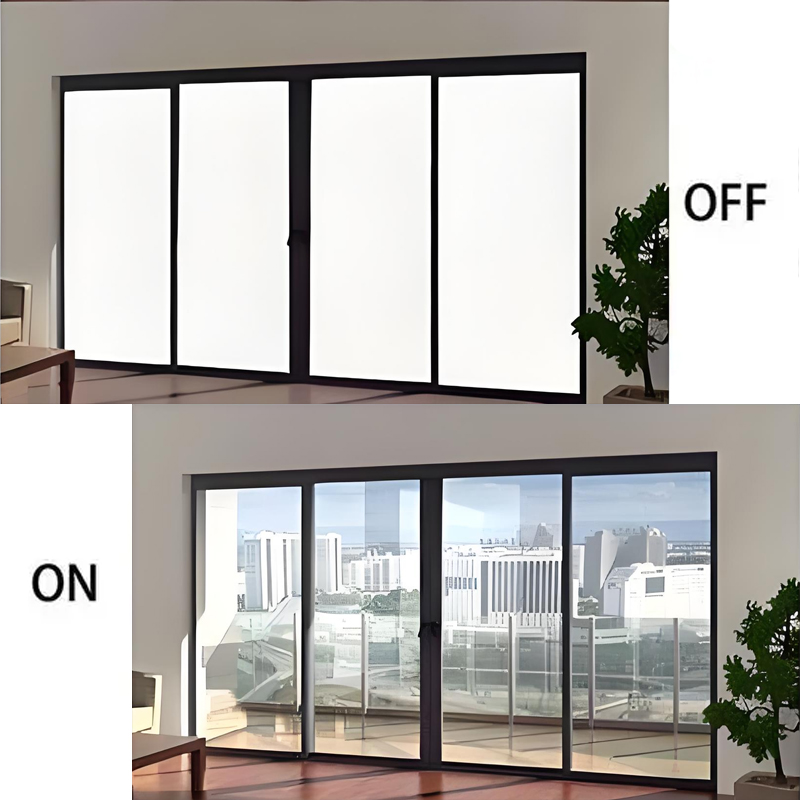
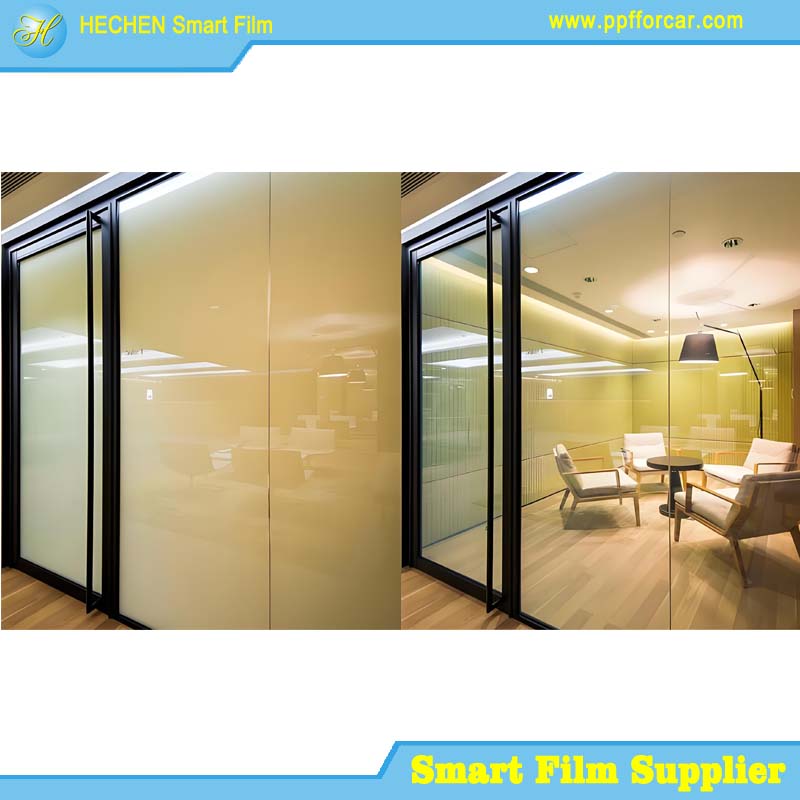
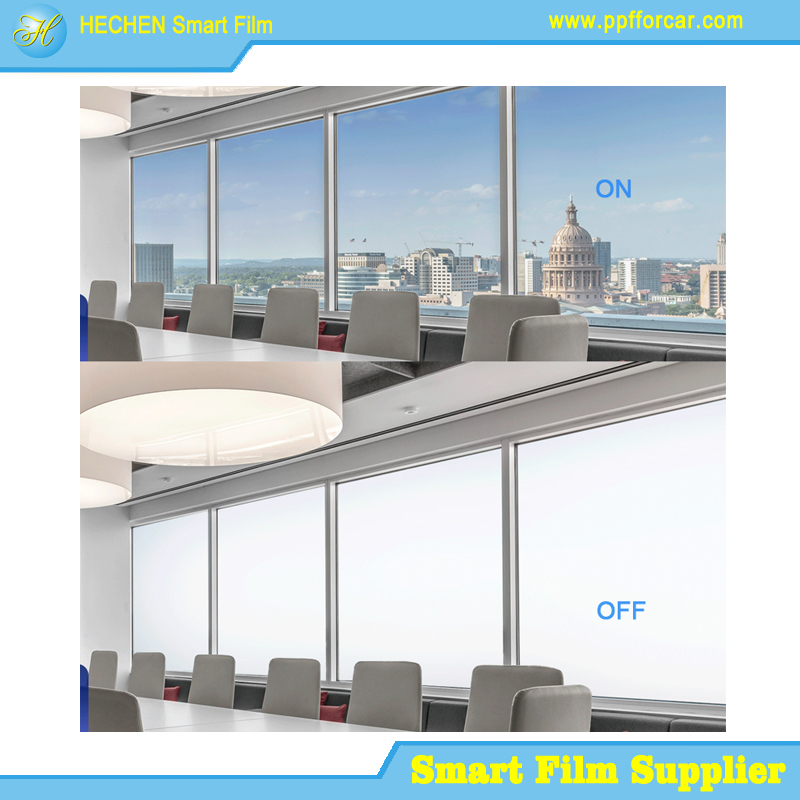
Privacy films are specialized coatings applied to glass surfaces to obscure visibility, reduce glare, or provide dynamic privacy control. Unlike traditional curtains or blinds, privacy films offer a sleek, low-maintenance solution that allows light to pass through while blocking unwanted views. They range from static films, such as frosted or tinted varieties, to advanced switchable films that change opacity with an electric current, like PDLC films.
These films serve multiple purposes: they enhance privacy in spaces like offices, bathrooms, or vehicles, reduce glare for occupant comfort, and can even block UV rays to protect interiors. Advanced privacy films, such as PDLC, offer instant opacity control, making them ideal for dynamic environments like conference rooms or medical facilities. Privacy film manufacturers design and produce these films to meet high standards for optical clarity, durability, and ease of application, tailoring solutions to specific industries and aesthetic preferences.
The Role of Privacy Film Manufacturers
Privacy film manufacturers are essential in advancing glass technology by developing films that provide seclusion, functionality, and aesthetic appeal. Their primary role is to innovate, produce, and distribute films that meet the diverse needs of residential, commercial, and automotive applications. This involves research and development (R&D) to create films with enhanced performance, such as faster switching speeds for smart films or improved durability for static films.
Manufacturers collaborate with architects, interior designers, automotive companies, and contractors to deliver customized solutions. For example, they may produce frosted films for office partitions or switchable PDLC films for luxury vehicles. Beyond production, manufacturers ensure product quality through rigorous testing, evaluating factors like adhesion strength, UV resistance, and optical performance.
Education and support are critical responsibilities. Manufacturers train installers and distributors on proper application techniques to ensure optimal performance, as improper installation can affect clarity or functionality. They also promote the benefits of privacy films—such as enhanced privacy, energy savings, and aesthetic versatility—to drive market adoption. Sustainability is a key focus, with manufacturers adopting eco-friendly materials and production processes to align with global environmental goals, positioning themselves as leaders in green technology.
The Manufacturing Process of Privacy Films
Producing privacy films is a complex process that combines advanced materials science with precision engineering. The manufacturing process varies depending on the film type but typically involves the following stages:
1. Material Selection: Privacy films are often made from polyester (PET) or other flexible substrates. For static films, materials like vinyl or dyes are used, while switchable films like PDLC require liquid crystal-polymer mixtures and conductive coatings, such as indium tin oxide (ITO). Manufacturers select high-quality materials to ensure clarity and durability.
2. Coating and Dispersion: For static privacy films, frosted or tinted coatings are applied to PET substrates using techniques like roll coating or screen printing. For PDLC films, liquid crystal droplets are dispersed in a polymer matrix using emulsification or phase separation. This step requires precise control to ensure uniform opacity and clarity. Advanced coating technologies, such as sputtering, are used for conductive layers in smart films.
3. Lamination: For switchable films, the active layer (e.g., liquid crystal mixture) is sandwiched between two conductive films. Static films may involve laminating multiple layers to enhance durability or add UV-blocking properties. Adhesive layers are often added for easy application to glass surfaces.
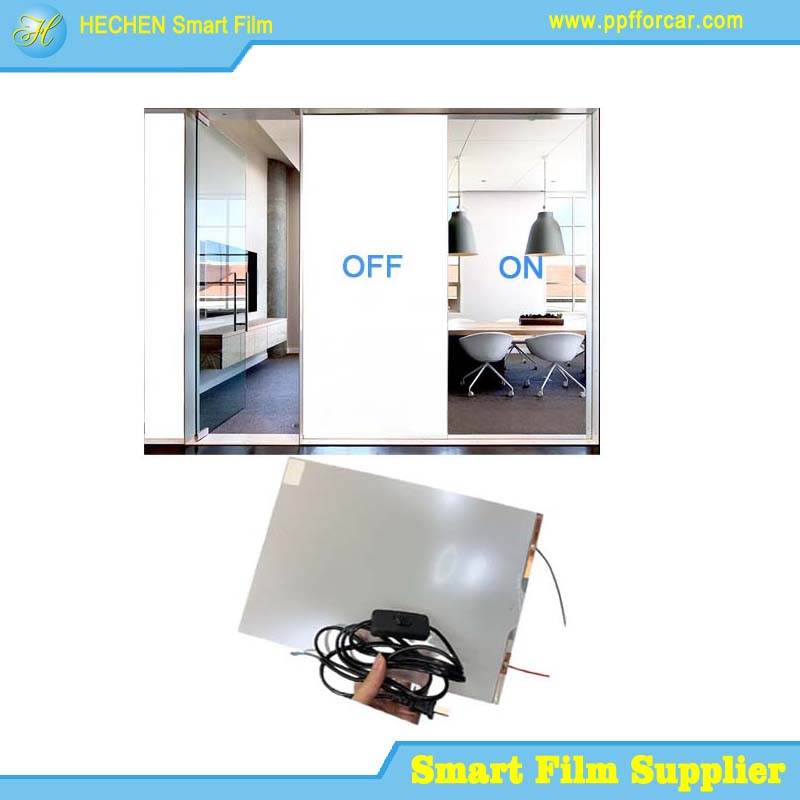
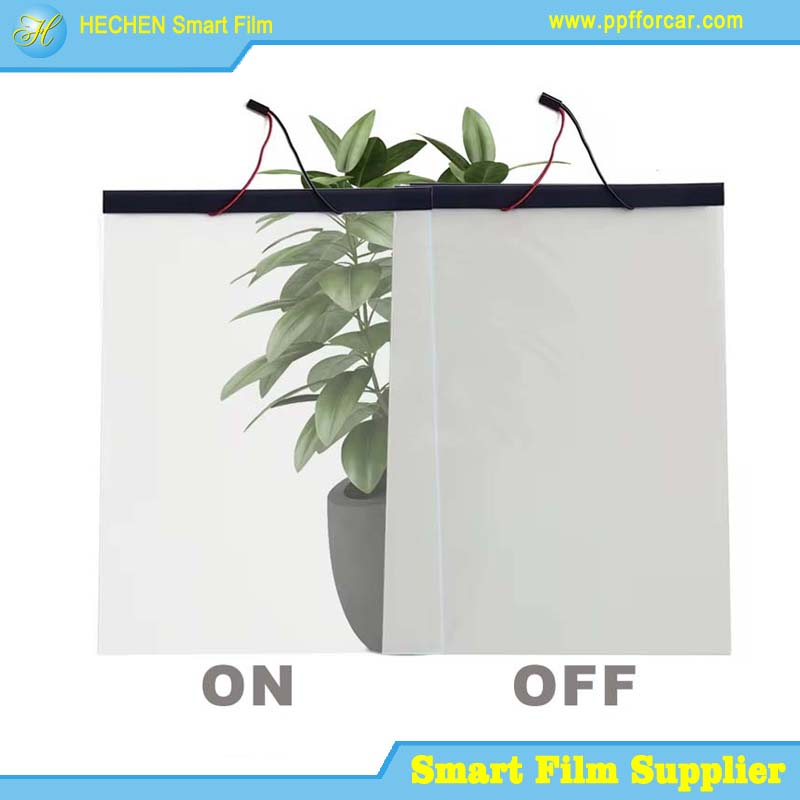
4. Electrical Integration (for Smart Films): For PDLC or other switchable films, manufacturers incorporate electrical components, such as busbars or wiring, to enable connection to power sources or control systems. This allows films to switch between opaque and transparent states.
5. Quality Control and Testing: Each batch undergoes rigorous testing to verify performance metrics like opacity, light transmission, UV resistance, and durability. Tests simulate real-world conditions, including UV exposure, temperature fluctuations, and humidity. Automated systems detect defects to ensure consistency.
6. Cutting and Packaging: Films are cut into rolls or sheets tailored to specific applications, such as large office windows or small vehicle panels. They are then packaged for distribution to installers, retailers, or end-users.
This process requires state-of-the-art facilities, skilled technicians, and stringent quality control to produce films that meet industry standards and customer expectations.
Types of Privacy Films
Privacy film manufacturers produce a variety of films, each designed for specific applications and performance needs. The main types include:
· Frosted Privacy Films: These films create a translucent, frosted appearance, obscuring visibility while allowing light transmission. They are popular in offices, bathrooms, and retail spaces for their aesthetic appeal and simplicity.
· Tinted Privacy Films: These films reduce visibility and glare by adding a darkened or colored tint. They are used in residential windows, vehicles, and commercial buildings to enhance privacy and reduce solar heat gain.
· Polymer Dispersed Liquid Crystal (PDLC) Films: These switchable films change from opaque to transparent with an electric current, offering dynamic privacy control. They are ideal for conference rooms, medical facilities, and luxury vehicles.
· Decorative Privacy Films: These films combine privacy with aesthetic designs, such as patterns, gradients, or logos. They are used in commercial and residential spaces to add style while maintaining seclusion.
· One-Way Privacy Films: These films allow visibility from one side while blocking it from the other, depending on lighting conditions. They are common in storefronts and security applications.
· Self-Adhesive Privacy Films: Designed for retrofit applications, these films can be applied to existing glass surfaces, making them cost-effective for upgrading windows in homes or offices.
Each type is engineered to meet specific needs, from static privacy to dynamic control, with manufacturers innovating to expand functionality and aesthetic options.
Technological Advancements in Privacy Film Manufacturing
The privacy film industry is driven by technological advancements that enhance performance, efficiency, and versatility. Manufacturers are leveraging cutting-edge innovations to meet growing market demands.
Switchable film technologies are a major focus. PDLC films, for instance, have seen improvements in switching speed and energy efficiency, with manufacturers developing low-voltage films that reduce power consumption. This makes them suitable for battery-powered systems or integration with smart home platforms.
Improved optical clarity is another advancement. For PDLC films, manufacturers are refining liquid crystal formulations to minimize haze in the transparent state, ensuring crystal-clear visibility for high-end applications. Frosted and tinted films are also being enhanced with anti-glare and UV-blocking properties to improve functionality.
Flexible and large-format films are expanding applications. Advances in roll-to-roll manufacturing allow the production of films for curved surfaces or large glass panels, enabling use in modern architecture, vehicle windows, or decorative installations.
Integration with smart systems is transforming functionality. Manufacturers are developing privacy films compatible with IoT platforms, allowing users to control opacity via smartphone apps, voice assistants, or sensors. Some films incorporate hybrid technologies, combining PDLC with tinted or decorative elements for enhanced versatility.
Sustainability innovations are critical. Manufacturers are adopting eco-friendly materials, such as recyclable PET and non-toxic adhesives, and implementing energy-efficient production processes. Some are exploring biodegradable films to address end-of-life disposal concerns, aligning with circular economy principles.
Automation and AI are streamlining production. Automated coating and lamination systems ensure precision, while AI-driven quality control detects defects in real-time, reducing waste and improving consistency. Digital simulation tools allow manufacturers to design films tailored to specific climates or design needs.
Market Trends and Industry Outlook
The global privacy film market is experiencing steady growth, driven by increasing demand for privacy, energy efficiency, and aesthetic versatility. Industry reports project a compound annual growth rate (CAGR) of 8-12% through the next decade, fueled by applications in architecture, automotive, healthcare, and retail.
Commercial and residential buildings are a key driver, with architects and homeowners adopting privacy films for office partitions, bathroom windows, and residential privacy needs. The rise of open-plan offices and urban living is boosting demand for films that balance privacy with natural light.
The automotive sector is another growth area, with privacy films used in windows and sunroofs, particularly in luxury and electric vehicles. Their ability to reduce glare and enhance seclusion aligns with consumer preferences for comfort and style.
Healthcare and retail applications are expanding, with privacy films used in hospitals for patient privacy and in storefronts for dynamic displays. The rise of retrofit solutions, such as self-adhesive films, is making privacy films accessible for upgrading existing glass surfaces.
Challenges include competition from low-cost manufacturers and the need for skilled installation, but leading manufacturers are addressing these through quality differentiation and training programs. The integration of smart privacy films with IoT and smart city initiatives is expected to further drive market growth.
Sustainability and Environmental Impact
Privacy film manufacturers are prioritizing sustainability, recognizing their role in reducing environmental impact. By reducing glare and heat gain, privacy films lower reliance on air conditioning and artificial lighting, contributing to energy savings in buildings and vehicles. Some manufacturers estimate energy reductions of up to 20%, supporting greener urban environments.
In production, companies are adopting eco-friendly practices, such as using recyclable materials, reducing solvent use, and implementing energy-efficient manufacturing processes. Some are exploring biodegradable privacy films to minimize environmental impact at the end of the product’s life cycle.
By enhancing energy efficiency and promoting sustainable design, privacy film manufacturers are supporting global efforts to combat climate change, making their products a key component of eco-conscious architecture and transportation.
Conclusion
Privacy film manufacturers are driving innovation in glass technology, delivering solutions that enhance seclusion, functionality, and aesthetics. Through advanced manufacturing processes, cutting-edge technologies, and a commitment to sustainability, they are transforming industries from architecture to automotive. As demand for privacy-focused, energy-efficient, and customizable solutions grows, these manufacturers are well-positioned to lead the market, offering films that combine performance with style. Their focus on sustainability, coupled with advancements in smart films, optical clarity, and IoT integration, ensures that privacy films will play a pivotal role in shaping a more private, efficient, and eco-friendly future. By continuing to innovate and educate the market, privacy film manufacturers are not only meeting today’s needs but also paving the way for a new era of intelligent and sustainable design.
For more about how to find the right privacy film manufacturer or supplier for your product, you can pay a visit to Hechen PDLC Smart Film Manufacturers for more info.