2025 Switchable Privacy Glass Installation Cost: A Complete Breakdown, with Clear Cost-Effectiveness
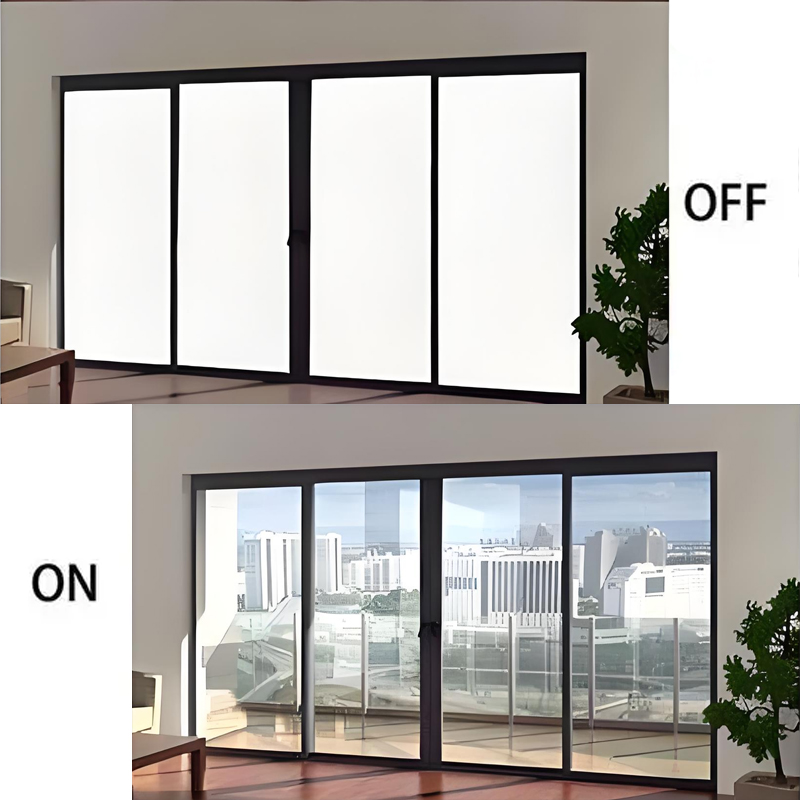
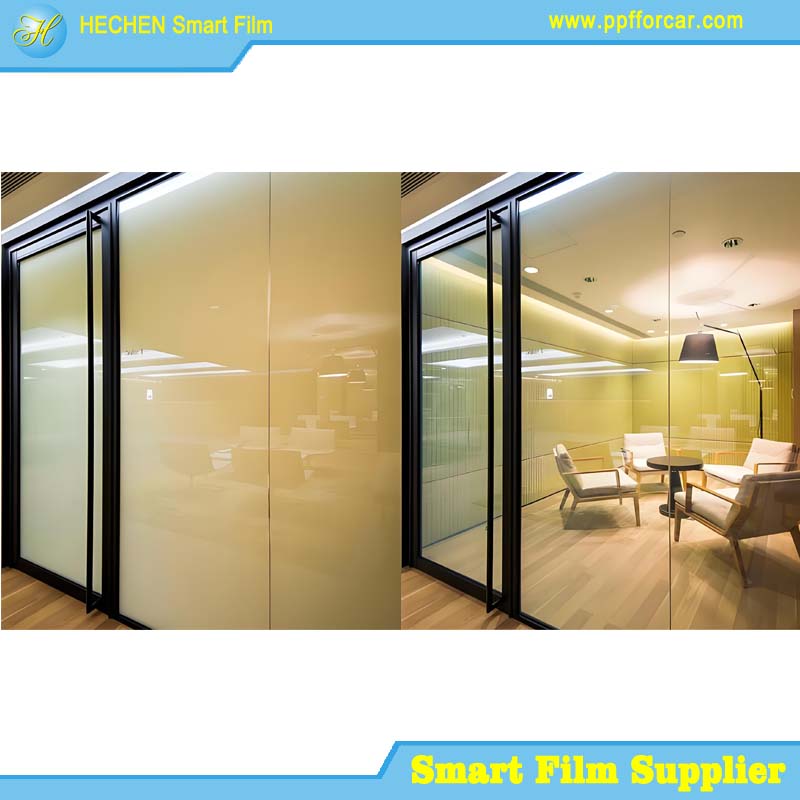
In the rapidly evolving world of smart home and commercial building technologies, switchable privacy glass—also known as smart glass—stands out as a game-changer for modern architecture and interior design. This innovative material allows users to seamlessly transition glass surfaces from transparent to opaque at the flick of a switch, voice command, or even automated schedule, offering unparalleled control over privacy, light, and energy efficiency. As we navigate 2025, the adoption of switchable privacy glass has surged, driven by a post-pandemic emphasis on flexible workspaces, sustainable building practices, and enhanced personal security.
But with great innovation comes the question of affordability. Installation costs for switchable privacy glass can vary widely, typically ranging from $70 to $150 per square foot when fully installed, depending on the type, scale, and complexity of the project. For homeowners retrofitting a single bathroom window or office managers outfitting an entire conference room, understanding these costs is crucial to making informed decisions. This article delves deep into the economics of switchable privacy glass in 2025, exploring everything from material types and influencing factors to a detailed cost breakdown, installation processes, and future projections. By the end, you'll have a comprehensive guide to budgeting for this transformative technology, backed by the latest market data and expert insights.
The global smart glass market is booming, projected to grow from approximately $6.42 billion in 2025 to $10.42 billion by 2030 at a compound annual growth rate (CAGR) of 10.2%. This expansion is fueled by advancements in manufacturing that promise slight cost reductions over the next few years, making switchable privacy glass more accessible than ever. Whether you're envisioning a sleek, privacy-on-demand shower enclosure or energy-saving office partitions, grasping the full spectrum of costs will empower you to invest wisely.
 What is Switchable Privacy Glass?
The concept isn't entirely new—early prototypes date back to the 1980s—but 2025 marks a maturation point. Integration with smart home ecosystems like Amazon Alexa, Google Home, and Apple HomeKit is now standard, allowing voice or app control. Moreover, advancements in photovoltaic integration mean some panels can self-power during daylight hours, reducing operational costs to near zero.
For residential applications, switchable privacy glass shines in bathrooms, bedrooms, and home offices, where natural light is desired but seclusion is paramount. In commercial settings, it's revolutionizing open-plan offices, hotels, and healthcare facilities by enabling fluid reconfiguration of spaces. Unlike static alternatives like etched glass or roller shades, switchable options eliminate maintenance hassles—no dusting blinds or replacing worn fabrics—and enhance aesthetics with a minimalist, high-tech vibe.
Energy efficiency is another hallmark. By modulating light transmission, these glasses can reduce solar heat gain by up to 90%, slashing cooling costs in warm climates. In 2025, with global pushes toward net-zero buildings, switchable privacy glass qualifies for green building certifications like LEED, potentially unlocking tax incentives that offset installation expenses.
However, the technology's sophistication comes at a premium. While traditional glass might cost $10-15 per square foot, switchable variants demand specialized materials and labor, pushing prices higher. Yet, as production scales—thanks to giants like Saint-Gobain and View Inc.—economies of scale are beginning to temper these figures. Understanding the nuances of how it works sets the stage for appreciating why costs fluctuate and how to optimize them.
Switchable privacy glass isn't a monolith; several technologies underpin its functionality, each with distinct performance profiles, aesthetics, and price tags. In 2025, the three dominant types—Polymer Dispersed Liquid Crystal (PDLC), Suspended Particle Device (SPD), and Electrochromic—cater to varied needs, influencing installation costs based on manufacturing complexity and energy demands.
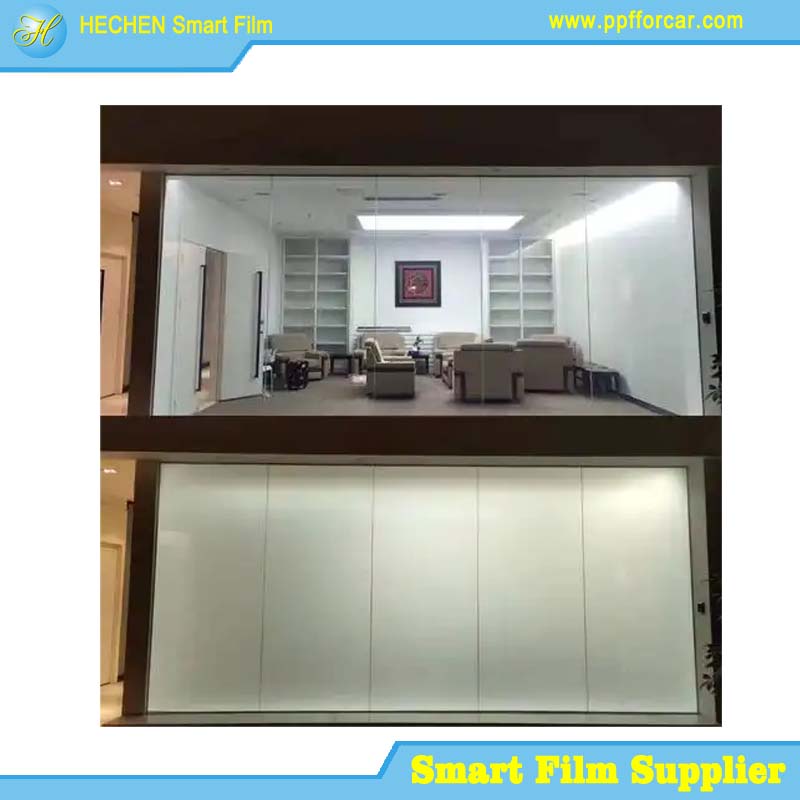
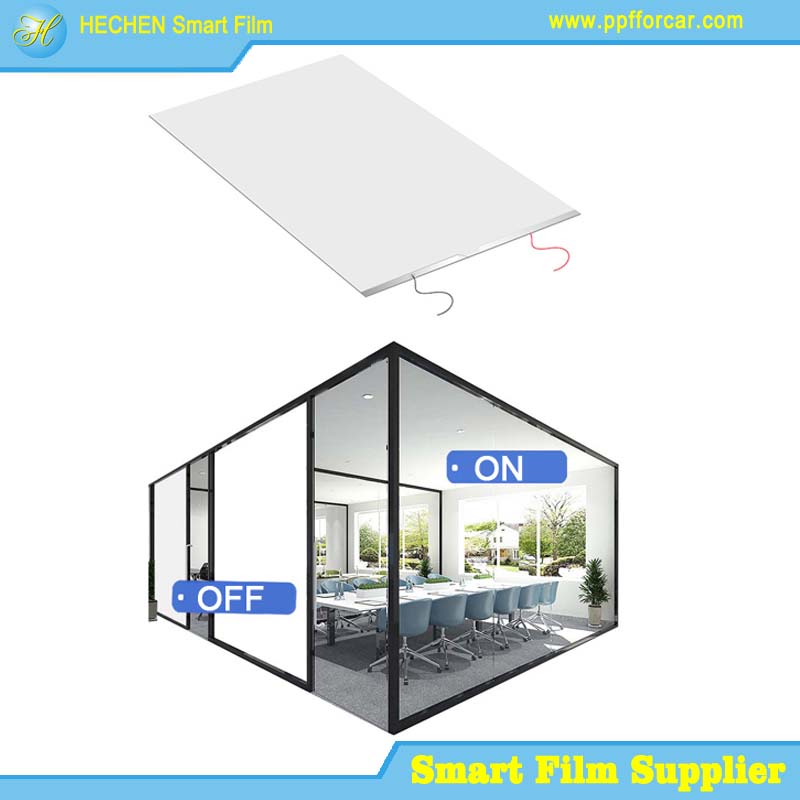
PDLC glass, the most common for privacy applications, uses liquid crystals dispersed in a polymer matrix. When unpowered, the crystals are randomly oriented, scattering light for opacity; voltage aligns them for transparency. It's prized for its rapid switching (under 1 millisecond) and high opacity levels, ideal for conference rooms or medical partitions. Costs for PDLC typically range from $85 to $130 per square foot installed, reflecting its straightforward film-based production. Bulk orders over 100 square feet often see discounts up to 15%, bringing per-unit prices down.
SPD technology, conversely, suspends rod-like particles in a liquid between glass panes. In the off state, particles absorb light, darkening the glass to a deep tint; power aligns them to transmit light. SPD excels in glare reduction and UV blocking, making it suitable for automotive sunroofs or sunny facades. Its versatility in tint levels (from light to dark) commands a mid-range price of $50 to $150 per square foot, slightly edging out PDLC for larger projects due to enhanced durability. In 2025, SPD's integration with IoT sensors for auto-tinting has boosted its popularity, though custom wiring adds 10-20% to costs.
Electrochromic glass shifts ions between layers to alter tint, mimicking sunglasses. It transitions slowly (seconds to minutes) but offers precise control over light and heat, reducing HVAC loads by 20-30%. Popular in high-end skyscrapers, electrochromic costs $50 to $100 per square foot, benefiting from thinner profiles that ease retrofits. However, its slower response and higher voltage needs can inflate electrical integration expenses.
 Benefits and Applications
Beyond aesthetics, switchable privacy glass delivers tangible ROI through privacy, efficiency, and versatility. Privacy is instantaneous—no more awkward curtain adjustments—fostering wellness in homes and productivity in offices. Studies show 70% of workers prefer adjustable spaces, reducing stress and boosting collaboration.
Energy-wise, it cuts lighting needs by harnessing daylight, with potential 15-25% reductions in utility bills. In 2025's climate-conscious era, this aligns with rebates under the Inflation Reduction Act, amortizing costs over 3-5 years.
Applications span sectors. Residentially, it's transforming en-suite bathrooms and glass-walled studies. Commercially, hotels use it for modular suites, hospitals for patient rooms minimizing infection risks via touchless controls. Automotive integrations, like SPD sunroofs, are projected to drive 20% of market growth.
Drawbacks? Power dependency means backup batteries for outages, adding $500-2000. Yet, benefits outweigh, with payback periods shrinking as costs dip 5-10% annually.
Installation costs for switchable privacy glass in 2025 aren't one-size-fits-all; myriad variables dictate the final bill, often comprising 30-50% of total expenses. Material type is paramount: PDLC's film simplicity keeps costs lower than SPD's particle suspension, which requires precision lamination.
Project scale matters hugely. Small retrofits (under 20 sq ft) incur setup fees of $500-1000, inflating per-square-foot rates to $150+. Larger installs benefit from economies, dropping to $70/sq ft for 500+ sq ft. Customization—curved panels or integrated LEDs—adds 20-40%, as does thickness for structural needs.
Location plays a role: urban areas like New York command 15-25% premiums for labor ($100-150/hour) versus rural spots ($75-100). Building codes influence too; seismic zones demand reinforced frames, hiking costs 10%.
Electrical integration is a hidden driver. Wiring to switches or apps costs $2-5 per sq ft, more for zoned controls. Retrofitting existing frames saves 20% over new builds but risks compatibility issues, potentially doubling labor.
Supply chain factors persist: 2025's stabilized post-chip-shortage market keeps prices steady, but tariffs on imported components (e.g., from Asia) could nudge 5% hikes. Installer expertise varies—certified pros ensure warranties, but DIY kits for film (under $50/sq ft) void them.
Materials: $4,000-6,500 ($80-130/sq ft). PDLC film: $85/sq ft; full glass panels: $100+.
Labor: $1,000-2,500. Prep, cutting, sealing: 4-8 hours at $100/hour.
Electrical: $500-1,000. Wiring, transformers (12-48V DC).
Misc: $250-500. Permits, transport.
Total: $5,750-10,500 ($115-210/sq ft), aligning with 2025 averages. Commercial scales down: 200 sq ft office partition: $14,000-25,000 ($70-125/sq ft) with bulk savings.
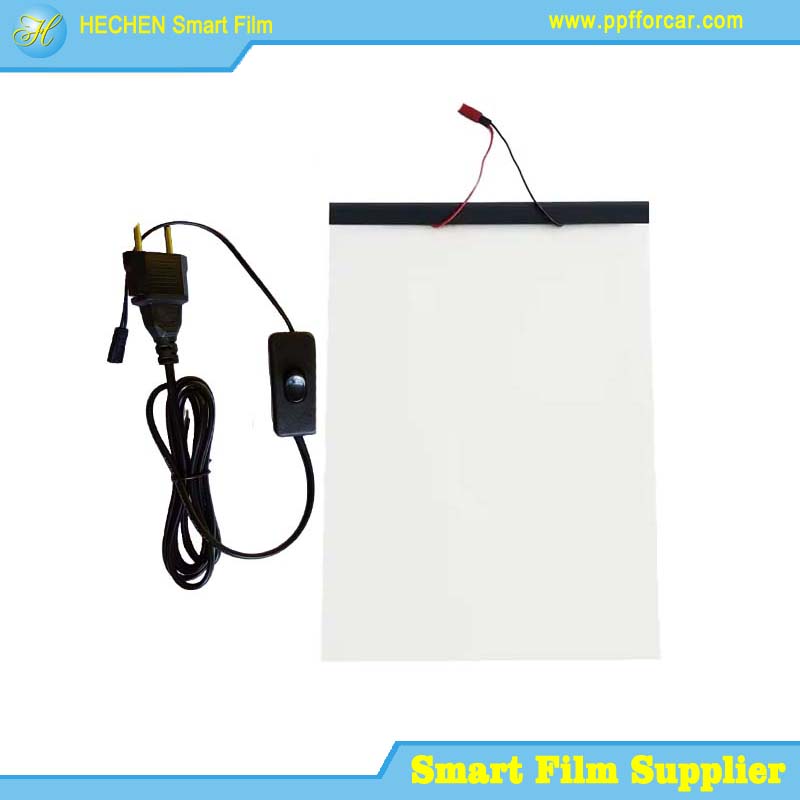
Smart film alternatives slash to $25-55/sq ft, ideal for renters—apply to existing glass, self-adhesive. Projections indicate 5% deflation by year-end, per market analyses.
Conclusion
Switchable privacy glass in 2025 blends luxury with practicality, with costs from $70-150/sq ft yielding long-term value. Weigh factors, shop smart, and embrace the future of adaptive living.For more about the switchable privacy glass installation cost in 2025, you can pay a visit to Hechen PDLC Smart Film Manufacturers for more info.