How Does PDLC Smart Film Work in Cars?
As automotive technology continues evolving, smart glass solutions are becoming one of the most exciting innovations in the industry. Among them, PDLC smart film for cars has gained significant attention for its ability to instantly switch vehicle windows from transparent to opaque.
From luxury sedans and executive SUVs to commercial vehicles and electric cars, more manufacturers and customization companies are adopting PDLC film technology to improve privacy, comfort, and vehicle aesthetics.
But many buyers still ask:
How does PDLC smart film work?
What is the smart film working principle?
How does transparency switching happen?
Why does voltage control change the glass appearance?
In this comprehensive guide, we’ll explain the complete smart film working principle, including the liquid crystal structure, ON/OFF states, electrical operation, and why this technology is transforming the future of automotive glass.
What Is PDLC Smart Film?
PDLC stands for Polymer Dispersed Liquid Crystal.
It is a type of intelligent switchable film that changes its transparency when electrical voltage is applied.
Unlike traditional car tint, which remains permanently dark, PDLC smart film for cars provides dynamic privacy control. Drivers and passengers can instantly switch between:
Transparent mode
Frosted privacy mode
This capability makes PDLC film technology highly popular in:
Luxury vehicles
VIP transportation
Electric cars
Smart mobility systems
Commercial automotive projects
The Core Smart Film Working Principle
To understand how PDLC smart film works, it’s important to first understand the internal structure of the film.
PDLC smart film contains:
Liquid crystal molecules
Polymer matrix materials
Conductive ITO layers
PET protective films
The key component is the liquid crystal layer.
Liquid Crystal Explanation
Liquid crystals are unique materials that behave between solid and liquid states.
Their molecular alignment changes when electrical voltage is applied.
This molecular movement is the foundation of the smart film working principle.
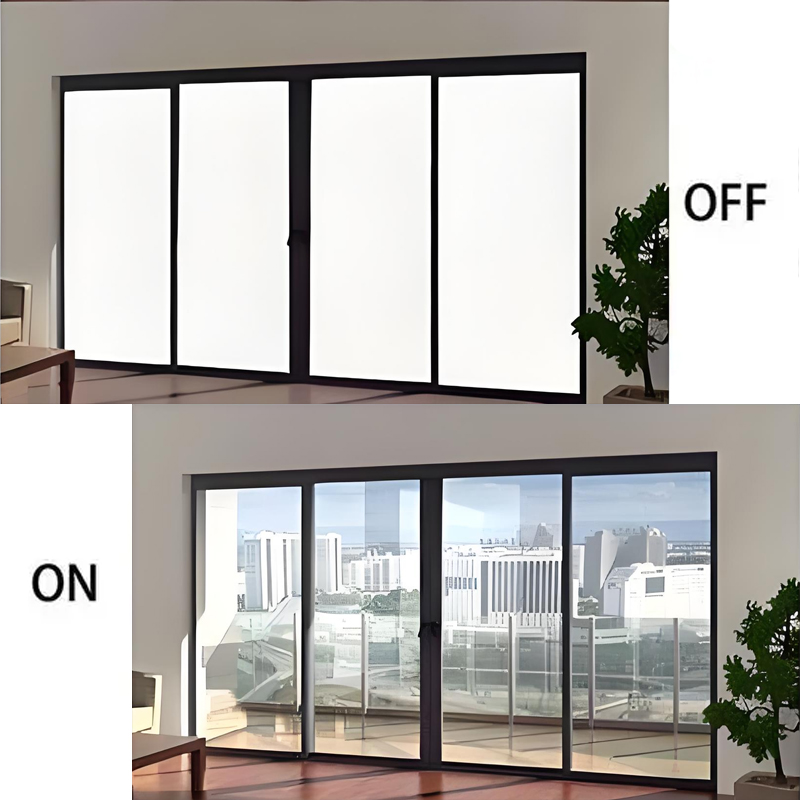
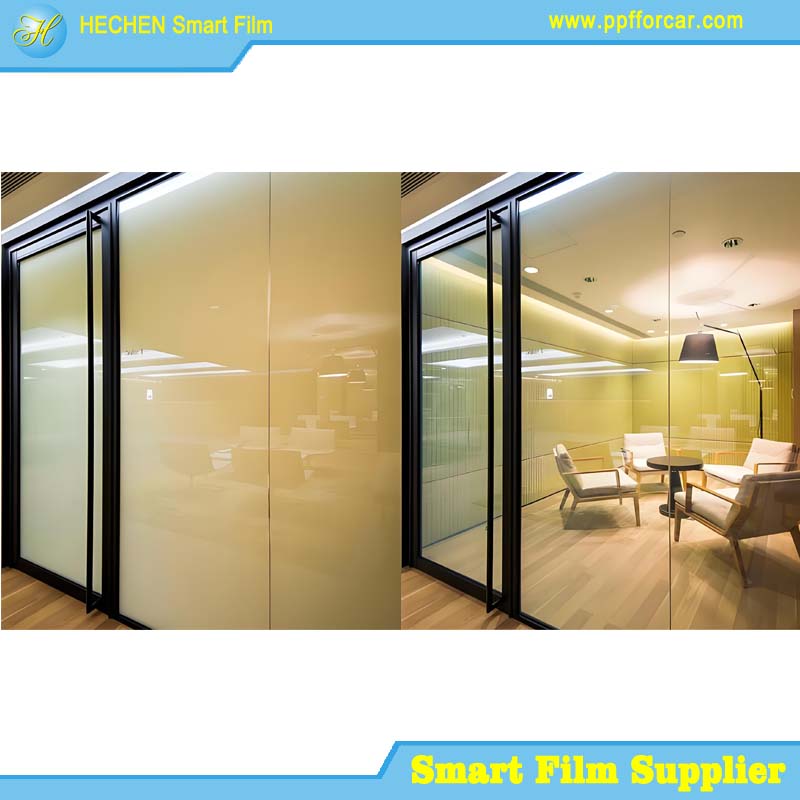
In the OFF State
When no power is applied:
Liquid crystal molecules remain randomly scattered
Light passing through the film is diffused
The glass appears frosted or opaque
This creates privacy because people cannot clearly see through the glass.
In the ON State
When voltage is applied:
Liquid crystal molecules align in the same direction
Light passes directly through the film
The glass becomes transparent
This process happens almost instantly.
Understanding Transparency Switching
The most impressive feature of PDLC smart film for cars is transparency switching.
Transparency switching refers to the film’s ability to alternate between:
Clear visibility
Privacy mode
This occurs because voltage changes the orientation of liquid crystal molecules.
Why Transparency Changes
Light behaves differently depending on molecular alignment.
Random Alignment
Light scatters in multiple directions.
Result:
Opaque appearance
Privacy effect
Uniform Alignment
Light travels straight through.
Result:
Clear visibility
Transparent glass
This is why PDLC film technology is often called:
Switchable smart film
Electric privacy film
Intelligent glass film
Voltage Control in Automotive PDLC Film
Voltage control is one of the most important parts of the system.
Automotive smart film operates using electrical power supplied by the vehicle.
How Voltage Control Works
The vehicle’s DC power is converted through a transformer into the AC voltage required by the PDLC film.
The system generally includes:
Power transformer
Wiring harness
Conductive busbars
Smart control switch
Once voltage reaches the liquid crystal layer, molecular alignment changes immediately.
Typical Switching Process
| Voltage State | Liquid Crystal Position | Film Appearance |
|---|---|---|
| No Voltage | Random | Opaque |
| Voltage Applied | Aligned | Transparent |
Fast Response Speed
One major advantage of high-quality PDLC film technology is extremely fast switching speed.
Most automotive-grade films switch within milliseconds.
Fast response improves:
User experience
Luxury feel
Smart functionality
Structure of PDLC Smart Film for Cars
A standard automotive PDLC film structure includes multiple layers.
1. PET Protective Layer
Provides:
Surface protection
Flexibility
Durability
2. Conductive ITO Layer
ITO (Indium Tin Oxide) conducts electricity across the film.
This layer distributes voltage evenly.
3. PDLC Liquid Crystal Layer
This is the functional core where:
Liquid crystal alignment occurs
Transparency switching happens
4. Adhesive Layer
The adhesive bonds the film securely to automotive glass.
Why Cars Are Using PDLC Film Technology
The automotive industry is rapidly adopting smart glass technologies because drivers increasingly demand:
Privacy
Comfort
Luxury
Intelligent systems
Benefits of PDLC Smart Film for Cars
1. Instant Privacy
Passengers can instantly control visibility.
This is highly valuable for:
VIP transportation
Executive vehicles
Celebrity protection
Luxury vans
2. Advanced Vehicle Appearance
PDLC smart film for cars creates a futuristic high-tech appearance that traditional tint cannot achieve.
3. UV and Heat Reduction
High-quality smart film can block:
UV radiation
Infrared heat
Solar glare
This improves cabin comfort and protects interiors.
4. Smart Vehicle Integration
Modern vehicles can integrate smart film with:
Touch controls
Mobile apps
Voice assistants
Smart vehicle systems
ON/OFF State Explained in Detail
Understanding the ON/OFF state is essential to understanding how PDLC smart film works.
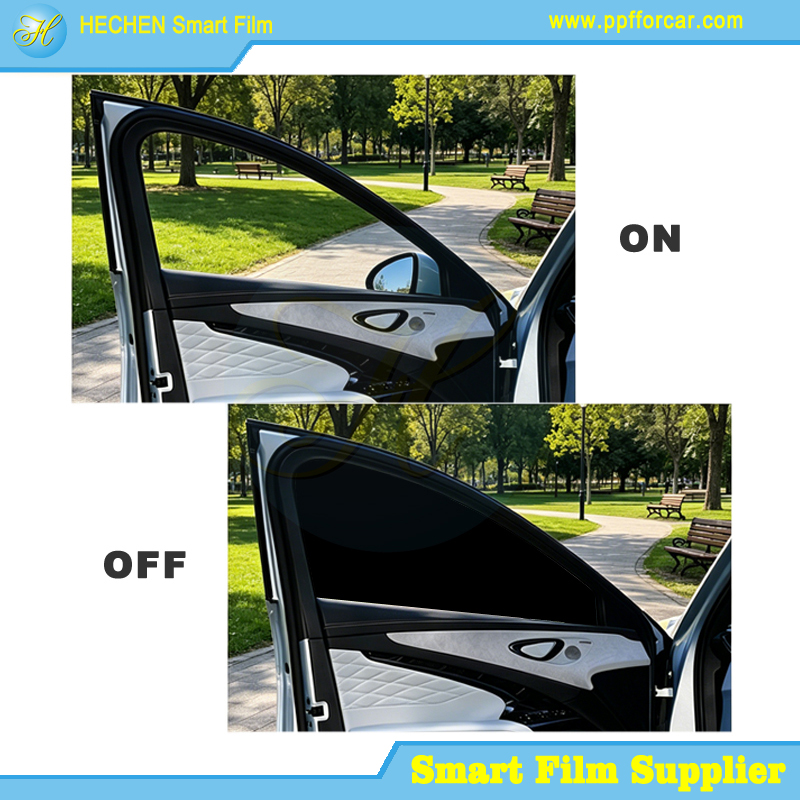
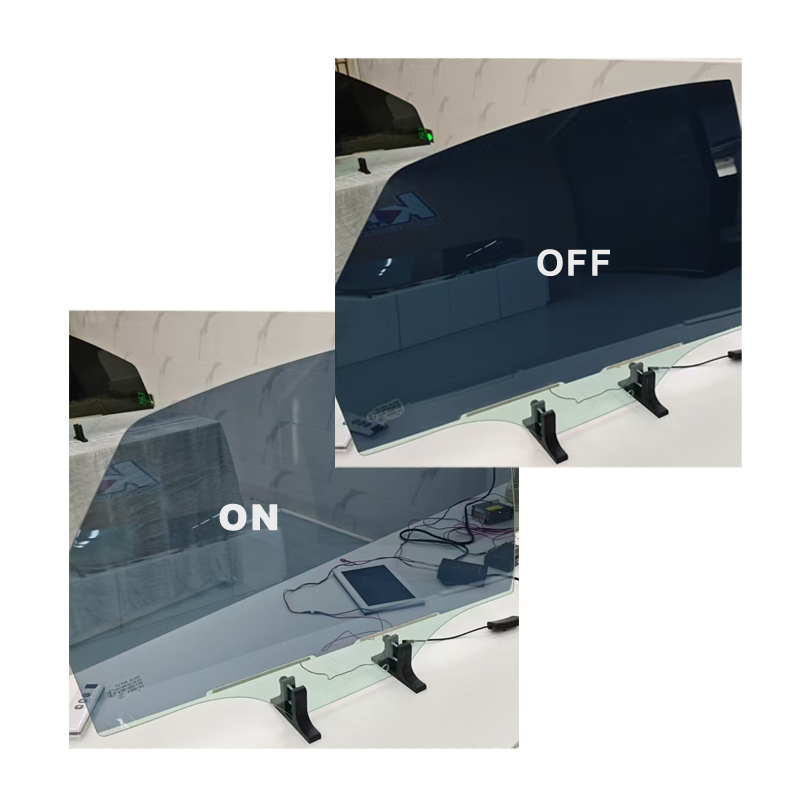
OFF State (Privacy Mode)
When power is OFF:
Liquid crystals scatter randomly
Light diffuses
Visibility decreases
Advantages:
Privacy protection
Elegant frosted appearance
Reduced visibility from outside
ON State (Transparent Mode)
When power is ON:
Molecules align uniformly
Light transmission increases
Glass becomes clear
Advantages:
Normal visibility
Open interior feeling
Better driving visibility
Applications of Automotive PDLC Film
The use of smart film working principle technology extends across many automotive sectors.
Luxury Sedans
Premium sedans use PDLC smart film for:
Rear passenger privacy
Luxury appearance
Executive transportation
Electric Vehicles
EV manufacturers increasingly use smart glass to improve:
Energy efficiency
Thermal control
Intelligent vehicle design
VIP Vans and Limousines
Switchable privacy is highly popular in:
Chauffeur vehicles
Business transportation
Luxury tourism fleets
Recreational Vehicles (RVs)
RVs benefit from:
Flexible privacy control
Solar heat reduction
Smart interior environments
Commercial Automotive Projects
Commercial applications include:
Mobile offices
Conference vehicles
Smart transportation concepts
Important Factors Affecting PDLC Film Performance
Not all smart films are the same.
High-quality PDLC film technology depends on several critical factors.
1. Liquid Crystal Quality
Premium liquid crystals provide:
Faster switching
Better transparency
Improved durability
2. Conductive Layer Stability
Stable ITO layers ensure:
Uniform voltage distribution
Consistent switching
Longer lifespan
3. Transformer Quality
Reliable transformers improve:
Voltage stability
Switching speed
System safety
4. Installation Quality
Professional installation prevents:
Edge peeling
Electrical problems
Air bubbles
Uneven opacity
How to Choose a Reliable Automotive Smart Film Supplier
If you are sourcing PDLC smart film for cars, supplier quality is extremely important.
Look for Automotive-Grade Products
Reliable suppliers provide:
Heat-resistant materials
UV-stable film
Automotive-certified components
Ask About OEM Support
Professional manufacturers often provide:
Custom sizing
OEM branding
Wiring solutions
Installation support
Evaluate Technical Support
A strong supplier should offer:
Wiring diagrams
Installation training
Technical consultation
After-sales service
Why the Automotive Smart Film Market Is Growing
The demand for intelligent automotive technologies is increasing worldwide.
Consumers increasingly prefer:
Smart mobility
Luxury customization
Intelligent privacy systems
Advanced vehicle electronics
As a result, PDLC smart film technology is becoming a major trend in:
Automotive modification
Smart transportation
Premium vehicle upgrades
Frequently Asked Questions
How does PDLC smart film work?
PDLC smart film works by using liquid crystal molecules that change alignment when electrical voltage is applied, allowing the film to switch between opaque and transparent states.
What is the smart film working principle?
The smart film working principle is based on voltage-controlled liquid crystal alignment that changes light transmission through the film.
What happens in the OFF state?
In the OFF state, liquid crystals scatter randomly, diffusing light and creating an opaque appearance.
What happens in the ON state?
In the ON state, liquid crystals align uniformly, allowing light to pass through and making the glass transparent.
Does PDLC smart film consume electricity constantly?
The film consumes power mainly while maintaining transparency.
Can automotive PDLC film block UV rays?
Yes. Most high-quality PDLC films provide excellent UV protection.
Is PDLC film suitable for electric vehicles?
Yes. Smart film is increasingly popular in EVs because it improves energy efficiency and supports intelligent vehicle design.
Final Thoughts
Understanding how PDLC smart film works helps explain why this technology is rapidly transforming the automotive industry.
By combining:
Liquid crystal science
Voltage control
Transparency switching
Intelligent electronics
PDLC film technology delivers a new generation of smart automotive privacy solutions.
Compared with traditional tint, PDLC smart film for cars offers:
Dynamic privacy
Luxury aesthetics
Smart integration
Advanced passenger comfort
Whether you are an automotive distributor, vehicle customization company, installer, or project contractor, investing in high-quality automotive smart film solutions can create significant business opportunities.