Architectural Trends: Integrating PDLC Smart Film in Modern Design
Architecture has perpetually been a dialogue between space and boundary, light and mass, privacy and exposure. In the 21st century, this dialogue is becoming dynamic, responsive, and intelligent. At the forefront of this revolution is Polymer Dispersed Liquid Crystal (PDLC) smart film, a transformative material challenging our most fundamental architectural element: the window. More than just a technological novelty, PDLC film is emerging as a cornerstone of modern design, enabling architects to create buildings that are more adaptive, sustainable, and experientially rich. This article delves into the technical underpinnings, explores its multifaceted applications, and examines how PDLC smart film is reshaping architectural paradigms.
Demystifying the Technology: How PDLC Smart Film Works
At its core, PDLC smart film is a composite laminate that transitions between transparent and opaque states at the command of an electrical current. Understanding its basic construction is key to appreciating its architectural potential.
The Composite Structure:
A typical PDLC film consists of a thin layer of polymer matrix (often PVB or PET) embedded with microscopic droplets of liquid crystals. This active layer is sandwiched between two transparent conductive layers, usually made of Indium Tin Oxide (ITO) or a silver nanowire-based alternative. The entire assembly is then laminated between two layers of glass or rigid PET, creating a durable, insulated glass unit (IGU).
The Science of Switching:
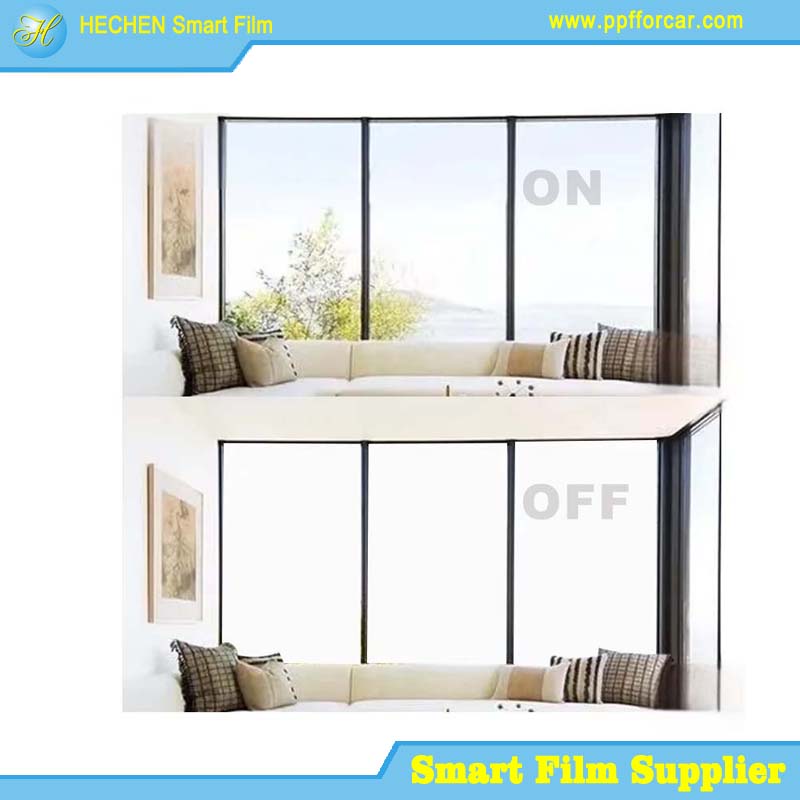
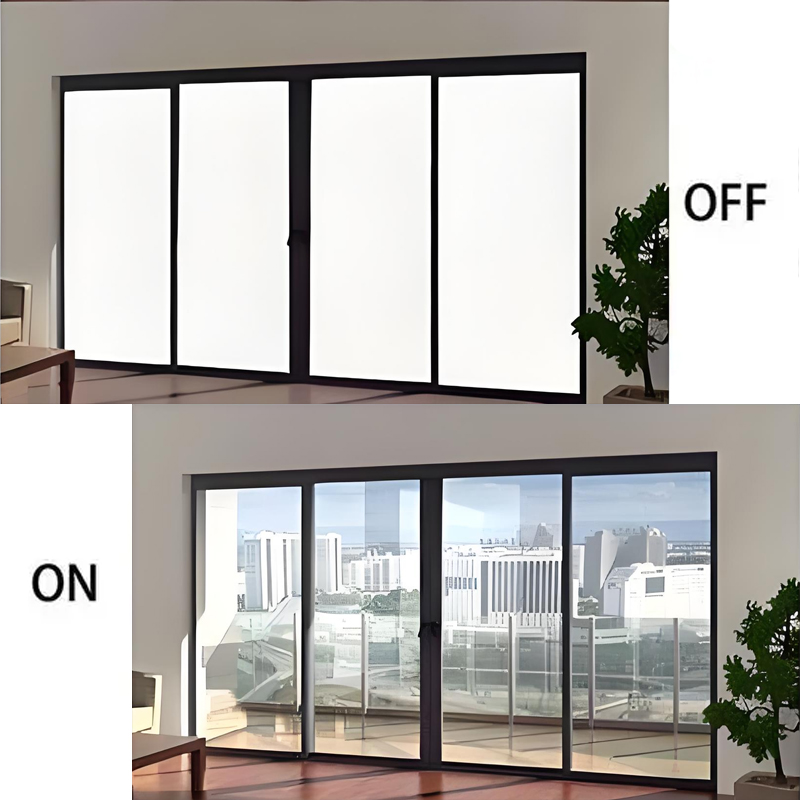
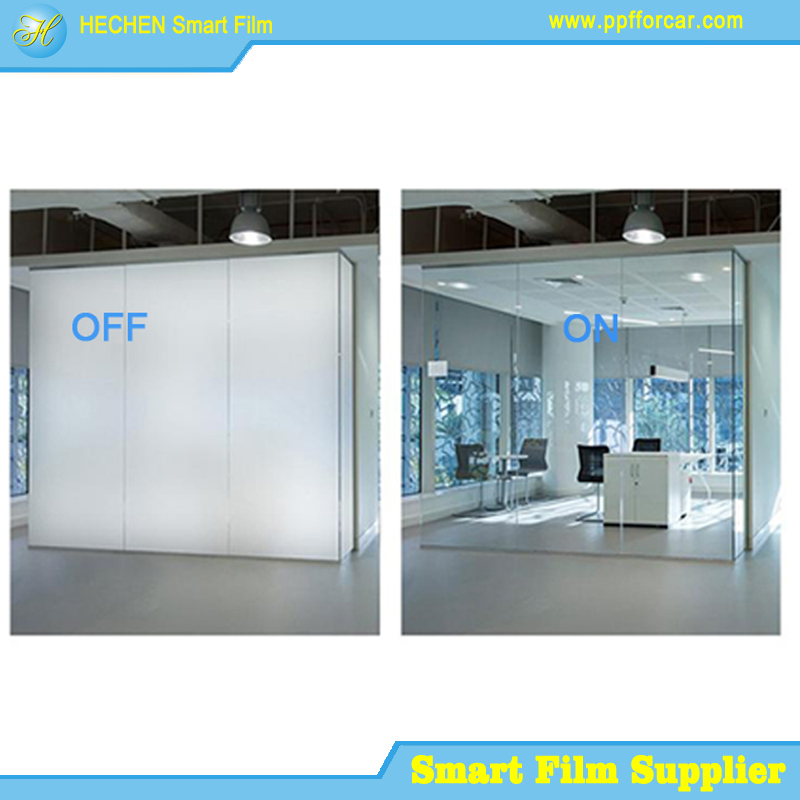
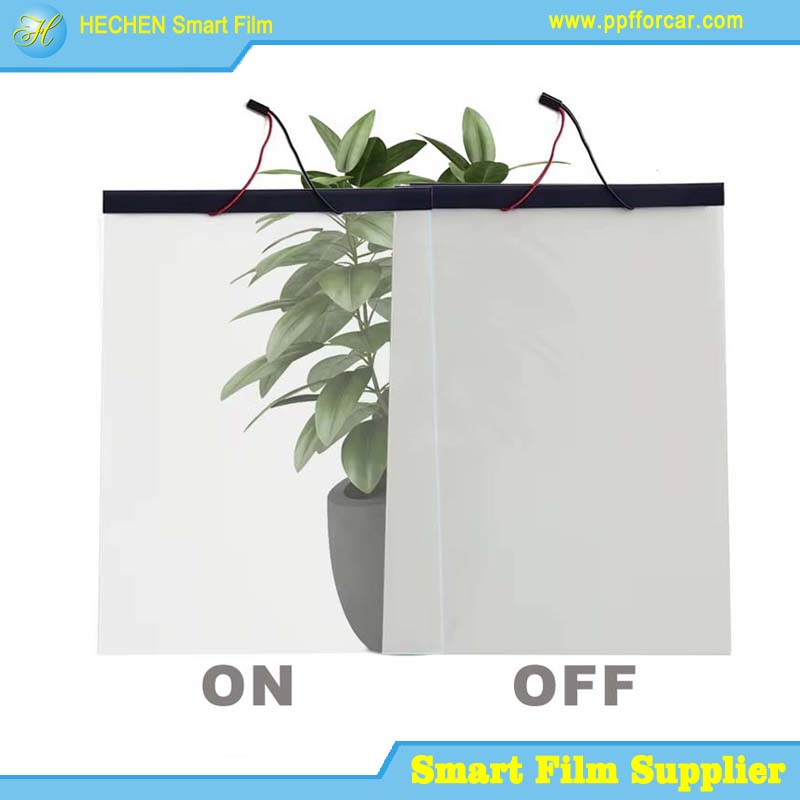
In the "Off" State (Opaque/Translucent): When no voltage is applied, the liquid crystal molecules within the polymer matrix are randomly oriented. They scatter incoming light in all directions, creating a frosted, milky appearance that provides visual privacy while still transmitting diffuse natural light.
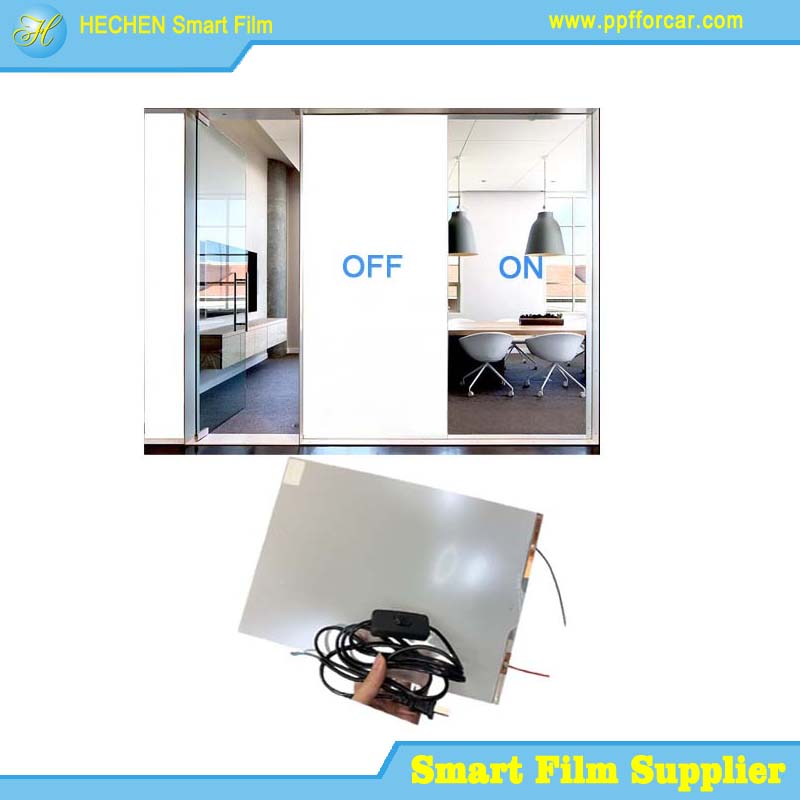
In the "On" State (Transparent): Upon application of a low-voltage AC current (typically 24V-110V AC), the electric field aligns the liquid crystal molecules in parallel. This ordered alignment allows light to pass through with minimal scattering, resulting in a clear, transparent view. The switching is instantaneous, taking mere milliseconds.
This binary control of light and visibility, achieved without moving parts, blinds, or curtains, forms the basis of its architectural power.
Technical Advantages Driving Architectural Adoption
The integration of PDLC film is driven by a suite of compelling technical benefits that address core challenges in contemporary architecture.
1. Dynamic Spatial Optimization: Modern design, particularly in dense urban environments, demands flexibility. PDLC film transforms static partitions into dynamic spatial tools. A conference room can be visually opened to a common area for a town hall, then instantly privatized for a confidential meeting. In residential open-plan lofts, a smart film partition can delineate a bedroom from a living space without sacrificing the feel of light and volume. This adaptability maximizes the functional utility of every square foot.
2. Enhanced Energy Performance and Sustainability: Buildings are major energy consumers, with a significant portion attributed to heating, cooling, and artificial lighting. PDLC film contributes to a building’s energy envelope:
Solar Heat Gain Control: In its opaque state, the film diffuses direct sunlight, reducing glare and solar heat gain. This can lower cooling loads (and associated HVAC costs) in sun-exposed facades, contributing directly to energy-efficient design and compliance with green building standards like LEED or BREEAM.
Daylight Harvesting: By maintaining light transmission even when opaque, the film facilitates "daylighting"—the use of natural light to illuminate interiors. This reduces dependence on artificial lighting during daylight hours, further cutting energy consumption.
3. Unobtrusive Privacy and Security: Security and privacy no longer require the compromise of dark, fortified spaces. Smart film can instantly obscure the view into sensitive areas—bank security rooms, corporate R&D labs, or residential bathrooms—while preserving an open, light-filled aesthetic. This dual-state capability is superior to traditional blinds or curtains, which, when closed, often create a sense of confinement and block all light.
4. A Canvas for Digital Integration: As a switchable surface, PDLC film serves as a seamless integration point for digital technologies. When opaque, it can function as a projection screen for presentations or immersive art. Coupled with touch-sensitive technology, it can become an interactive digital whiteboard. This convergence of the physical boundary and the digital interface aligns perfectly with the trend towards smart, connected buildings (IoT in architecture).
Application Landscapes: From Facades to Furniture
The versatility of PDLC film allows it to be integrated across multiple scales of design, from the building envelope to interior details.
A. Building Envelope & Facade Design:
Dynamic Skins and Windows: Smart film can be integrated into curtain wall systems or window units, allowing the building’s "skin" to respond to external conditions (sun path, time of day) or internal programming (occupancy schedules). This creates a living, breathing facade.
Smart Skylights and Roof Glazing: In atriums or large roof spans, PDLC film can manage solar radiation and glare dynamically, improving thermal comfort and visual comfort without the need for complex mechanical shading systems.
B. Interior Architecture & Space Planning:
Transformative Partitions: This is the most prominent application. Glass walls, room dividers, and even entire enclosures for private offices or wellness rooms can switch between open and closed visual states.
Doors and Cabinetry: Smart film can be laminated into glass doors for pantries, conference rooms, or shower enclosures, offering privacy on demand. It is also used in high-end retail or residential cabinetry to conceal or reveal contents.
C. Specialized Environments:
Healthcare: In hospitals, PDLC film is used in ICU windows, patient room partitions, and surgical observation galleries. It provides instant privacy for patient dignity while allowing medical staff to maintain visual oversight when needed.
Corporate & Retail: Tech companies and forward-thinking corporations use it to foster collaborative yet private workspaces. In retail, it can create pop-up fitting rooms or dynamic window displays that change throughout the day.
Hospitality: Luxury hotels and restaurants employ smart film to create convertible private dining areas or to transform the ambiance of a spa treatment room.
Design Considerations and Integration Challenges
While promising, integrating PDLC smart film requires careful planning and collaboration.
1. Electrical and Control Systems Integration: PDLC is not a passive material. Its installation requires foresight in electrical rough-ins, with wiring run to window or partition frames. Control systems range from simple wall switches to sophisticated integration with Building Management Systems (BMS), IoT platforms, or even voice-activated assistants (e.g., "Hey Siri, make the conference room private"). Architects must work closely with MEP (Mechanical, Electrical, Plumbing) consultants from the schematic design phase.
2. Cost-Benefit Analysis: The upfront cost of PDLC glass is significantly higher than standard or even high-performance glazing. The justification lies in the long-term value: reduced costs for separate curtain/shade systems, potential energy savings, and the premium placed on spatial flexibility and technological sophistication. It is often a targeted investment for feature elements rather than a whole-facade solution.
3. Performance Specifications: Not all PDLC films are equal. Key specifications for architects to evaluate include:
Transparency in Clear State: Ranges from ~78% to over 85% light transmission for high-grade films.
Haze in Opaque State: Lower haze provides a "whiter," more uniform opacity.
Power Consumption: Typically low (approx. 5W/m² when switched on), but relevant for large installations.
UV Stability and Lifespan: Quality films are designed for long-term performance without yellowing or degradation.
4. Aesthetics and Detailing: The film’s edges and electrical connections must be elegantly detailed. Framing systems need to accommodate wiring, and the overall aesthetic must embrace the "high-tech" look of a switchable surface, ensuring it complements the design language rather than appearing as an afterthought.
The Future Outlook: Towards Truly Responsive Architecture
PDLC technology is not the end state but a significant step toward a broader vision of adaptive architecture. Future trends point toward:
Gradient and Zoned Control: Moving beyond binary on/off, films that can selectively tint sections or offer gradient transparency for more nuanced light control.
Integrated Photovoltaics: Combining PDLC with transparent solar cells, creating building surfaces that manage light, privacy, and generate power.
True Environmental Responsiveness: Direct integration with sensors (light, heat, occupancy) to allow facades and interiors to auto-adjust in real-time, creating perpetually optimized environments with minimal human intervention.
Conclusion
The integration of PDLC smart film signifies more than the adoption of a new glazing product. It represents a philosophical shift in architecture—from designing static, inert boxes to choreographing dynamic, responsive environments. It empowers architects to dissolve the traditional trade-offs between open and closed, public and private, light and shade. By giving control over the very permeability of a boundary, PDLC smart film allows architecture to become more humane, sustainable, and intimately attuned to the rhythms of its users and environment. As the technology matures and becomes more accessible, it is poised to move from a specialty application to a standard tool in the modern architect’s kit, fundamentally reshaping our experience of the built world.
For more about architectural trends: integrating PDLC smart film in modern design, you can pay a visit to Hechen PDLC Smart Film Manufacturers for more info.