Beyond Dimming: A Technical Analysis of Heat Insulation in Electric Smart Tints for Automobiles
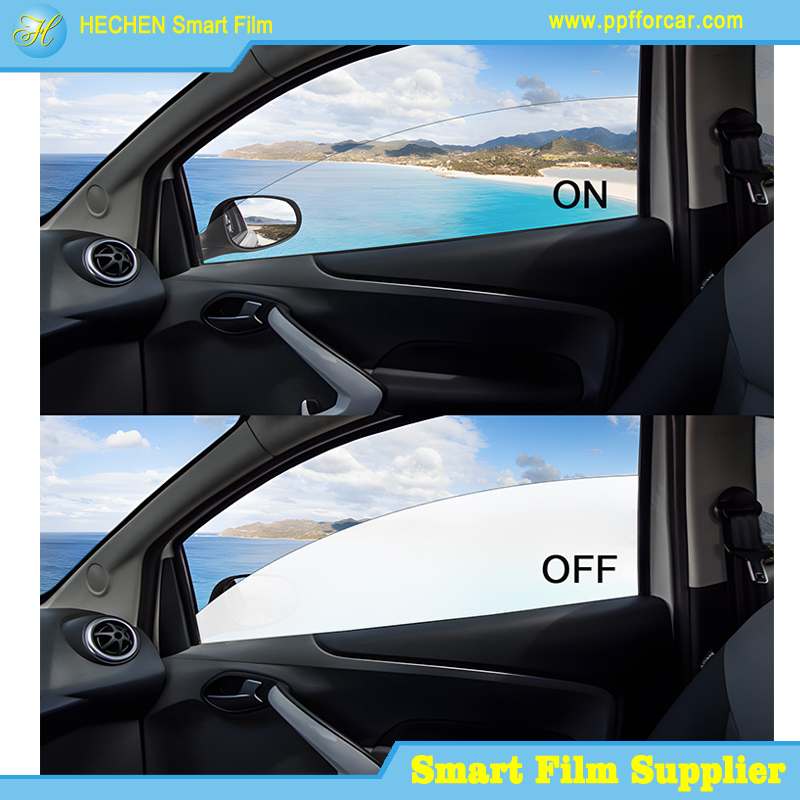
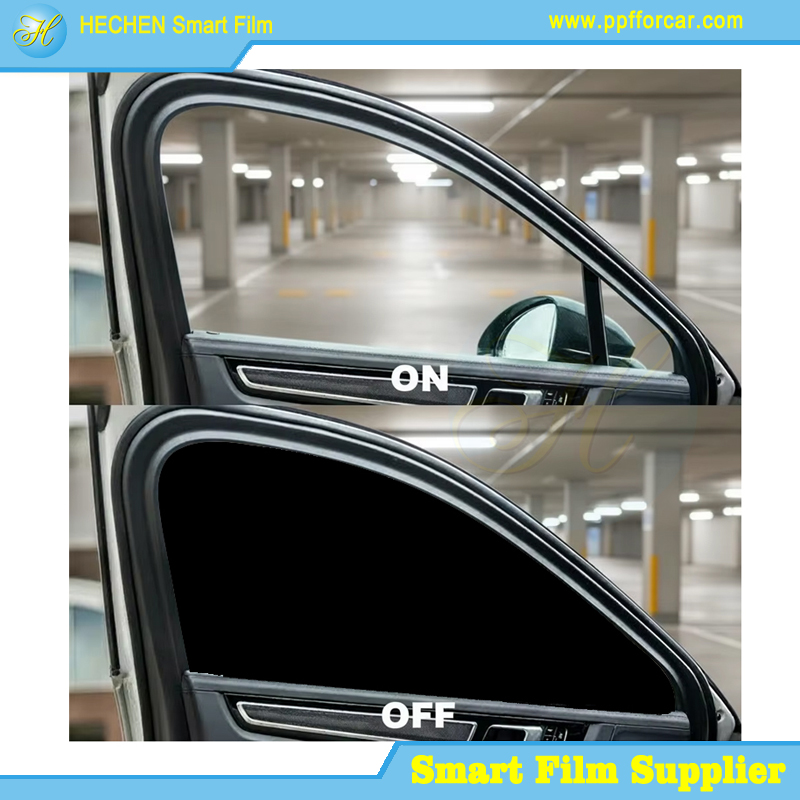
The evolution of automotive glazing has entered a dynamic phase with the advent of electric smart window tints. While their instant, adjustable opacity—shifting from clear to dark—captures most of the attention, their role as a sophisticated thermal management system is equally revolutionary. For electric vehicles (EVs) in particular, where cabin climate control is a direct competitor to driving range, understanding this thermal performance is critical. This article delves into the technical underpinnings of how these active tints insulate, examines whether they primarily reflect or absorb infrared (IR) radiation, quantifies their impact on cabin cooling load, and analyzes their operational power consumption.
The Primary Insulation Mechanism: Reflection vs. Absorption
To understand the thermal performance of electric smart tints, one must first distinguish between the two fundamental mechanisms of solar heat rejection: absorption and reflection.
Absorption: Traditional dyed or passive metallic tints often work primarily through absorption. They contain pigments or particles that absorb solar energy, including visible light and infrared radiation. The absorbed energy heats the window glass itself. This heat is then dissipated both outward and, critically, inward into the cabin via conduction and re-radiation, limiting overall effectiveness.
Reflection: High-performance spectrally selective films and smart tints aim for reflection. They are engineered to selectively reflect specific wavelengths of solar energy, particularly the near-infrared (NIR) spectrum (approximately 780-2500 nm), which constitutes about half of the sun's total thermal energy. The ideal product allows visible light for clarity while rejecting invisible IR heat.
Electric smart tints, primarily those based on Suspended Particle Device (SPD) or Polymer Dispersed Liquid Crystal (PDLC) technologies, are fundamentally absorption-based in their tinted state. Here's a breakdown:
SPD Technology: In its dark state, microscopic light-absorbing particles align to block light transmission. These particles absorb energy across a broad spectrum, including visible and infrared. Consequently, a significant portion of the solar energy is converted to heat within the window laminate.
PDLC Technology: In its opaque state, scattered liquid crystals diffuse light. While also mainly absorptive, the scattering can contribute to some reflection. However, the primary mechanism for blocking solar gain remains absorption and diffusion.
The Critical Advancement: To enhance thermal performance, manufacturers integrate IR-reflective coatings or nano-layers onto the smart film or the inner glass surface. This is a key hybrid approach. The active film controls visibility and provides baseline absorption, while the supplemental, static IR-reflective layer selectively bounces infrared radiation away before it penetrates deeper. Some advanced electrochromic tints, which change color via an electrochemical reaction, can be tuned to have better inherent spectrally selective properties, offering a more direct reflection mechanism in their darkened state.
Conclusion on Mechanism: Pure, un-enhanced SPD/PDLC smart tints are predominantly absorptive. However, commercially viable automotive-grade electric tints for heat management are almost always hybrid systems, combining the adjustable absorption of the active layer with a static, spectrally selective IR-reflective coating. The reflection of infrared radiation is the primary goal for effective insulation, and the technology achieves this through added, specialized layers rather than the tint-changing mechanism itself.
Quantifying Thermal Performance: Reduction in Solar Heat Gain and AC Load
The effectiveness of window tint is measured by key metrics:
Total Solar Energy Rejected (TSER): The percentage of total solar energy (UV, Visible, IR) prevented from entering the cabin.
Solar Heat Gain Coefficient (SHGC): The fraction of solar radiation admitted (both directly transmitted and absorbed & re-radiated inward). A lower SHGC is better for cooling.
A standard clear automotive window may have a TSER of 20-25%. A high-quality passive IR-reflective film can achieve 50-65% TSER. Where do electric smart tints in their darkened state stand?
In their maximum tint state, advanced hybrid smart windows can achieve TSER values of 60% to 75% or more. For instance, while a basic SPD film alone might have a TSER of ~40-50%, with a dedicated IR-reflective layer, the composite performance can match or exceed top-tier passive films.
Impact on Cabin Cooling Load (Air Conditioning Load):
The cabin cooling load is directly proportional to the solar heat gain. Reducing the SHGC/Thermal Load through glazing has a measurable impact.
Technical Studies & Simulations: Research from the National Renewable Energy Laboratory (NREL) and automotive thermal management studies show that glazing can contribute to 30-40% of the total cabin thermal load in peak sun conditions. Improving window performance is therefore a high-leverage strategy.
Load Reduction Estimate: By upgrading from clear glass (TSER ~22%, SHGC ~0.7) to a high-performance smart tint in dark mode (TSER ~70%, SHGC ~0.3), the solar thermal load through the windows can be reduced by approximately 55-60%. This is a dramatic decrease.
System-Level Impact on AC Power Draw: This direct load reduction translates to a lower demand on the vehicle's HVAC compressor. Estimations and controlled environment tests suggest that in hot, sunny climates (ambient >35°C / 95°F, solar irradiance >800 W/m²), such a reduction in window heat gain can lead to a 20-30% decrease in the peak power consumption of the AC system. For an EV AC compressor that might draw 3-6 kW at peak, this represents a savings of 600 to 1800 Watts.
Range Implications: This reduced parasitic load has a direct, positive effect on EV driving range. While dependent on climate and usage, studies indicate potential range preservation of 5-10% in hot weather cycling, where the AC would otherwise be a significant drain. The benefit is not just in steady-statedriving but also in pre-cooling efficiency and reduced thermal soak when parked.
Self-Consumption: The Power Cost of Smart Functionality
The insulation benefit is largely passive once the tint is activated, but the system itself requires electrical power to operate. This consumption comes from two main phases:
Activation Power (Switching): This is the power required to change the state from clear to dark or vice versa. It is the most power-intensive phase.
SPD Technology: Requires a continuous application of AC voltage (typically 40-110V AC) to maintain a tinted state. The power draw is higher. Switching power can range from 5 to 15 Watts per square foot (50-160 W/m²) for a few seconds during activation. To maintain a dark state, it may require a lower but continuous "holding" power.
PDLC/Electrochromic (EC) Technology: These are typically bistable or low-holding-current devices. They require a short pulse of higher voltage/current (e.g., 12-60V DC) to switch states (e.g., 3-7 W/sq ft for 30-60 seconds), but once switched, they require negligible or zero power to maintain that state. This gives them a significant efficiency advantage for static tint levels.
Control System & Electronics Power: This includes the draw from the control module, sensors (e.g., light sensors for auto-dimming), and the interface. This is relatively low, typically in the range of 0.5 to 2 Watts for the entire system when idle.
Total Energy Impact Analysis:
For a mid-size car with approximately 3.0 m² (~32 sq ft) of tintable glass surface:
SPD System: A full tint cycle might consume ~150-500 Watt-hours (Wh) of energy. Maintaining tint for an hour could consume an additional 30-100 Wh. Over a day of mixed use, this could add up to 0.5-1.5 kWh.
PDLC/EC System: A full tint cycle might consume ~100-250 Wh. Maintaining the state thereafter costs almost nothing.
Comparative Perspective: This self-consumption (especially for SPD) is a cost. However, it must be weighed against the significant savings in AC load (600-1800W reduction). The net energy balance is overwhelmingly positive during hot, sunny conditions when the AC is running. The power used to tint the windows is often recouped in just a few minutes of reduced AC compressor operation. In cooler weather or when tinting is not needed for thermal reasons, the system's idle draw is minimal (for PDLC/EC) or can be turned off.
Conclusion
Electric smart window tints represent a convergence of comfort, privacy, and energy efficiency. Their thermal insulation performance in the tinted state is formidable, primarily achieved through a hybrid design that couples the active tint layer with static, spectrally selective IR-reflective coatings. This combination effectively rejects over 70% of total solar energy, placing it at the pinnacle of automotive glazing technology.
The resulting 55-60% reduction in solar heat gain through windows translates directly into a 20-30% lowering of peak AC electrical load, a critical achievement for extending EV range and improving cabin comfort. While the smart systems themselves consume power—with SPD technology being more demanding than bistable PDLC or electrochromic—this operational overhead is dwarfed by the savings in climate control energy during hot conditions. Therefore, beyond their sleek, adaptive appearance, electric smart tints are a potent and intelligent thermal barrier, strategically reducing one of the largest parasitic loads in modern vehicle energy management.
For more about beyond dimming: a technical analysis of heat insulation in electric smart window tints for automobiles , you can pay a visit to Hechen PDLC Smart Film Manufacturers for more info.