Can I install pdlc folie auto myself, or do I need a professional?
TL;DR: A car owner can install pdlc folie auto (PDLC smart film) without professional help. While professional installation offers convenience, warranty, and lower risk, DIY installation is absolutely possible for someone with intermediate technical skills, patience, and the right tools. The key challenges are: dust‑free glass preparation, precise cutting to fit curved windows, bubble‑free wet application, routing wires through door panels, connecting to 12V power, and applying a moisture‑proof edge seal. The article provides a step‑by‑step DIY guide, lists required tools (squeegee, razor knife, slip solution, multimeter, heat gun, silicone sealant), warns of common mistakes (dust bubbles, over‑squeegeeing, DC voltage use, poor edge sealing), and explains how successful DIY installers achieve professional‑grade results. The conclusion: if you have installed window tint before, understand basic automotive electrical work, and follow instructions carefully, you can successfully install PDLC film yourself and save USD 100–250 in labor costs.
1. Introduction: The DIY question
One of the first questions buyers ask after purchasing a pdlc folie auto kit is: “Can I put this on myself, or do I need to pay a professional?” The cost of professional installation typically adds USD 100–250 to the project, which is significant. Naturally, many car owners want to save that money and experience the satisfaction of a DIY upgrade.
The short answer is yes, you can install PDLC film yourself. However, it is not as simple as applying a phone screen protector. PDLC film is thicker, requires electrical connections, and demands meticulous edge sealing to prevent moisture damage. This article provides a realistic, technical assessment of what DIY installation entails, the skills and tools required, common pitfalls, and a step‑by‑step guide to success. No brand names are mentioned – only generic techniques that work for any automotive PDLC kit.
2. Why professional installation is recommended (and why DIY still works)
Professionals exist for a reason. A trained installer has experience with hundreds of film applications, a dust‑controlled workshop, specialized tools, and knowledge of each vehicle’s window curvature and wiring paths. They also typically offer a warranty (1–3 years) on their work.
However, professional installation does not involve magic. The underlying process is learnable. Many car enthusiasts have successfully installed PDLC film at home with excellent results. The key is understanding the risks and preparing accordingly.
Risks of DIY:
Dust bubbles that ruin optical clarity (requires re‑doing)
Poor edge sealing leading to moisture ingress (permanent clouding)
Incorrect wiring (using DC instead of AC, or reverse polarity) damaging the film
Over‑squeegeeing that cracks the ITO layer (permanent white lines)
Difficulty conforming to curved glass causing bubbles at edges
Why DIY can still succeed:
Modern PDLC kits come with detailed instructions, pre‑cut film for some car models, and plug‑and‑play wiring harnesses.
With patience, a clean indoor space, and basic tools, you can achieve professional results.
The cost savings (USD 100–250) are substantial.
You gain the satisfaction of a custom installation.
If you have previous experience applying window tint or vinyl wrap, you are already 80% of the way there. If not, you can learn – but expect the first attempt to take 4–6 hours instead of a pro’s 2 hours.
3. Tools and materials required for DIY
Before starting, gather the following:
Essential tools:
Squeegee (hard plastic or felt‑edged, for pushing out water)
Razor knife with snap‑off blades (for cutting film precisely)
Spray bottle (for slip solution)
Isopropyl alcohol (70% or higher) for glass cleaning
Lint‑free microfiber cloths (multiple)
Heat gun or hair dryer (for conforming film to curved glass)
Multimeter (to verify voltage and continuity)
Wire strippers / crimpers (for 12V connections)
Silicone sealant (clear, waterproof, automotive grade) for edge sealing
Masking tape (to hold film temporarily)
Consumables:
Slip solution: Distilled water + 2–3 drops of baby shampoo per liter (no dish soap, which can leave residues)
Application fluid (optional, some kits include it)
Rubbing alcohol for final glass cleaning
Workspace requirements:
Indoor, dust‑free area (garage with closed doors, no fans running)
Good lighting (LED work light)
Clean floor (mop before starting)
4. Step‑by‑step DIY installation guide
Step 1: Prepare the car and glass
Park the car indoors. Remove any existing window tint (if present) using a steamer or ammonia solution (ventilate well).
Clean the glass thoroughly: first with glass cleaner, then with isopropyl alcohol. Use a razor blade to scrape off any bonded contaminants (tar, glue). The glass must be perfectly clean – a single dust spec will be visible.
Tape off the window seal / felt edges with masking tape to prevent dirt from migrating onto the glass.
Step 2: Pre‑fit and cut the film
Unroll the PDLC film (keep release liner on for now). Hold it against the outside of the window (with liner facing you) to check size. Most kits come oversized; you will trim.
Use a razor knife to cut the film roughly 10–15 mm larger than the glass on all sides. Leave extra for final trimming.
For curved windows, use a heat gun to gently warm the film (do not overheat – keep below 50°C/122°F) and shape it to the glass curvature. This is called “pre‑forming”.
Step 3: Wet application
Remove the release liner from the adhesive side (the side that will touch the glass). Spray the glass generously with slip solution. Also spray the adhesive side of the film.
Position the film on the glass, adhesive side down. The slip solution allows you to slide it into the correct position. Use masking tape to hold it in place temporarily.
Starting from the center, use the squeegee to push out water and air bubbles. Work outward in a star pattern. Apply firm, even pressure – but not so hard that you crack the ITO layer. A good rule: use similar pressure as you would for applying vinyl decals.
Once most water is removed, use a felt squeegee edge (or wrap a microfiber cloth around the squeegee) for final pass. Leave the film to set for 15 minutes.
Step 4: Trim edges
After the film is adhered and most water expelled, use a razor knife to trim the film to exactly match the glass edge. Leave 1–2 mm gap from the glass edge to allow for edge sealing (do not trim flush to the seal). Follow the window’s natural curve carefully.
A common technique: score the film along the edge of the glass, then peel away the excess. Use a fresh blade for each window.
Step 5: Edge sealing (critical step!)
Dry the glass edges thoroughly with a microfiber cloth. Clean the gap between film edge and glass with isopropyl alcohol.
Apply a thin, continuous bead of clear silicone sealant along all four edges of the film, covering the cut edge completely. Use a toothpick or small brush to spread the sealant into the gap. The goal is to create a waterproof barrier that prevents moisture from wicking under the film.
Allow the silicone to cure for 24 hours (follow product instructions) before exposing to water or humidity.
Step 6: Electrical wiring
Important: PDLC requires AC voltage (30–60V, 50–400 Hz). The kit includes a driver (inverter) that converts the car’s 12V DC to AC. Never connect the film directly to 12V DC.
Locate a switched 12V power source (cigarette lighter, window switch power, or fuse tap). Use a multimeter to confirm it provides 12V only when ignition is on.
Route the film’s two thin wires (usually coming from a corner) to the driver. You will need to remove the door panel (or run wires through existing grommets) to hide the wiring.
Connect the driver’s input to the 12V source (positive and ground). Many drivers have a wiring diagram; typically red is +12V, black is ground.
Connect the driver’s output to the film wires (polarity may not matter for AC, but check the manual).
Install the manual switch or remote receiver within easy reach (e.g., on the door panel or center console).
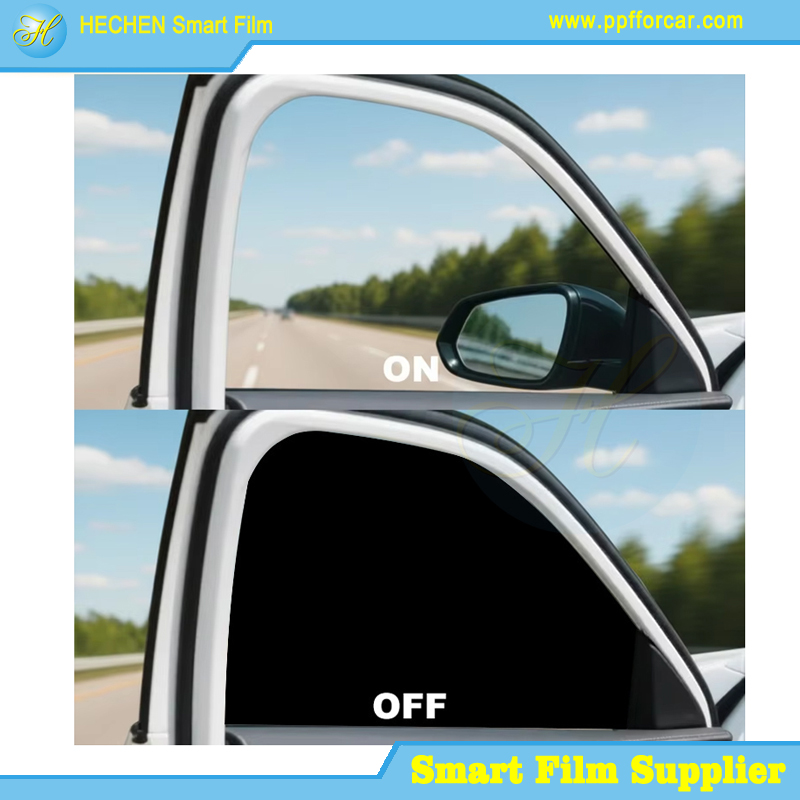
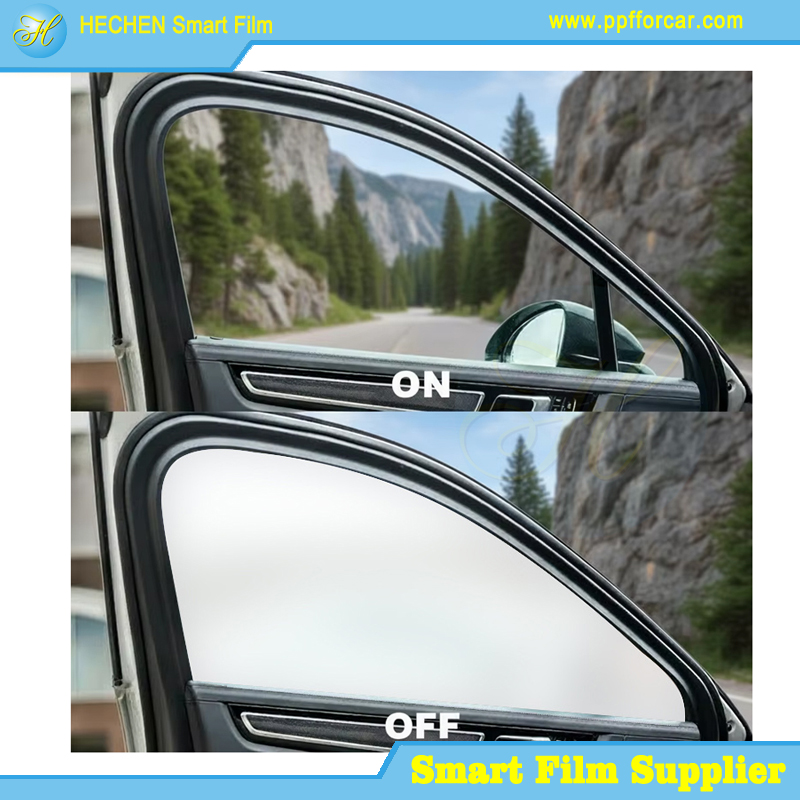
Test the system: With ignition on, press the switch. The film should become transparent. Turn ignition off – it should return to opaque (privacy mode).
Step 7: Final checks and cleanup
Ensure all wires are tucked away, door panels reattached, and no wires are pinched.
Wait 72 hours before rolling the windows down (to allow adhesive and edge seal to fully cure).
Avoid high‑pressure car washes for the first week.
5. Common DIY mistakes and how to avoid them
| Mistake | Consequence | Prevention |
|---|---|---|
| Dust trapped under film | Visible dark specks in transparent mode | Work in dust‑free environment; clean glass twice; use slip solution generously. |
| Over‑squeegeeing | Cracks ITO layer → permanent white lines | Use moderate pressure; stop once water is pushed out. |
| Trimming too close to glass edge | No room for edge seal; water ingress | Leave 1–2 mm gap; sealant will cover the gap. |
| Skipping edge sealing | Moisture ingress → permanent clouding in months | Never skip this step. Apply silicone to every edge. |
| Using DC voltage directly | Destroys PDLC layer (irreversible) | Always use the included AC driver. Test output with multimeter (should be AC). |
| Forgetting heat‑forming on curved glass | Bubbles at edges after window roll‑down | Pre‑heat film with heat gun to match curvature before final squeegee. |
| Rolling down window too soon | Peels film edge | Wait 72 hours. |
| Using ammonia‑based cleaners | Degrades polymer matrix | Use mild soap and water only. |
6. Skills assessment: Are you ready for DIY?
Answer these questions honestly:
Have you successfully installed window tint or vinyl wrap on a car before? (If yes, you have a head start.)
Do you own and know how to use a multimeter?
Have you removed a car door panel and reattached it without breaking clips?
Are you comfortable working with small wires and crimp connectors?
Do you have a clean, indoor workspace (garage) and at least 4–6 hours of uninterrupted time?
Are you patient enough to re‑do a step if it goes wrong?
If you answered “yes” to at least 4 of these, you can likely succeed at DIY installation. If you answered “no” to most, consider professional installation or practice first on a spare piece of glass.
7. Time and cost comparison
| Aspect | Professional | DIY |
|---|---|---|
| Time investment | 2–3 hours (you wait) | 4–6 hours (your labor) |
| Labor cost | USD 100–250 | $0 |
| Risk of failure | Low (warranty covers) | Moderate (you absorb loss) |
| Tools needed | None (provided) | You buy (∼USD 30–50 for basic tools, which you keep) |
| Learning experience | None | Valuable |
If you value your time at USD 50/hour, DIY takes 4–6 hours = USD 200–300 “cost” – similar to professional. But many DIYers enjoy the process and consider it a hobby, not lost time.
8. When DIY is not recommended
Even with this guide, some situations strongly favor professional installation:
Highly curved windows (e.g., some sports cars, hatchbacks with complex compound curves). Professional installers have heat‑forming ovens and pre‑curved film suppliers.
Lack of indoor workspace – doing this outdoors guarantees dust bubbles.
Electric vehicle with complex door wiring – some EVs have sensitive electronics; improper tapping can trigger errors.
You are installing on a leased vehicle – a professional installation can be removed cleaner.
You have no patience for delicate work – PDLC film is unforgiving of rushed work.
If you fit any of these, pay the professional. It is still worth the cost.
9. How to know if your DIY installation succeeded
A successful install will show:
In clear mode: No visible bubbles, dust specks, or distortion. The film appears as if it is part of the glass.
In opaque mode: Uniform milky white appearance, no dark spots or bright lines.
Switching: Instant response (within 1 second). No flickering.
Edges: Silicone sealant covers the entire perimeter, no gaps. After a car wash, no water trapped under film.
Window operation: Windows roll up and down smoothly without binding.
Test by parking the car in the sun for a few hours, then driving at night. If you have no complaints, you have succeeded.
10. Conclusion: Yes, you can install PDLC film yourself – with preparation
The answer to “Can I install pdlc folie auto myself?” is a qualified yes. You do not need a professional if you are willing to invest time, learn the process, and work carefully. Thousands of car owners have successfully completed DIY PDLC installations using online guides and basic tools. The key is respecting the critical steps: dust‑free cleaning, proper heat‑forming for curved glass, careful squeegeeing, and – most importantly – meticulous edge sealing with silicone.
Professional installation is faster, lower‑risk, and comes with a warranty. But for the hands‑on car enthusiast, DIY installation offers significant cost savings (USD 100–250) and the pride of a custom job. Start with the rear windows first to gain confidence, then move to the sides. If you make a mistake, film is replaceable – you can always peel it off (using heat to soften adhesive) and try again.
For those with previous tint or vinyl experience, DIY is straightforward. For beginners, it is a challenging but achievable weekend project. Either way, the reward is a smart, switchable privacy film that you installed with your own hands.
Key Takeaways
DIY installation of pdlc folie auto is absolutely possible for an enthusiast with intermediate skills, patience, and the right tools.
Key success factors: dust‑free workspace, meticulous glass cleaning, pre‑forming on curved windows with a heat gun, even squeegee pressure, and – most critically – applying a waterproof edge seal (silicone) to all four edges.
Required tools: squeegee, razor knife, slip solution, heat gun, multimeter, wire strippers, silicone sealant, and microfiber cloths.
Critical step – edge sealing: Without it, moisture ingress will permanently cloud the film within months. Never skip this.
Electrical: Always use the supplied AC driver. Never connect PDLC film directly to 12V DC. Test output with a multimeter.
Common DIY mistakes: dust bubbles, over‑squeegeeing (cracks ITO), skipping edge seal, using DC voltage, rolling windows too soon (wait 72 hours).
Time required: 4–6 hours for a first‑time installer; professionals take 2–3 hours.
Cost savings: DIY saves USD 100–250 in labor. Tools cost ~USD 30–50 if you don’t already own them.
Not recommended for: highly curved compound windows, leased vehicles, lack of indoor space, or anyone unwilling to learn the detailed steps.
Success indicators: no bubbles, uniform switching, dry edges after car wash, smooth window operation.
Final verdict: With careful preparation and attention to detail, a motivated car owner can achieve professional‑quality PDLC installation at home. If you have installed window tint before, it’s even easier. Give yourself a full weekend, follow the steps, and you will succeed.
For more about Can I install pdlc folie auto myself, or do I need a professional? Everything you need to know, you can pay a visit to https://www.ppfforcar.com/product/PDLC-Smart-Film/ for more info.