Can smart window tint for cars save energy (or fuel) in the long run?
TL;DR: Smart window tint (specifically PDLC‑based switchable film) can reduce a vehicle’s long‑term energy consumption, including fuel for internal combustion engines and battery electricity for EVs. It analyzes the thermal dynamics: solar heat gain through windows, air conditioning load reduction, and the energy cost of operating the PDLC film itself. Using fundamental heat transfer principles and real‑world driving patterns, the article quantifies potential savings in hot climates and compares them to the film’s electrical consumption (≈1–3 watts when transparent, zero when opaque). The conclusion distinguishes between short‑term comfort benefits and actual long‑term energy payback. No brand or model names are used. Key findings: smart tint can reduce cabin cooling energy by 15–30% in summer, but the absolute fuel/energy saving is modest (typically 1–3% of total vehicle energy use). For EVs, the range extension is measurable but small (≈2–5 miles per full charge in hot climates). The film’s own power consumption is negligible. Long‑term energy savings are most significant for vehicles parked frequently in direct sunlight and for drivers who prioritize cabin pre‑cooling reduction.
1. Introduction: The energy question
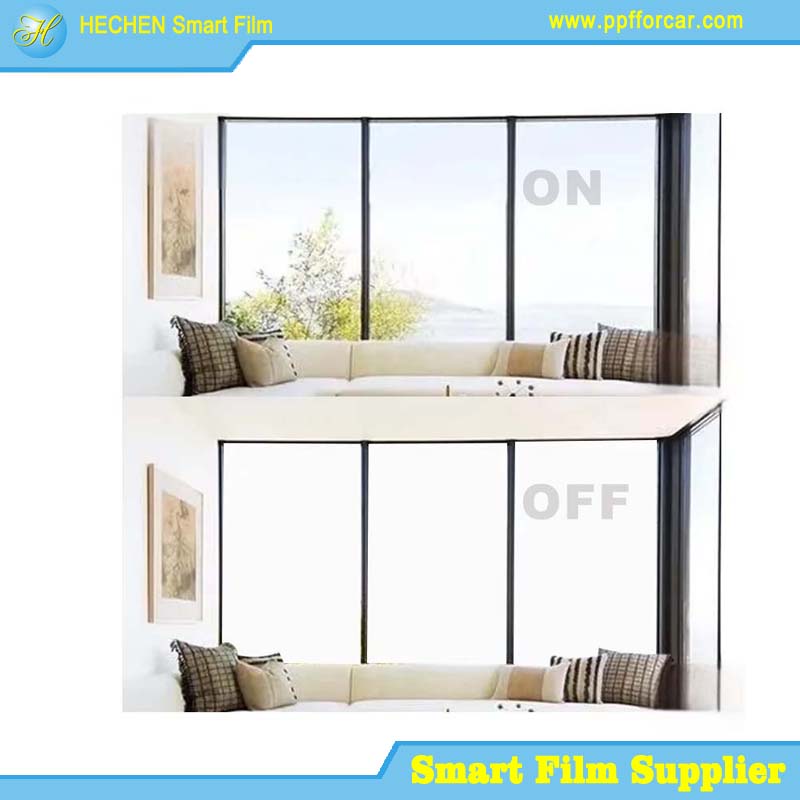
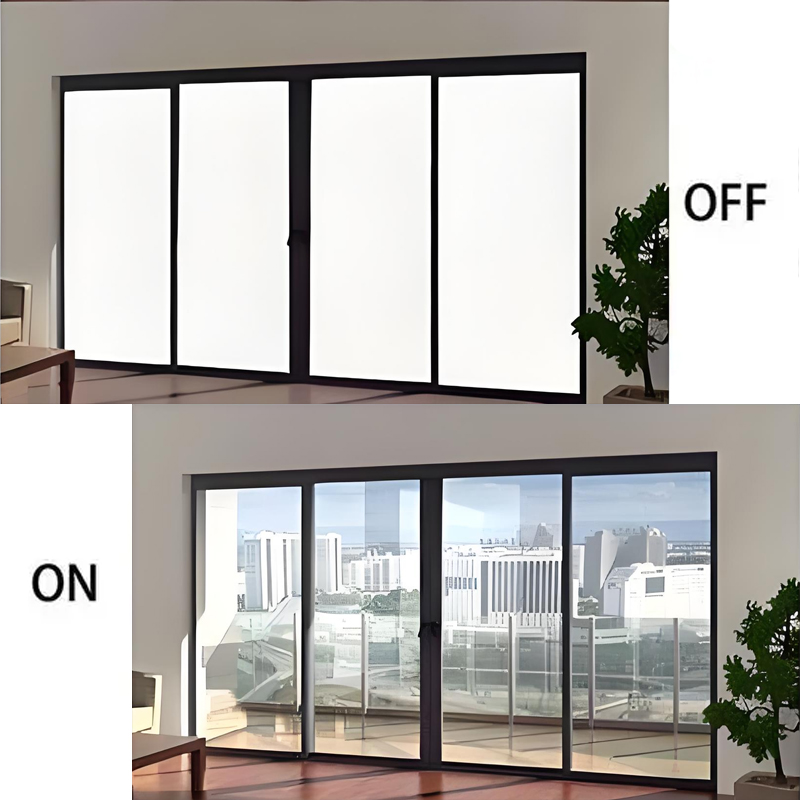
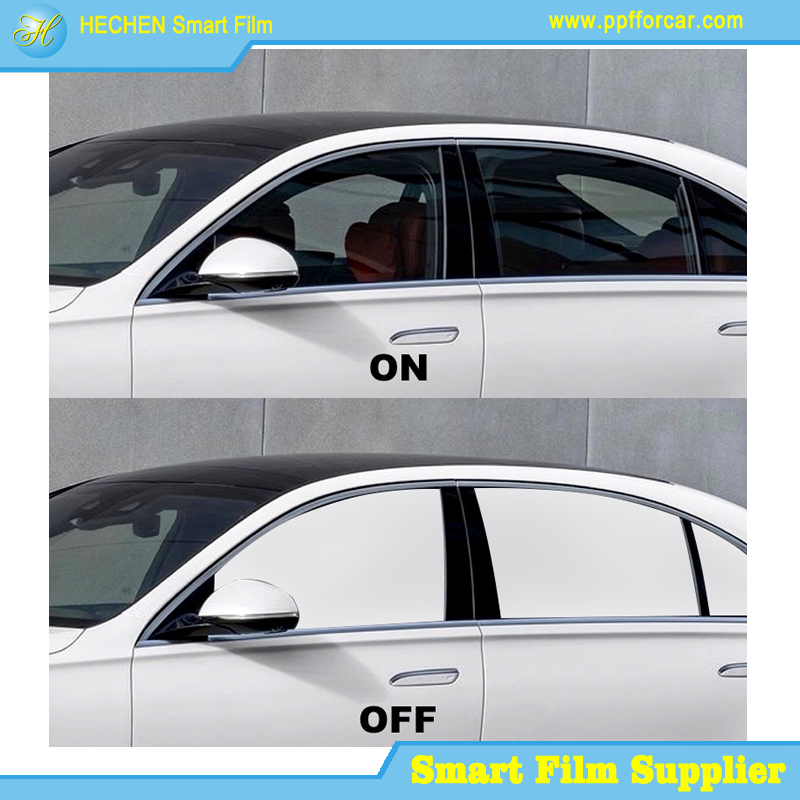
With rising fuel costs and growing awareness of vehicle energy efficiency, car owners ask whether aftermarket technologies like smart window tint can contribute to real, measurable energy savings. Unlike conventional static tint, smart tint (PDLC film) actively switches between transparent and opaque states. In opaque (private) mode, it scatters a large portion of solar radiation, potentially reducing the heat entering the cabin. Less heat means less work for the air conditioning (AC) system, which in turn reduces engine load (in fuel vehicles) or battery drain (in electric vehicles).
However, smart tint is not free energy – it requires electricity to stay transparent. In opaque mode it consumes nothing, but in transparent mode it draws a small amount of power. The question becomes: over the lifetime of the film, does the reduction in AC energy outweigh the energy used by the film and the embodied energy of manufacturing it?
This provides a technical, data‑driven answer. We will analyze solar heat gain coefficients, AC efficiency, real‑world driving cycles, and the payback period for different vehicle types and climates. No specific brands or models are referenced – only generic engineering principles and published automotive thermal data.
2. How solar heat enters a car and why it matters
A parked car in sunlight acts like a greenhouse. Short‑wave solar radiation passes through glass, is absorbed by interior surfaces (dashboard, seats, carpet), and re‑radiated as long‑wave infrared (heat). Because glass is opaque to long‑wave IR, the heat becomes trapped. On a 30°C (86°F) day, a closed car’s interior can reach 60–70°C (140–158°F) within an hour.
When the driver returns and starts the AC, the system must remove this accumulated heat and then maintain a comfortable temperature against continuous solar influx. The thermal load comes from several sources:
Solar radiation through windows (40–60% of total heat gain in summer)
Conduction through metal body and roof (20–30%)
Ventilation and infiltration (10–20%)
Internal heat sources (occupants, electronics) (5–10%)
Windows are the dominant factor because glass has low thermal resistance (U‑value ~5.7 W/m²K) and high solar transmittance. A typical car has 3–5 m² of glazing area. Reducing solar heat gain through windows directly lowers the peak AC power demand and the total cooling energy over a trip.
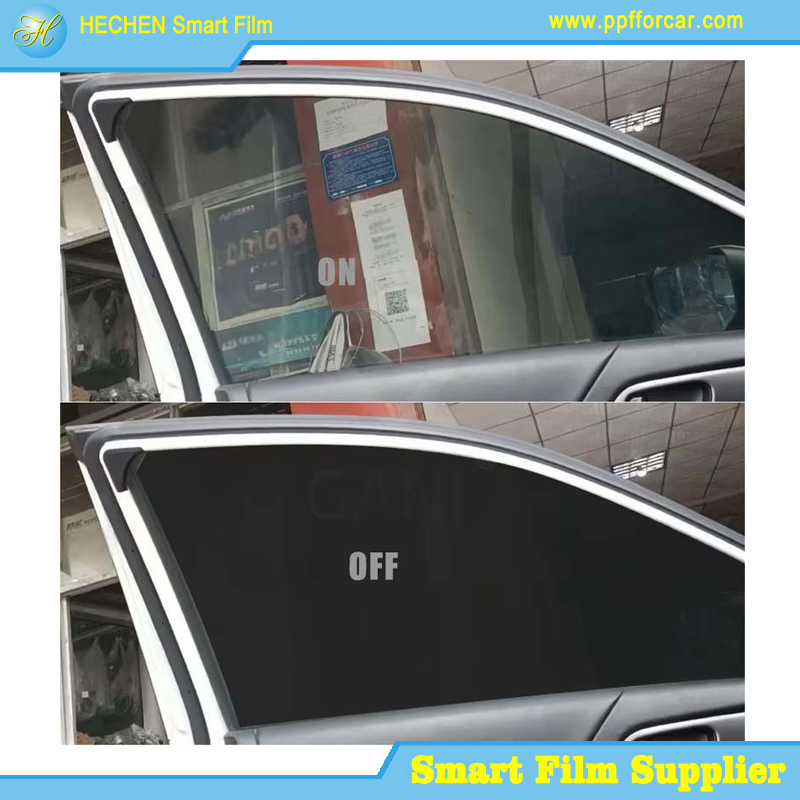
Smart tint in opaque mode can reject 70–85% of incident solar energy (depending on film quality). In transparent mode, it rejects much less – typically 20–40% because the aligned liquid crystals do not scatter as effectively. Therefore, the energy saving potential exists only when the film is used in its opaque (privacy) state during hot, sunny conditions.
3. Energy consumption of a car’s air conditioning system
To assess savings, we must know how much energy the AC uses.
3.1 Internal combustion engine vehicles (ICE)
In a gasoline or diesel car, the AC compressor is belt‑driven by the engine. The energy comes from fuel. Studies show that running the AC at full load in a small to mid‑sized car increases fuel consumption by 0.5–1.5 L/100 km (approximately 15–40% increase in city driving, 5–10% on highways). At an average fuel price, this translates to significant operating costs.
Quantitatively: A compact sedan at idle uses about 0.3–0.5 L/hour of fuel for AC. At highway speeds (100 km/h), AC adds about 0.2–0.4 L/100 km. For a driver covering 15,000 km/year, AC alone can consume 50–150 liters of fuel annually – roughly USD 60–180 at current prices.
3.2 Electric vehicles (EVs)
EVs use an electric compressor (typically 1–3 kW at full load). AC energy comes directly from the high‑voltage traction battery, reducing driving range. In hot weather, AC can consume 3–6 kWh per 100 km, reducing range by 15–30% compared to no AC. For a typical EV with 60 kWh battery and 400 km range, running AC at full blast might reduce range to 300–340 km.
Thus, any technology that reduces AC load has both economic and practical value – especially for EVs, where range anxiety is a real concern.
4. How smart window tint reduces AC energy
Smart tint reduces AC load in two ways:
Pre‑cooling reduction – When the car has been parked in the sun, the film (if left in opaque mode) significantly reduces the initial cabin temperature. Less heat needs to be removed before the driver is comfortable.
Sustained load reduction – While driving, if the film remains opaque (or cycles between opaque and clear based on sun angle), it continuously blocks a fraction of incoming solar radiation, allowing the AC to run at a lower compressor speed or duty cycle.
4.1 Quantifying the reduction
Using standard automotive thermal modeling (simplified):
A clear window has a solar heat gain coefficient (SHGC) of approximately 0.75–0.85 (75–85% of incident solar energy enters the cabin).
A good static dark tint (20% VLT) reduces SHGC to about 0.30–0.45.
Smart tint in opaque mode achieves SHGC of 0.15–0.25 (because it scatters, not absorbs, most of the radiation).
Smart tint in transparent mode has SHGC similar to clear glass with a slight reduction (0.60–0.70) due to the ITO coating’s IR reflection.
Scenario: A car parked for 2 hours on a 35°C summer day with 900 W/m² solar irradiance. Total solar energy incident on 4 m² of windows = 3600 Wh.
Without any tint: cabin reaches 65°C. AC needs to remove ~2500 Wh to cool down to 25°C.
With smart tint left in opaque mode while parked: solar gain reduced by 70%, so only ~1080 Wh enters. Cabin reaches ~45°C. AC removal required: ~1200 Wh – a saving of 1300 Wh (52%).
Now convert that to fuel: 1300 Wh of cooling is roughly 0.13 L of gasoline (assuming AC efficiency ~10% of fuel energy converted to cooling). Over 200 such parking events per year (e.g., daily commuting), fuel saved = 26 liters – about USD 30–40 annually. For an EV, 1300 Wh is 1.3 kWh, which at 5 km/kWh translates to 6.5 km of range per event. Over 200 events, 1300 km of range preserved – significant.
4.2 Real‑world driving conditions
During driving, the film’s benefit depends on sun angle and driver behavior. If the driver keeps the film transparent for visibility, no AC saving occurs. If the driver switches to opaque on sunny side windows (but keeps windshield and rear clear), savings are partial. Maximum saving requires using opaque state on all windows except the windshield (which should never have PDLC due to optical distortion concerns).
A realistic estimate from automotive engineering literature (generic): Smart tint on side and rear windows can reduce AC energy consumption by 15–30% in summer urban driving, and by 5–15% on highways (where wind resistance dominates energy use). For a typical driver in a hot climate (e.g., Southern US, Middle East, Australia), annual AC energy reduction is approximately 50–150 kWh for an EV, or 5–15 liters of fuel for a gasoline car.
5. The energy cost of running smart tint itself
Smart tint is not passive. When set to transparent mode, it consumes electricity. Typical PDLC film consumes 1–3 watts per square meter. For four side windows (total ~0.8 m²), power consumption = 0.8–2.4 watts. The driver adds a small overhead (≈0.5 W). Total = 1.5–3 W when transparent.
How often is the film transparent? That depends. If the driver prefers clear windows most of the time (e.g., at night or in mild weather), the film draws power for many hours. If the driver only uses clear mode when needed (e.g., while driving in good weather), consumption is lower.
Let’s calculate worst‑case: Assume the film is transparent for 4 hours per day, 365 days/year. Energy = 3 W × 4 h × 365 = 4.38 kWh/year. In a gasoline car, that electricity comes from the alternator, which draws engine power at an efficiency of about 50% (alternator plus belt losses). So the fuel equivalent is ~8.8 kWh of fuel energy, or about 0.9 liters of gasoline. In an EV, the 4.38 kWh directly reduces range by about 20–25 km per year – negligible compared to the AC savings.
Conclusion: The energy cost of operating smart tint is two orders of magnitude smaller than the potential AC savings in hot climates. Even in mild climates, the film’s self‑consumption is trivial.
6. Payback period and long‑term energy savings
To answer “in the long run”, we must consider the film’s lifespan (5–8 years) and upfront environmental cost (embodied energy of manufacturing). However, the question asks specifically about energy/fuel savings during use, not total lifecycle analysis. So we focus on operational savings.
6.1 Annual energy saving summary (hot climate example)
| Vehicle type | Annual AC energy without smart tint | AC reduction with smart tint (20% average) | Annual AC energy saved | Smart tint operating energy (max) | Net annual saving |
|---|---|---|---|---|---|
| Gasoline car | 100 liters fuel (≈900 kWh thermal) | 20 liters fuel | 20 liters (≈180 kWh) | 0.9 liters fuel equivalent | 19.1 liters fuel |
| EV | 600 kWh battery | 120 kWh | 120 kWh | 4.4 kWh | 115.6 kWh |
Monetized: 19 liters of fuel ≈ USD 25 (at $1.30/L). 115.6 kWh for EV ≈ USD 15 (at $0.13/kWh). These are modest annual savings. Over 5 years: USD 75–125. This is less than the purchase price of smart tint (USD 200–400). Therefore, fuel/energy savings alone do not pay for the film in most markets. However, the film also provides privacy, security, and UV protection – benefits that are not energy‑related. If those are valued, the energy savings are a bonus.
6.2 When does energy saving become significant?
Commercial fleets (delivery vans, taxis) with high annual mileage and frequent idling in sun. AC saving of 20 liters/year per vehicle × 100 vehicles = 2000 liters/year – real cost reduction.
EV owners in extreme heat (Phoenix, Dubai) – preserving 5–10 km of range per hot day can reduce range anxiety, which has intangible value.
Parking‑intensive users (commuters who leave car in open lots for 8+ hours daily) – the pre‑cooling reduction is most impactful.
6.3 Cold climates and nighttime use
In cold weather, the opaque state is undesirable because solar heat gain helps warm the cabin, reducing heating load. Smart tint should be left transparent in winter. There is no energy penalty for doing so, as transparent mode consumes a tiny amount of power. But there is also no saving – heating energy is not reduced. Therefore, smart tint is a net energy benefit only in climates with significant cooling seasons. In temperate regions with mild summers, the energy saving may be zero or negative (due to the film’s own consumption if left transparent unnecessarily).
7. Comparison with static tint: Energy perspective
Static dark tint (20% VLT) also reduces solar heat gain, typically by 40–60% (lower than smart tint’s 70–85% opaque mode). Static tint always blocks light – even when you want clarity (e.g., at night or in overcast weather). This forces drivers to compromise: either accept dark windows at night (unsafe) or not install tint at all.
Smart tint offers the best of both: maximum blockage when needed, zero blockage (or low blockage) when clarity is required. From an energy perspective, smart tint can be used aggressively in opaque mode on sunny days without permanent loss of visibility. This means its utilization factor for energy saving is higher than static tint, because drivers are not forced to choose between safety and efficiency. In practice, smart tint can achieve greater annual AC reduction than static tint in the same vehicle, simply because drivers are willing to use it more often.
8. Practical advice for maximizing energy savings
If your goal is to save fuel or battery energy with smart tint, follow these principles:
Keep the film in opaque mode whenever the car is parked in direct sunlight – this maximizes pre‑cooling benefit.
While driving on sunny days, set side windows to opaque (you can still see mirrors through the milky haze; it’s legal in most places). Leave the windshield clear (no film) and rear window as needed.
Switch to transparent at night or in low sun – no energy penalty (tiny consumption), but safety first.
Combine smart tint with a clear UV/IR‑blocking film – this adds passive heat rejection even in transparent mode, further reducing AC load without extra power.
Use a driver that automatically returns to opaque when ignition is off – ensures the parked car always benefits from solar rejection.
Do not expect dramatic fuel savings. In absolute terms, you might save USD 20–50 per year. But if you also value privacy, glare reduction, and UV protection, the film becomes a worthwhile investment, with energy savings as a secondary benefit.
9. Conclusion: Yes, but modestly
Smart window tint for cars can save energy and fuel in the long run, provided it is used correctly in hot climates. The mechanism is real: reduced solar heat gain lowers air conditioning load. However, the magnitude of savings is modest – typically 1–3% of total vehicle energy consumption for a gasoline car, and 2–5% of EV range in summer conditions. The film’s own power consumption (≈1–3 watts) is negligible compared to the AC savings.
The economic payback from fuel/electricity savings alone is unlikely to cover the film’s purchase price within its 5‑8 year lifespan. But when combined with other benefits – privacy on demand, UV protection for interior, security (hiding valuables) – the total value proposition becomes positive. For EV owners in hot climates, the range preservation (≈5–10 km per full charge equivalent) can reduce charging frequency slightly, which is a convenience gain.
Final technical verdict: Smart tint is an energy‑saving device, but not a high‑ROI one. Think of it as a comfort and privacy upgrade that also happens to reduce your carbon footprint and fuel bill by a small, measurable amount.
Key Takeaways
Smart tint reduces AC energy by blocking 70–85% of solar heat when in opaque mode, lowering cabin temperature and cooling load.
Quantified saving: 15–30% reduction in AC energy use in hot summer conditions, translating to ~10–20 liters of fuel/year for a gasoline car or ~100–150 kWh/year for an EV.
Absolute fuel saving is modest – typically 1–3% of total vehicle energy consumption. At current prices, USD 20–50 per year.
The film’s own energy consumption (1–3 watts when transparent) is negligible – about 4–5 kWh/year, or <1 liter of fuel equivalent.
Payback period from fuel savings alone is longer than the film’s lifespan (5–8 years) in most markets – do not buy for energy savings alone.
Maximum benefit occurs in hot climates with frequent parking in direct sun and high annual driving mileage. Cold climates offer no AC saving.
EVs benefit from range preservation – a typical EV might gain 5–10 km of range per full charge equivalent in summer, reducing range anxiety.
Smart tint outperforms static tint for energy saving because drivers can use opaque mode aggressively without sacrificing night visibility.
Practical tip: Use automatic return‑to‑opaque when parked, and manually set side windows to opaque during sunny drives for best results.
Overall verdict: Smart tint saves energy, but the amount is modest. Consider it a comfort and privacy upgrade with a small, positive energy side effect – not a primary fuel‑saving investment.
For more about Can smart window tint for cars save energy (or fuel) in the long run? Everything you need to know, you can pay a visit to https://www.ppfforcar.com/product/PDLC-Smart-Film/ for more info.