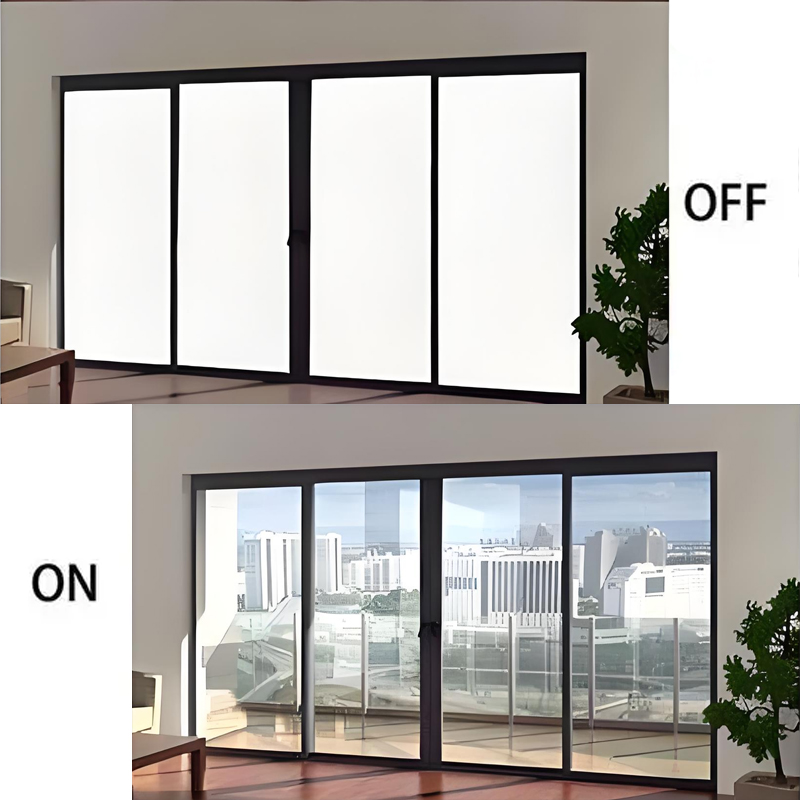
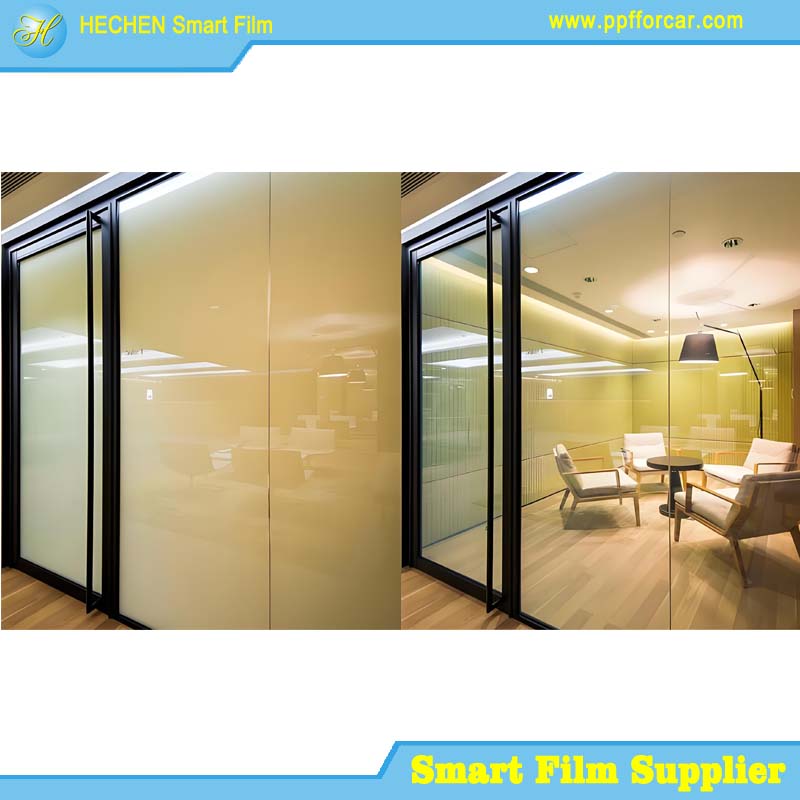
Dimming Glass Film: Revolutionizing Light Control and Privacy in Modern Spaces
Imagine a window that shifts from transparent to opaque with a simple tap, a car sunroof that tints automatically to block out harsh sunlight, or an office partition that offers instant privacy without the need for curtains. This is the transformative power of dimming glass film, a cutting-edge technology that is redefining how we manage light, privacy, and energy in our surroundings.Dimming glass film, often referred to as smart glass film or switchable glass film, is a thin, adaptable layer applied to glass surfaces that can alter its transparency or tint when activated by an electric current. This ability to switch between clear, frosted, or tinted states has made it a versatile solution in fields ranging from architecture to automotive design. By offering a sleek, modern alternative to traditional window treatments, dimming glass film is gaining traction in spaces that value both practicality and style.In this 2000-word article, we will dive deep into the world of dimming glass film. We’ll begin by explaining what it is and how it functions, exploring the technologies behind it. Then, we’ll examine its diverse applications, from residential homes to high-tech vehicles, and outline its key benefits, such as energy savings and enhanced privacy. We’ll also discuss the challenges it faces and look ahead to its future potential. By the end, you’ll have a thorough understanding of how dimming glass film works and why it’s poised to shape the future of modern design.
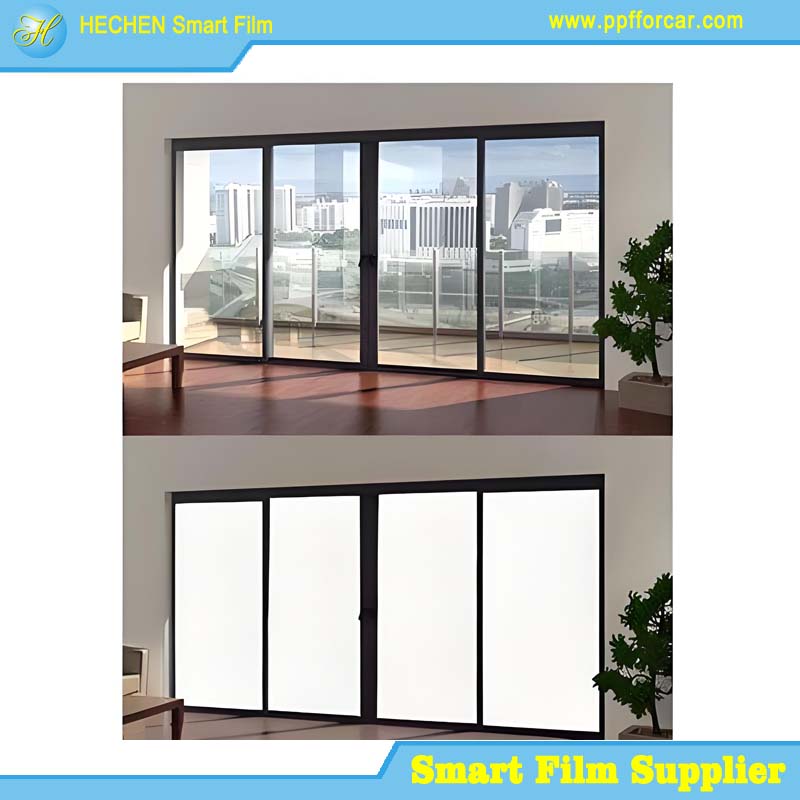
1. What is Dimming Glass Film?
Dimming glass film is a type of smart glass technology that enables glass surfaces to dynamically change their light transmission properties. Unlike conventional glass, which remains fixed in its appearance, dimming glass film can transition from transparent to opaque, tinted, or frosted states, giving users control over light, privacy, and heat at the touch of a button.The film typically consists of a core layer of specialized materials—such as liquid crystals or electrochromic compounds—sandwiched between two transparent conductive layers. These are encased in a protective adhesive film that can be applied to existing glass surfaces, like windows or partitions, or integrated into new glass products during production. In its “off” state (no electricity applied), the film might appear frosted or tinted, scattering or blocking light. When an electric current is activated, the internal components adjust to allow light to pass through, rendering the glass clear or modifying its tint.This technology’s adaptability makes it suitable for retrofitting onto older glass or designing into new installations, offering a practical way to add smart functionality to transparent surfaces.
2. How Does Dimming Glass Film Work?
The magic of dimming glass film lies in its use of advanced technologies that manipulate light transmission. The three main types are Polymer-Dispersed Liquid Crystal (PDLC), Electrochromic, and Suspended Particle Device (SPD) films. Here’s how each operates:
2.1 Polymer-Dispersed Liquid Crystal (PDLC) Film
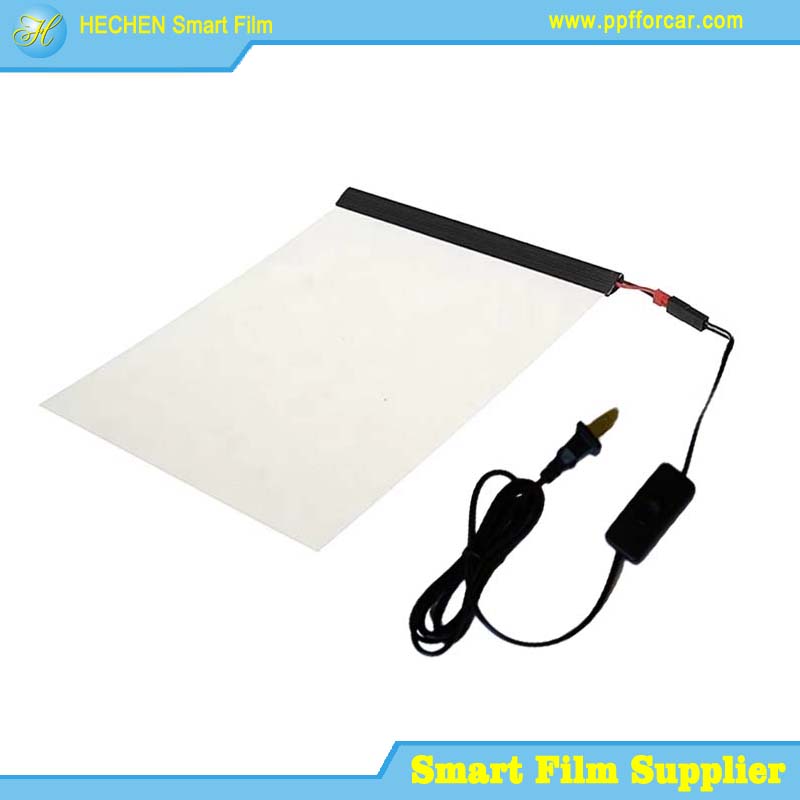
PDLC film is the most widely used type of dimming glass film. It contains tiny droplets of liquid crystals embedded in a polymer matrix. When no voltage is applied (the “off” state), these droplets are randomly oriented, scattering light and giving the film a frosted, opaque look. Applying an electric current—typically 20 to 100 volts of alternating current (AC)—aligns the liquid crystals, allowing light to pass through and making the film transparent.The switch between opaque and clear happens almost instantly, often in milliseconds, making PDLC film perfect for applications needing rapid privacy adjustments, such as office dividers or home windows.
2.2 Electrochromic Film
Electrochromic film relies on materials like tungsten oxide that change color or opacity through an electrochemical reaction. In its default state, the film is usually clear. When a small voltage is applied, ions move within the material, darkening it and reducing light transmission. Removing the voltage reverses the process, returning the film to transparency.Unlike PDLC’s on-off switch, electrochromic film can adjust to various tint levels, offering precise control over light and heat. However, the transition takes longer—seconds to minutes—making it better suited for gradual adjustments, like in building windows or car sunroofs.
2.3 Suspended Particle Device (SPD) Film
SPD film uses microscopic particles suspended in a liquid medium between conductive layers. In the “off” state, these particles float randomly, blocking and scattering light, resulting in a dark or opaque appearance. When voltage is applied, the particles align, letting light through and making the film transparent or partially tinted.SPD film switches faster than electrochromic film and allows variable light control, making it a favorite in premium applications like luxury car windows or airplane cabins.All three technologies require a power source and a control mechanism—like a switch, remote, or smartphone app—to operate. The choice between them depends on factors like switching speed, tint precision, and intended use.
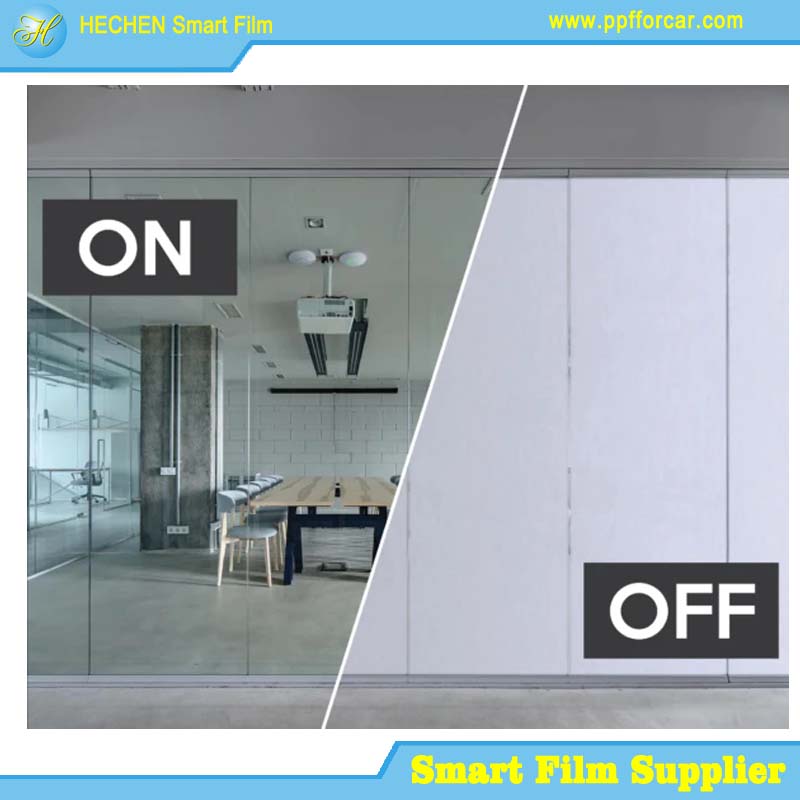
3. Applications of Dimming Glass Film
Dimming glass film’s flexibility has led to its use across numerous industries, each harnessing its capabilities to improve functionality and user experience.
3.1 Architecture and Interior Design
In buildings, dimming glass film is applied to smart windows, partitions, skylights, and doors. It enables spaces to adapt instantly—conference rooms can shift from open to private, while homes can balance light and seclusion. For instance, the One Penn 1 building in New York uses smart glass to enhance light management and energy efficiency, creating a modern, adaptable workspace.
3.2 Automotive Industry
In vehicles, dimming glass film appears in sunroofs, side windows, and mirrors, improving comfort and efficiency. Luxury brands like Tesla and Mercedes-Benz offer dimmable glass options to reduce glare and heat. In electric vehicles, this helps lower interior temperatures, cutting air conditioning use and boosting battery range.
3.3 Healthcare
Hospitals employ dimming glass film for privacy screens in patient rooms and operating theaters. Its fast-switching ability ensures confidentiality while maintaining natural light, and its smooth surface is more hygienic than fabric curtains, reducing infection risks.
3.4 Retail and Consumer Electronics
Retailers use dimming film in shop windows that switch from clear to opaque for dynamic displays or product highlights. In electronics, it powers smart mirrors and interactive screens, blending utility with cutting-edge design.
3.5 Aerospace and Transportation
In aviation, companies like Boeing integrate dimming film into airplane windows, letting passengers adjust light without physical shades, saving weight and maintenance costs. High-speed trains and luxury buses also adopt it for enhanced passenger comfort.These examples highlight dimming glass film’s ability to merge practicality with innovation across diverse fields.
4. Benefits of Dimming Glass Film
Dimming glass film offers a range of advantages that set it apart from conventional light and privacy solutions:
· Privacy on Demand: Instant switching eliminates the need for blinds or curtains, perfect for adaptable spaces.
· Energy Efficiency: By controlling light and heat, it reduces reliance on artificial lighting and cooling. Studies suggest energy savings of up to 20% in buildings with smart glass.
· UV Protection: It blocks harmful ultraviolet rays, safeguarding interiors and occupants.
· Aesthetic Appeal: It enables clean, modern designs by removing bulky window treatments.
· Improved Comfort: Reducing glare and heat enhances occupant well-being in homes, offices, and cars.
· Low Maintenance: Its smooth surface is easy to clean and resists dust buildup.
These benefits position dimming glass film as a smart, sustainable choice for contemporary design.
5. Challenges and Limitations
Despite its potential, dimming glass film has hurdles that limit its broader adoption:
· Cost: At $50 to $150 per square foot, it’s pricier than traditional options, restricting its accessibility.
· Power Dependency: Most films need constant electricity to stay transparent, reverting to opaque during outages, which can be inconvenient.
· Durability: Heat, humidity, or frequent use may degrade performance, with warranties typically lasting 5-10 years.
· Limited Options: Many films offer only clear or opaque states, with few color or partial transparency choices.
· Installation Challenges: Retrofitting older buildings requires electrical integration, which can be complex or impractical.
Overcoming these issues is crucial for expanding its reach and impact.
6. Future Trends and Innovations
The future of dimming glass film is promising, with advancements set to enhance its performance and affordability:
· Material Advances: Research into nanotechnology and improved liquid crystals aims to create thinner, more durable, and efficient films.
· Smart Integration: As smart homes and IoT grow, films could adjust automatically based on sunlight or occupancy, controlled via apps or voice assistants.
· Cost Reduction: Scalable production methods, like roll-to-roll manufacturing, may lower prices, making it more accessible.
· Self-Powered Solutions: Solar-powered or self-tinting films could eliminate external power needs.
· Emerging Uses: Applications in VR/AR devices, wearable tech, and more suggest a versatile evolution.
These developments point to a future where dimming glass film becomes a standard feature in smart, sustainable design.
Conclusion
Dimming glass film is a groundbreaking technology that blends functionality, efficiency, and style. Its applications—from architecture to transportation—demonstrate its versatility, while its benefits, like energy savings and privacy control, make it a compelling choice for modern spaces. Though challenges like cost and durability remain, ongoing innovations are set to address these, paving the way for wider adoption. As we look to a future of smarter, greener solutions, dimming glass film stands out as a shining example of how technology can enhance our lives and environments.
For more about the dimming glass film: revolutionizing light control and privacy in modern spaces, you can pay a visit to Hechen PDLC Smart Film Manufacturers for more info.