Electric Smart Window Tint for Home: The Seamless Fusion of Privacy & Energy Saving
For centuries, the window has been a architectural paradox—a portal for light and view, yet a vulnerability for privacy and energy loss. We’ve draped them with fabric, hung slatted blinds, and applied static films, each solution a compromise. Today, a transformative technology is redefining this fundamental element of our homes: Electric Smart Window Tint (ESWT). Moving beyond a simple film, ESWT is an active, dynamic glazing system that empowers homeowners with instantaneous control over light, privacy, and thermal performance at the touch of a button. This article delves into the technical underpinnings, quantifiable benefits, and practical considerations of integrating this cutting-edge technology into the modern smart home.
The Technology Behind the Transition: From Clear to Opaque
At its core, Electric Smart Window Tint is a type of switchable glazing technology, most commonly based on Polymer Dispersed Liquid Crystal (PDLC) or Suspended Particle Device (SPD) technology. While both achieve similar results, their operational principles differ.
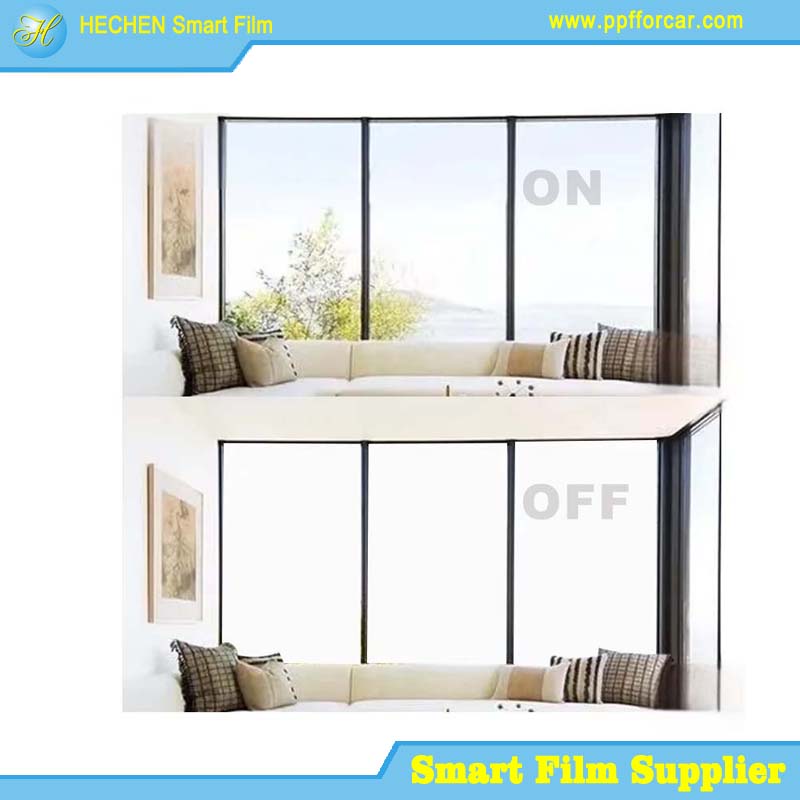
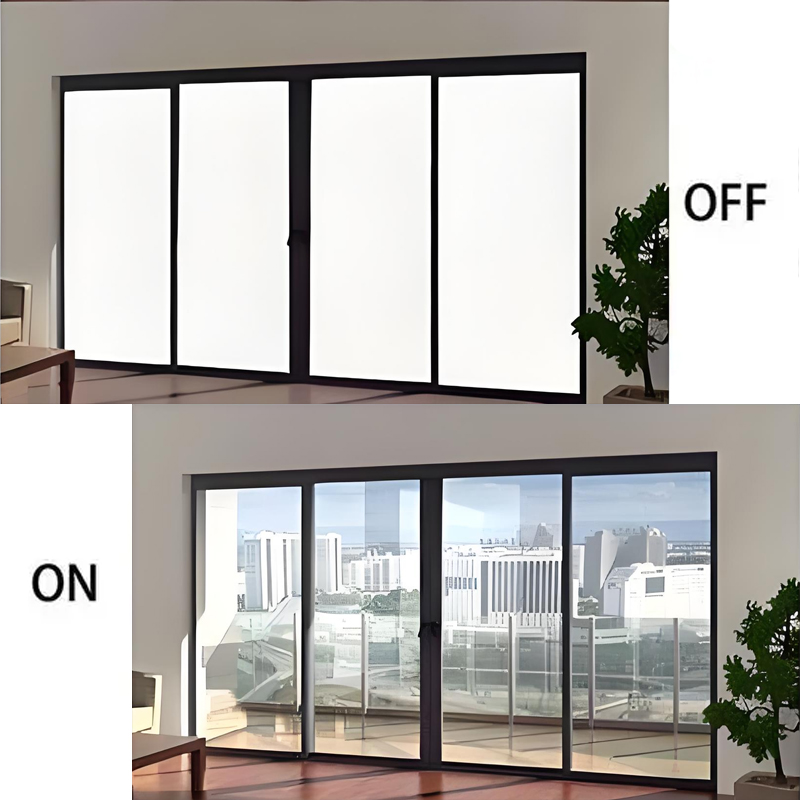
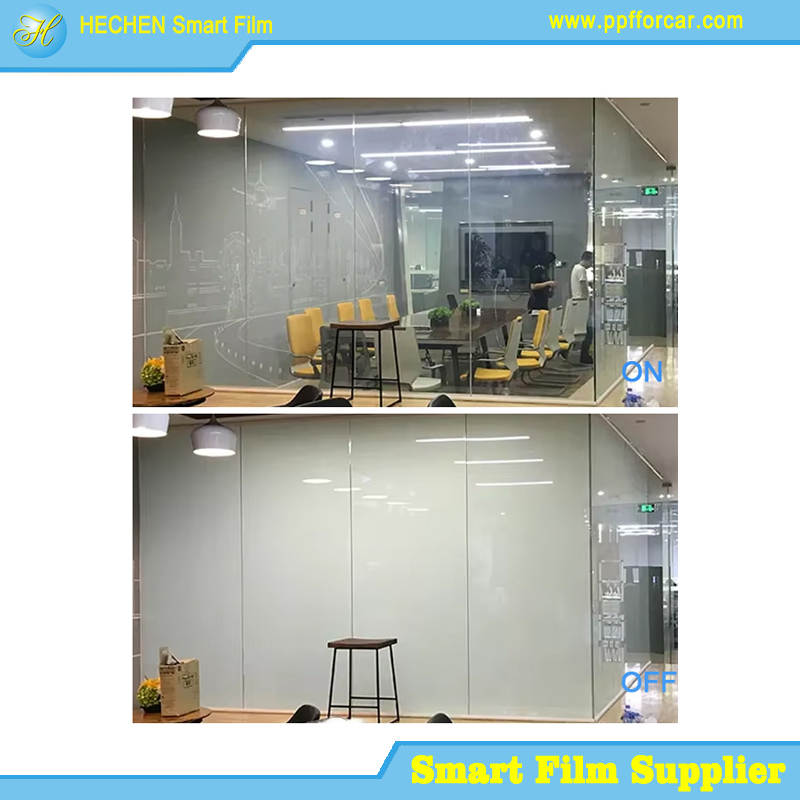
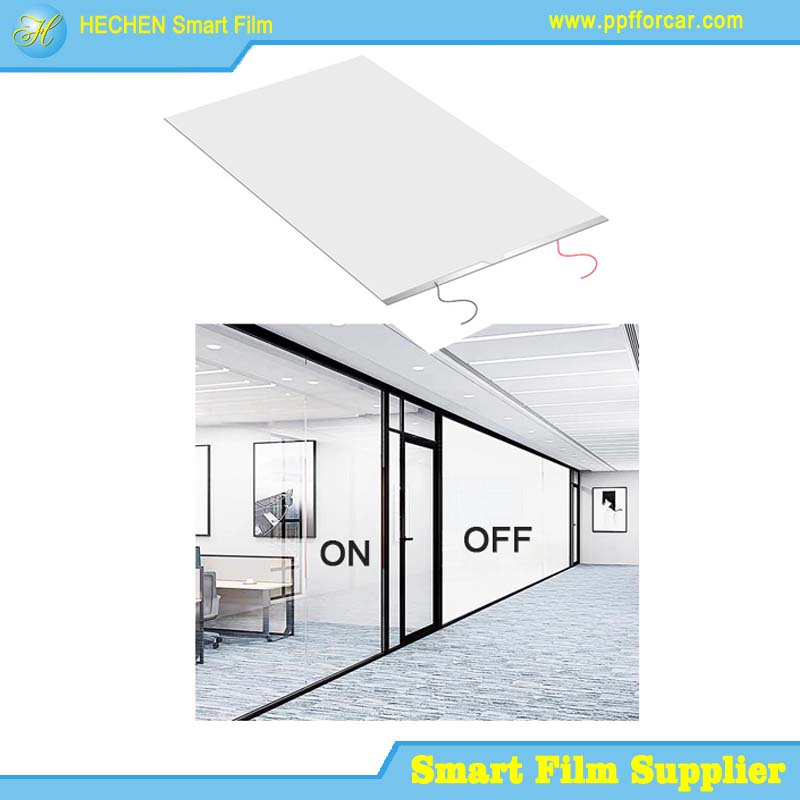
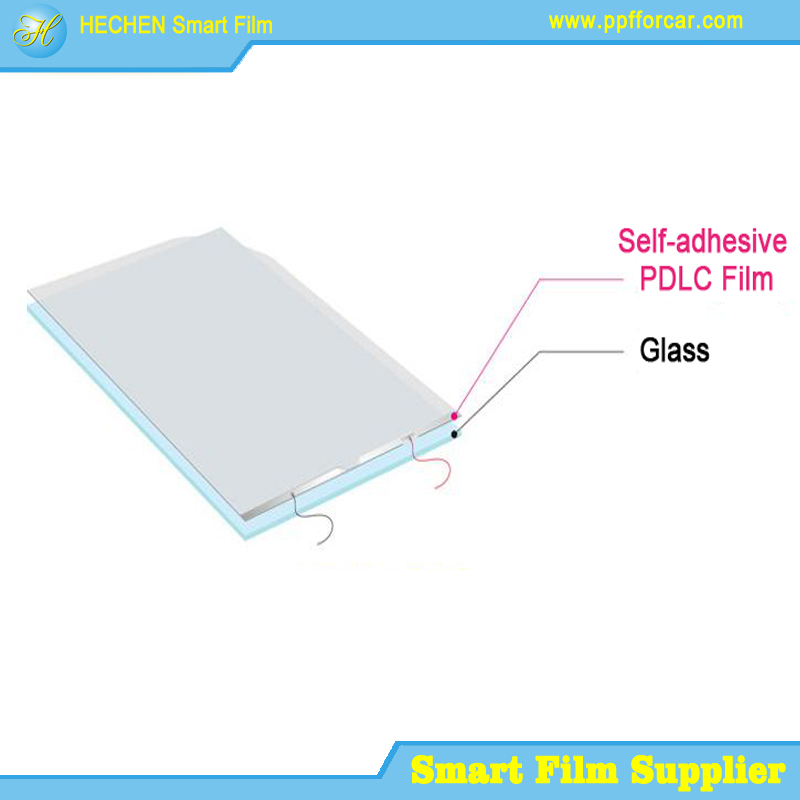
PDLC Technology: This is the most prevalent for residential privacy applications. A thin laminate film, typically sandwiched between two layers of conductive PET (Polyethylene Terephthalate) and two layers of adhesive, contains micro-droplets of liquid crystals dispersed in a polymer matrix. In the off state (no power), the liquid crystals are randomly oriented, scattering incoming light. This creates a translucent, "frosted" or "milky white" appearance, providing privacy while still diffusing natural light. When a low-voltage AC current (typically 24V-110V AC) is applied—the on state—the crystals align parallel to the electric field. Light passes through these aligned crystals with minimal scattering, rendering the film transparent and restoring the clear view.
SPD Technology: More common in automotive and high-end architectural settings, SPD films contain microscopic light-absorbing particles suspended in a fluid. In the off state, these particles are randomly arranged, blocking a significant portion of visible light (up to 99.5%), creating a dark, tinted state—often blue or grey. When voltage is applied, the particles align, allowing light to pass through. SPD offers superior continuous dimming control (variable opacity) and is exceptional for solar control but is generally more expensive and less opaque in its "private" state than PDLC's frosted effect.
System Architecture: A complete ESWT system comprises:
The Switchable Film: Applied to the interior surface of existing glass (retrofit) or laminated between glass panes in new insulated glass units (IGUs).
The Power Supply/Controller: Converts standard household current to the appropriate voltage and frequency for the film. Advanced controllers enable scheduling, remote operation, and integration.
The Control Interface: This can range from simple wall switches and RF remotes to full integration into smart home ecosystems (e.g., via Wi-Fi, Zigbee, or Z-Wave modules), allowing control via smartphone apps, voice assistants (Google Home, Amazon Alexa, Apple HomeKit), or automated scenes.
The Privacy Paradigm: Dynamic Control at Your Fingertips
Privacy is the most immediately apparent benefit. ESWT transforms a transparent barrier into an opaque one in less than a second.
Instantaneous Transformation: Unlike motorized blinds that require cleaning and can obstruct views even when open, smart tint provides a clean, seamless transition. It eliminates the need for unsightly curtains in spaces where minimalism is desired.
Zoned Privacy: Large windows or open-plan living areas can be zoned. For example, the lower half of a bathroom window can be frosted for privacy while the top remains clear for light, or a home office within a living room can be visually isolated during work hours.
Security Enhancement: The opaque state prevents casual observation of home interiors, deterring potential burglars from casing valuable items. When paired with vacation modes, the film can cycle opacity to simulate occupancy.
Aesthetic Versatility: Beyond standard frosted, films are available in decorative patterns, colors, and even custom logos, merging technology with interior design.
The Energy Efficiency Engine: A Data-Driven Advantage
While privacy is visceral, the energy-saving potential of ESWT is profound and quantifiable, impacting both heating and cooling loads—the largest contributors to home energy consumption.
A. Solar Heat Gain Control (The Cooling Load):
The primary energy saving occurs in summer. Standard windows allow Short-Wave Infrared Radiation (SWIR) from sunlight to pass through, heating interior surfaces (solar heat gain). This directly increases air conditioning load.
Technical Performance: In its tinted/opaque state, high-quality ESWT can reject a significant percentage of Solar Heat Gain Coefficient (SHGC). While specific values depend on the film and base glass, advanced PDLC films can reject up to 30-40% of infrared heat. Some variants are engineered with low-emissivity (Low-E) properties or are paired with spectrally selective films to enhance this further.
Impact: By dynamically tinting windows exposed to direct afternoon sun, the internal heat gain is drastically reduced. Studies and manufacturer data suggest potential reductions in cooling energy consumption of 15-30% in sun-exposed rooms, depending on climate, window orientation, and building envelope.
B. Insulation & Thermal Comfort (The Heating Load):
In its transparent state, ESWT has minimal impact on visible light transmission. However, the multilayer film structure, especially when laminated in an IGU, adds an extra insulating barrier.
U-Value Improvement: The U-Value measures the rate of heat loss. A standard double-pane window has a U-Value around 2.8 W/m²K. Adding a PDLC laminate can improve this to approximately 2.4-2.6 W/m²K, reducing conductive heat loss in winter. The real savings, however, come from managing radiant heat.
Reduced Radiant Asymmetry: Clear windows on a cold day create a "cold radiant" effect, where your body loses heat to the cold glass surface, leading to discomfort even if the air temperature is high. The frosted layer diffuses and slightly insulates, improving perceived thermal comfort, potentially allowing for lower thermostat settings.
C. Glare Reduction & Daylighting:
Excessive glare leads to occupants closing blinds and switching on artificial lights, wasting both cooling energy (from light heat) and electricity. ESWT can be tuned to a mid-level tint (with SPD or some advanced PDLC) to mitigate glare without plunging a room into darkness, maximizing the use of free, natural daylight and reducing lighting energy use by up to 20%.
Integration and Practical Considerations for Homeowners
Implementing ESWT requires careful planning.
Retrofit vs. New Construction: Retrofit films are applied directly to existing glass. It's cost-effective and non-invasive but may have slight imperfections. Laminated units (new glass) offer superior durability, clarity, and integration but are a larger investment, ideal for new builds or full window replacement projects.
Power and Wiring: Each window requires a power connection. Planning for discreet wiring (through window frames, sills, or walls) is crucial for a clean install. Battery-operated films exist but are niche due to limited lifespan.
Smart Home Integration: The true potential is unlocked via integration. Imagine scenes like "Good Morning" (tints clear), "Movie Mode" (tints dark), or "Away Mode" (randomized opacity). Integration with solar sensors can enable fully automated operation, where the film tints in response to direct sunlight intensity.
Cost-Benefit Analysis: Residential ESWT costs $50-$150 per square foot, installed, depending on technology, size, and integration complexity. While not inexpensive, it should be evaluated as a multi-functional capital improvement: a window treatment, an energy efficiency upgrade, and a smart home feature. Incentives like energy-efficiency tax credits (where applicable) can improve ROI.
Durability and Maintenance: Modern films are robust, with lifespans exceeding 10-15 years. They are cleaned like standard glass with non-abrasive cleaners. The power draw is minimal, similar to an LED bulb per window.
The Future and Conclusion
Electric Smart Window Tint is more than a novel gadget; it represents a shift towards responsive and adaptive building envelopes. The future points towards further integration:
Photovoltaic Integration: Combining ESWT with transparent solar cells, creating windows that generate power while controlling light.
Thermochromic & Electrochromic Advancements: New materials that respond directly to heat or offer wider ranges of tint for superior energy modulation.
IoT and AI Optimization: Windows that communicate with home energy management systems, reacting not just to sun but to weather forecasts, grid demand, and occupant behavior patterns.
Conclusion
Electric Smart Window Tint for the home elegantly solves the age-old window dilemma. It seamlessly merges on-demand privacy with significant, measurable energy savings, all wrapped in a sleek, futuristic interface. By offering dynamic control over solar heat gain, glare, and insulation, it moves the window from a passive component to an active player in home comfort and sustainability. For homeowners investing in modern comfort, smart technology, and long-term energy efficiency, ESWT is a compelling, transformative solution that redefines what a window can be. It is not merely a tint; it is the intelligent skin of the 21st-century home.
For more about the electric smart window tint for home: the seamless fusion of privacy & energy saving, you can pay a visit to Hechen PDLC Smart Film Manufacturers for more info.