How to Apply Self-Adhesive PDLC Film to Any Glass Surface
Self-adhesive Polymer Dispersed Liquid Crystal (PDLC) film represents a revolutionary leap in smart glass technology, offering instant privacy, dynamic light control, and modern aesthetics at a fraction of the cost of traditional wired smart glass. Unlike laminated or liquid-injected units, PDLC film is a standalone adhesive layer that can be retrofitted to existing glass, making it accessible for both DIY projects and professional installations.
However, the promise of "smart glass in minutes" hinges entirely on the quality of the application. A single speck of dust, a misplaced bubble, or improper electrical connection can compromise the film's optical clarity, adhesive integrity, and functionality. This comprehensive, 1600-word guide will walk you through the professional-grade process of applying self-adhesive PDLC film to any glass surface, ensuring a flawless, durable, and high-performance result.
Understanding the Technology and Its Demands
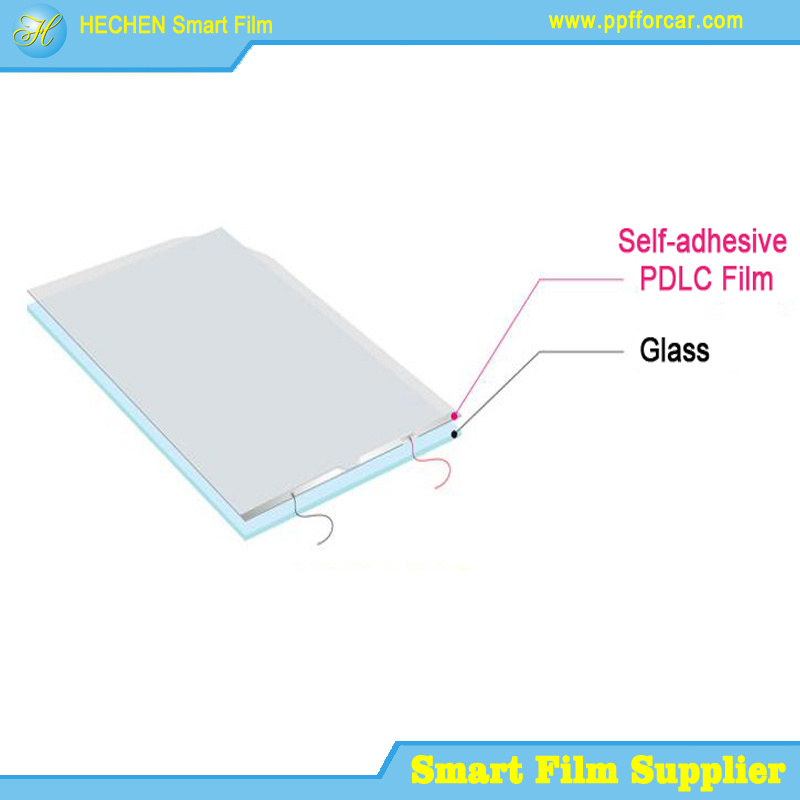
Before touching the glass, it’s crucial to understand what you’re working with. A self-adhesive PDLC film is a sophisticated multi-layer laminate. From top to bottom, it typically consists of:
A protective top layer (often PET): Provides scratch resistance.
The PDLC active layer: Contains the liquid crystals that scatter or align light.
Conductive layers (ITO/PET): Thin, transparent electrodes that carry the current.
The pressure-sensitive adhesive (PSA) layer: The key to installation.
A removable liner: Protects the adhesive until application.
The adhesive is pressure-sensitive, not a liquid glue. It bonds on contact under firm, even pressure. This characteristic makes the initial alignment critical—repositioning is extremely difficult and can damage the conductive layers. The film’s optical performance is also dependent on a perfectly clean, contaminant-free bond with the glass.
Phase 1: Pre-Installation – Planning and Preparation (The Most Critical Step)
Tools and Materials Required:
PDLC Film Kit: Correctly sized for your glass, including controller and power supply.
Cleaning Supplies: High-purity isopropyl alcohol (99% recommended), distilled water, a brand-new razor blade/scraper, a high-quality microfiber cloth (lint-free), and a clean, non-abrasive paper towel (like blue shop towels).
Application Tools: A high-density felt squeegee with a sharp, clean edge. A soft rubber squeegee can be a secondary tool.
Alignment & Support: A stable platform or a second pair of hands. Low-tack painter's tape for marking and holding.
Environmental Control: A spray bottle with a light soapy water solution (2-3 drops of clear, non-conditioning dish soap per liter of distilled water).
Electrical Tools: Wire strippers, electrical tape, screwdriver, and drill if routing cables.
Safety Gear: Nitrile gloves to prevent fingerprints.
Environmental Conditions:
Install in a controlled environment. Ideal conditions are:
Temperature: Between 18°C and 25°C (65°F - 77°F). The film, glass, and adhesive must all be acclimatized to room temperature for at least 24 hours.
Humidity: Moderate (40-60%). High humidity increases dust static and condensation risk.
Cleanliness: The work area must be as dust-free as possible. Avoid working near HVAC vents. Wet floors can help settle airborne dust.
Surface Preparation:
This step is non-negotiable. The glass must be surgically clean.
Remove Existing Hardware: Take off handles, locks, or any obstacles on or around the glass.
Initial Clean: Wipe the glass with soapy water to remove grease and grime. Scrape off any paint, glue, or hardened debris with a fresh razor blade held at a 45-degree angle.
Deep Clean: Spray isopropyl alcohol directly onto the glass. Using a clean section of paper towel, scrub the entire surface in a systematic, overlapping "S" pattern. The alcohol will dissolve organic residues and evaporate quickly without streaks.
Final Wipe & Inspection: Using a fresh, lint-free microfiber cloth, give the glass a final polish. Then, in a raking light (shine a flashlight or lamp at a shallow angle across the surface), inspect for any remaining dust, fibers, or smudges. Re-clean any contaminated spots. Do not touch the prepared surface with bare hands.
Phase 2: The Application Process – A Step-by-Step Walkthrough
Step 1: Dry Fit and Electrical Planning
Do not peel the liner yet. Unroll the film and, with the liner side down, position it against the glass. Use painter's tape at the top to create a temporary hinge. This allows you to visualize the final placement and plan the cable routing. The film typically has two busbar electrodes (often thicker, silver-colored edges). Decide which edge will connect to the controller and plan a discreet, safe path for the wires to a power outlet.
Step 2: Preparing the "Wet Method" Solution
While a "dry" installation is possible for experts, the "wet method" is highly recommended for beginners and large panels. It allows for minor repositioning and helps eliminate bubbles. Fill your spray bottle with the prepared soapy water solution (distilled water + 2-3 drops of dish soap). This acts as a lubricant.
Step 3: Peeling, Wetting, and Aligning (The Moment of Truth)
With the film hinged at the top, peel back the liner about 30-50 cm (12-20 inches) from the top edge. Cut away the removed liner.
Liberally spray the now-exposed adhesive with the soapy water solution.
Liberally spray the corresponding area of the prepared glass.
Carefully bring the adhesive side of the film into contact with the wet glass, aligning it precisely with your top and side margins. The soapy water will allow it to slide slightly.
Once the top section is aligned, use your squeegee gently to adhere the top 10-15 cm (4-6 inches), pushing out the soapy water from the center towards the edges. This creates a secure anchor point.
Step 4: The Progressive Squeegee Technique
Peel and Spray: Slowly peel back more of the liner with one hand, while your assistant (or your other hand in a careful motion) sprays both the newly exposed adhesive and the glass.
Lower and Smooth: Lower the film onto the wet glass. Do not let the adhesive touch dry glass.
Squeegee Firmly: Starting from the center of the newly laid section, use the felt squeegee in firm, overlapping strokes to push the water and air bubbles towards the edges. Work from the center outwards and from top to bottom. Apply significant, even pressure.
Repeat this process—peel, spray, lower, squeegee—in manageable sections until the entire film is applied and the liner is fully removed.
Step 5: Final De-Watering and Edge Sealing
After the entire film is down, you will see a milky, water-trapped appearance. This is normal.
Begin a final, firm pass with the squeegee over the entire surface. Use a systematic pattern (e.g., vertical strokes top to bottom, then horizontal left to right) to ensure all solution is expelled.
Pay special attention to the edges. Firmly run the squeegee along the perimeter to ensure a strong, sealed bond. Wipe away expelled solution with a clean cloth.
For stubborn water pockets or small bubbles near the edge, you can gently lift the edge and re-squeegee. For central bubbles, a small pinprick can sometimes be used to release air before pressing flat, but this is a last resort.
Phase 3: Post-Application – Curing and Electrical Integration
Curing Time:
The adhesive requires time to reach full strength (typically 24-72 hours). The film may appear slightly hazy initially as the last micro-layer of water evaporates through the film. This should clear completely. Do not touch, press, or clean the film during this period.
Electrical Connection:
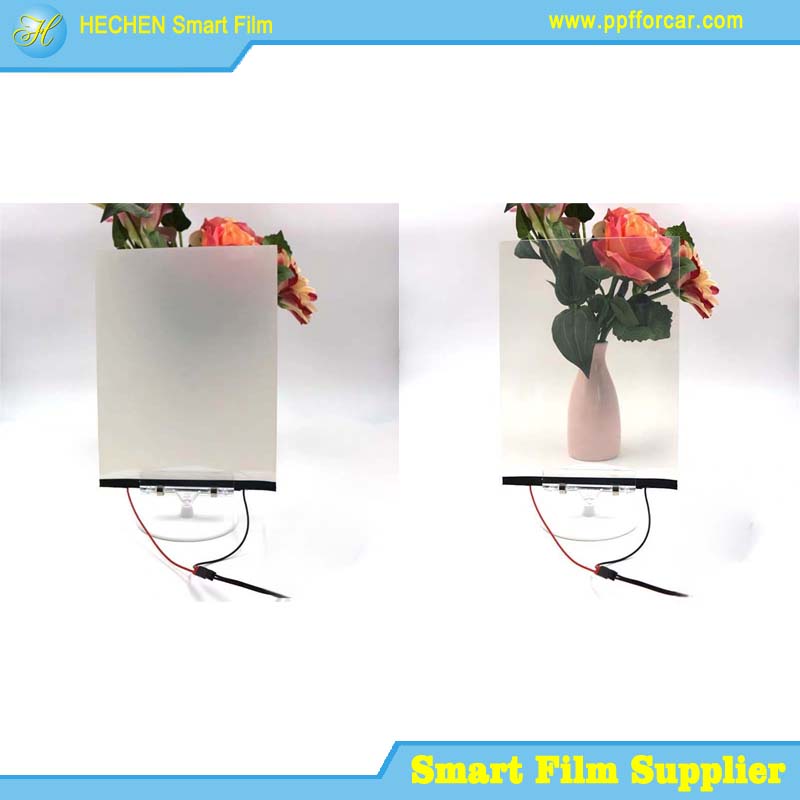
Identify Terminals: Locate the two electrode busbars. Your controller will have two output wires.
Make Connection: Follow the manufacturer's instructions. This usually involves clamping the controller wires to the busbars with provided clips or using conductive copper tape. Ensure a solid metal-to-metal contact. Insulate any exposed connections with electrical tape.
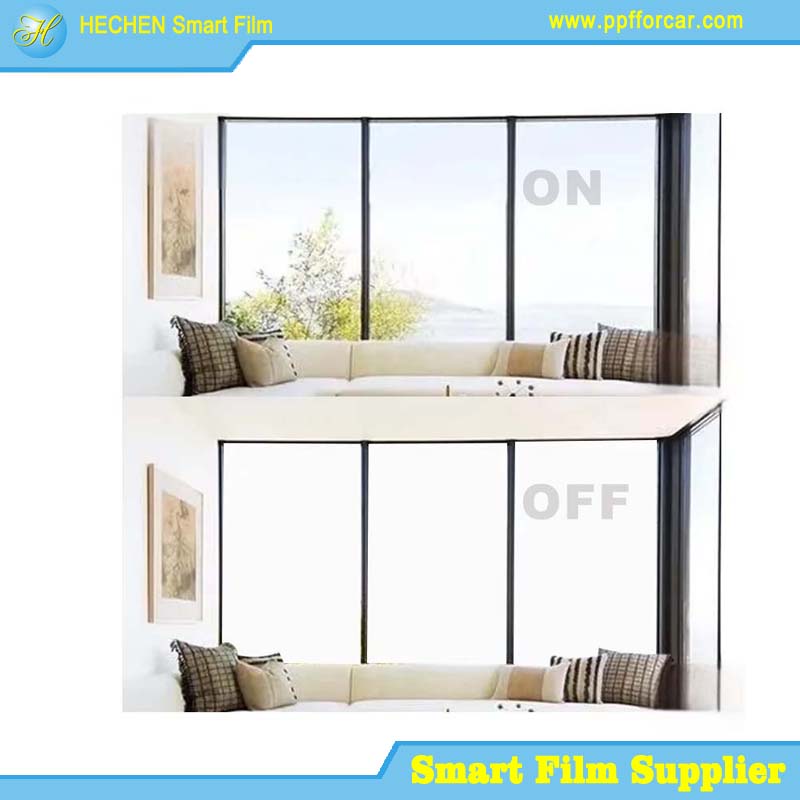
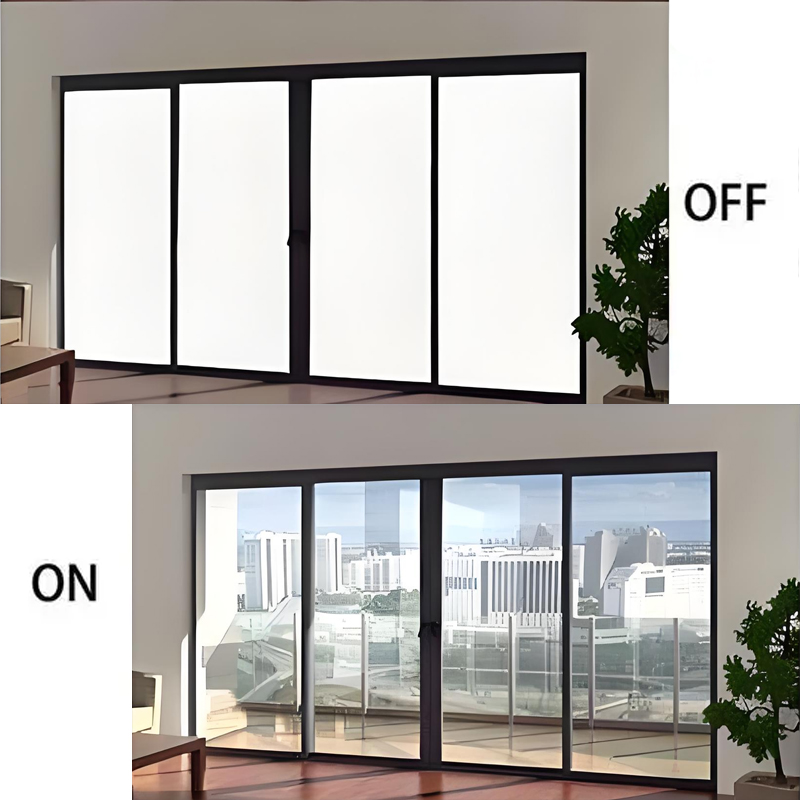
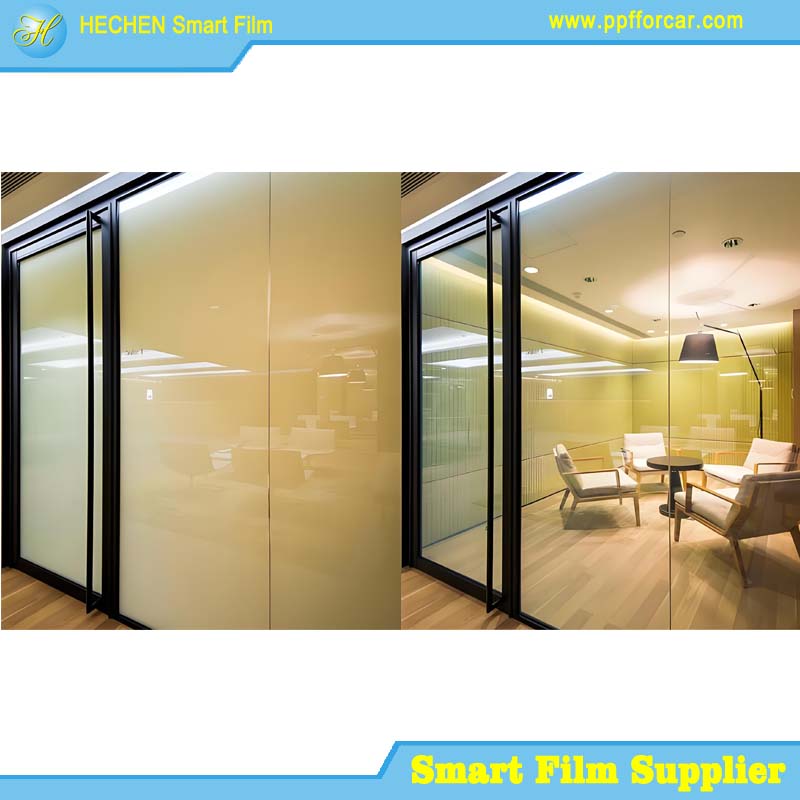
Power On Test: Once connections are secure and insulated, plug in the controller. Test the switching function. The film should transition from opaque (OFF) to clear (ON) smoothly. Listen for a faint hum from the controller as confirmation it's working.
Phase 4: Troubleshooting Common Issues
Dust or Lint Specks Under the Film: If small and near the edge, they can sometimes be pushed out with firm squeegeeing towards the closest edge. If central, they are usually permanent. Prevention via cleaning is the only true solution.
Large Air Bubbles: Caused by insufficient squeegee pressure or fast application. Try pushing them firmly towards the nearest edge. If trapped, a precision syringe can be used to inject a tiny amount of soapy water underneath, then re-squeegee.
Film Not Sticking at Edges: Usually due to contamination or insufficient edge pressure during application. Ensure the glass was cleaned right to the edge. You may need to apply a very thin bead of clear, neutral-cure silicone sealant along the edge for security and moisture protection (check compatibility with film first).
Hazy Appearance Persists After 72 Hours: This indicates moisture or air trapped in the adhesive layer, often from incomplete squeegeeing. In severe cases, the film may need to be removed and reapplied.
Film Does Not Switch/Clear Unevenly: Check electrical connections. Ensure clips are making contact with the conductive busbar, not just the transparent layer. Test the controller and power supply with a multimeter. An uneven clear state often points to a poor connection at one of the electrodes.
Conclusion
Applying self-adhesive PDLC film is less about brute force and more about meticulous preparation and controlled technique. The mantra "measure twice, cut once" evolves into "clean ten times, apply once." By dedicating 80% of your effort to preparation—environment control, tool selection, and obsessive cleaning—you set the stage for a straightforward, successful application.
The reward for this precision is a transformative upgrade: a pane of ordinary glass reborn as a dynamic, functional element of your space. Whether for a bathroom window, a office partition, or a residential skylight, a correctly applied PDLC film delivers years of reliable, instant privacy at the flick of a switch. By following this technical guide, you move beyond a simple DIY task and execute a professional-grade installation, ensuring the smart technology performs exactly as promised: clearly, reliably, and impressively.
For more about how to apply self-adhesive PDLC film to any glass surface, you can pay a visit to Hechen PDLC Smart Film Manufacturers for more info.