Is PDLC Film for Cars Legal? Tint Laws by USA State & Best Practices
TL;DR: This comprehensive guide examines the legality of automotive PDLC (polymer-dispersed liquid crystal) film across the United States. Unlike static window tints that have a fixed visible light transmission (VLT) value, PDLC film actively switches between transparent (clear) and opaque (milky white) states. This dual-nature creates unique legal challenges: the transparent state must comply with each state‘s front-side VLT requirements (typically 25–70%), while the opaque state—if used on front windows while driving—would almost certainly violate safety laws nationwide because it reduces visibility well below legal thresholds. Provides a state-by-state breakdown of VLT limits for 2026, explains how PDLC differs from conventional tint under existing regulations, outlines recent legislative changes (e.g., New York’s proposed 50% VLT standard), and offers best practices for legal installation and use.
Introduction: The Legal Gray Area of Smart Tint
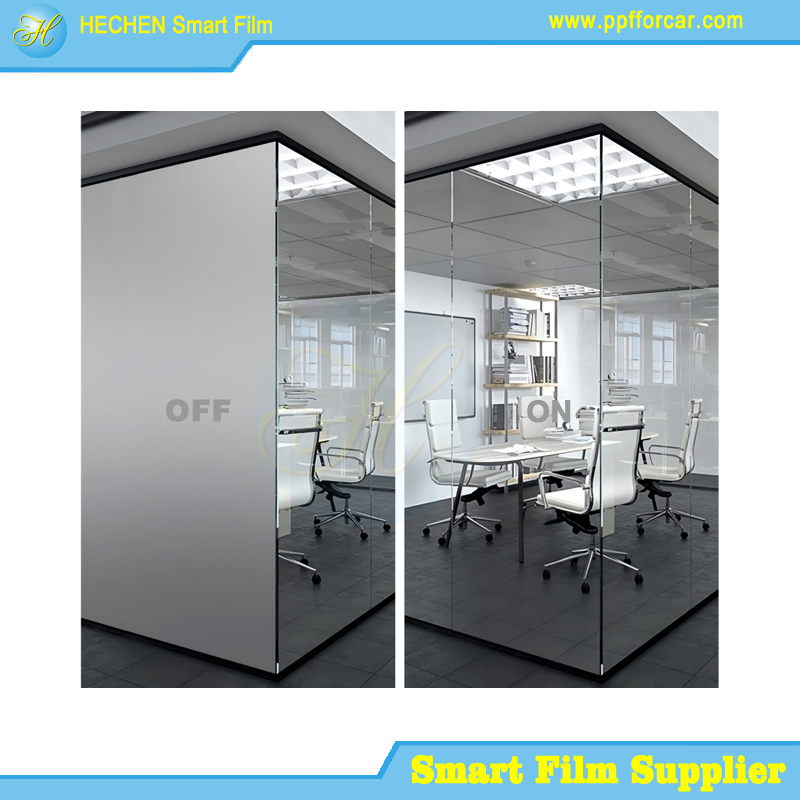
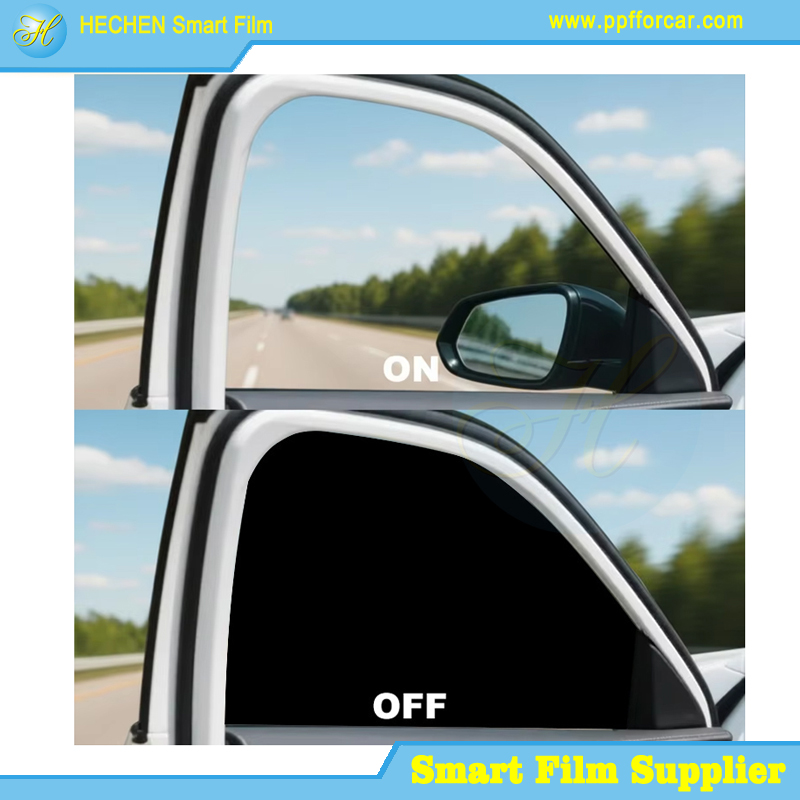
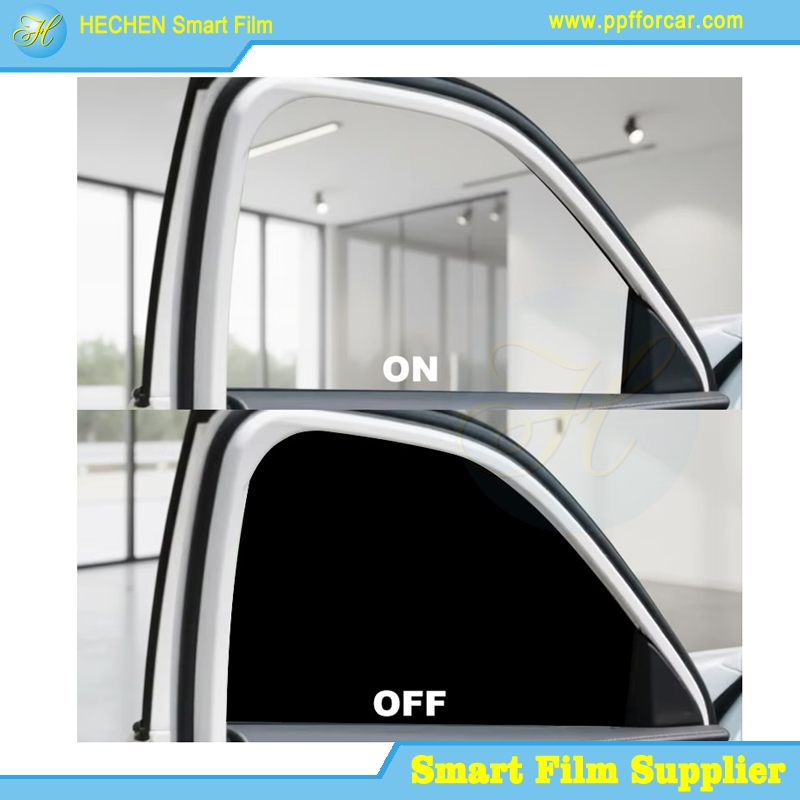
PDLC (polymer-dispersed liquid crystal) film is fundamentally different from traditional window tint. Instead of providing a single, fixed level of darkness, it switches between two distinct optical states: transparent (clear) when powered, and opaque (milky white) when unpowered. This switchable nature raises a critical legal question: which state do the laws apply to, and when?
The short answer is that both states are subject to regulation, depending on when and where each state is active. The transparent state must comply with visible light transmission (VLT) limits for the windows on which it is installed. The opaque state, because it dramatically reduces light transmission, is generally illegal on front side windows and windshields while the vehicle is in motion—and in many states, even when parked (though enforcement is rare).
This guide explains the federal framework, state-by-state VLT requirements, how PDLC fits into existing laws, recent 2026 legislative updates, and best practices for staying compliant while enjoying the benefits of smart tint.
Federal Law: What the NHTSA Says
Before diving into state laws, it is essential to understand the federal baseline. The National Highway Traffic Safety Administration (NHTSA) issues Federal Motor Vehicle Safety Standard (FMVSS) No. 205, which governs glazing materials in new vehicles.
FMVSS No. 205 requires that all windows “requisite for driving visibility” in passenger cars have a light transmittance of at least 70 percent at the time of first sale. This includes the windshield, front side windows, and rear windows. The purpose is to ensure adequate visibility and reduce crash risk. Factory glass typically transmits 70–90% of visible light. A completely clear window transmits about 90%, while factory-tinted glass in new vehicles is about 80%.
However, FMVSS No. 205 applies to manufacturers, distributors, dealers, and repair businesses—not to vehicle owners. The NHTSA explicitly states: “Vehicle owners are not restricted by Federal law in the modifications that they make to their vehicles, and could tint their windows as dark as they like without violating Federal law.” Of course, NHTSA does not encourage tinting darker than Standard No. 205 allows.
Crucially, the regulation of vehicle operation and use falls entirely to individual states. As the NHTSA notes, “Individual States govern the operational use of vehicles by their owners … it is within the authority of the States to preclude owners from applying dark tinting material on their vehicles.” This is why window tint laws vary so dramatically from state to state.
How Window Tint Laws Work: VLT Explained
State tint laws are built around Visible Light Transmission (VLT) —the percentage of visible light that passes through a window after tint has been applied. A higher VLT means a lighter tint; a lower VLT means a darker tint.
For reference:
70% VLT: Very light, almost clear. Common requirement for front windows in strict states.
50% VLT: Balanced, subtle darkness. Sometimes allowed on front windows.
35% VLT: Moderate popular standard—balances glare reduction with outward visibility.
20% VLT: Dark, high privacy, often illegal on front windows.
5% VLT (“limo tint”): Extremely dark, blocks 95% of light; illegal on front windows in virtually all states.
A critical nuance often missed is the “Net VLT” trap. Modern vehicle glass already has a slight factory tint, typically 70–80% VLT embedded in the glass itself. State laws govern the combined VLT of the glass plus aftermarket film, not just the film alone. For example, applying a film labeled “35% VLT” to glass that is already 70% VLT results in a net transmission of approximately 24.5% (0.70 × 0.35)—well below most state limits. To legally achieve a net 35% VLT on typical factory glass, an installer must use a film rated around 50% VLT.
Since 2024, all 50 states now permit or require state-certified inspectors to use calibrated digital photometers during inspections and traffic stops. These devices measure actual VLT within ±2% accuracy.
How PDLC Film Fits Into Existing Tint Laws
PDLC film creates a unique situation because its VLT changes dramatically with state. Here is how the law applies:
Transparent (Clear) State
When powered on, PDLC film is designed to be optically clear, typically achieving 70–80% VLT. In this state, it behaves like a very light or completely clear window film. For side windows, the transparent state must comply with the state‘s front-side VLT requirement (if installed on front side windows). For rear windows, there is often no restriction at all.
This is the safest state for driving. Provided the film in its transparent mode meets or exceeds the state’s minimum VLT for the window location, driving with the film set to clear is fully legal.
Opaque (Privacy) State
When unpowered, PDLC film becomes milky white or translucent, with typical VLT of 5-20% (meaning only 5‑20% of light passes through). This is well below the legal limit for front side windows in every state.
Therefore, operating a vehicle with PDLC film in opaque mode on the front side windows or windshield is illegal nationwide. The film drastically reduces the driver’s ability to see pedestrians, other vehicles, and road hazards. While some drivers might wish to use opaque mode on sunny afternoons to reduce glare, doing so on front windows creates a serious safety hazard and invites traffic stops and citations.
The exception: Rear side windows and the rear windshield may legally be kept in opaque mode while driving in most states, as rear-window tint restrictions are typically minimal or nonexistent. However, drivers must check their local laws—some states regulate rear windows as well.
Parked Vehicles
When the vehicle is parked and unoccupied, the legal situation is less clear. Most state tint laws apply to vehicles “operated on public roads.” A car parked in a driveway or parking lot with opaque windows is unlikely to attract enforcement. However, some states have laws that apply regardless of operation, and police may still issue citations if the vehicle is visible from the road. For practical purposes, using opaque mode while parked is widely accepted and rarely enforced—but it is not a guarantee of legality in every jurisdiction.
State-by-State VLT Requirements (2026 Update)
Tint laws vary significantly by state. Below is a summary of front side window VLT requirements for key states, based on 2026 data. Always verify with your state‘s DMV before installation, as laws change frequently.
Strictest States (70% VLT on Front Sides)
California: Front side VLT 70% minimum, rear no restriction, windshield strip top 4 inches. Aftermarket front tint rarely legal; requires installer certificate.
New York: 70% minimum (proposed 50%), rear 70% minimum, windshield strip top 6 inches. Proposed legislation would lower front/rear to 50%.
Pennsylvania: 70% minimum front and rear, windshield strip top 5 inches. One of the strictest.
Alaska: 70% front, 40% rear side, 30% rear window, windshield strip top 5 inches. Very restrictive on all windows.
Delaware: 70% front, rear no restriction, windshield strip top AS-1. SB 255 proposes 35% for front sides.
Iowa: 70% front, rear no restriction, windshield strip top AS-1. Allows full windshield tint at 70%+ VLT.
Moderate States (25–35% VLT on Front Sides)
Texas: 25% minimum front, rear no limit. One of the most lenient.
Florida: 28% minimum front, rear side/rear 15% VLT.
Arizona: 33% minimum front, rear no limit.
North Carolina: 35% minimum (net). Meter may read 32% as passing.
Colorado: 27% minimum.
Georgia: 32% minimum.
Illinois: 35% minimum front and rear.
Unique or Unusual Restrictions
New Jersey: Prohibits aftermarket tint on both windshields and front side windows entirely. Rear side windows and rear window may be tinted to any darkness.
Vermont: Similarly prohibits front side window tinting.
Michigan: Allows only a four-inch horizontal tint band on front side windows (similar to windshield strip).
North Carolina: As of December 1, 2025, window tint is no longer measured during annual safety inspections, but tint must still meet legal limits, and drivers can be cited during traffic stops.
Medical Exemptions
Many states allow darker-than-legal tints for drivers with qualifying medical conditions (e.g., lupus, melanoma, extreme photosensitivity). To qualify, drivers typically need a signed statement from a licensed physician and an official exemption permit from the state DMV. The documentation must be kept inside the vehicle at all times.
Recent and Proposed 2026 Legislative Changes
Tint laws are not static. Several states have introduced or passed legislation in 2026 that affects PDLC film owners:
New York (S9226) : Proposed legislation would lower the VLT standard for all windows except the front windshield from 70% to 50%. The bill’s justification notes that FMVSS 205 was originally based on 1930s glass manufacturing capabilities, not driver safety research. The bill would also provide a ±7% tolerance for measurements.
Delaware (SB 255) : Would update Delaware law to allow 35% VLT on front side windows (currently 30% with medical waiver).
New Hampshire (proposed 35% VLT) : Bill would allow front side window tinting at 35% VLT and create medical exemptions for similar tinting.
For PDLC buyers, these changes trend toward more lenient VLT standards, which may eventually make smart tint more widely acceptable on front windows in its transparent state. However, even at 50% VLT, the opaque state remains far too dark for legal driving.
Best Practices for Legal PDLC Installation
To enjoy the benefits of PDLC film without legal trouble, follow these best practices:
Choose the Right Windows
Install PDLC film only on rear side windows and the rear windshield. These windows have minimal or no VLT restrictions in most states, and opaque mode is legal while driving.
Avoid installing PDLC film on front side windows unless you are certain the transparent state meets your state‘s VLT requirement AND you never use opaque mode while driving.
Never install PDLC film on the windshield. Windshields have the strictest regulations (usually only a top strip of non-reflective tint is allowed).
Use a Professional Installer
Professional installation ensures:
The film’s transparent-state VLT is measured post-installation using a calibrated photometer.
The installer provides a certificate of compliance listing the measured VLT, meter model, and calibration date.
Edge sealing prevents moisture ingress (which affects optical clarity and could alter light transmission over time).
Program the Driver for Safety
Most PDLC controllers can be configured with auto-return to transparent when the ignition is on. This ensures the film never remains in opaque mode while the car is being driven. Some drivers also wire the system so the film is transparent by default and only switches to opaque manually—preventing accidental operation.
Keep Documentation in the Vehicle
If your PDLC film is installed on front side windows in a state with strict VLT limits, keep the installer’s VLT measurement report and certificate of compliance in your glove compartment. In the event of a traffic stop, this documentation can demonstrate that the film meets legal requirements in its transparent state.
Understand Local Enforcement
Enforcement varies widely. Some states conduct routine VLT checks during annual safety inspections. Others rely entirely on police discretion. In states where PDLC on front windows is technically legal in transparent mode, an officer seeing opaque windows while the car is parked may still stop the vehicle to investigate. Knowing local enforcement patterns helps you avoid unnecessary citations.
Penalties for Non-Compliance
Operating with illegal tint carries real consequences. Penalties vary by state but generally include: fines, corrective “fix-it” notices requiring removal of the film, and in some cases, failed vehicle inspections. In Texas, for example, first-offense fines typically range from 200, and failure to correct the violation can result in additional penalties. California violations carry a base fine of 100–$200 with court assessments. PDLC owners should factor these risks into their installation decisions.
Conclusion: PDLC Is Legal—If Used Correctly
PDLC film for cars is not inherently illegal. Like any aftermarket modification, its legality depends entirely on where it is installed, how it is used, and which state the vehicle is registered in.
Rear windows: PDLC is almost always legal. Opaque mode is safe and permissible while driving.
Front side windows: PDLC can be legal in its transparent state if the film’s VLT meets state requirements. Opaque mode on front windows while driving is illegal in every state.
Windshield: PDLC film is not recommended and is unlikely to be legal anywhere in the US.
By choosing the right installation configuration, programming the driver for safety, and staying informed about local VLT limits, drivers can fully enjoy the privacy, heat rejection, and UV protection of PDLC smart film without running afoul of the law. The dual-nature of PDLC is a feature, not a flaw—but using that feature requires understanding that the transparent state is for driving, and the opaque state is for parking.
Key Takeaways
Federal law (FMVSS No. 205) requires new vehicles to have at least 70% VLT on windows requisite for driving visibility, but this applies to manufacturers, not vehicle owners. States regulate owner modifications and vehicle operation.
VLT (Visible Light Transmission) is the universal metric for tint darkness. Lower VLT means darker tint. Net VLT (glass + film) is what law enforcement measures.
PDLC has two states: Transparent (clear, 70‑80% VLT) — potentially legal on front windows if it meets state limits. Opaque (milky white, 5‑20% VLT) — illegal on front windows while driving in all states.
Front side windows have the tightest restrictions. In strict states like California, New York, and Pennsylvania, VLT must be at least 70%—meaning only virtually clear PDLC film qualifies. More lenient states like Texas (25%) and Florida (28%) allow noticeably darker transparent films.
Rear side windows and rear windshield have minimal or no VLT restrictions in most states. These are the safest locations for PDLC installation, and opaque mode is generally legal while driving.
Never install PDLC on the windshield—only a top non-reflective strip is permitted.
Recent 2026 legislation in New York (proposed 50% VLT), Delaware (proposed 35% VLT), and New Hampshire (proposed 35% VLT) suggests a trend toward more lenient front-window standards.
Professional installation is strongly recommended to ensure proper VLT measurement, certificate of compliance, and documentation that can be presented during traffic stops.
Best practice: Install PDLC on rear windows only, program the driver to auto-return to transparent mode when the ignition is on, and keep compliance documentation in the vehicle.
Penalties for illegal tint include fines (200 typical for first offense), corrective notices, failed inspections, and repeat-violation fees.
For more about Is PDLC Film for Cars Legal? Tint Laws by USA State & Best Practices. Everything you need to know, you can pay a visit to https://www.ppfforcar.com/product/PDLC-Smart-Film/ for more info.