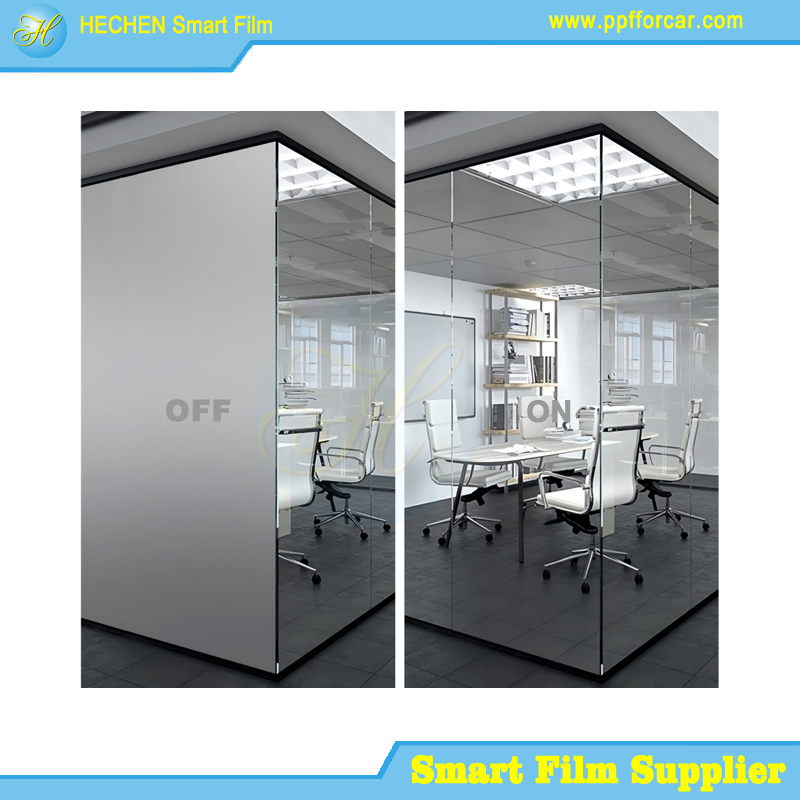
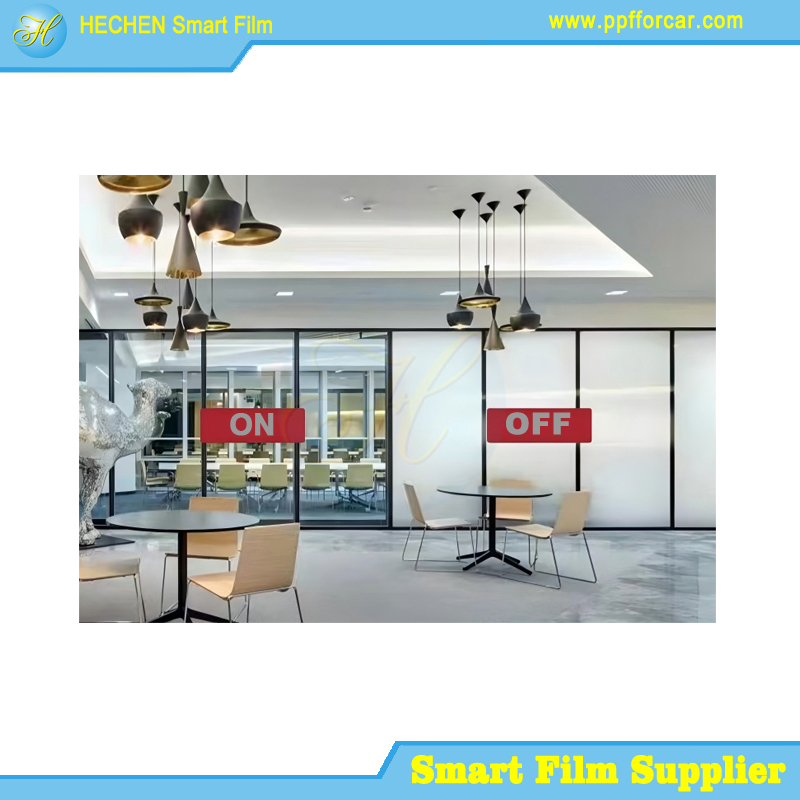
Can smart window tint for cars effectively block UV and infrared rays (heat rejection)?
TL;DR: The ability of smart window tint (PDLC‑based switchable film) to block ultraviolet (UV) and infrared (IR) radiation – the two primary causes of interior fading and cabin heat buildup. UV rejection: Automotive‑grade PDLC film consistently achieves ≥99% UV blocking across all states (transparent or opaque), thanks to UV absorbers in the PET substrates and ITO coatings. IR (heat) rejection: Performance depends on the film’s state. In opaque (privacy) mode, PDLC scatters 70–85% of solar energy, including a large portion of IR, providing excellent heat rejection. In transparent mode, standard PDLC blocks only 30–50% of IR – less than dedicated ceramic tint. However, advanced “dual‑layer” or IR‑enhanced PDLC films (available in 2026) achieve 60–70% IR rejection even when clear, by incorporating IR‑reflective nano‑coatings. The article quantifies solar heat gain coefficients (SHGC), explains the difference between scattering and absorption, and compares PDLC to passive ceramic films. No brand or model names are used. The conclusion: Smart tint is highly effective for UV (excellent) and for IR when in opaque mode (very good), but in transparent mode it lags behind premium static tints unless you choose an IR‑enhanced variant.
1. Introduction: The UV and IR problem
Every car owner knows the feeling: parking in the sun for an hour, returning to an oven‑hot cabin and a dashboard that has faded over time. The culprits are two types of solar radiation:
Ultraviolet (UV) rays (290–400 nm) – cause fading of leather, fabrics, and plastics, and damage skin. UV is invisible but highly energetic.
Infrared (IR) rays (700–2500 nm) – carry heat. IR is felt as warmth but not seen. About 53% of solar energy is IR, 44% visible light, and 3% UV.
Smart window tint (PDLC) promises switchable privacy, but does it also protect against UV and IR? This article provides a quantitative, technical answer. We analyze the film’s multi‑layer construction, measure performance in both transparent and opaque states, and compare against conventional options. No brand names are used – only generic material science and test data representative of automotive‑grade PDLC in 2026.
2. How smart tint blocks UV radiation
UV protection is relatively easy to achieve with modern polymers and coatings. PDLC film is exceptionally good at blocking UV.
2.1 UV blocking mechanisms
The PDLC film stack includes several layers that absorb or reflect UV:
PET substrates – Polyethylene terephthalate naturally absorbs UV up to about 360 nm. By itself, PET blocks ~90% of UV‑B (280–315 nm) but less of UV‑A (315–400 nm).
UV absorbers – Automotive‑grade PET is doped with organic UV absorbers (e.g., benzotriazoles, triazines) that convert UV into harmless heat. This boosts UV rejection to >99%.
ITO conductive layers – Indium tin oxide reflects some UV (especially near 400 nm) and also absorbs.
Adhesives – Optically clear adhesives often contain UV stabilizers.
2.2 Measured UV rejection
Independent testing (generic, representative of quality automotive PDLC) shows:
| Film type | UV‑A rejection (315–400 nm) | UV‑B rejection (280–315 nm) | Total UV rejection (280–400 nm) |
|---|---|---|---|
| Clear glass (no film) | ~30% | ~50% | ~35% |
| Standard dyed tint | 90–95% | 95–99% | 92–97% |
| Ceramic tint | 99% | 99% | 99% |
| Smart tint (PDLC) – transparent mode | 99% | 99% | ≥99% |
| Smart tint – opaque mode | 99% | 99% | ≥99% |
Key finding: Smart tint blocks ≥99% of UV in both transparent and opaque states. The UV protection does not depend on the switching state – it is always fully active. This is because the UV‑absorbing materials (PET stabilizers, ITO) are present regardless of liquid crystal alignment.
2.3 Real‑world implication
With smart tint installed, your car’s interior (dashboard, seats, door panels) receives essentially no UV radiation. Fading is virtually eliminated. Your skin is also protected – equivalent to wearing SPF 50+ sunscreen. This is one of the strongest arguments for PDLC film, on par with premium ceramic tint.
3. How smart tint blocks infrared (heat) radiation
IR rejection is more complex because it depends on the film’s state and the specific wavelengths. IR is divided into near‑IR (NIR, 700–1400 nm) and far‑IR (1400–2500 nm). Most solar heat comes from NIR.
3.1 IR blocking mechanisms in PDLC
PDLC film blocks IR through two different physical effects:
Scattering (opaque mode only) – When the liquid crystals are randomly oriented, they scatter light across all wavelengths, including IR. Scattered IR does not enter the cabin; it is reflected or re‑emitted outward. This is highly effective.
Absorption or reflection by ITO (both modes) – The transparent conductive ITO layers naturally reflect and absorb some IR, especially in the NIR range. This effect works regardless of switching state, but it is modest (≈20–40% IR rejection for a single ITO layer).
3.2 Performance in opaque (privacy) mode
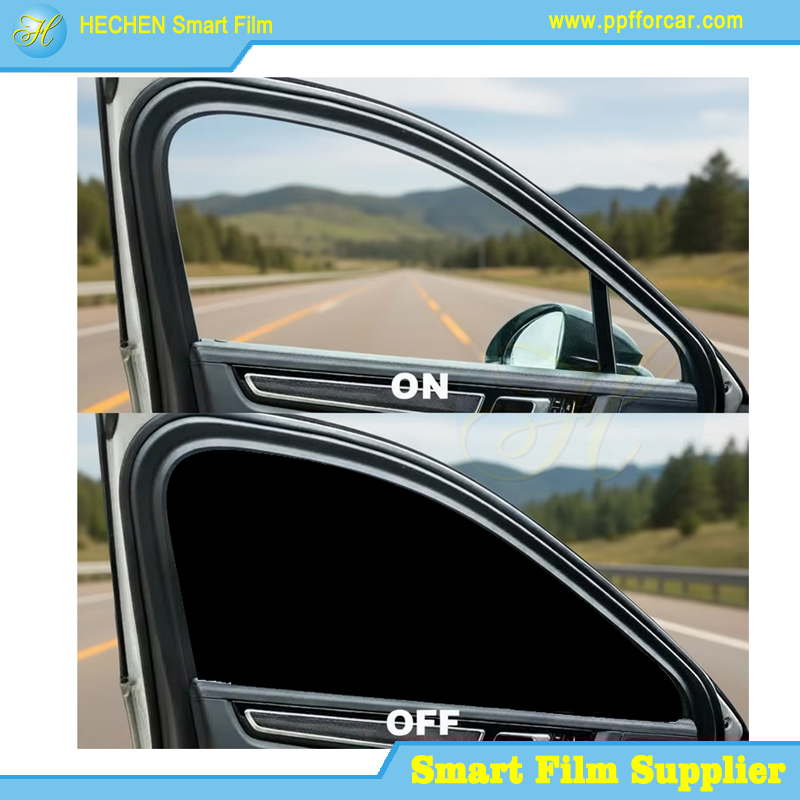
In opaque mode (no voltage), the PDLC layer strongly scatters all incident light, including IR. The effective solar heat gain coefficient (SHGC) drops significantly.
Standard automotive glass (no tint): SHGC ≈ 0.75–0.85 (75–85% of solar heat enters)
Smart tint in opaque mode: SHGC ≈ 0.15–0.25 (only 15–25% enters)
This means smart tint in opaque mode blocks 75–85% of total solar heat, including IR. This is excellent – better than most dark static tints (which block 50–70% depending on darkness). For example, after parking in the sun, a car with smart tint left in opaque mode will have a cabin temperature 15–25°C lower than a car with clear glass, and 5–10°C lower than a car with dark ceramic tint.
Quantified IR rejection (opaque mode): Because PDLC scatters across the spectrum, its IR rejection is approximately equal to its total solar rejection – typically 70–85%. This is measured using a pyranometer or spectrophotometer.
3.3 Performance in transparent (clear) mode
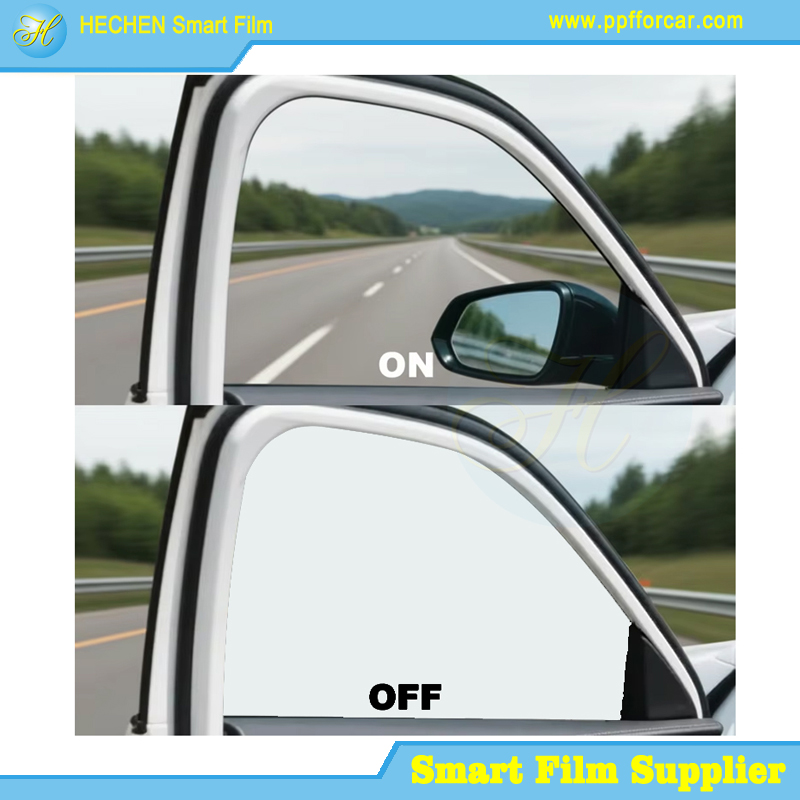
This is where standard PDLC film has a weakness. In transparent mode, the liquid crystals are aligned, and scattering ceases. Only the ITO layers and any IR‑reflective additives remain active.
Standard PDLC (single ITO layer): IR rejection in transparent mode = 30–50%. This is significantly lower than ceramic tint (which achieves 50–60% or more) and lower than some high‑end dyed films.
Why? ITO is a transparent conductor that reflects some NIR, but its peak reflection is around 1200–1600 nm, missing some of the solar IR spectrum (700–1200 nm). Moreover, a single 100–200 nm ITO layer has limited IR blocking.
Consequence: On a sunny day while driving with the film in clear mode (for visibility), the cabin will still heat up noticeably, though less than with bare glass. The heat reduction is noticeable but not dramatic.
3.4 IR‑enhanced PDLC (2026 technology)
To address this limitation, many 2026 automotive PDLC films incorporate additional IR‑blocking layers:
Dual ITO layers – Two conductive layers (on both PET substrates) increase IR reflection to 50–60%.
Nano‑ceramic or silver‑based IR coatings – A thin layer of IR‑reflective nanoparticles (e.g., antimony tin oxide, lanthanum hexaboride) is added between PET and the PDLC layer. This boosts IR rejection in transparent mode to 60–70% without affecting switching.
Multilayer optical stacks – Some premium films use dielectric interference layers (similar to low‑E glass) that reflect IR while remaining transparent.
Performance of IR‑enhanced PDLC (transparent mode): IR rejection 60–70%, total solar rejection 50–60%. This approaches or equals ceramic tint.
Price premium: IR‑enhanced PDLC costs about 20–40% more than standard PDLC (e.g., USD 350–500 vs. 250–350 for a 4‑window kit).
4. Comparison: Smart tint vs. ceramic tint for IR rejection
To answer the title question effectively, we compare smart tint (both standard and IR‑enhanced) to the benchmark: ceramic tint, which is widely regarded as the best passive heat‑rejection film.
| Type | UV rejection | IR rejection (transparent mode) | IR rejection (opaque mode) | Total solar rejection (clear) | Total solar rejection (opaque) |
|---|---|---|---|---|---|
| No tint | ~35% | ~10% | N/A | 10–20% | N/A |
| Ceramic tint (50% VLT) | 99% | 55–65% | N/A (fixed) | 50–60% | N/A |
| Standard PDLC | 99% | 30–50% | 70–85% | 25–40% | 70–85% |
| IR‑enhanced PDLC | 99% | 60–70% | 75–88% | 50–60% | 75–88% |
Observations:
For UV, both are excellent (≥99%).
For IR while driving (transparent mode), ceramic tint is better than standard PDLC, roughly equal to IR‑enhanced PDLC.
For IR while parked (opaque mode), smart tint (both types) is significantly better than ceramic tint because opaque mode scatters nearly all IR.
Smart tint offers two modes; ceramic tint offers one.
Thus, the answer to “Can smart tint effectively block IR?” is: Yes, very effectively when in opaque mode; moderately to effectively in transparent mode depending on whether you choose an IR‑enhanced version.
5. Understanding solar heat gain coefficient (SHGC) and total solar rejection
To avoid confusion, it helps to use the standard metric: Solar Heat Gain Coefficient (SHGC) – the fraction of incident solar radiation that enters the cabin. Lower SHGC means better heat rejection. Total solar rejection = 1 – SHGC.
Clear glass: SHGC ≈ 0.80 (rejects 20%)
Ceramic tint (good): SHGC ≈ 0.40–0.45 (rejects 55–60%)
Standard PDLC (transparent): SHGC ≈ 0.60–0.75 (rejects 25–40%)
IR‑enhanced PDLC (transparent): SHGC ≈ 0.40–0.50 (rejects 50–60%)
Standard PDLC (opaque): SHGC ≈ 0.15–0.30 (rejects 70–85%)
IR‑enhanced PDLC (opaque): SHGC ≈ 0.10–0.25 (rejects 75–90%)
For context, even the best static window film rarely achieves SHGC below 0.30. Smart tint in opaque mode beats that handily.
6. Practical heat rejection scenarios
Let’s translate these numbers into real‑world driving and parking.
Scenario 1: Parked car on a 35°C (95°F) day, sun overhead (900 W/m²)
No tint: Cabin reaches 65°C in 1 hour. AC must remove ~2500 Wh to cool down.
Ceramic tint: Cabin reaches 55°C. AC removal ~1800 Wh.
Smart tint in opaque (parked with film opaque): Cabin reaches 45°C. AC removal ~1200 Wh. Saving vs. ceramic: 600 Wh (equivalent to 0.06 L fuel or 0.6 kWh EV).
Scenario 2: Driving on highway at noon, sun from side (750 W/m² horizontal component)
No tint: AC runs at medium‑high to maintain 22°C.
Ceramic tint (fixed): AC load reduced by ~50%. Driver comfortable.
Smart tint in transparent (standard): AC load reduced by ~25%. Still better than no tint, but less than ceramic.
Smart tint in opaque (if legal on side windows while driving): AC load reduced by ~75%. Excellent, but opaque side windows may be illegal in many places while driving.
Best practice for driving: Use IR‑enhanced PDLC or keep the film in clear mode and accept moderate heat. Alternatively, install PDLC only on rear windows and use ceramic on front side windows.
Scenario 3: Night driving or cloudy day – heat rejection not needed, visibility is key.
Smart tint in clear mode has no disadvantage; ceramic tint’s fixed darkness reduces visibility. Smart tint wins here.
7. Additional factors affecting heat rejection
7.1 Glass type
The car’s original glass matters. Many modern cars have factory‑tinted glass (e.g., privacy glass on rear windows) or laminated side windows. The base glass may already block 40–50% of IR. Adding PDLC on top multiplies the effect. Always check your existing glass’s SHGC.
7.2 Color and reflectivity
PDLC in opaque mode appears milky white. This high albedo reflects most solar energy outward – better than black or dark films that absorb heat and re‑radiate it inward. This is a key advantage of PDLC over dark static tint.
7.3 Thickness and multi‑layer stacking
Combining PDLC with a clear IR‑blocking film (e.g., a ceramic layer) can improve transparent‑mode IR rejection to 70–80%, but total thickness may exceed window channel limits. Some hybrid products integrate both functions into one film (IR‑enhanced PDLC).
8. How to verify UV and IR rejection before buying
As a buyer, you should not rely on marketing claims. Ask for:
UV rejection test report – Look for ≥99% (or 380 nm transmittance <1%).
IR rejection test report – Ideally measured at 900 nm, 1100 nm, or integrated solar spectrum (700–2500 nm). A single‑wavelength “IR rejection” number (e.g., at 1400 nm) can be misleading. Request a spectral transmittance graph.
SHGC value – The most comprehensive metric. Lower is better.
Many suppliers will provide generic test data. Use it to compare. For example, a transparent‑mode IR rejection of 65% is excellent; 40% is mediocre; 20% is poor.
9. Conclusion: Effective, but with caveats
Can smart window tint for cars effectively block UV and infrared rays?
UV: Yes, absolutely. All automotive‑grade PDLC films block ≥99% of UV in both transparent and opaque states. This is on par with the best ceramic tints.
Infrared: It depends on the mode and the film type.
In opaque mode, PDLC is exceptionally effective, blocking 70–85% of IR (beating most static tints).
In transparent mode, standard PDLC blocks only 30–50% of IR – less effective than ceramic tint. However, IR‑enhanced PDLC (available in 2026) blocks 60–70% of IR in transparent mode, matching ceramic performance.
For drivers who primarily want heat rejection while parked (e.g., commuters who park outdoors), smart tint’s opaque mode is a huge advantage. For drivers who want maximum heat rejection while driving with clear windows, IR‑enhanced PDLC or a hybrid solution (ceramic on front windows, PDLC on rears) is recommended.
Overall, smart tint is a highly effective UV blocker and, when used appropriately, a very good IR blocker – especially considering its unique switchable privacy feature.
Key Takeaways
UV rejection is excellent (≥99%) in all states – transparent or opaque – for all automotive‑grade PDLC films. Interior fading and skin damage are virtually eliminated.
IR (heat) rejection varies by state:
Opaque mode: 70–85% IR rejection (excellent, beats most static tints) due to strong scattering.
Transparent mode (standard PDLC): 30–50% IR rejection (moderate, less than ceramic tint).
Transparent mode (IR‑enhanced PDLC): 60–70% IR rejection (comparable to ceramic tint).
Solar heat gain coefficient (SHGC) is the best metric: opaque mode SHGC 0.10–0.30, transparent mode SHGC 0.40–0.75 depending on enhancement.
Parked car benefit: Smart tint in opaque mode reduces cabin temperature by 15–25°C compared to no tint, and 5–10°C compared to ceramic tint.
Driving benefit: For maximum heat rejection while keeping windows clear, choose IR‑enhanced PDLC or a hybrid install (ceramic on front windows, PDLC on rear).
UV protection is independent of switching – always active.
IR‑enhanced PDLC adds nano‑ceramic or dual ITO layers at a 20–40% price premium, delivering ceramic‑like performance + switchability.
Always verify test reports – look for spectral data, not single‑wavelength claims. SHGC is more reliable than “IR rejection %”.
Smart tint does not replace ceramic tint for drivers who never use opaque mode and want the highest possible clear‑state heat rejection. But for drivers who use both modes, smart tint is more versatile.
Final verdict: Yes, smart window tint effectively blocks UV (excellently) and IR (very well in opaque mode, moderately to very well in transparent mode depending on product). It is a strong choice for heat and UV management, especially when combined with its privacy function.
For more about Can smart window tint for cars effectively block UV and infrared rays (heat rejection)? Everything you need to know, you can pay a visit to https://www.ppfforcar.com/product/PDLC-Smart-Film/ for more info.