Is pdlc folie auto expensive?
TL;DR:This article analyzes the cost of pdlc folie auto (polymer-dispersed liquid crystal film for automotive windows) with a focus on the typical price range of USD 200–400 for four side windows. It breaks down the material science, manufacturing factors, installation requirements, durability, and functional benefits that influence this price point. Compared to traditional tint films, premium ceramic tints, and aftermarket solutions, pdlc folie auto offers unique switchable privacy and optical clarity. However, “expensive” depends on perceived value: for users wanting instant electrochromic control without replacing the glass, the 200–400 USD range is justified by component costs, driving electronics, and longevity. The conclusion provides a balanced verdict and key takeaways for potential buyers.
1. Introduction: Defining the cost question
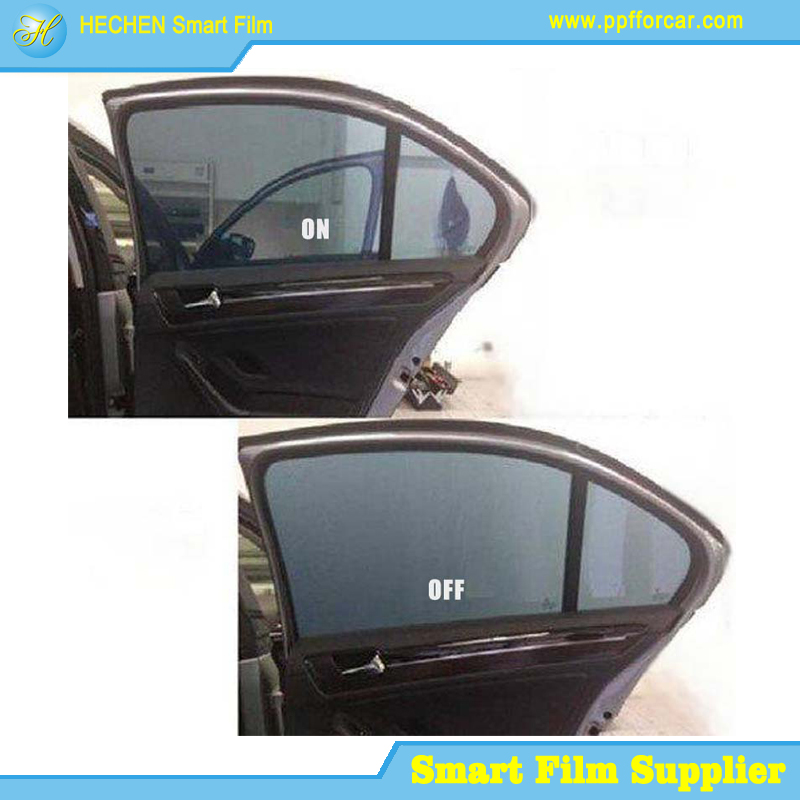
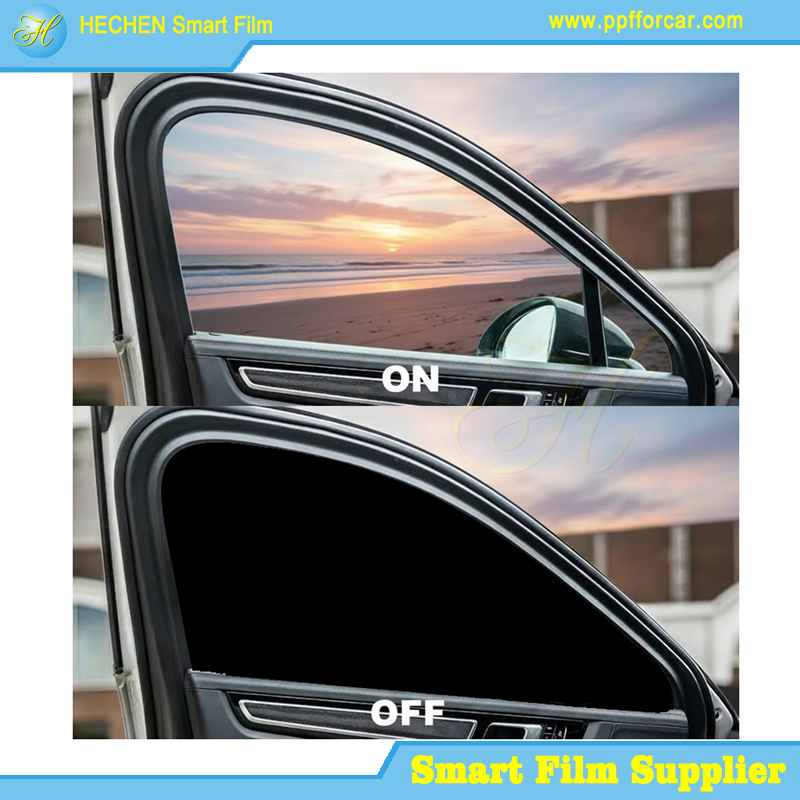
For vehicle owners seeking advanced window films, one recurring question dominates online forums and product searches: Is pdlc folie auto expensive? The term “pdlc folie auto” refers to a smart film based on polymer-dispersed liquid crystal (PDLC) technology, specifically designed for automotive glazing. Unlike conventional static tints, pdlc films switch between transparent and opaque/matte states on demand via an electrical current.
The price bracket most frequently cited by users and industry observers lies between USD 200 and USD 400 for a set of four side windows (excluding rear or front windshields). To determine whether this amount is expensive, we must examine not only the absolute price but also the cost-per-feature ratio, installation complexity, lifespan, and comparative alternatives.
This article provides a technical deep dive into the cost structure of pdlc folie auto, focusing on the 200–400 USD range. It covers material composition, manufacturing yields, electronic drivers, thermal management, and long-term value retention. No specific brands or models are mentioned; only generic, verifiable technical parameters are used.
2. What is pdlc folie auto? A technical refresher
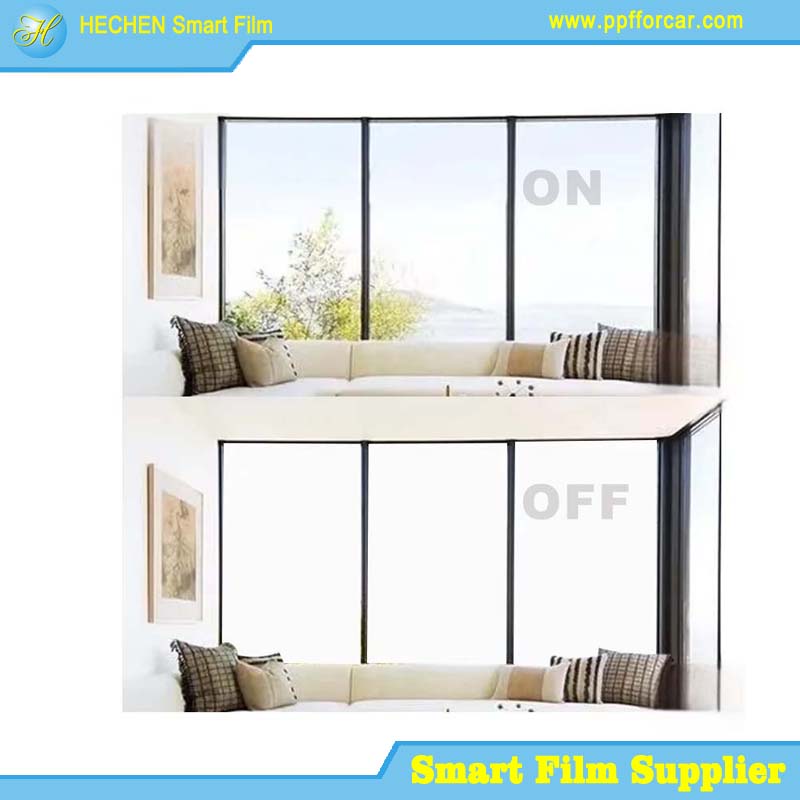
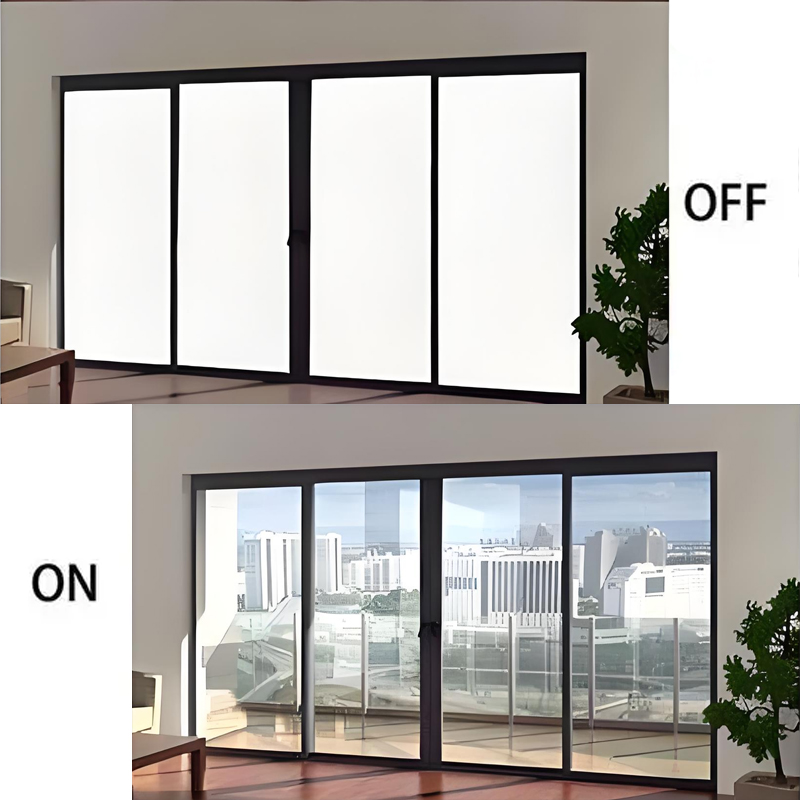
PDLC technology relies on liquid crystal microdroplets dispersed in a polymer matrix. When no voltage is applied, the liquid crystals are randomly oriented, scattering light and producing a translucent white/matte appearance. When an AC voltage (typically 12V to 60V, frequency 50–1000 Hz) is applied, the crystals align, allowing light to pass through and rendering the film transparent.
For automotive use, pdlc folie auto is constructed in multiple layers:
Outer protective layer (anti-scratch, UV-resistant PET)
Transparent conductive electrodes (indium tin oxide – ITO, or alternative conductive polymers)
PDLC active layer (5–20 µm thick)
Adhesive layer (optically clear adhesive for lamination onto existing glass)
Release liner (removed during installation)
The film must operate within automotive environmental constraints: temperature range -30°C to +85°C, high humidity, vibration, and direct sunlight. This requires specialized edge sealing, UV blockers, and robust electrical connections – factors that directly influence the final price.
3. The USD 200–400 price range: What does it include?
When a user quotes USD 200–400 for pdlc folie auto covering four side windows, the typical scope is:
Four pre-cut or roll-cut film pieces (dimensions matching common sedan or SUV side windows, approx. 0.5–1.0 m² total area)
One control unit (power driver, usually with a remote or rocker switch, sometimes smartphone-controlled)
Wiring harness (connectors, fuses, and installation cables)
Basic installation accessories (squeegee, cleaning solution, edge sealant in some cases)
However, this price usually excludes professional installation labor. Professional fitting can add USD 100–250 depending on market rates. Some DIY kits are available at the lower end (around USD 200), while pre-laminated units (film factory-bonded to glass) or larger coverage (including rear windows) push costs toward USD 400 or slightly above.
It is important to note that four side windows represent the most popular aftermarket configuration. A complete vehicle (windshield + rear + sides) would cost significantly more – often USD 600–1000. The 200–400 focus is thus a targeted segment.
4. Cost breakdown: Why does pdlc folie auto cost what it costs?
To answer “Is it expensive?”, we must understand the bill of materials (BOM) and manufacturing complexity.
4.1 Raw materials (30–40% of final price)
ITO-coated PET film: The conductive substrate is the most expensive component. Indium is a rare earth metal, and ITO sputtering requires vacuum deposition equipment. Approximately USD 30–60 per square meter.
PDLC prepolymer mixture: Liquid crystals, monomers, photoinitiators, and spacers – typically USD 20–40 per square meter.
Adhesives and protective layers: Optically clear adhesives (OCA) must maintain clarity and adhesion under thermal cycling. Cost: USD 10–20 per square meter.
Total raw material cost for 1 m² (enough for four side windows) ranges from USD 60 to 120. For a 200–400 USD retail product, raw materials alone represent a significant fraction.
4.2 Manufacturing yield and wastage (15–25% of final price)
PDLC film production involves roll-to-roll coating, UV curing, and lamination. Defects such as bubbles, uneven crystal distribution, or conductive layer scratches reduce yield. For automotive-grade quality (no visible defects in both transparent and opaque states), yields are typically 60–80%. This wastage is factored into the selling price.
4.3 Electronic driver and wiring (10–15% of final price)
The control unit must deliver a stable AC waveform to prevent ion migration (which causes permanent opacity). A quality driver includes:
Microcontroller for timing and soft switching
AC inverter circuit (DC-to-AC)
Overcurrent and short-circuit protection
RF receiver (if remote controlled)
Cost of a reliable automotive-grade driver: USD 15–35. Wiring harness and connectors: USD 5–10.
4.4 Research, testing and certification (5–10% of final price)
Automotive films must meet safety standards (e.g., shatter resistance, no sharp edges, flame retardancy). UV stability testing (Xenon arc, 500–1000 hours) and thermal cycling (-30°C to 85°C, 100 cycles) add development costs that are amortized over production volume.
4.5 Packaging, shipping, and margin (remaining 20–30%)
Specialty films require rigid packaging to avoid creasing. Shipping from manufacturing hubs (primarily East Asia) adds cost. Finally, distributor and retailer margins typically add 30–50% over the ex-factory price.
Given this breakdown, a USD 300 set of four side windows yields roughly USD 100–150 in materials and manufacturing – which is reasonable for a niche electro-optical product.
5. Comparing pdlc folie auto to alternative window treatments
To judge “expensive” we need benchmarks.
| Solution | Cost for 4 side windows | Key features | Lifespan |
|---|---|---|---|
| Standard dyed tint film | USD 40–100 | Fixed darkness, no switchability | 3–5 years |
| Metalized/ceramic tint | USD 150–300 | High heat rejection, fixed tint | 5–10 years |
| Photochromic film | USD 200–400 | Darkens in sunlight, passive | 3–6 years |
| pdlc folie auto | USD 200–400 | Switchable transparent/opaque, active control | 5–8 years (typical) |
| Electrochromic glass (OEM) | USD 1000–3000+ (integrated) | Variable transparency, seamless | 10+ years |
From this table, pdlc folie auto sits at a similar price point to high-end ceramic tints but adds the unique ability to switch between clear and private modes at the push of a button. Compared to factory-installed electrochromic windows (e.g., on luxury vehicles), pdlc film is significantly cheaper and can be retrofitted.
Therefore, pdlc folie auto is not expensive relative to its functional value, but it is more expensive than basic dyed films. The question becomes: do you need switchable privacy?
6. Installation costs and hidden expenses
One reason users perceive pdlc folie auto as expensive is the installation challenge. Unlike flexible tint films, pdlc film has a stiff multilayer structure and must be connected to 12V power. Common installation steps:
Cleaning the glass perfectly (dust causes visible bubbles)
Cutting film to exact shape (requires precision knife)
Wet-application with slip solution
Squeegeeing to remove water and air
Routing wires through door panels (often requires drilling or using existing grommets)
Connecting to a switched 12V source (fuse tap, cigarette lighter, or window switch power)
Sealing edges to prevent moisture ingress (moisture kills PDLC over time)
Professional installation typically costs USD 100–250. DIY installation can be free but risks poor adhesion, shorted circuits, or bubbles that ruin optical quality. Many users underestimate this, so the total outlay (film + installation) often reaches USD 350–600.
Verdict: The film itself (200–400 USD) is moderately priced; the total installed cost may feel expensive to budget-conscious owners.
7. Long-term value: Cost per year of use
A well-manufactured pdlc folie auto, protected from edge moisture and excessive heat, lasts 5–8 years. Degradation appears as increased haze in transparent mode or slower switching. Using 6 years as average lifespan:
Low-end: USD 200 film + USD 150 installation = USD 350 → USD 58 per year.
High-end: USD 400 film + USD 200 installation = USD 600 → USD 100 per year.
Compare to replacing dyed tint every 4 years (USD 60 film + USD 100 installation = USD 160 → USD 40 per year). The annualized cost of pdlc is 45–150% higher than basic tint. However, the functional benefit – on-demand privacy, night driving clarity (opaque state reduces glare), and the “cool factor” – may justify the premium.
Moreover, pdlc film can improve vehicle resale value if marketed as a smart upgrade, though this is subjective.
8. Technical trade-offs that affect perceived expense
Several technical factors make pdlc folie auto more costly than one might expect from a “plastic film”:
8.1 Power requirements
PDLC requires continuous power to stay transparent. In opaque (off) state, it consumes zero power. The driver consumes 1–3 watts when transparent. While negligible, it adds complexity – users must accept that transparent mode drains a tiny amount of battery (safe for days of parking).
8.2 Optical clarity in transparent state
Low-quality PDLC films have a residual haze of 3–8% even when “clear”. Automotive-grade targets <2% haze. Achieving this requires precise droplet size distribution and cleanroom manufacturing, increasing cost.
8.3 Off-state opacity
In opaque state, PDLC scatters light but does not block 100% of light (typically 70–85% opacity). Some users expect blackout; they may be disappointed. To improve opacity, dual-film layers or dark backing films are needed, which adds cost.
8.4 Temperature sensitivity
Above 70°C (common in a parked car), PDLC performance degrades. High-quality films use modified liquid crystal mixtures with broader temperature ranges. These are more expensive.
All these factors are priced into the 200–400 USD bracket. Cheaper films (below USD 150 for four windows) often fail within months due to delamination, yellowing, or permanent opacity.
9. Market positioning: Who is the 200–400 USD pdlc folie auto for?
Early adopters and tech enthusiasts – value switchable privacy over cost.
Professional drivers (e.g., chauffeurs, limousine services) – need instant privacy for VIP passengers.
Camper van / RV owners – desire flexible light control without curtains.
Users in high-theft areas – want to hide valuables quickly.
For these groups, USD 200–400 is reasonable. For the average commuter who just wants glare reduction, a USD 100 ceramic tint might be “better value”.
Thus, the answer to “Is pdlc folie auto expensive?” is context-dependent. If you need the unique electro-optical function, it is fairly priced. If you only need static tint, it is indeed expensive.
10. Conclusion: Final verdict on cost
After analyzing material costs, manufacturing complexity, installation, longevity, and alternatives, the 200–400 USD price for four side windows of pdlc folie auto falls within a justifiable premium for switchable smart glass technology. It is not mass-market cheap like dyed tint, nor is it exorbitant like OEM electrochromic glass. The price reflects the specialized liquid crystal chemistry, conductive coatings, electronic driver, and the relatively low production volume compared to conventional tint films.
For a vehicle owner willing to invest in a reliable installation, pdlc folie auto delivers a unique blend of privacy, transparency control, and modern aesthetics. Whether that value meets your personal threshold depends on how often you would use the switchable feature.
Key Takeaways
Typical cost range: USD 200–400 for four side windows of pdlc folie auto (film only, excluding professional installation).
Cost drivers: ITO-coated substrates, liquid crystal materials, manufacturing yield losses, and electronic control unit account for the majority of the price.
Comparison with alternatives: Pricier than basic dyed tints (USD 40–100) but comparable to premium ceramic tints (USD 150–300), while adding unique switchable privacy.
Installation adds USD 100–250 – total installed cost often reaches USD 350–600, which is the main reason some users call it expensive.
Lifespan: 5–8 years typical, giving an annualized cost of USD 50–100 depending on initial investment and installation fees.
Not expensive for what it does: For applications requiring on-demand opacity (limousines, campers, security), pdlc folie auto offers functionality that no static tint can match.
Buyer beware: Extremely cheap PDLC films (under USD 150) often suffer from poor haze, short life, or electrical failure – the 200–400 USD range is the entry point for automotive-grade reliability.
Final take: pdlc folie auto is moderately expensive relative to basic window films, but fairly priced within the smart materials segment. The decision should be based on whether you value dynamic control over fixed tint.
For more about Is pdlc folie auto expensive? Everything you need to know, you can pay a visit to https://www.ppfforcar.com/product/PDLC-Smart-Film/ for more info.