PDLC Dimming Film: A Comprehensive Overview
Polymer Dispersed Liquid Crystal (PDLC) dimming film is a transformative technology that redefines how we manage light and privacy in modern environments. Often dubbed "switchable film" or "smart glass film," this innovative material enables glass surfaces to shift from transparent to opaque with the simple press of a button. By harnessing the unique properties of liquid crystals embedded within a polymer matrix, PDLC dimming film provides dynamic control over light transmission, making it a game-changer in fields like architecture, automotive design, and healthcare. This article offers an in-depth exploration of PDLC dimming film—its mechanics, applications, benefits, limitations, and the exciting possibilities it holds for the future.
What is PDLC Dimming Film?
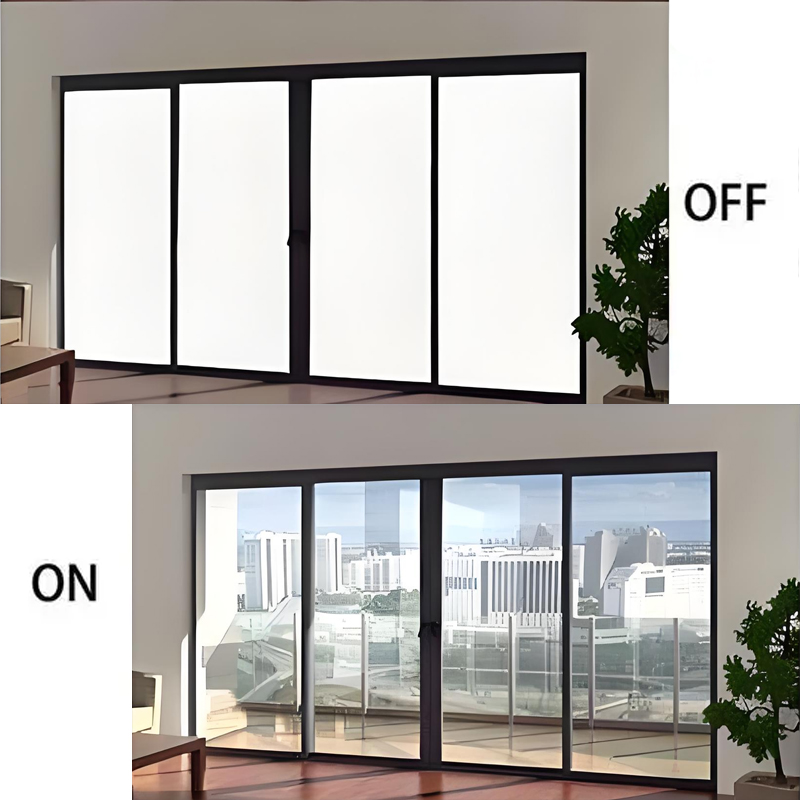
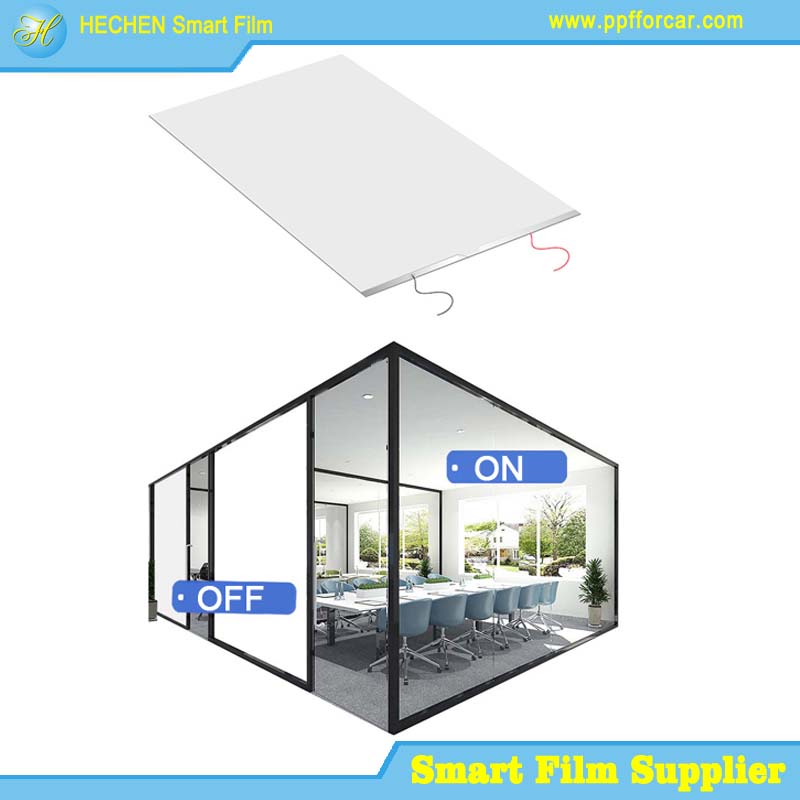
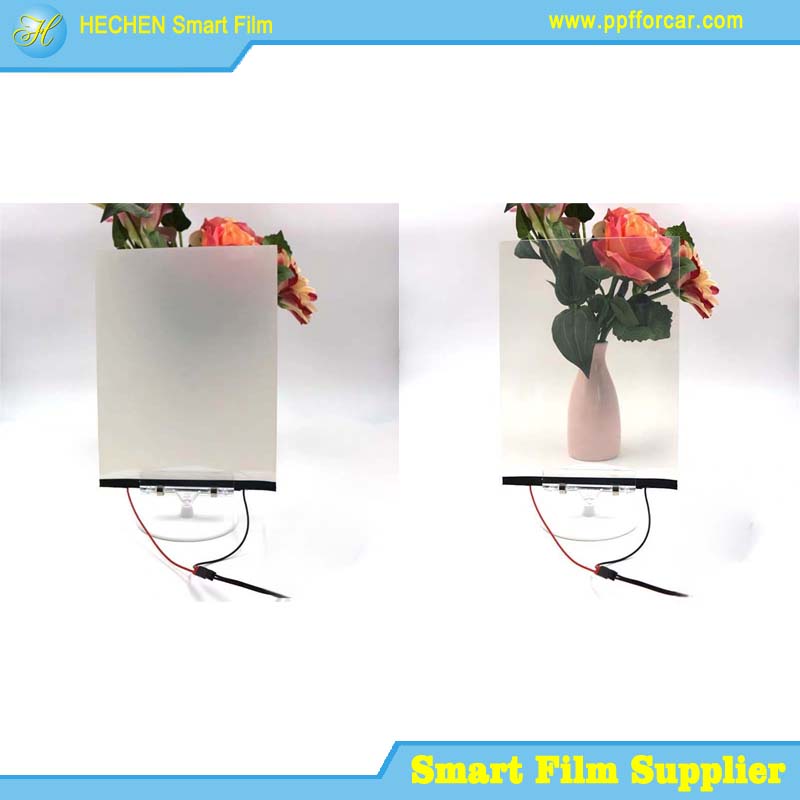
PDLC dimming film is a smart material composed of a thin layer of liquid crystals dispersed within a polymer matrix, encased between two transparent conductive layers. In its default state, with no electric current applied, the liquid crystals are randomly oriented, scattering light and rendering the film opaque. This opacity ensures privacy by blocking direct visibility while still permitting diffused light to filter through. When an electric current is introduced, the liquid crystals align uniformly, allowing light to pass through unobstructed, making the film transparent.This transition happens almost instantly—within milliseconds—and can be triggered by a switch, remote control, or integration into smart home systems. The film is versatile: it can be retrofitted onto existing glass as a self-adhesive layer or laminated into new glass panels during production. Unlike traditional liquid crystal displays (LCDs), PDLC films do not require polarizers or alignment layers, simplifying their design and enhancing their adaptability for large-scale use. This combination of simplicity and functionality has propelled PDLC dimming film into widespread use across multiple industries.
How Does PDLC Dimming Film Work?
The operation of PDLC dimming film hinges on the behavior of liquid crystals when subjected to an electric field. Liquid crystals are hybrid materials, possessing characteristics of both liquids and solid crystals. In PDLC film, these crystals are suspended as microscopic droplets within a polymer matrix.
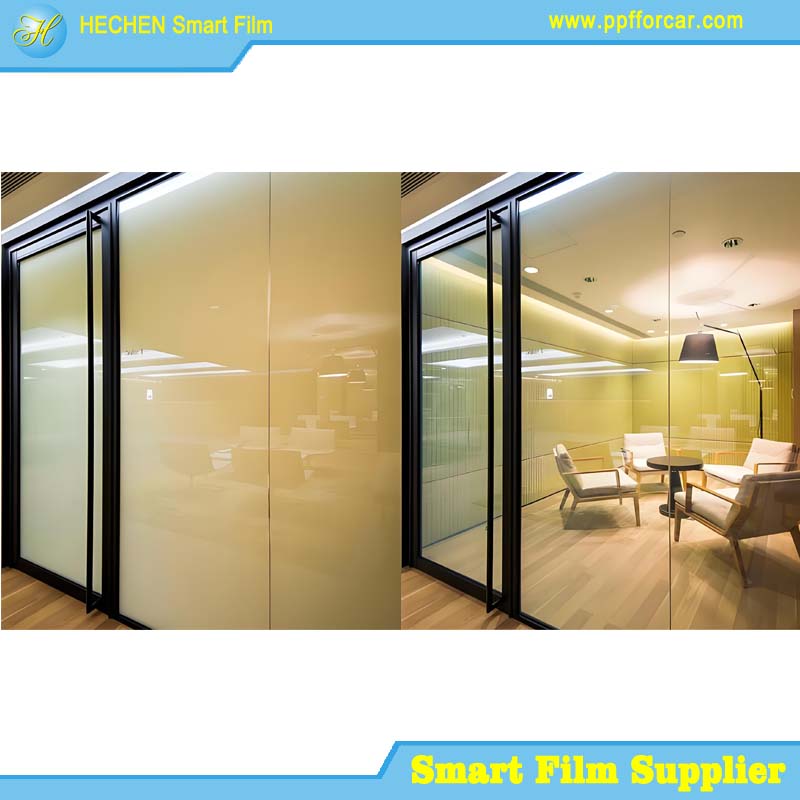
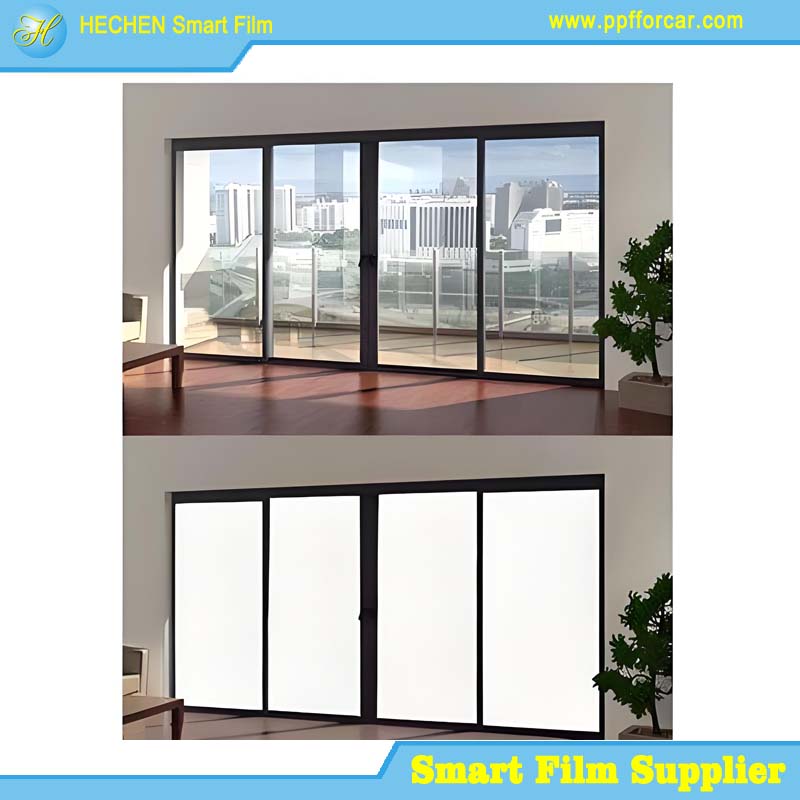
· Opaque State (Off State): Without voltage, the liquid crystal droplets are haphazardly arranged. This randomness scatters incoming light, giving the film a frosted, opaque appearance. In this mode, it obscures visibility, providing privacy while still allowing ambient light to diffuse through.
· Transparent State (On State): When voltage is applied (typically 60-100V AC), the liquid crystals align along the electric field. This alignment minimizes light scattering, turning the film clear and transparent. The switch is seamless and reversible, offering precise control.
The film’s responsiveness is one of its standout features, requiring only minimal power to maintain transparency. Advanced versions allow for customization—such as varying colors, thicknesses, or even gradient dimming—offering users tailored control over light and privacy.
Applications of PDLC Dimming Film
PDLC dimming film’s versatility has led to its adoption across a broad spectrum of industries. Below are some of its most impactful applications:
1. Architecture and Interior Design
In modern architecture, PDLC film creates adaptable, multifunctional spaces:
· Offices: Glass partitions in conference rooms can switch from transparent to opaque, fostering both collaboration and confidentiality without traditional window treatments.
· Homes: Applied to windows, skylights, or bathroom glass, it offers homeowners privacy and light control. In home theaters, it blocks external light for an enhanced viewing experience.
· Hospitality: Luxury hotels use it in suites and spas, allowing guests to personalize their environment.
2. Automotive Industry
PDLC film enhances vehicle functionality and comfort:
· Sunroofs and Windows: Drivers can adjust opacity to reduce glare and heat, improving safety and comfort.
· Privacy Glass: In high-end cars, it provides instant privacy for passengers.
· Electric Vehicles (EVs): By managing heat, it reduces reliance on air conditioning, boosting energy efficiency.
3. Healthcare and Medical Facilities
In healthcare, PDLC film balances privacy and practicality:
· Patient Rooms: Glass partitions allow staff to monitor patients while switching to private mode as needed.
· Operating Theaters: It controls light and visibility for optimal surgical conditions.
· Hygiene: Unlike curtains, it’s easy to clean, reducing infection risks.
4. Retail and Advertising
Retailers leverage PDLC film for dynamic displays:
· Storefronts: Windows switch between transparent and opaque to showcase products or hide interiors.
· Projection Screens: In opaque mode, it doubles as a surface for advertisements or promotions.
5. Transportation
Beyond cars, PDLC film is used in other transport sectors:
· Aircraft: It replaces window shades, reducing weight and giving passengers light control.
· Trains and Buses: It enhances privacy and comfort in premium seating areas.
6. Education and Corporate Training
Educational and corporate spaces benefit from its flexibility:
· Classrooms: Glass walls switch between open and private, supporting varied teaching styles.
· Training Rooms: It ensures privacy for sensitive discussions while maintaining a sleek design.
Advantages of PDLC Dimming Film
PDLC dimming film offers a range of benefits that distinguish it from traditional light and privacy solutions:
1. Instant Privacy: Switchable opacity eliminates the need for blinds or curtains.
2. Energy Efficiency: By regulating light and heat, it cuts down on lighting and cooling costs.
3. Aesthetic Appeal: Its clean, modern look enhances any space.
4. Low Maintenance: Easy to clean and durable, it requires little upkeep.
5. UV Protection: Blocks up to 99% of UV rays, safeguarding interiors and occupants.
6. Sound Insulation: When laminated, it dampens noise transmission.
7. Versatility: Compatible with diverse glass types and smart systems.
These qualities make PDLC film a sustainable, user-friendly option for contemporary design challenges.
Challenges and Limitations
While PDLC dimming film excels in many areas, it has some drawbacks:
1. Cost: High initial costs can deter widespread adoption, especially for large projects.
2. Power Dependency: Transparency requires constant power, potentially increasing energy use.
3. Haze: Even when clear, a slight haze may reduce optical clarity.
4. Installation Complexity: Retrofitting requires skill; errors can impair performance.
5. Durability: Extreme conditions may degrade the film over time.
6. Privacy Limits: In opaque mode, it scatters light but may not fully obscure silhouettes.
Overcoming these hurdles will be critical for its long-term success.
Future Potential of PDLC Dimming Film
The future of PDLC dimming film is promising, with innovations poised to broaden its scope:
· Self-Powered Films: Solar-powered versions could eliminate external power needs.
· Enhanced Clarity: Material advances may reduce haze, improving transparency.
· IoT Integration: Smart films could adjust automatically based on sunlight or occupancy.
· Augmented Reality (AR): Combined with AR, it could enable interactive displays in cars and buildings.
· Sustainability: Eco-friendly materials and processes are in development.
· Affordability: Scaling production may lower costs, increasing accessibility.
These advancements will likely expand PDLC film’s reach into new markets, solidifying its place in smart technology.
Conclusion
PDLC dimming film is a remarkable advancement in smart glass technology, offering unmatched flexibility in managing light and privacy. Its applications—spanning architecture, automotive, healthcare, and more—demonstrate its transformative potential. Though challenges like cost and power needs persist, ongoing research and development promise to refine its capabilities and affordability. As the demand for smart, energy-efficient spaces rises, PDLC dimming film is set to become a cornerstone of innovative design, seamlessly adapting to the needs of a rapidly evolving world.
For more about the PDLC Smart Film Manufacturers: Innovators of Switchable Glass Technology, you can pay a visit to Hechen PDLC Smart Film Manufacturers for more info.