PDLC Film Manufacturer
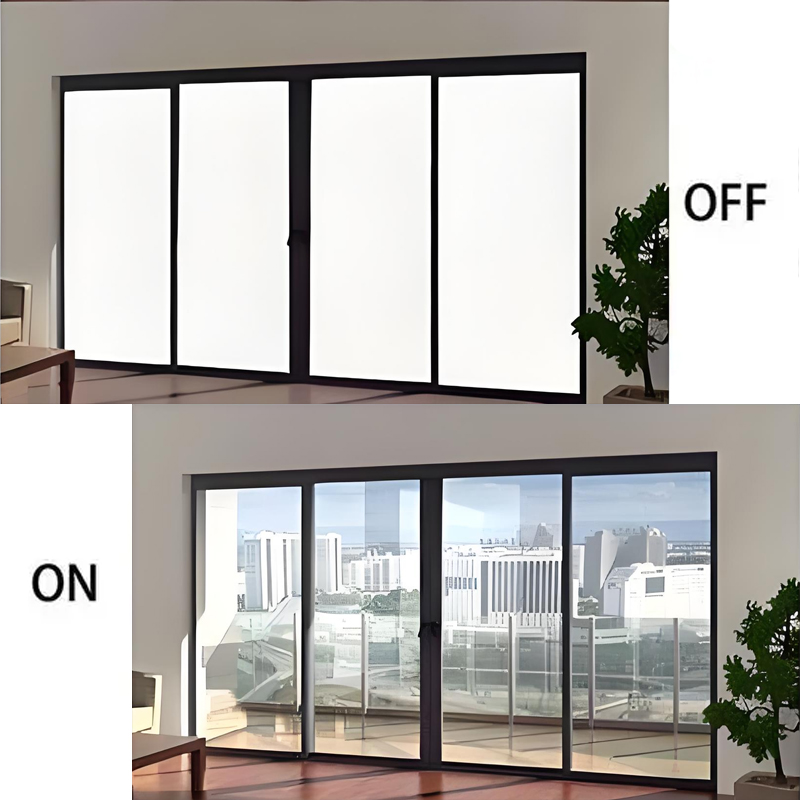
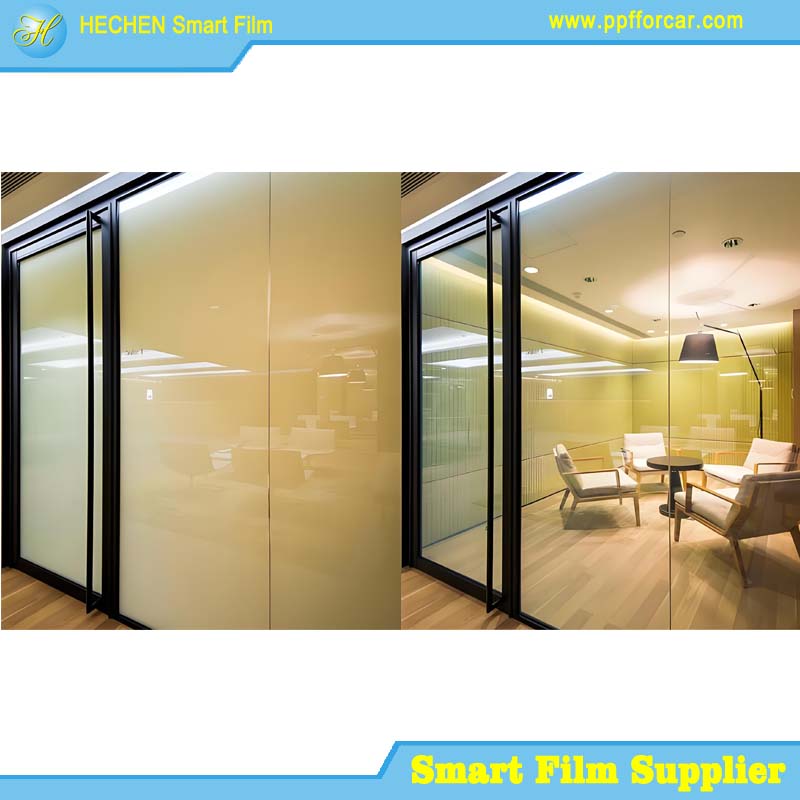
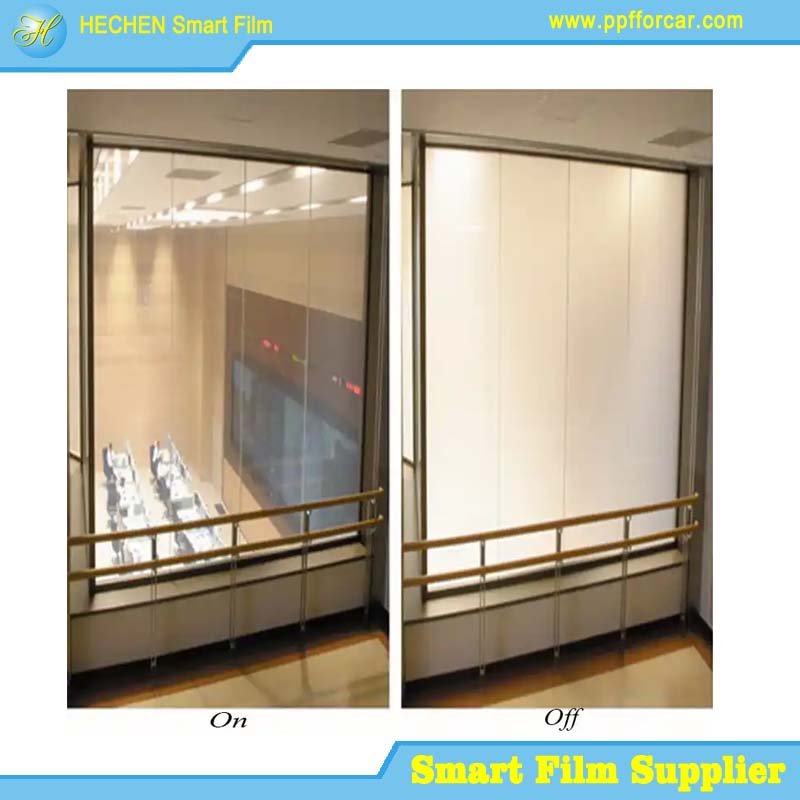
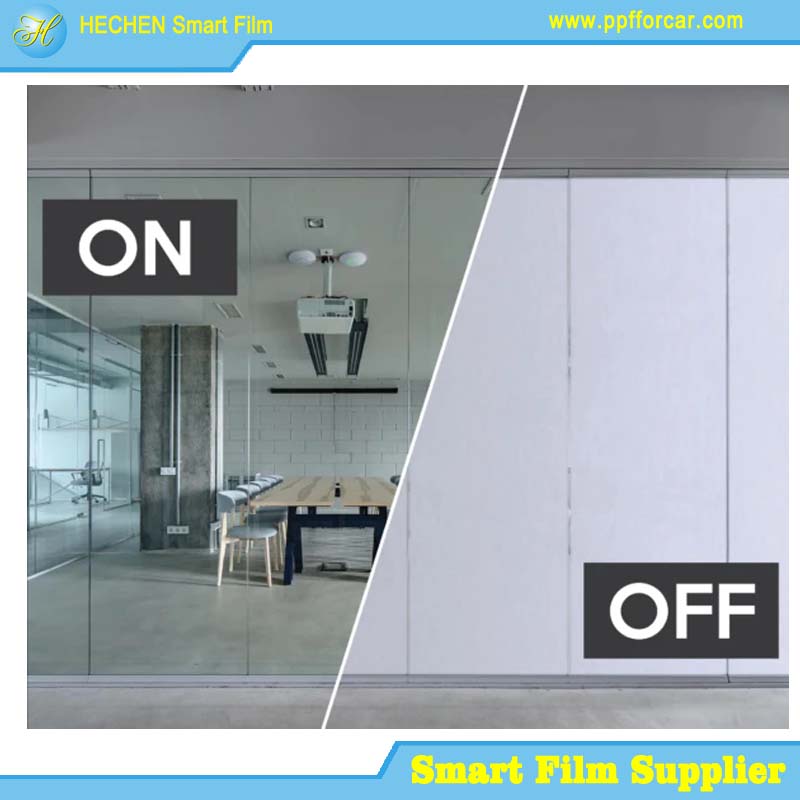
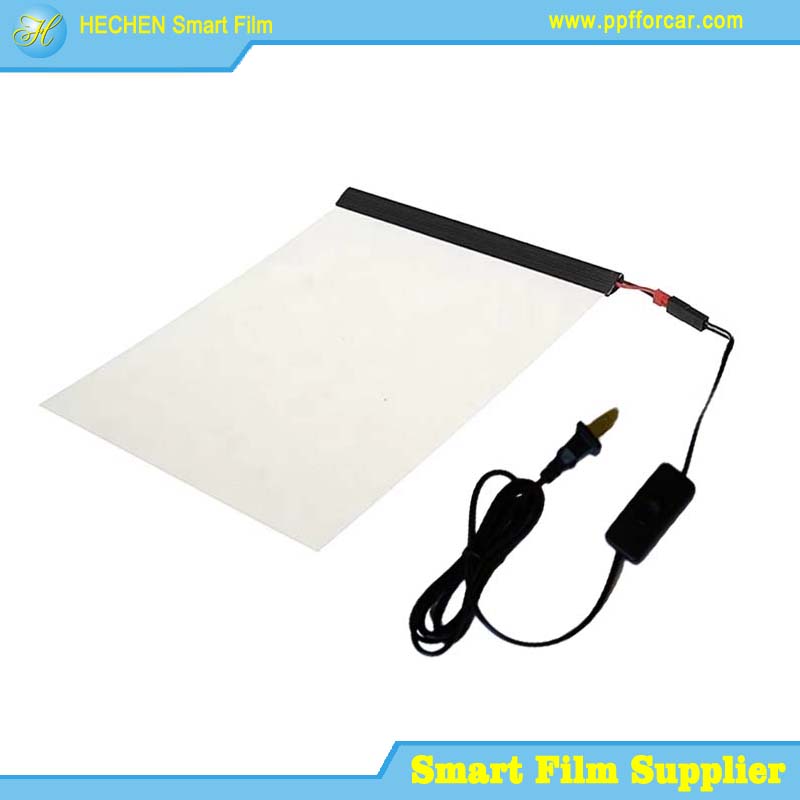
Polymer Dispersed Liquid Crystal (PDLC) film represents a groundbreaking advancement in smart materials technology, enabling surfaces to switch between opaque and transparent states with the application of electricity. At its core, PDLC film consists of liquid crystal droplets dispersed within a polymer matrix, sandwiched between two layers of conductive film, typically Indium Tin Oxide (ITO)-coated polyethylene terephthalate (PET). When no voltage is applied, the liquid crystals are randomly oriented, scattering light and rendering the film opaque for privacy. Upon applying a low voltage (usually 24-110V AC), the crystals align, allowing light to pass through and making the film transparent. This active smart glass technology requires electricity to operate, distinguishing it from passive alternatives like electrochromic films.
PDLC films are integral to modern architecture, automotive, and consumer electronics, offering on-demand privacy, energy efficiency, and aesthetic flexibility. Manufacturers of PDLC films play a pivotal role in this ecosystem, driving innovation through precise production techniques that ensure durability, optical clarity, and scalability. As demand surges for sustainable and intelligent building materials, PDLC film manufacturers are at the forefront of transforming how we interact with our environments. This article delves into the intricacies of PDLC film manufacturing, exploring its history, processes, key players, applications, advantages, challenges, and future trends.
History of PDLC Technology
The origins of PDLC technology trace back to the 1980s in the United States, where it was first developed and patented by Dr. James Ferguson in 1984.
Initially conceptualized as a means to create switchable displays, the technology evolved from basic liquid crystal research into practical applications for privacy glass. Early industrial efforts in the late 1980s and early 1990s were led by a few large companies, focusing on polymer-dispersed liquid crystals dissolved in a liquid polymer that solidified upon curing.
The industrial evolution of PDLC included periods of rapid progress, followed by a decline due to high costs and technical limitations, and a recent resurgence driven by advancements in materials science.
In Europe, companies like Innoptec began refining the technology in the early 2000s, enhancing its reliability for commercial use.
By 2003, intelligent electronically controlled dimming glass, incorporating PDLC, entered the Asian markets, particularly China, where it gained traction despite initial high prices and limited awareness.
Over the decades, PDLC has shifted from niche laboratory experiments to mainstream manufacturing, with global patents and collaborations propelling its integration into smart windows and displays. Today, manufacturers leverage this historical foundation to produce films that meet stringent modern standards for energy efficiency and user control.
The Manufacturing Process of PDLC Film
Manufacturing PDLC film is a sophisticated process requiring precision to achieve consistent performance. It begins with the preparation of the liquid crystal-polymer mixture. Liquid crystals are dispersed into a polymer precursor, often using methods like Temperature-Induced Phase Separation (TIPS), Solvent-Induced Phase Separation (SIPS), or Polymerization-Induced Phase Separation (PIPS).
These techniques ensure the crystals form microscopic droplets within the polymer matrix.The mixture is then coated onto a conductive ITO-PET film layer. This is followed by lamination with a second ITO-PET layer, enclosing the PDLC core.
For adhesive films, a release liner is added to one side. The assembly undergoes curing, typically via UV light or heat, to solidify the polymer and stabilize the liquid crystals.
Electrode busbars are attached to enable electrical connectivity, often using copper tape or conductive adhesives.
In producing laminated smart glass, PDLC film is sandwiched between two glass panels using interlayers like Polyvinyl Butyral (PVB) or Ethylene Vinyl Acetate (EVA). The stack is heated in an autoclave under vacuum to bond the layers, ensuring no air bubbles and optimal adhesion.
Quality control involves testing for haze, transmittance, switching speed, and durability against environmental factors like temperature and humidity.
Advanced manufacturers employ cleanroom environments to prevent contamination, and automation for large-scale production. For instance, roll-to-roll processing allows continuous fabrication of film rolls up to several meters wide, catering to architectural demands.
Challenges in scaling include maintaining uniform droplet size for consistent opacity and ensuring long-term stability of the liquid crystals.
Top PDLC Film Manufacturers
The PDLC film market is dominated by innovative companies, primarily in Asia, Europe, and North America. Gauzy, an Israeli firm, leads with its LCG (Light Control Glass) adhesive films, offering high transparency and low haze for architectural applications.
They emphasize sustainability, blocking up to 99% of UV rays.In China, Huichi has been a key player for nearly 20 years, specializing in custom PDLC films with advanced production techniques for durability and clarity.
Filmbase, another Chinese manufacturer, serves global markets in architecture and advertising, integrating PDLC with LED technologies.
Smart Films International (SFI) focuses on developer-friendly solutions for privacy control.
European pioneer Innoptec has manufactured switchable films since 2001, holding multiple patents for PDLC and Suspended Particle Device (SPD) variants.
In the US, Polytronix and Smart Tint offer factory-direct products, emphasizing customization for residential and commercial use.
Other notables include Chiefway in Asia, known for multi-national certifications, and WGlass in Shenzhen for eco-friendly options.
These manufacturers compete on quality, price, and innovation, with many expanding into integrated smart systems.
Applications of PDLC Film
PDLC films find diverse applications across industries. In architecture, they are used for facades, partitions, and skylights, providing dynamic light control and privacy without curtains.
Offices benefit from switchable conference rooms, enhancing collaboration while maintaining confidentiality.
In healthcare, PDLC films create hygienic privacy screens in hospitals and spas, resistant to mold and easy to clean.
Automotive applications include sunroofs and side windows that reduce glare and heat.
Retailers use them for interactive displays and projection screens, turning opaque surfaces into advertising platforms.Emerging uses include smart windows for energy-efficient buildings, blocking UV/IR rays to cut cooling costs, and in electronics for flexible displays.
PDLC's versatility extends to aerospace for cabin dividers and marine for yacht privacy glass, showcasing its adaptability.
Advantages and Challenges in PDLC Film Manufacturing
PDLC films offer numerous advantages. They provide instant privacy, energy savings by reducing HVAC loads (up to 30%), and UV protection, extending interior lifespans.
Manufacturing benefits from scalability, with low power consumption (about 5W/m²) and long lifespans exceeding 10 years.
They enhance security by shattering resistance and noise reduction.However, challenges persist. High production costs, driven by specialized materials and cleanroom requirements, make PDLC expensive compared to traditional glass.
Installation demands professionals, and films may yellow over time or suffer from haze in off-states. Power dependency means opacity during outages, and scaling for large areas requires precise uniformity to avoid defects. Manufacturers address these through R&D, but balancing cost and performance remains key.
Future Trends in PDLC Film Technology
Looking ahead to 2025 and beyond, PDLC technology is poised for exponential growth. The market is projected to reach $11.83 billion by 2032, with a CAGR of 9.4%, fueled by IoT integration for voice-activated controls.
Trends include cost reductions through advanced manufacturing and enhanced performance with lower haze and faster switching.Sustainability drives innovations like solar-powered PDLC and recyclable materials. Automotive and architectural sectors will see increased adoption, with films integrating AR displays. Flexible, thinner films for wearables and curved surfaces are emerging, alongside AI-optimized energy management. By 2027, the switchable smart film market could hit $9,026.9 million, emphasizing privacy in smart cities.
Conclusion
PDLC film manufacturers are the unsung heroes behind this transformative technology, blending science and engineering to create products that redefine privacy and efficiency. From humble beginnings in the 1980s to a multi-billion-dollar industry, PDLC continues to evolve, promising a future where glass is not just a barrier but an intelligent interface. As challenges are overcome through innovation, these manufacturers will lead the charge toward smarter, more sustainable worlds.
For more about the PDLC film manufacturer, you can pay a visit to Hechen PDLC Smart Film Manufacturers for more info.