PDLC Smart Film Can Block Up to 70% of Heat, Saying Goodbye to the Summer Car Steamer
For decades, the summer ritual for drivers has been universally frustrating: approaching a car that has baked in the sun, opening the door to a wall of stifling heat, and desperately fumbling with the air conditioning while steering with sweaty palms. Traditional solutions—foldable sunshades, static window tints—offer only partial, passive relief. However, a cutting-edge technology is shifting the paradigm from passive blocking to active, intelligent climate management. Polymer Dispersed Liquid Crystal (PDLC) smart film, when integrated into automotive glazing, can block up to 70% of solar heat gain, effectively saying goodbye to the "summer car steamer" and ushering in a new era of comfort, efficiency, and high-tech convenience.
Understanding the Technology: More Than Just a Tint
To appreciate its revolutionary impact, one must first understand what PDLC film is and how it operates. At its core, PDLC is a sandwich-like composite: microscopic liquid crystal droplets are uniformly dispersed within a polymer matrix, laminated between two layers of transparent conductive material (typically Indium Tin Oxide, or ITO). This entire assembly is then sealed between two layers of clear PET or glass.
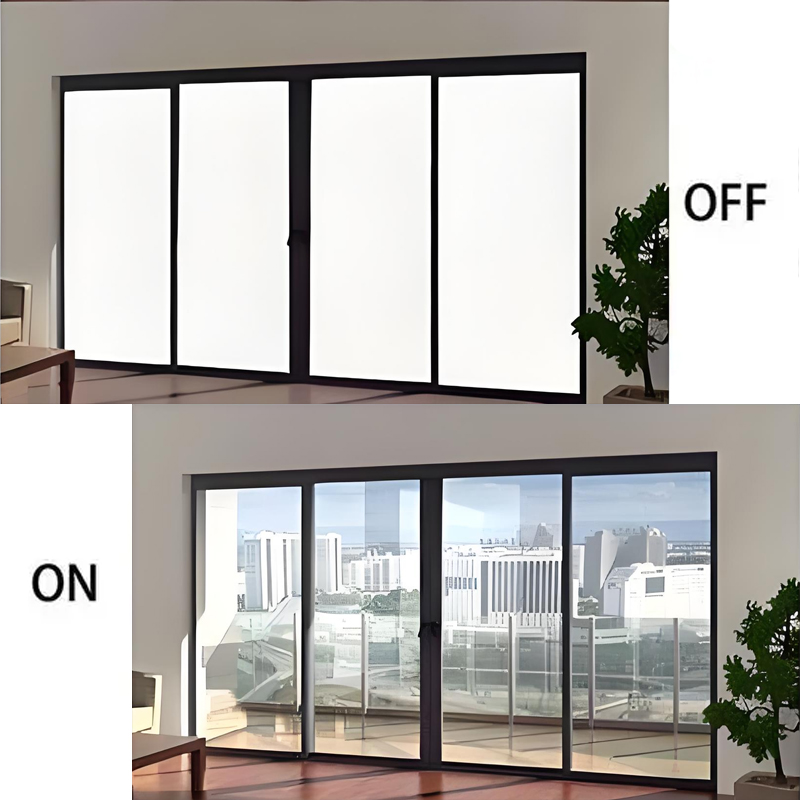
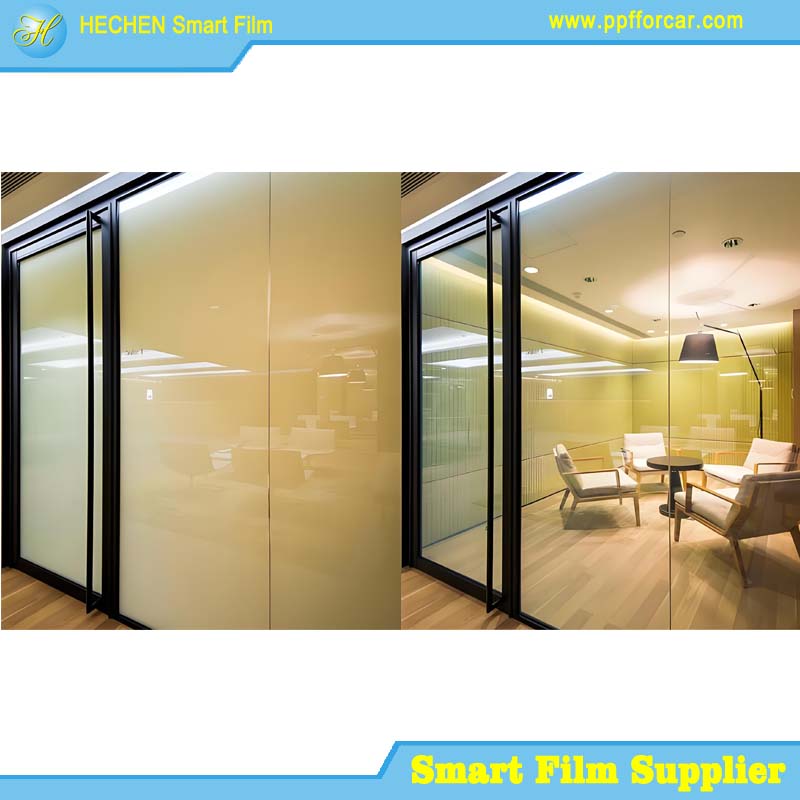
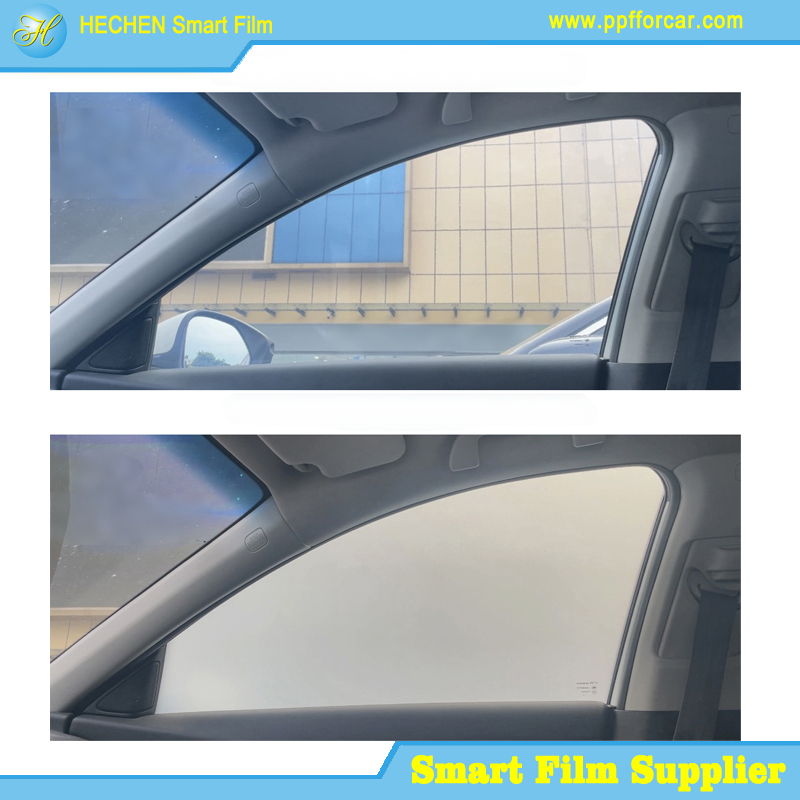
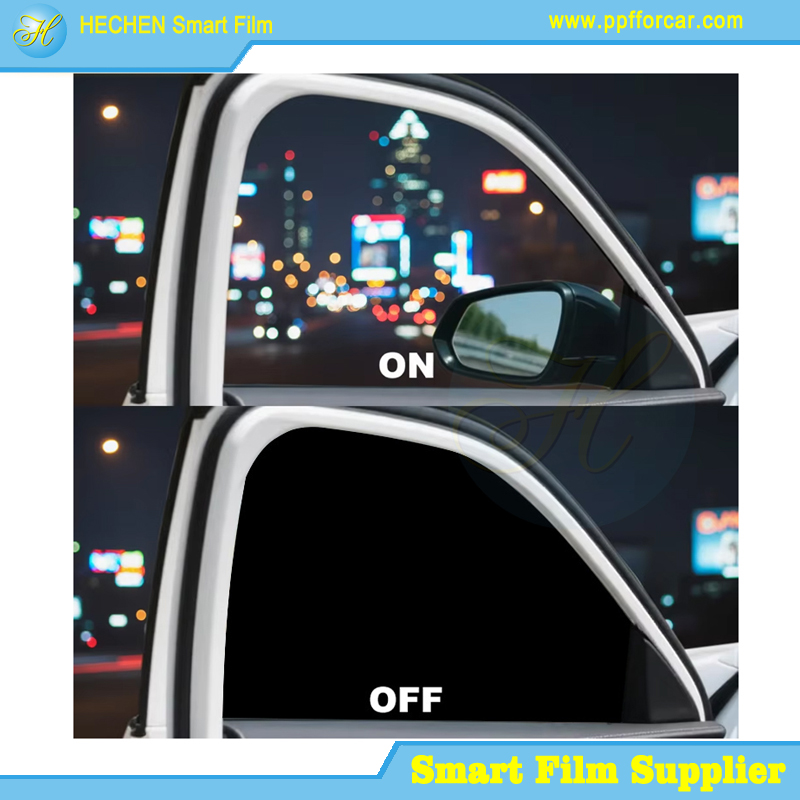
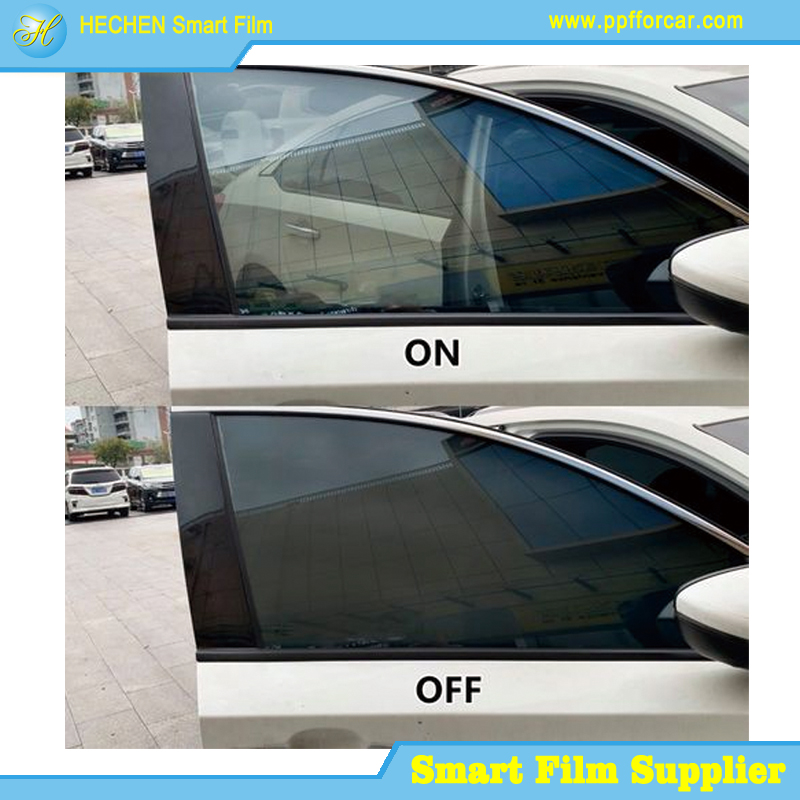
The magic lies in its electrically controlled opacity. In its OFF state (no power applied), the liquid crystals are randomly oriented. They scatter incoming light in all directions, rendering the film translucent or milky white. This provides immediate privacy and diffuses harsh light. When a low-voltage alternating current (typically 24V-110V AC) is applied—the ON state—the liquid crystals align uniformly along the electric field. This alignment allows light to pass through directly, making the film perfectly clear, with transparency levels often exceeding 80%.
This on-demand privacy is the feature most commonly marketed. However, the profound benefit for automotive applications, especially in summer, is its formidable thermal management capability, which operates in both states but is particularly potent in the opaque mode.
The Science of Heat Blocking: A Multi-Faceted Defense
PDLC smart film combats solar heat gain through a combination of optical phenomena, achieving its remarkable ~70% heat rejection rate. The solar energy spectrum consists of Ultraviolet (UV, 5%), Visible light (VIS, 43%), and Infrared (IR, 52%) radiation. It is primarily the near-infrared (NIR) and visible light that contribute to the greenhouse effect inside a vehicle.
High Infrared Rejection: Advanced PDLC films are engineered with nano-coatings or IR-reflective additives within the layers. These components are specifically designed to reflect a significant portion of the sun's infrared radiation—the primary carrier of heat—regardless of the film's transparent or opaque state. This intrinsic property forms the first and most critical line of defense.
Enhanced Reflectivity in the Opaque State: When switched to its translucent OFF state, the film's light-scattering property causes a high degree of diffuse reflection. A substantial portion of the total solar energy (both visible and IR) hitting the surface is reflected back outward, rather than being transmitted through the glass as direct radiation. This is analogous to a highly effective, built-in sunshade that is perfectly fitted to every window.
Spectral Selectivity: Premium automotive-grade PDLC films are tuned to be spectrally selective. This means they are designed to maximize the reflection of IR and UV rays while still allowing for good visibility in the clear state. They protect against 99% of UV radiation, safeguarding both occupants' skin and the car's interior from fading and cracking.
Comparative Heat Blocking Table:
Method | Typical Heat Rejection | Mechanism | Control |
Standard Clear Glass | ~15-20% | Absorbs some IR, poor performance. | None |
Traditional Dark Tint | 40-50% | Absorption of solar energy (can re-radiate inward). | Static |
Ceramic Window Tint | 50-60% | Non-metallic, nano-ceramic particles reflect IR. | Static |
Foldable Sunshade | Up to 60% (on windshield only) | Physical barrier, reflects/absorbs at surface. | Manual |
PDLC Smart Film (Opaque) | Up to 70% | Combination: High IR reflection + diffuse reflection. | Dynamic, On-demand |
Transforming the Summer Driving Experience
The integration of PDLC film into side windows, sunroofs, and even potential future windshield applications revolutionizes the in-cabin environment.
Dramatic Temperature Reduction: By blocking up to 70% of solar heat at the window surface, the interior ambient temperature can be 15-25°F (8-14°C) cooler than an untreated car. This eliminates the "oven effect." Pre-conditioning the car by switching the films to opaque a few minutes before entry makes stepping into a parked car a pleasant experience, not a shock to the system.
Unparalleled Glare Reduction: The translucent state instantly eliminates harsh direct sunlight and glare from side windows, a common hazard during dawn, dusk, or bright days. This significantly reduces driver eye strain and fatigue, enhancing safety.
Instant Privacy and Security: At the touch of a button, windows and sunroofs turn opaque, shielding occupants and valuables from prying eyes. This provides privacy during stops, in urban areas, or when children are in the car.
Synergy with HVAC Systems: With the primary radiant heat load drastically reduced, the vehicle's air conditioning system operates far more efficiently. It no longer needs to work at maximum capacity to combat constant solar gain, leading to faster cabin cool-down, maintained comfort with less energy, and a potential extension of EV driving range—a critical consideration for electric vehicles where HVAC is a major power draw.
Integration and Considerations for Automotive Use
Implementing PDLC technology in vehicles is not without its engineering considerations. The film can be applied as an aftermarket retrofit, laminated between glass panes for sunroofs, or integrated into side window modules. Key factors include:
Power Consumption & Wiring: PDLC films require a small but continuous power draw to maintain the clear state and a brief surge to switch. Modern automotive electrical systems can handle this easily, but integration must be designed to be seamless, often tying into the vehicle's accessory power or a dedicated control module.
Control Systems: Control can be via a dedicated remote, a smartphone app, or, ideally, integration into the vehicle's existing infotainment or overhead console. Advanced systems can feature automated scheduling or link to GPS to activate opaque mode when the car is parked.
Durability: Automotive-grade PDLC films are built to withstand extreme temperatures (-30°C to 80°C+), UV degradation, and constant switching cycles. The lamination process ensures they are protected from scratches and moisture.
Regulatory Compliance: Application must consider local regulations on window visibility (VLT - Visible Light Transmission) for driver and passenger windows. The clear state must meet legal transparency requirements for driving.
The Future: Beyond Heat Blocking
PDLC technology is a gateway to a smarter vehicle ecosystem. Future iterations could incorporate:
Dynamic Tinting Gradients: Allowing the top portion of the windshield to darken as a virtual visor.
Photovoltaic Integration: Combining with transparent solar cells to harness reflected energy.
Display & HUD Functions: Using the film as a projection screen for passenger entertainment or augmented reality head-up displays.
Conclusion
The days of enduring the "summer car steamer" are numbered. PDLC smart film represents a sophisticated convergence of materials science, optics, and user-centric design. By moving beyond static solutions to offer dynamic, intelligent control over solar energy, it delivers a quantifiable and dramatic improvement: blocking up to 70% of incoming heat. This translates not just into unprecedented comfort and privacy but also into tangible benefits for vehicle efficiency, HVAC performance, and overall energy consumption. As the technology matures and integrates further with vehicle electronics, it is poised to become a defining feature of the modern, comfortable, and intelligent automobile, making the stressful summer commute a relic of the past. It is no longer just about blocking the sun; it's about intelligently managing light and thermal energy to create the optimal personal environment on the move.
For more about the PDLC smart film can block up to 70% of heat, saying goodbye to the summer car steamer, you can pay a visit to Hechen PDLC Smart Film Manufacturers for more info.