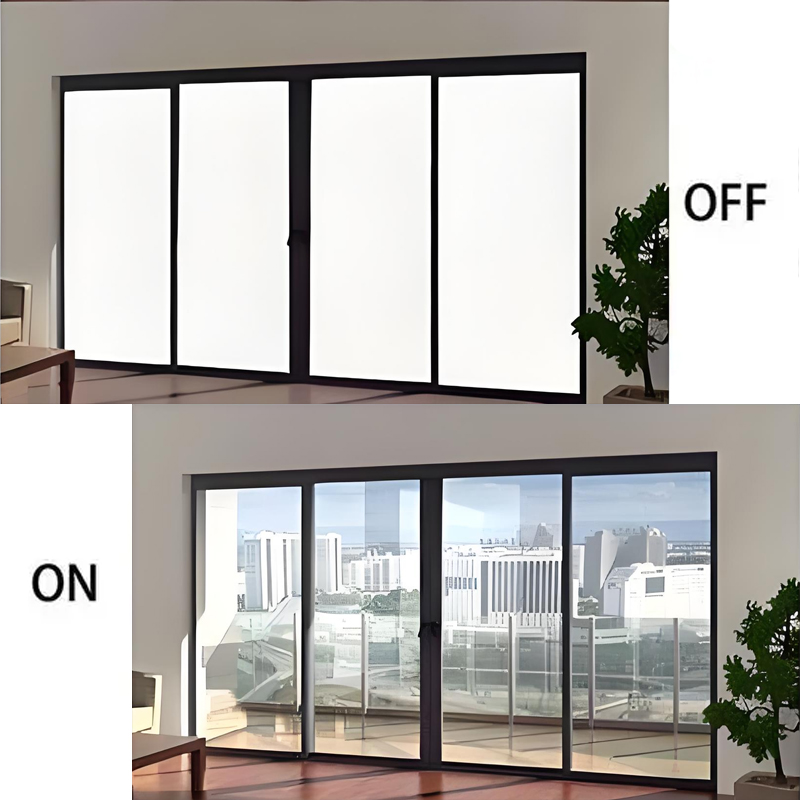
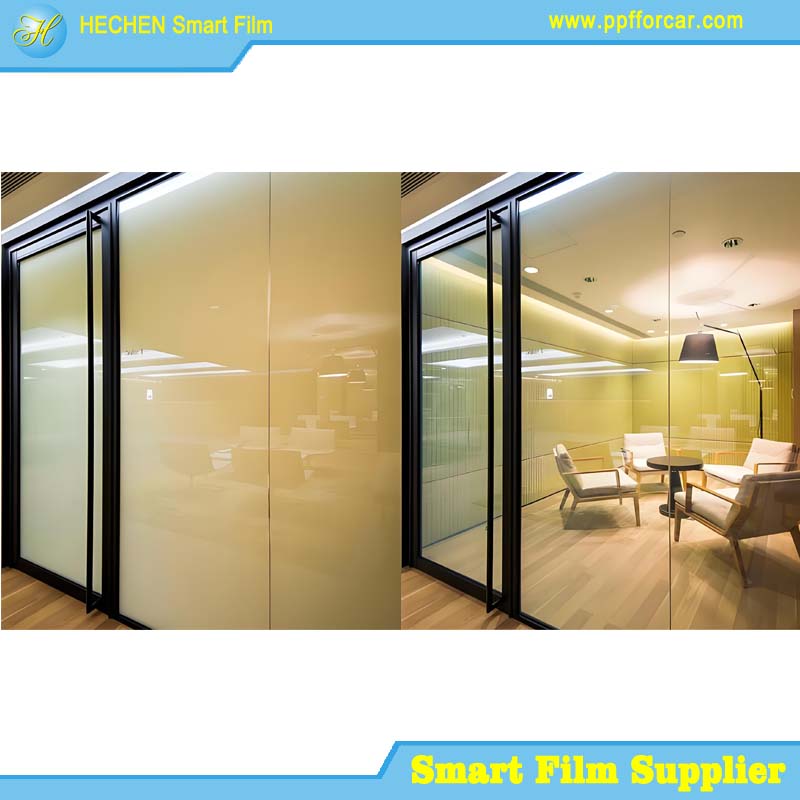
Smart Film Manufacturer
Smart film, often referred to as switchable privacy film or PDLC (Polymer Dispersed Liquid Crystal) film, is an innovative material that can change from opaque to transparent with the flick of a switch or application of electricity. This technology embeds liquid crystal droplets within a polymer matrix, sandwiched between conductive layers, allowing users to control light transmission for privacy, energy efficiency, and aesthetic purposes.
Unlike traditional window treatments, smart film adheres directly to glass surfaces, offering instant adjustability without mechanical parts. Manufacturers of smart film are pivotal in advancing this technology, producing high-quality films that integrate into architecture, automotive, and consumer products. As global demand for sustainable and intelligent materials grows, smart film manufacturer drive innovation, reducing energy consumption in buildings by up to 40% through dynamic shading. This article explores the world of smart film manufacturing, covering its history, production processes, leading companies, applications, benefits, hurdles, and emerging trends as of 2025.
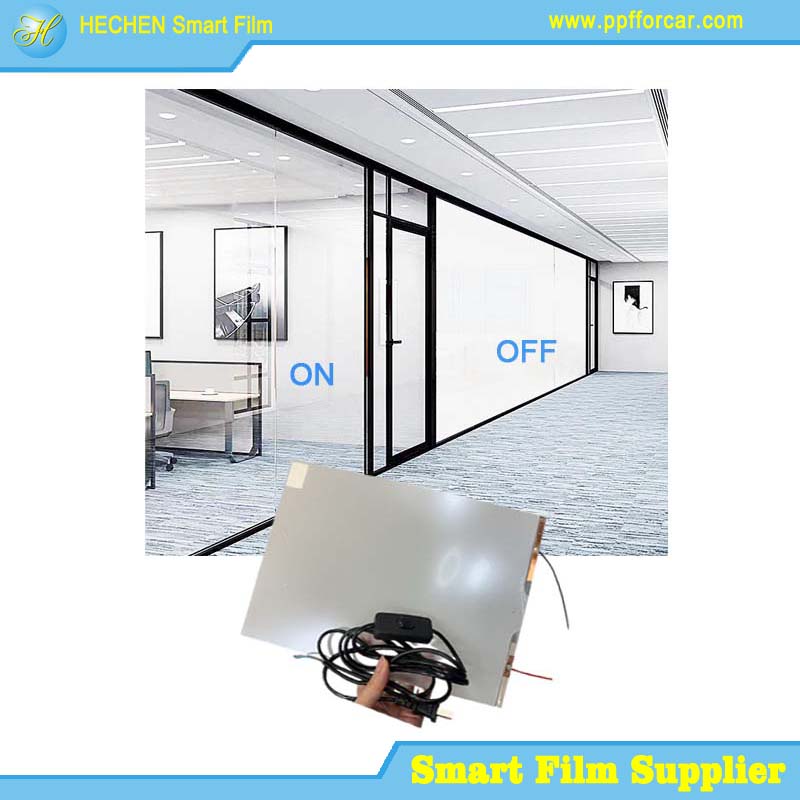
History of Smart Film Technology
The roots of smart film technology date back to the 1980s, originating from research into liquid crystal displays. The term "smart window" was coined in the 1980s by Swedish physicist Claes-Göran Granqvist, who pioneered electrochromic materials for energy-efficient glazing.
PDLC technology, the backbone of modern smart films, was invented independently in the USA during the 1980s, with the first patents based on micro-emulsion methods filed around that time. Initially developed for military and high-security applications, the technology transitioned to commercial use in the late 20th century, with advancements in materials science making it viable for everyday interiors. By the early 2000s, European and Asian manufacturers began refining PDLC films, improving optical performance and reliability. Companies like Raychem licensed foundational patents, such as those from Dr. James Fergason, enabling broader adoption.
The 2010s saw a surge in architectural applications, driven by sustainability goals, with smart films integrated into green building standards. In the USA, the technology gained traction for privacy in healthcare and offices, while Asia emerged as a manufacturing hub due to cost-effective production. By 2025, smart film has evolved from niche experiments to a mainstream solution, with ongoing patents focusing on integration with IoT and AI for automated control. This historical progression underscores how manufacturers have adapted to market needs, transforming smart film into a versatile tool for modern living.
The Manufacturing Process of Smart Film
Producing smart film involves precise engineering to ensure consistent switching performance and durability. The process starts with preparing the PDLC mixture: liquid crystals are dispersed into a polymer precursor using techniques like polymerization-induced phase separation, where UV curing solidifies the matrix around crystal droplets. This mixture is then coated onto a conductive ITO (Indium Tin Oxide) film layer, typically on PET (Polyethylene Terephthalate) substrates, in a cleanroom environment to avoid contaminants.
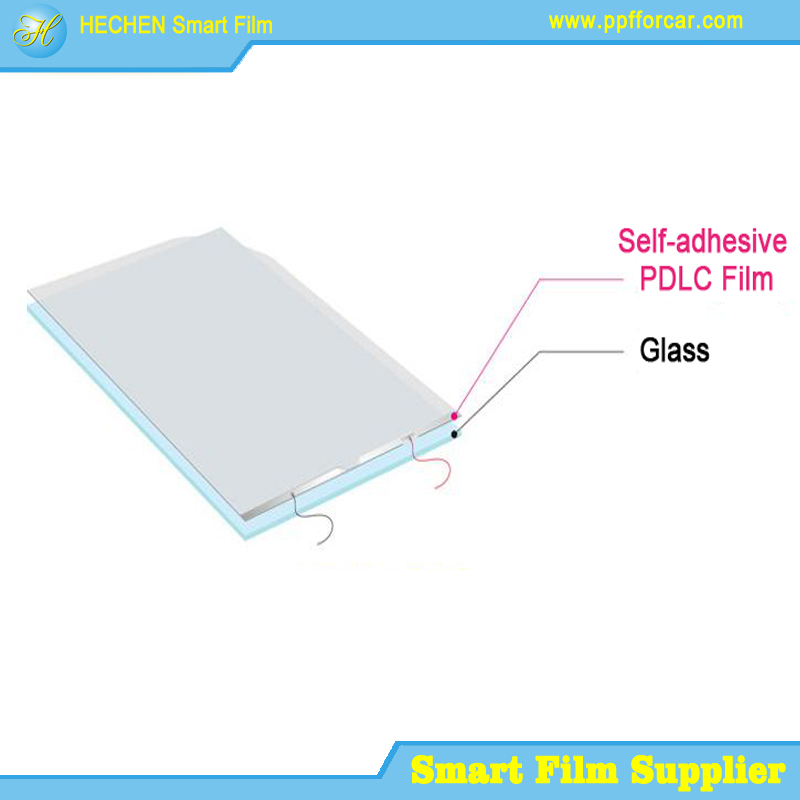
Next, a second ITO-PET layer is laminated over the PDLC core, enclosing it securely. Electrode busbars, often made of copper or silver paste, are attached to enable electrical connectivity. For self-adhesive variants, a pressure-sensitive adhesive and release liner are added. The assembly undergoes curing via UV light or heat, stabilizing the liquid crystals for long-term use. In smart glass production, the film is laminated between glass panels using interlayers like EVA (Ethylene Vinyl Acetate) or PVB (Polyvinyl Butyral), processed in an autoclave under vacuum to eliminate bubbles and ensure adhesion. Quality control is rigorous, involving tests for haze levels (typically under 5% in transparent mode), switching speed (milliseconds), and resistance to UV, heat, and humidity. Manufacturers employ roll-to-roll processing for scalability, producing films up to 1.8 meters wide in continuous rolls.
Challenges include maintaining uniform droplet size for even opacity and preventing delamination over time. Advanced facilities, like those in China, integrate automation for efficiency, while R&D focuses on eco-friendly polymers to reduce environmental impact.
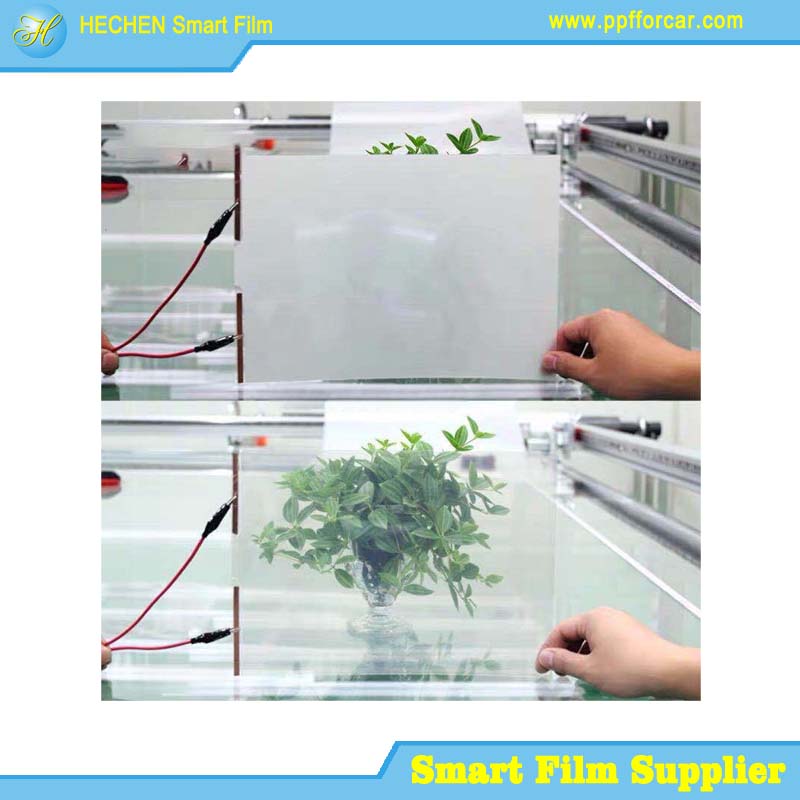
The smart film industry features a mix of global leaders and specialized firms, with Asia dominating production due to cost advantages. Smart Films International (SFI), based in the USA, is renowned for its NCAP PDLC technology, offering developer-friendly solutions for privacy control in architecture and automotive sectors. Filmbase, a Chinese manufacturer, excels in PDLC and LED-integrated films, serving global markets in advertising and home applications with customizable options. Gauzy, an Israeli company listed on NASDAQ, leads in smart glass and film technologies, emphasizing ADAS (Advanced Driver Assistance Systems) and vision control for transportation. Polytronix and Glass Apps provide innovative solutions, with Polytronix pioneering liquid crystal tech since the 1980s. European players like Intelligent Glass offer switchable films for stylish interiors, while China's Tsing Glass and Unite Glass supply bulk PDLC products with technical training for distributors. Other notables include PriWatt for versatile control options and Deluxe Smart Film for premium installations in Miami. These manufacturers compete on certification, customization, and sustainability, with many holding patents for enhanced performance. Many new manufacturers such as Hechen New Materials (Huizhou) Co., Ltd have also been released.
Applications of Smart Film
Smart film versatility spans multiple sectors, revolutionizing how spaces are used. In architecture, it transforms windows, partitions, and skylights into dynamic elements, providing on-demand privacy in offices and homes while allowing natural light.Healthcare facilities use it for hygienic privacy screens in bathrooms, showers, and patient rooms, reducing the need for curtains and enhancing cleanliness.Automotive applications include sunroofs and side windows that block glare and UV rays, improving passenger comfort and safety.Retailers leverage smart film for interactive displays, turning opaque surfaces into projection screens for ads or branding.
In cleanrooms and dust-free environments, it switches transparency to minimize disruptions.Emerging uses include energy-efficient smart windows that regulate heat, cutting cooling costs, and integration into vehicles for enhanced privacy.Iconic projects, like modern skyscrapers, showcase smart film in facades for aesthetic and functional appeal.
Overall, smart film's adaptability makes it ideal for spaces valuing privacy, light control, and innovation.Advantages and Challenges in Smart Film ManufacturingSmart film offers compelling advantages, starting with instant privacy control, switching states in milliseconds without mechanical wear.It blocks up to 99% of UV rays, protecting interiors from fading and reducing skin cancer risks, while enhancing energy efficiency by minimizing heat gain and HVAC usage.Low maintenance, as it eliminates curtains or blinds, and versatility for retrofitting existing glass add to its appeal.Manufacturers benefit from scalable production, with films lasting over 10 years and consuming minimal power (about 5W per square meter).
However, challenges abound. High costs, often $50-100 per square foot, stem from specialized materials and cleanroom manufacturing, limiting widespread adoption. Installation requires professionals to avoid bubbles or misalignment, and films can yellow or degrade under prolonged UV exposure.Power dependency means default opacity during outages, and achieving uniform performance in large sheets is technically demanding. Environmental concerns arise from non-recyclable components, though manufacturers are shifting to greener alternatives.Balancing these pros and cons drives ongoing R&D for cost-effective, durable solutions.Future Trends in Smart Film TechnologyAs of 2025, smart film technology is evolving rapidly, with projections indicating significant market growth. The switchable smart film market is valued at USD 4.53 billion in 2024, expected to grow at a 15.6% CAGR through 2030, driven by IoT integration for voice-activated controls.
Trends include smart tints with nano-ceramic enhancements for better UV protection and energy efficiency in automotive and residential applications. By 2030, the global smart glass market, encompassing films, is forecasted to reach USD 13.01 billion, with a focus on eco-friendly, recyclable materials and AI-optimized shading. Automotive trends highlight energy-efficient tints and customizable aesthetics, while office privacy solutions emphasize switchable films for hybrid workspaces. Innovations like solar-powered films and integration with AR displays are emerging, promising thinner, flexible options for wearables. The electric switchable smart film segment alone is projected to hit USD 4.5 billion by 2033 at a 12.5% CAGR.
Conclusion
Smart film manufacturers are at the vanguard of a technological shift, crafting materials that blend functionality with sustainability. From its 1980s origins to 2025's advanced integrations, smart film has become essential for privacy and efficiency. As markets expand and innovations address challenges, these manufacturers will continue to shape intelligent environments, making glass not just a window, but a responsive interface to the world.
For more about the smart film manufacturer, you can pay a visit to Hechen PDLC Smart Film Manufacturers for more info.