Switchable Smart Film: The Evolution of Adaptive Glass Technology in Modern Architecture and Design
In an era where environmental adaptability and user-centric design have become paramount, switchable smart film has emerged as one of the most transformative technologies in the materials science landscape. Also known as polymer dispersed liquid crystal film, privacy film, or smart glass film, this innovative material enables glass surfaces to transition instantly between transparent and opaque states at the flick of a switch or the tap of a smartphone screen. What was once considered a niche luxury product for high-end corporate boardrooms has rapidly evolved into a versatile solution spanning architectural design, automotive engineering, healthcare facilities, and consumer electronics. This comprehensive article explores the technology behind switchable smart film, its market dynamics, diverse applications, and the innovations shaping its future.
Understanding the Science Behind Switchable Smart Film
At its core, switchable smart film operates on relatively simple principles of electro-optical physics, yet its manufacturing requires sophisticated precision. The film consists of a micron-thin layer of liquid crystals suspended within a polymer matrix, sandwiched between two transparent conductive polyester layers coated with indium tin oxide. This multi-layer construction, typically measuring less than 0.4 millimeters in total thickness, is what enables the dramatic visual transformation that characterizes the technology.
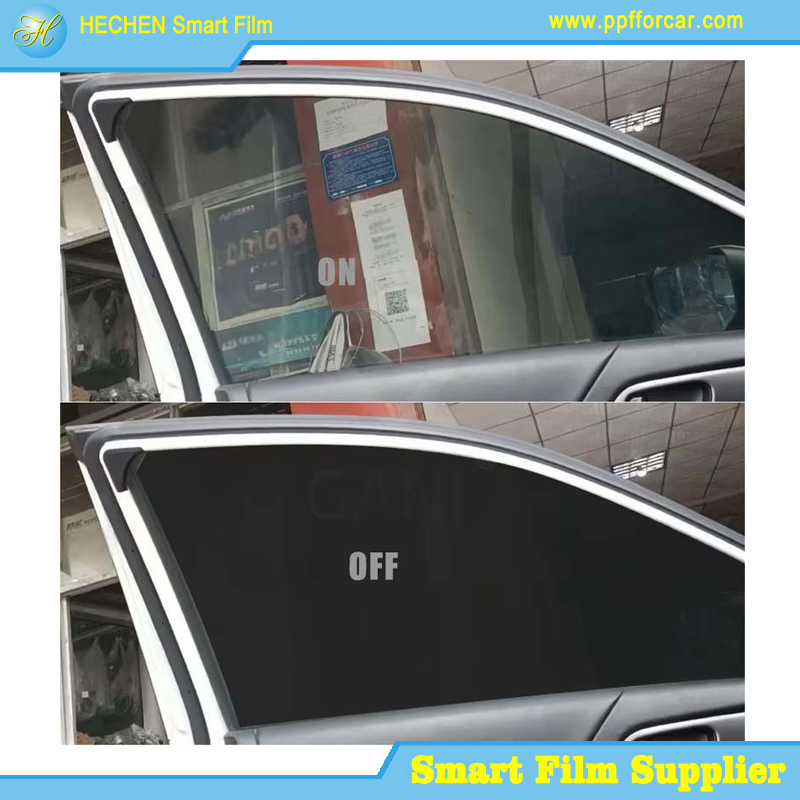
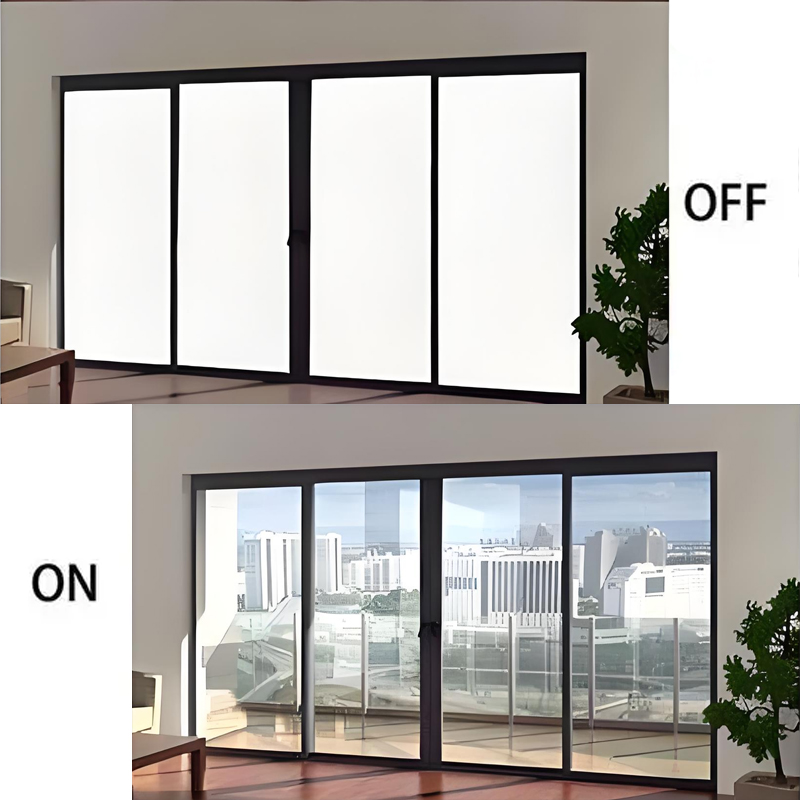
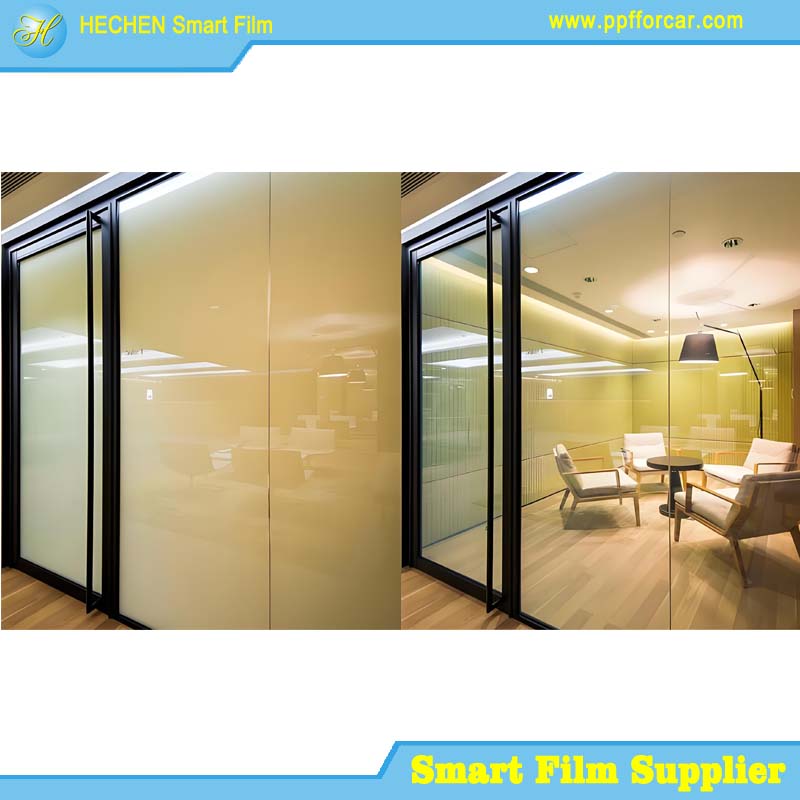
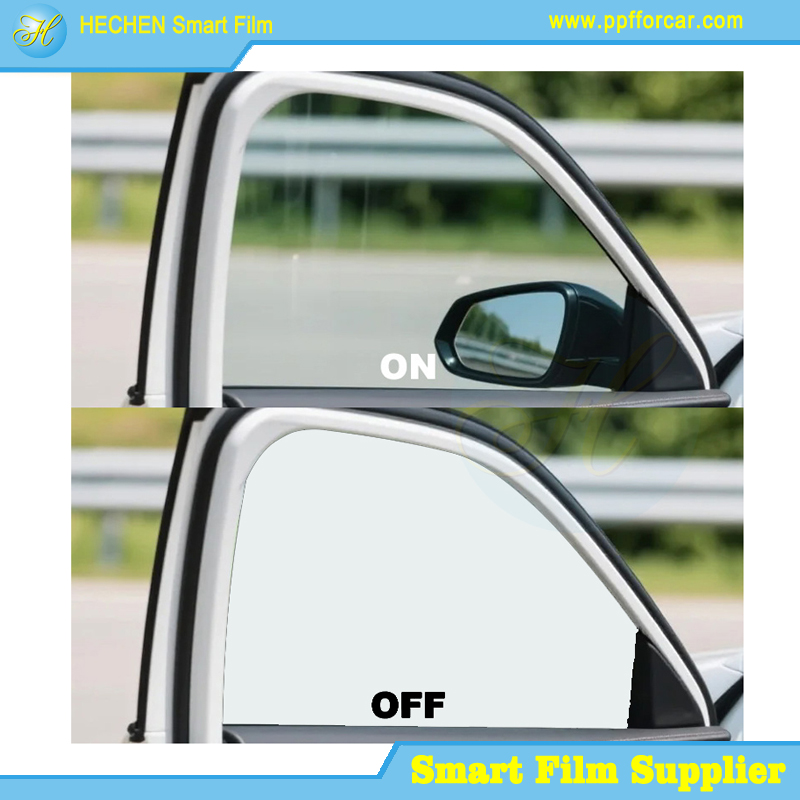
When no electrical current is applied, the liquid crystal droplets are randomly oriented within the polymer, scattering light in all directions and creating a milky white, opaque appearance. This off-state provides complete visual privacy while still allowing diffused light to pass through, eliminating the need for traditional window coverings. The moment an electrical current—typically 50-100 volts AC—is applied to the conductive coatings, an electric field forms across the liquid crystal layer. This field forces the randomly oriented crystals to align uniformly, allowing light to pass through unimpeded and rendering the film transparent.
The manufacturing process itself is a marvel of materials engineering. During production, a liquid mixture of prepolymer and liquid crystals is coated onto conductive polyester and subjected to controlled curing conditions. As the polymer solidifies, phase separation occurs, forcing the liquid crystal to form microscopic droplets of consistent size within the solid matrix. The uniformity of these droplets directly impacts optical performance, with premium manufacturers achieving droplet sizes optimized for both rapid switching speed and minimal haze in the transparent state. Advanced production techniques now enable switching times under 100 milliseconds, a significant improvement over early generations that required several seconds to transition.
Market Growth and Industry Dynamics
The global market for switchable smart film has experienced remarkable growth, driven by converging trends in sustainable construction, smart building automation, and automotive innovation. Market research indicates the PDLC switchable smart film segment alone was valued at approximately USD 131 million in 2024, with projections reaching USD 287 million by 2032, representing a compound annual growth rate of 12.4 percent. Broader definitions of the switchable film market, encompassing multiple technologies including suspended particle device and electrochromic films, suggest even larger figures, with some analyses projecting the total market to approach USD 9 billion by 2027.
Europe has emerged as the dominant regional market, accounting for approximately 44 percent of global revenue, driven primarily by stringent building energy regulations and automotive emissions standards. Countries including Germany, France, and the United Kingdom have been early adopters, with building codes increasingly incentivizing technologies that reduce HVAC loads and improve overall energy efficiency. North America follows closely, with the United States market projected to reach USD 2.77 billion by 2027, supported by widespread adoption in commercial architecture and healthcare applications.
The competitive landscape features a mix of established multinational corporations and innovative specialty manufacturers. Key players include Japan's TOPPAN, Israel's Gauzy, the United Kingdom's Smart Films International, and United States-based Polytronix and Inno Glass. These companies compete primarily on optical clarity, switching speed, durability, and the ability to produce large-format films. Chinese manufacturers, including Shantou Wanshun New Material Group and Shanghai HIUV New Material, have captured significant regional market share through competitive pricing and government support for domestic production.
Technological Advancements Driving Performance Improvements
Recent years have witnessed substantial technological advancements that have expanded the addressable market for switchable smart film. First-generation products suffered from noticeable haze in the transparent state, limiting their use in applications requiring pristine optical clarity. Modern formulations have reduced haze levels to between one and three percent, while maximum transparency has increased from approximately 65 percent to over 80 percent in premium products. These improvements have made the technology viable for retail display windows, museum cases, and other applications where visual fidelity is paramount.
Self-adhesive variants represent one of the most significant recent innovations, capturing approximately 62 percent of the 2023 market share. These products feature a pressure-sensitive adhesive layer and a protective hard coat, enabling retrofit installation onto existing glass surfaces without the need for specialized lamination equipment. This development has dramatically reduced installation costs and opened the residential retrofit market, where replacing entire glazing units was previously cost-prohibitive. Installation time for standard windows has been reduced from hours to minutes, and deployment costs have decreased by approximately 25 percent compared to traditional framed solutions.
Integration with building automation and Internet of Things systems has transformed switchable smart film from a standalone product into an integral component of intelligent environments. Modern installations can be controlled through voice commands via Amazon Alexa, Google Home, and Apple HomeKit platforms, through smartphone applications, or automatically based on occupancy sensors, time of day, or ambient light levels. This connectivity enables sophisticated energy management strategies, where films automatically tint to reduce solar heat gain during peak afternoon hours and clear to maximize passive solar heating during winter months.
Diverse Applications Across Industries
The architectural sector remains the largest application area for switchable smart film, accounting for over 45 percent of commercial installations. Corporate offices have embraced the technology for conference room partitions, executive offices, and glass-walled meeting spaces that must balance openness with confidentiality. The ability to transform an entire glass wall from transparent to opaque instantaneously eliminates the need for blinds or curtains, creating cleaner aesthetics and reducing maintenance requirements. Healthcare facilities represent a rapidly growing segment, where the technology addresses both privacy needs and infection control concerns. Unlike fabric curtains, which can harbor pathogens and require frequent laundering, smart film surfaces can be cleaned with standard hospital-grade disinfectants, reducing cross-contamination risks.
The automotive industry has emerged as a particularly dynamic growth area, with the segment projected to expand at a compound annual rate of 14.2 percent through 2032. Premium vehicle manufacturers increasingly specify switchable smart film for panoramic sunroofs, allowing occupants to instantly darken or clear overhead glass at will. Beyond convenience, the technology offers substantial energy benefits for electric vehicles, where reduced HVAC loads can meaningfully extend driving range. The ability to block up to 99 percent of harmful ultraviolet radiation also protects interior surfaces from fading and degradation while shielding occupants from UV exposure.
Retail and hospitality applications demonstrate the technology's versatility in creating dynamic customer experiences. Storefront windows equipped with smart film can transform from transparent display windows to opaque projection surfaces for after-hours advertising or events. High-end hotels use the technology in bathroom partitions and room dividers, allowing guests to control their environment while maintaining the clean sightlines that contemporary design demands. Conference centers and meeting facilities increasingly incorporate smart film into presentation spaces, where the opaque state serves as an ideal projection screen surface.
Residential adoption, while currently smaller than commercial segments, is accelerating as costs decline and awareness increases. High-end residential projects feature switchable smart film in master bathrooms, home theaters, and wine cellars, where the ability to control visibility on demand adds both functionality and dramatic impact. The technology is particularly valued in urban settings where proximity to neighbors might otherwise require permanent window treatments that block views and natural light.
Benefits Beyond Privacy
While privacy control remains the most visible benefit of switchable smart film, the technology offers numerous additional advantages that contribute to its growing adoption. Energy efficiency ranks prominently among these, with smart films capable of reducing building energy consumption by up to 30 percent through improved solar heat gain control. By dynamically adjusting transparency in response to solar conditions, the films reduce cooling loads during summer months while maximizing passive heating in winter. The low power consumption—typically only 5 watts per square meter when energized—ensures that the energy benefits are not offset by operational costs.
Sound dampening represents an often-overlooked benefit, particularly in laminated glass constructions incorporating smart film interlayers. The multiple material layers and the viscoelastic properties of the polymer matrix effectively attenuate acoustic vibrations, reducing noise transmission compared to standard glazing. This acoustic performance makes the technology particularly valuable in healthcare settings, recording studios, and urban residential applications where noise control is critical.
The elimination of traditional window coverings simplifies cleaning and maintenance while improving indoor environmental quality. Fabric blinds and curtains accumulate dust, allergens, and odors over time, requiring regular cleaning or replacement. Smart film surfaces, by contrast, require only standard glass cleaning protocols and present no fabric surfaces to harbor allergens. This characteristic has proven particularly valuable during the COVID-19 pandemic, when healthcare facilities sought to minimize surfaces that could potentially harbor viral particles.
Challenges and Limitations
Despite its many advantages, switchable smart film faces several challenges that continue to limit widespread adoption. Cost remains the most significant barrier, with commercial-grade products typically ranging from USD 100 to 150 per square meter, substantially more than conventional glazing or high-end window treatments. While prices have decreased approximately 15 percent over three years, the technology remains premium-priced, limiting penetration in cost-sensitive residential and small commercial markets.
Technical limitations also persist. Current PDLC technology cannot achieve complete blackout in the opaque state, typically transmitting five to ten percent of incident light. While sufficient for visual privacy, this light transmission may be inadequate for applications requiring complete darkness, such as home theaters or sleeping areas. Haze in the transparent state, though dramatically reduced, remains measurable at one to three percent, potentially noticeable in applications requiring pristine optical clarity.
Durability concerns, while diminishing with each product generation, continue to influence specification decisions. The operational lifespan of premium films now exceeds 100,000 switching cycles, equivalent to approximately 27 years of ten daily cycles, but extreme temperatures outside the range of negative 20 degrees to positive 60 degrees Celsius can accelerate degradation. Manufacturers continue to refine formulations to extend operational temperature ranges and improve long-term reliability.
Future Directions and Emerging Trends
The future of switchable smart film appears exceptionally bright, with numerous emerging trends poised to expand applications and improve performance. Integration with sustainable building certification systems, including LEED and BREEAM, is becoming increasingly important as owners and developers seek to maximize green building points. Films that contribute to energy optimization and daylight harvesting are gaining preference in certified projects, and manufacturers are developing products specifically optimized for sustainability metrics.
Customization and aesthetic integration represent growing market demands. Manufacturers now offer films that can incorporate logos, patterns, or graphics visible in the transparent state, enabling branded architectural applications. Color customization, once limited to the natural slightly blue or gray tints of early products, now encompasses a broad palette, allowing designers to match films precisely to interior color schemes.
Emerging technologies may eventually complement or partially displace current PDLC solutions. Suspended particle device technology offers different performance characteristics, including continuously variable tint rather than binary switching, though at higher cost and with different aesthetic qualities. Electrochromic technologies, which change tint through electrochemical reactions rather than liquid crystal alignment, offer memory effects that require power only during switching, potentially reducing energy consumption for applications where constant transparency is not required.
The medical sector presents particularly intriguing growth opportunities, with recent developments including antimicrobial film variants specifically designed for healthcare environments. These products incorporate biocidal materials into the film construction, actively reducing pathogen survival on surfaces and addressing infection control concerns that have intensified since the COVID-19 pandemic.
Conclusion
Switchable smart film has evolved from a novel technology into a mature solution with proven benefits across architecture, automotive, healthcare, and consumer applications. Its ability to provide instant, controllable privacy while contributing to energy efficiency, acoustic comfort, and design flexibility positions it well for continued market expansion. As manufacturing costs decline, performance improves, and integration with smart building systems becomes seamless, the technology appears destined to transition from premium specialty product to mainstream building material.
The convergence of sustainability imperatives, digital integration, and consumer demand for adaptable environments creates a favorable market context for continued innovation. Manufacturers investing in improved optical clarity, expanded temperature ranges, and enhanced durability will find ready markets among architects, builders, and homeowners seeking to create spaces that respond intelligently to human needs. While challenges remain, the trajectory of switchable smart film technology suggests a future where adaptive glass becomes the norm rather than the exception, transforming the way we experience and interact with the built environment.
For more about Switchable Smart Film: The Evolution of Adaptive Glass Technology in Modern Architecture and Design. Everything you need to know, you can pay a visit to Hechen PDLC Smart Film Manufacturers for more info.