Everything You Need to Know About SPD Smart Film for Cars
The automotive industry is rapidly embracing intelligent glazing technologies that enhance comfort, energy efficiency, and driving experience. Among the latest innovations, SPD Smart Film for Cars has emerged as one of the most advanced dynamic shading solutions for luxury vehicles, electric vehicles (EVs), panoramic sunroofs, and premium automotive glass.
Unlike traditional window tint or privacy films, automotive SPD film continuously adjusts the amount of light passing through the glass, allowing drivers and passengers to control brightness and solar heat without sacrificing outward visibility. This makes SPD smart tint an ideal solution for vehicles requiring variable light transmission, glare reduction, and thermal management.
In this comprehensive guide, you'll learn everything about SPD Smart Film for Cars, including how SPD smart glass works, its advantages, applications, installation methods, OEM versus aftermarket solutions, costs, and frequently asked questions.
What Is SPD Smart Film?
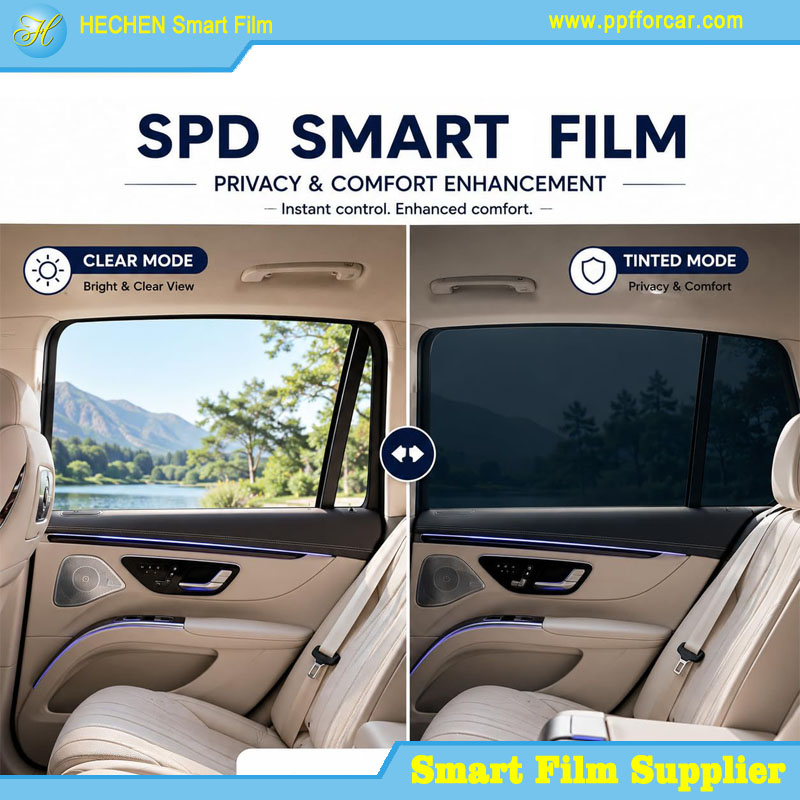
SPD Smart Film (Suspended Particle Device Smart Film) is an electronically controlled light-modulating film that changes its tint level when electrical voltage is applied.
Unlike PDLC technology, which switches between transparent and opaque privacy states, SPD technology continuously adjusts the amount of visible light passing through the glass. This enables smooth and variable shading while maintaining visibility.
Because of this capability, SPD technology is widely used in:
Luxury vehicles
Panoramic sunroofs
Premium side windows
Aircraft windows
Marine glazing
High-end architectural glass
Today, smart tint for cars based on SPD technology is increasingly adopted by automotive manufacturers seeking intelligent solar control and passenger comfort.
How SPD Technology Works
The working principle of SPD Smart Film for Cars is based on millions of microscopic light-absorbing particles suspended within a special liquid matrix.
OFF State (No Power)
When electrical power is removed:
Suspended particles are randomly distributed.
Light is absorbed and scattered.
The glass appears dark or tinted.
This state reduces sunlight penetration and helps minimize glare and heat buildup.
ON State (Power Applied)
When voltage is applied:
Suspended particles align in the direction of the electric field.
More visible light passes through the glass.
The glass becomes clearer.
Unlike conventional tint, SPD technology allows continuous adjustment rather than simple ON/OFF switching.
Drivers can select different tint levels depending on lighting conditions.
Variable Tint Control
One of the biggest advantages of variable tint glass is its ability to achieve multiple transparency levels.
Instead of only two states, SPD systems can provide:
Dark
Medium tint
Light tint
Nearly clear
This smooth transition allows occupants to optimize cabin brightness throughout the day.
Benefits of SPD Smart Film for Cars
1. Dynamic Solar Control
One of the primary benefits of SPD smart glass is active solar management.
The film continuously regulates:
Visible light transmission
Solar heat gain
Cabin brightness
This helps maintain a comfortable interior regardless of external weather conditions.
2. Superior Glare Reduction
Bright sunlight can reduce driving comfort and visibility.
Automotive SPD film significantly reduces glare from:
Direct sunlight
Reflections
Low-angle evening sun
Bright sky conditions
This improves both driving safety and passenger comfort.
3. Improved Energy Efficiency
Reducing solar heat helps decrease air-conditioning demand.
For electric vehicles, this contributes to:
Lower HVAC energy consumption
Improved driving range
Better battery efficiency
As EV manufacturers prioritize energy management, SPD technology becomes increasingly attractive.
4. Premium Passenger Experience
Luxury vehicle owners appreciate the ability to control cabin brightness instantly.
Passengers can create a more comfortable environment by adjusting window tint levels according to:
Weather
Time of day
Personal preference
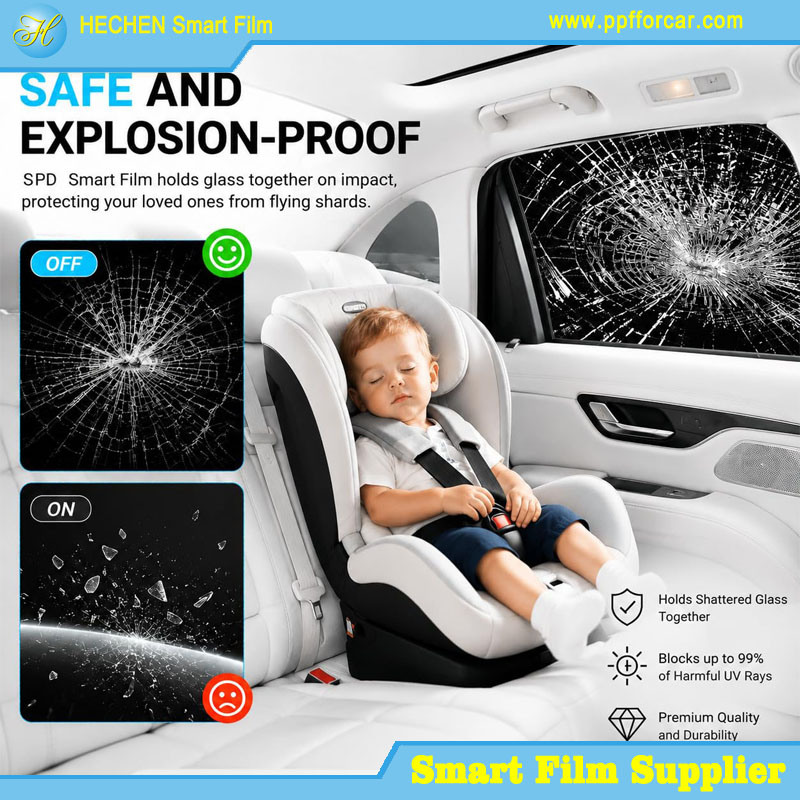
5. UV Protection
High-quality SPD Smart Film for Cars helps reduce ultraviolet radiation reaching the vehicle interior.
Benefits include:
Protecting leather upholstery
Preventing dashboard fading
Reducing interior aging
Improving passenger protection
6. Modern Vehicle Design
Many luxury automotive brands incorporate SPD smart tint into panoramic roofs and side glazing to create a sophisticated, high-tech appearance.
Applications of Automotive SPD Film
The flexibility of SPD technology allows it to be used across numerous automotive applications.
Panoramic Sunroofs
One of the most common applications is panoramic roof glazing.
Instead of using mechanical sunshades, variable tint glass electronically controls incoming sunlight.
Advantages include:
Better aesthetics
Increased headroom
Reduced mechanical complexity
Enhanced passenger comfort
Side Windows
SPD film provides adjustable shading while preserving outward visibility.
This is especially useful for:
Executive sedans
Luxury SUVs
Chauffeur-driven vehicles
Rear Passenger Compartments
Business transportation often requires enhanced passenger comfort.
SPD smart tint enables rear-seat occupants to independently adjust incoming light.
Electric Vehicles
Electric vehicles increasingly adopt SPD technology because reducing cabin heat lowers energy consumption.
This helps maximize battery efficiency without compromising visibility.
Specialty Vehicles
Other applications include:
VIP vans
Recreational vehicles (RVs)
Commercial mobility solutions
High-end shuttle vehicles
OEM vs Aftermarket SPD Smart Film
Buyers often wonder whether to choose OEM-installed SPD systems or aftermarket solutions.
OEM SPD Systems
OEM (Original Equipment Manufacturer) installations are integrated during vehicle production.
Advantages include:
Factory-engineered electrical integration
Optimized glass compatibility
Seamless vehicle design
Manufacturer warranty support
OEM systems are commonly found in premium luxury vehicles.
Aftermarket SPD Installation
Aftermarket installation involves applying SPD smart film to existing compatible glass.
Benefits include:
Vehicle upgrades
Lower replacement cost
Greater customization flexibility
Availability for older vehicles
However, installation quality plays a critical role in long-term performance.
Which Option Is Better?
| Factor | OEM Installation | Aftermarket Installation |
|---|---|---|
| Integration | Excellent | Good (depends on installer) |
| Cost | Higher | Lower |
| Customization | Limited | Flexible |
| Installation Time | Factory-installed | Project-based |
| Maintenance | Manufacturer support | Installer support |
For distributors and customization companies, aftermarket SPD solutions provide greater business opportunities.
SPD Smart Film Installation
Proper installation is essential to maximize the performance of SPD Smart Film for Cars.
Step 1: Glass Inspection
Before installation:
Inspect glass dimensions
Verify compatibility
Check curvature
Identify electrical routing
Step 2: Surface Preparation
Glass must be completely free from:
Dust
Oil
Moisture
Surface contaminants
Proper cleaning ensures reliable adhesion.
Step 3: Film Application
The film is carefully laminated to the glass while eliminating:
Air bubbles
Water residue
Optical distortion
Precision installation improves visual quality.
Step 4: Electrical Integration
The installer connects:
Power supply
Controller
Wiring harness
Transformer (if required by the system)
Stable electrical control ensures consistent tint adjustment.
Step 5: Functional Testing
After installation, technicians verify:
Transparency adjustment
Switching speed
Uniform tint
Electrical safety
Professional testing minimizes long-term maintenance issues.
Cost of SPD Smart Film for Cars
The cost of SPD Smart Film for Cars depends on several factors.
Factors Affecting Price
Glass Size
Larger windows require more film material.
Vehicle Type
Luxury vehicles often involve more complex installations.
Film Quality
Premium automotive-grade SPD films offer:
Better clarity
Faster response
Improved durability
Longer service life
Installation Complexity
Curved automotive glass, electrical integration, and custom control systems increase installation costs.
OEM vs Aftermarket
OEM systems generally have higher overall costs due to factory integration.
How to Choose a Reliable Automotive SPD Film Supplier
If you plan to source automotive SPD film, evaluate suppliers based on:
Product Quality
Look for:
High optical clarity
Uniform tint
Fast switching
Stable performance
Technical Support
Reliable suppliers should provide:
Installation guidance
Wiring documentation
Product specifications
Engineering consultation
OEM Capability
Professional manufacturers typically offer:
Custom dimensions
OEM branding
Project customization
Bulk production
Quality Assurance
Choose suppliers capable of providing:
Performance testing
Material certifications
Production consistency
Long-term warranty support
Frequently Asked Questions (FAQs)
What is SPD Smart Film for Cars?
SPD Smart Film is an electronically controlled shading technology that adjusts the amount of light passing through automotive glass by aligning suspended microscopic particles.
How is SPD different from PDLC smart film?
SPD technology controls light transmission while maintaining visibility, whereas PDLC technology primarily switches between transparent and opaque privacy states.
Can SPD Smart Film block UV rays?
Yes. High-quality SPD films significantly reduce ultraviolet radiation and help protect vehicle interiors.
Is SPD Smart Film suitable for electric vehicles?
Yes. SPD technology helps reduce solar heat gain, improving cabin comfort and supporting EV energy efficiency.
Can SPD Smart Film be installed after vehicle purchase?
Yes. Many vehicles can be upgraded using aftermarket SPD film, provided the installation is performed by experienced professionals.
Does SPD Smart Film consume electricity continuously?
SPD film requires electrical power to maintain lighter tint levels. Power consumption depends on the selected transparency level and system design.
How long does SPD Smart Film last?
With proper installation and normal operating conditions, automotive-grade SPD film is designed for long-term durability and reliable performance.
Conclusion
As automotive technology continues to evolve, SPD Smart Film for Cars is becoming one of the most advanced intelligent glazing solutions available.
Compared with conventional window tint, SPD smart tint offers:
Dynamic light control
Superior glare reduction
Enhanced thermal management
Premium passenger comfort
Modern vehicle aesthetics
Whether you are an automotive manufacturer, vehicle customization company, distributor, or smart glass integrator, investing in high-quality automotive SPD film can create new opportunities in the rapidly growing intelligent mobility market.
If you are looking for:
OEM SPD Smart Film for Cars
Automotive SPD smart glass solutions
Custom smart tint for cars
Wholesale variable tint glass
Technical support and global distribution
our engineering team can provide customized solutions, professional installation guidance, and OEM manufacturing services tailored to your automotive projects.
Recommend related products:
SPD Smart Film For Car VLT 60%