The Ultimate Guide to Buying the Best Car Smart Dimming Film Kits
In the evolving landscape of automotive customization, few technologies offer the perfect blend of functionality, futuristic aesthetics, and privacy quite like car smart dimming film. Once a speculative concept reserved for high-end concept cars, this innovative film is now accessible to the average car enthusiast. However, with a flood of options entering the market—from Electrochromic (EC) to Polymer Dispersed Liquid Crystal (PDLC) films—choosing the right kit can be daunting.
This technical guide is designed to demystify the jargon, break down the core technologies, and provide a structured checklist to help you select the best automotive smart dimming film kit for your specific vehicle and needs.
1. Understanding the Core Technology: PDLC vs. SPD vs. EC
Before evaluating kits, you must understand what makes the glass "smart." There are three primary technologies competing in the automotive aftermarket, and each has distinct advantages and drawbacks.
PDLC (Polymer Dispersed Liquid Crystal)
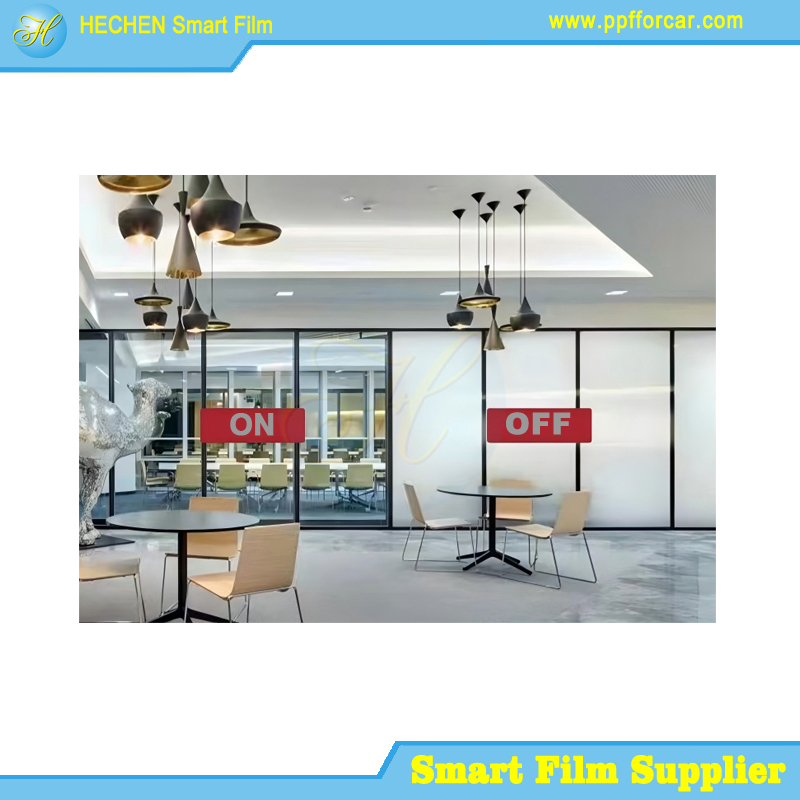
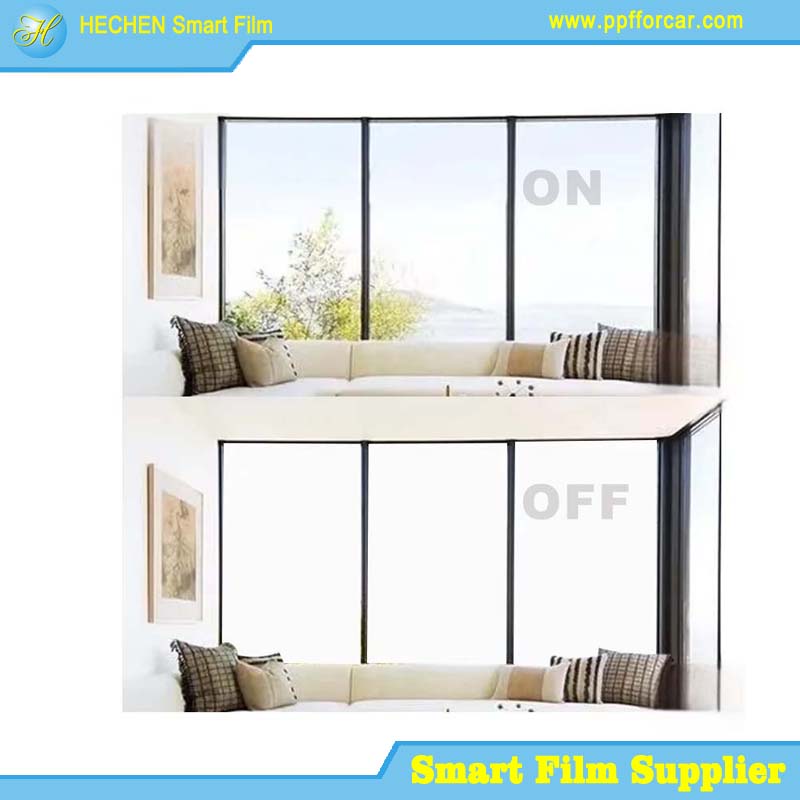
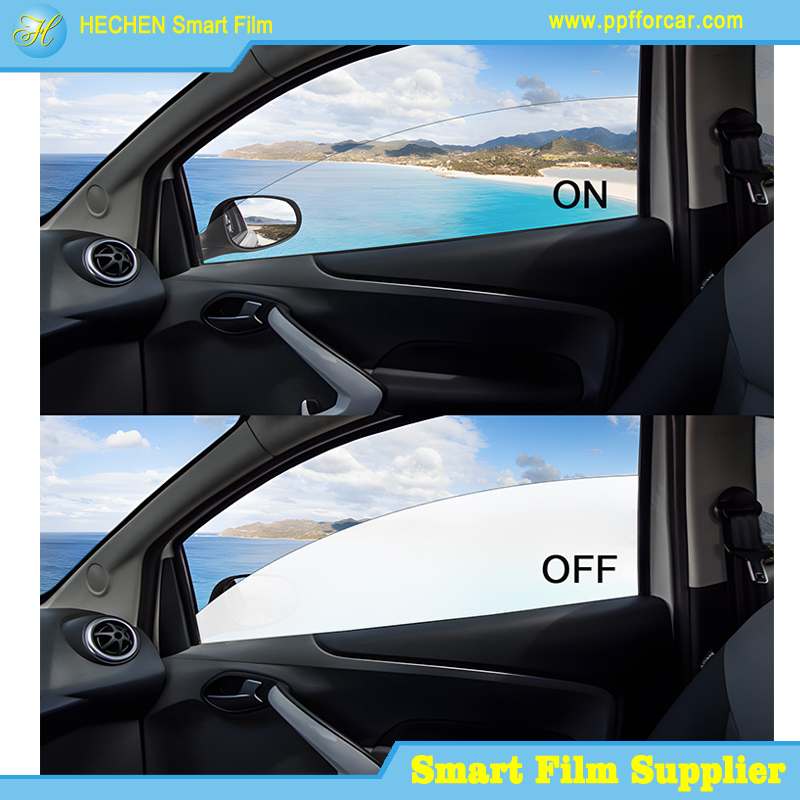
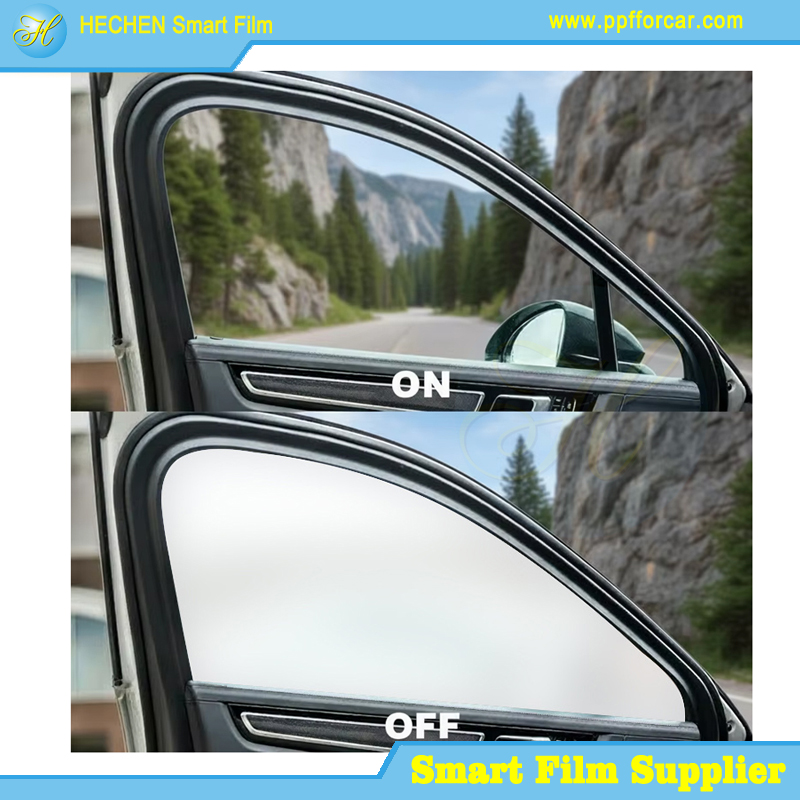
How it works: PDLC film contains liquid crystal droplets suspended in a polymer matrix. When electricity is off, the crystals are randomly oriented, scattering light and making the film appear opaque (frosted/milky white). When electricity is on, the crystals align, allowing light to pass through, resulting in a transparent state.
Pros: Fast switching (milliseconds), low power consumption to maintain transparency, and relatively low cost.
Cons: The "clear" state is never truly clear; it retains a slight haze (typically 5-10%). The "opaque" state is milky white, not black. It offers privacy but does not block significant heat when opaque.
Best For: Interior partitions, sunroofs, and side windows where instant privacy switching is the priority.
SPD (Suspended Particle Device)
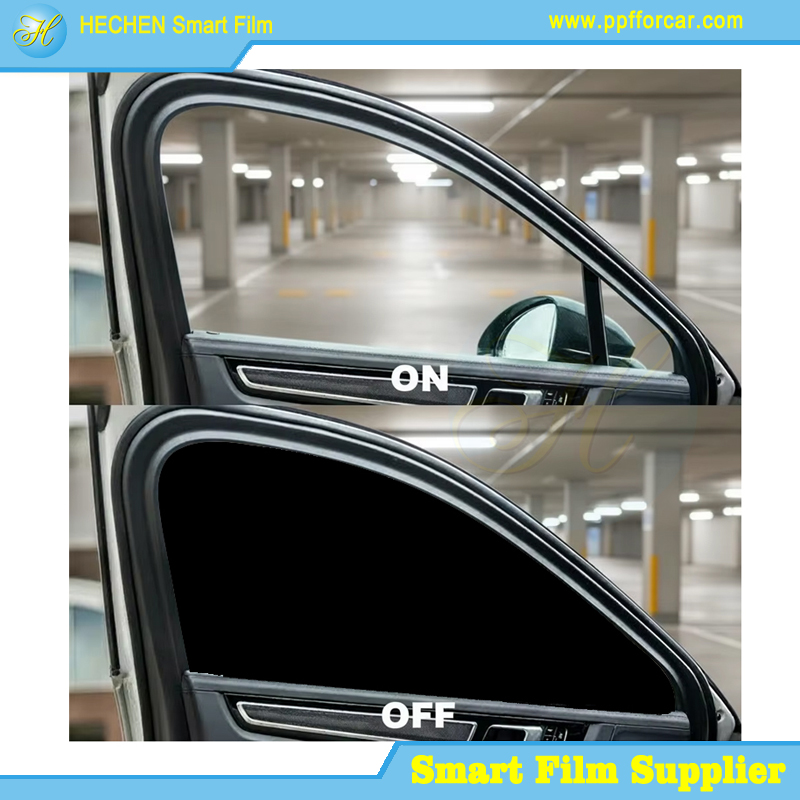
How it works: SPD film uses billions of rod-shaped particles suspended in a liquid. With electricity off, the particles move randomly, blocking light (dark state). When electricity is on, the particles align, allowing light to pass through (clear state).
Pros: Superior heat rejection and light blocking in the tinted state. It can achieve a true dark black tint, unlike PDLC's milky white.
Cons: Requires constant power to stay clear (fail-safe is dark). It is more expensive and switching speed is slightly slower than PDLC.
Best For: Rear windows, rear windshields, and panoramic roofs where heat rejection and darkness are the goals.
EC (Electrochromic)
How it works: An electrochromic device changes opacity via an electrochemical reaction when a voltage is applied. It gradually transitions between states and holds the tint level even after power is removed (voltage memory).
Pros: Excellent heat rejection, very uniform tint, and true dark-state colors.
Cons: Very slow switching speed (minutes), high complexity, and currently the most expensive option for automotive retrofit.
Best For: Factory-integrated windows (like the McLaren Sunroof or Boeing 787 windows), rarely used in aftermarket retrofit films.
Verdict for this Guide: For most aftermarket kit buyers, the choice is between PDLC (for privacy frosting) and SPD (for heat and glare).
2. Key Performance Specifications to Analyze
When browsing kits, you will encounter a spec sheet. Here is how to interpret the technical data to separate high-quality films from cheap imitations.
Haze in Clear State (For PDLC)
This is the most critical metric for PDLC. It measures the percentage of light scattered when the film is supposed to be transparent.
Poor Quality: >8% haze (Glass will look permanently foggy or greasy).
Good Quality: 3% - 5% haze.
Premium Quality: <2.5% haze.
Always look for the "Clear View" haze percentage. Anything above 5% is noticeable and distracting while driving.
Light Transmission Range
PDLC: Usually switches between ~5% transparency (opaque) and ~75% transparency (clear). It blocks light but does not turn black.
SPD: Can switch between ~1% transparency (dark) and ~55% transparency (clear). This provides true glare protection.
UV Rejection
Quality films should block 99%+ of UVA and UVB rays. This protects your leather interior from fading and your skin from damage. Most premium films achieve this, but budget films may degrade under sunlight and lose this property over time.
Switching Speed
PDLC: Milliseconds. It's instantaneous.
SPD: 1-3 seconds for a full transition.
EC: Several minutes.
For driving applications, instant or near-instant switching is preferable for safety and convenience.
Power Consumption
Car smart dimming films require power to maintain one of their states.
PDLC: Requires power to stay clear. If your car battery dies, the windows default to opaque/frosted. Consumption is roughly 5W/m².
SPD: Requires power to stay clear. If power fails, it defaults to the dark state. This can be a safety feature (anti-glare at night) or a hazard (if you need light immediately). Consumption is roughly 1W/m².
3. The Anatomy of a "Kit"
A true "Best Kit" is more than just a roll of film. It is a system. When evaluating your purchase, ensure the package includes these components:
The Film Stack
High-end films have a multi-layer construction:
Conductive Layers: Ultra-thin Indium Tin Oxide (ITO) layers that carry the electrical current across the entire surface. Uneven ITO coating leads to "hot spots" or slow switching areas.
Active Layer: Where the PDLC or SPD magic happens.
Adhesive: A high-clarity, pressure-sensitive adhesive (PSA) that must be resistant to "outgassing" (bubbles forming under the film due to adhesive breakdown in the sun).
Hard Coat: A protective outer layer to resist scratches during installation and daily use.
Wiring Harness and Controllers
A professional kit includes a proper wiring loom with fuse protection, EMI filters (to prevent radio interference), and a voltage regulator. The controller allows you to manage the power.
Basic Kits: Simple on/off switch.
Advanced Kits: Bluetooth/WiFi modules for smartphone control, integration with home automation, or dimming sliders (for SPD) to set intermediate tint levels.
Power Source
Most kits require a 12V DC input. They often come with a cigarette lighter adapter or need to be hardwired into the vehicle's fuse box. Consider whether the kit includes a step-down transformer if the film requires a specific voltage (e.g., 48V or 65V AC), which is common in some larger film applications.
4. The Buying Checklist
Use this checklist as your roadmap when browsing suppliers.
1. Verify Heat Rejection Data
Don't just look at the "opaque" state. Ask for the Total Solar Rejection (TSR) or Infrared Rejection (IRR) in the clear state. A good film should still reject heat even when transparent.
Red Flag: If the seller cannot provide technical data sheets or only quotes "99% UV rejection" (which is standard), they are likely hiding poor thermal performance.
2. Check for Optical Clarity
If purchasing PDLC, ask for a sample or look for videos showing the film against a detailed background (like a tree or a building with lines). Check for distortion, lines, or a persistent haze. For SPD, check the uniformity of the tint; cheap SPD can have a blotchy appearance.
3. Evaluate the Warranty
Automotive environments are harsh (extreme heat, cold, and vibration).
Good Warranty: 2-3 years against delamination, optical defects, and electrical failure.
Excellent Warranty: 5+ years, covering yellowing and "edge failure" (where the seal around the edge breaks down, allowing moisture to enter).
4. Consider the Controller and Integration
How will you control it?
Basic: A discreet physical button near the shifter.
Advanced: An app that allows for geofencing (e.g., windows tint automatically when you arrive at work) or integration with the car's CAN bus system to close when the car is locked.
Voice Control: Does it work with Amazon Alexa or Google Home if you want to pre-cool the car by darkening the glass before entering?
5. Acknowledge Legalities
Window tint laws vary by region (state/province/country). Smart film occupies a gray area in many jurisdictions.
Windshield: Usually illegal to apply any opaque film, though a "sun strip" or a clear-to-frosted PDLC band might be permissible if it stays clear while driving.
Front Side Windows: Often require a minimum light transmission (e.g., 70% VLT). SPD films in their clear state (55-60% VLT) may already be too dark in some areas. PDLC (75% VLT clear) is often safer for legality.
Rear and Rear Side: Usually fewer restrictions, making them ideal for SPD blackout films.
5. Installation Considerations: DIY or Pro?
Smart film is not like standard window tint. It has conductive bus bars (copper strips) that must be connected to the power source without breaking.
DIY Kits: Available for the brave. They require meticulous cleaning in a "clean room" environment to avoid dust bubbles, and steady hands to solder or crimp the electrical connections without damaging the bus bar. Success rates for DIY are low.
Professional Installation: Highly recommended. Professionals have the heat guns, slip solutions, and experience to route the wiring discreetly through the door jambs (using rubber grommets) and integrate the controller seamlessly. When budgeting for your kit, factor in $200-$500 for professional installation depending on the number of windows.
6. Top Use Cases and Recommended Kit Types
To simplify your choice, match your primary goal to the recommended kit:
Scenario A: The Privacy Seeker
Goal: I want to hide items in my car when parked, but I want full visibility when driving.
Best Kit: High-Clarity PDLC Kit.
Why: Switches from clear to frosted white instantly. The frosted state obscures vision completely, deterring prying eyes. Power draw is minimal when parked in the "clear" state while driving.
Scenario B: The Heat & Glare Fighter
Goal: I have a large panoramic glass roof, and the cabin gets too hot. I want to block the sun.
Best Kit: SPD Smart Film Kit.
Why: SPD turns a beautiful dark black/blue, blocking 99%+ of light and the majority of solar heat. It turns your sunroof into a giant pair of sunglasses.
Scenario C: The Ultimate Tech Enthusiast
Goal: I want variable control and the best of both worlds.
Best Kit: Dual-Layer or Hybrid Films. (Rare and expensive)
Why: These niche products can switch between clear, frosted privacy, and dark tint states, though they are complex and currently not widely available in the aftermarket.
7. Recommended Brands and What to Avoid
While I cannot endorse specific retailers, I can guide you on market tiers:
Premium Tier (OEM Quality): Brands supplying automotive manufacturers (like Gauzy, Research Frontiers - SPD) or their licensed partners. These have rigorous testing for thermal cycling and UV stability.
Mid-Tier (Aftermarket Specialists): Companies specializing in architectural or automotive smart film. They offer a good balance of performance and price. Look for ISO certifications and detailed spec sheets.
Budget Tier (Generic/No-Name): Found on auction sites. They may work for a few months but often suffer from "yellowing" (UV degradation), "delamination" (edges peeling), or "bubbling" due to outgassing. The controllers may also cause interference with the car's radio (EMI noise).
Conclusion
Selecting the best automotive smart dimming film kit requires a clear understanding of the physics behind the glass. Choose PDLC if your priority is instant, low-cost privacy switching with a frosted look. Choose SPD if your priority is maximum heat rejection and a true dark tint.
Beyond the film type, scrutinize the technical specifications—haze, switching speed, and UV protection—and ensure the kit includes a quality controller and harness. Remember that the film is only as good as its installation; budget for a professional to handle the delicate wiring and application.
By following this guide, you can transform your vehicle's glass into an intelligent interface, balancing light, privacy, and temperature at the touch of a button.
For more about the ultimate guide to buying the best car smart dimming film kits, you can pay a visit to Hechen PDLC Smart Film Manufacturers for more info.