Unpacking the Maximum Thickness for Curved Glass-Compatible Self-Adhesive Dimming Films
The Confluence of Flexibility, Optics, and Adhesion
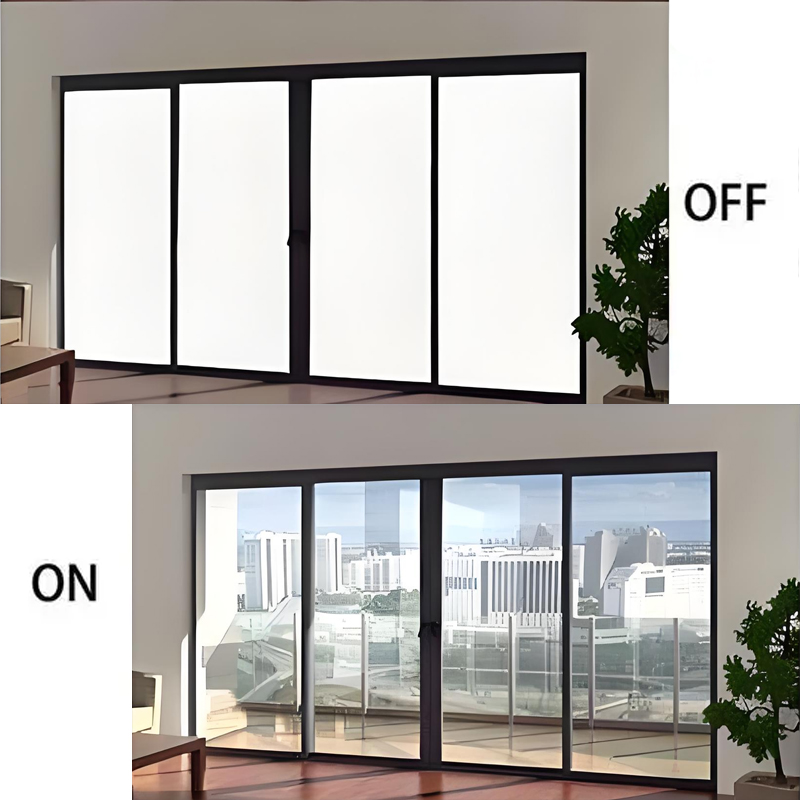
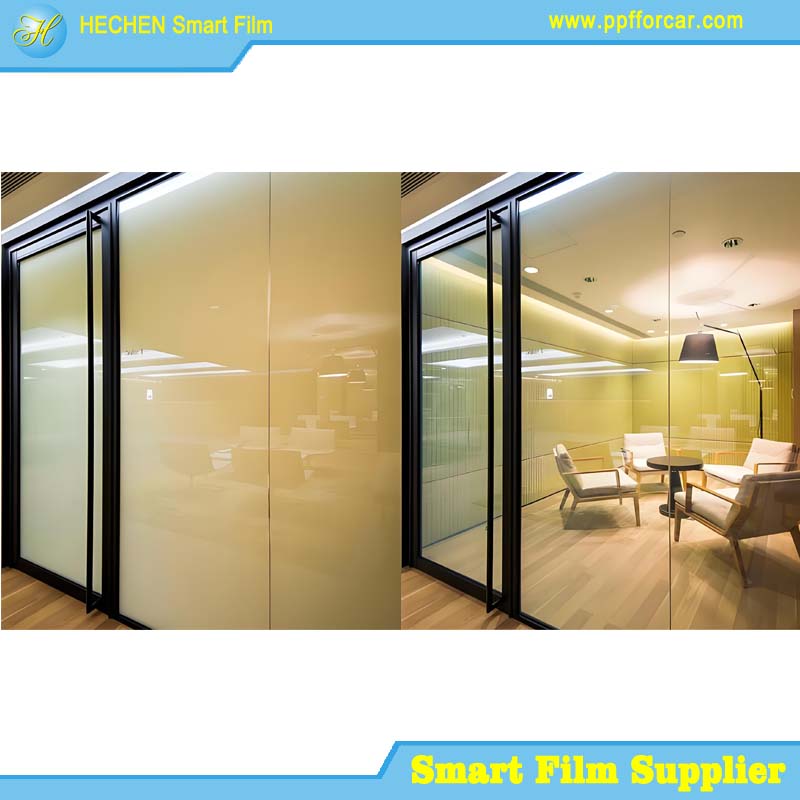
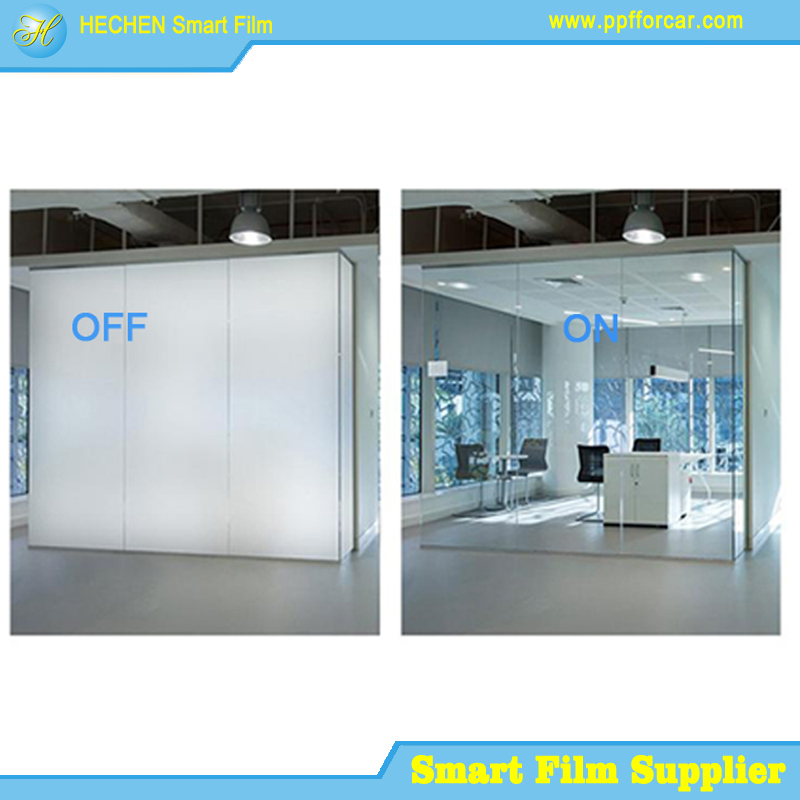
In the world of switchable privacy and smart glass technology, self-adhesive dimming films represent a remarkable fusion of optical engineering, materials science, and practical application. As these films evolve beyond flat-pane applications to embrace the curved architecture of modern buildings, vehicles, and specialty installations, a critical technical question emerges: what is the maximum total thickness (in micrometers) that these films can maintain while ensuring reliable bonding to curved glass surfaces? This parameter—often overlooked in discussions of optical performance—stands as a fundamental determinant of installation success, long-term reliability, and functional integrity. Through an exploration of material mechanics, interfacial physics, and real-world application data, this article establishes that curved glass-compatible dimming films must generally be controlled within a maximum total thickness of 50-150 micrometers (μm), with optimal performance typically found in the 80-120 μm range, depending on substrate curvature, adhesive system, and environmental conditions.
Section 1: The Material Anatomy of a Curved Glass-Compatible Self-Adhesive Dimming Film
To understand thickness constraints, we must first dissect the multilayer structure that constitutes a modern self-adhesive dimming film designed for curved applications.
1.1 The Core Functional Layers
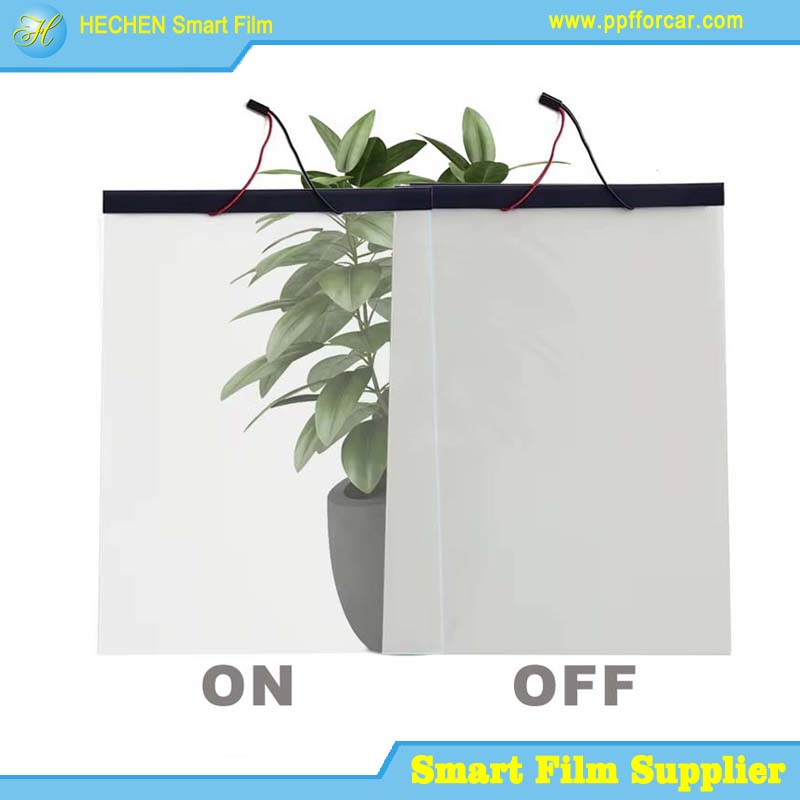
At the heart of any dimming film lies the active optical layer, which typically employs either Polymer-Dispersed Liquid Crystal (PDLC) or Suspended Particle Device (SPD) technology. These layers alone range from 15-40 μm in thickness. PDLC films tend toward the thinner end of this spectrum (15-25 μm), while SPD systems often measure 30-40 μm due to their more complex particle matrix.
1.2 The Conductive Electrode System
Flanking the active layer are transparent conductive electrodes, traditionally made from Indium Tin Oxide (ITO) but increasingly utilizing thinner, more flexible alternatives like silver nanowire meshes, conductive polymers (PEDOT:PSS), or graphene-based layers. The electrode system typically adds 0.05-2 μm per side, with newer materials allowing for sub-micrometer contributions.
1.3 The Substrate and Protective Films
The active layers are sandwiched between protective polyester (PET) or polycarbonate (PC) substrates, each measuring 25-100 μm in standard configurations. For curved applications, thinner substrates (25-50 μm) are preferred to enhance flexibility without compromising mechanical integrity.
1.4 The Pressure-Sensitive Adhesive (PSA) System
The bonding interface consists of specially formulated acrylic or silicone-based pressure-sensitive adhesives optimized for curved glass. This layer typically measures 15-50 μm, with thinner applications (15-25 μm) for gentle curves and thicker formulations (30-50 μm) for more aggressive curvatures that require greater stress distribution.
1.5 The Release Liner
Though removed during installation, the siliconized release liner contributes to the initial film package thickness, typically adding 50-125 μm of temporary bulk that must be considered during manufacturing and handling.
When assembled, these components create a composite structure whose total thickness becomes a critical determinant of curved surface compatibility.
Section 2: The Physics of Curved Surface Adhesion
2.1 Bending Stiffness and the Cubic Thickness Rule
The primary challenge in applying any film to curved glass stems from bending stiffness, which follows a fundamental relationship: bending resistance increases with the cube of thickness. A film twice as thick exhibits eight times the resistance to conforming to curved surfaces. This non-linear relationship explains why thickness control becomes exponentially more important as curvature increases.
Mathematically, the bending stiffness (D) can be expressed as:
D = E × t³ / [12 × (1 - ν²)]
Where E is the elastic modulus, t is thickness, and ν is Poisson's ratio.
For a dimming film with a composite structure, the effective bending stiffness becomes more complex but follows the same dramatic thickness dependency.
2.2 Interfacial Stress Distribution
When a film bends to match curved glass, the adhesive interface experiences complex stress patterns:
Peel stresses concentrate at the edges
Shear stresses distribute across the interface
Tensile stresses develop in the film's outer radius
Compressive stresses occur on the inner radius
Thicker films magnify all these stress components, potentially overwhelming the adhesive's ability to maintain continuous contact. Industry testing shows that interfacial stress increases approximately linearly with thickness for gentle curves but exponentially for tight radii.
2.3 The Creep and Stress Relaxation Challenge
Dimming films on curved glass exist in a constant state of elastic strain. Thicker films store more strain energy, which can gradually overcome the adhesive's viscoelastic resistance through creep—a time-dependent deformation under constant stress. This manifests as edge lifting, bubble formation, or complete delamination over time, often accelerated by thermal cycling.
Section 3: Empirical Thickness Limits for Curved Applications
3.1 The 120 μm "Sweet Spot"
For most architectural applications involving moderately curved glass (2000-5000 mm radius), a total thickness of 100-120 μm represents an optimal balance between:
Sufficient substrate thickness for mechanical protection
Adequate adhesive volume for stress distribution
Manageable bending stiffness for reliable conformability
Acceptable optical path length for clarity
This range has emerged as the de facto standard for curved glass-compatible dimming films in commercial building applications.
3.2 Case Study: Automotive Applications
Automotive sunroofs and side windows present some of the most challenging curved applications, with compound curvatures and radii often below 1000 mm. Leading automotive-grade dimming films have pushed thickness boundaries downward, with premium products achieving full functionality at 50-70 μm total thickness through:
Ultra-thin conductive layers (reduced to 0.05-0.1 μm using silver nanowires)
Thinner but higher-strength PET substrates (12-25 μm)
Precision-coated adhesive layers (8-15 μm) with enhanced creep resistance
Thinner but more efficient active layers (10-15 μm for PDLC)
Section 4: The Consequences of Exceeding Thickness Limits
4.1 Immediate Installation Failures
Films exceeding curvature-appropriate thickness limits exhibit recognizable installation challenges:
Bridging: The film spans concave curves without making contact at the center
Wrinkling: Compression buckling on convex surfaces
Edge Lift: Immediate detachment at perimeter due to stored bending energy
Optical Distortion: Visible stress patterns ("orange peeling") in the active layer
4.2 Long-Term Reliability Issues
Even when initially successful, overly thick installations degrade through predictable mechanisms:
Progressive Delamination: Starting at edges and propagating inward
Adhesive Fatigue: Cyclic stress from thermal expansion/contraction
Cohesive Failure: Adhesive tearing internally rather than releasing from surfaces
Electrical Failure: Strained conductive layers developing microcracks
Accelerated aging tests show that films 25% over the recommended thickness limit for a given curvature experience failure rates 3-5 times higher than properly sized films over a 5-year simulated period.
Section 5: Material Innovations Extending Thickness Boundaries
5.1 Advanced Adhesive Systems
Recent developments in adhesive technology allow slightly greater thickness while maintaining curved surface compatibility:
Gradient modulus adhesives: Softer at the edges to absorb peel stresses, firmer at the center to resist creep
Viscoelastic tuning: Frequency-dependent behavior optimized for thermal cycling rates
Microstructured adhesives: Patterned surfaces that accommodate strain through structural deformation
These innovations might extend practical thickness limits by 10-20% for equivalent curvatures.
5.2 Substrate Materials Engineering
Biaxial orientation control: PET films with tailored molecular alignment for improved flexibility in specific directions
Nanocomposite substrates: Polymer systems with embedded nanoparticles that increase strength without proportional stiffness increases
Ultra-thin glass substrates: Emerging technology using 30-50 μm flexible glass with exceptional dimensional stability
5.3 Active Layer Thinning
Microencapsulation advances: More efficient liquid crystal or particle containment allowing thinner active layers
Field concentration designs: Electrode patterns that maximize effect in thinner configurations
Quantum dot enhancement: Optical amplification allowing reduced active layer thickness without performance loss
Section 6: Measurement and Verification Protocols
6.1 Precision Thickness Measurement
Given the critical nature of thickness control, manufacturers employ sophisticated measurement systems:
Laser scanning micrometers: Non-contact measurements with 0.1 μm resolution
Spectroscopic ellipsometry: For individual layer thickness verification
Cross-sectional SEM: Destructive but definitive layer-by-layer analysis
In-line capacitance monitoring: Real-time thickness verification during production
6.2 Curvature Compatibility Testing
Standardized test protocols assess curved surface performance:
Mandrel wrap tests: Progressive wrapping around cylinders of decreasing radius
Thermal cycling on curved substrates: -40°C to 85°C with curvature maintained
Humidity exposure under strain: 85% RH at 85°C while bent to specification
Peel force measurements: Quantifying adhesion maintenance on curved surfaces over time
Section 7: Practical Guidelines for Specifiers and Installers
7.1 The Four-Factor Assessment
When selecting a dimming film for curved glass, professionals should evaluate:
Minimum radius of curvature: Identify the tightest curve the film must accommodate
Thermal environment: Consider expansion differentials between film and glass
Expected lifespan: Balance thickness with durability requirements
Optical requirements: Ensure thinner films meet transparency/opacity specifications
7.2 The Installation Imperatives for Curved Surfaces
Even with appropriately thin films, curved applications demand specialized techniques:
Directional application: Following the axis of least curvature first
Progressive adhesion: Stepwise bonding from center to edges
Controlled tensioning: Managing film tension during application
Post-application conditioning: Allowing stress relaxation before electrical connection
7.3 The Glass Preparation Criticality
Curved applications magnify the importance of surface preparation:
Chemical cleanliness: Removing all contaminants that might create weak boundaries
Surface energy verification: Ensuring glass has sufficient wettability
Temperature stabilization: Bringing both film and glass to application temperature
Static control: Preventing dust attraction during handling
Section 8: Future Trajectories and Emerging Technologies
8.1 The Push Toward Ultra-Thin Architectures
Research directions suggest continued thickness reduction:
Monolithic integration: Combining functions in fewer layers
Substrate-less designs: Direct coating of active systems on adhesive carriers
Molecular self-assembly: Bottom-up construction with minimal bulk
2D material integration: Graphene and MXenes as multifunctional ultrathin components
8.2 Smart Thickness Adaptation
Conceptual future systems might incorporate:
Variable thickness profiles: Thicker at edges for handling, thinner at center for flexibility
Responsive adhesives: Changing modulus after application to optimize for curved surfaces
Pre-strained application: Films manufactured with built-in curvature matching
8.3 The Sustainability Connection
Thinner films align with circular economy principles:
Material reduction: Lower resource consumption per unit area
End-of-life processing: Easier separation and recycling
Shipping efficiency: More product per volume reducing transportation footprint
Energy savings: Reduced thermal mass affecting building energy dynamics
Conclusion
The question of maximum thickness for curved glass-compatible self-adhesive dimming films reveals a fundamental tension in materials engineering—the competing demands of mechanical robustness, optical performance, and conformability to complex surfaces. While material innovations continue to push boundaries, current technology and practical experience establish 50-150 μm as the functional range, with 80-120 μm representing the optimal balance for most architectural applications.
This thickness constraint is not merely a manufacturing specification but a physical imperative arising from the cubic relationship between thickness and bending stiffness, the viscoelastic nature of adhesive systems, and the long-term stress states imposed by curved installations. As the smart glass industry evolves toward more ambitious architectural forms and more demanding applications, thickness optimization will remain a central challenge—one that requires continued collaboration between chemists, physicists, engineers, and installers.
The most successful implementations recognize that the dimming film is not just an optical component but a mechanical system that must harmonize with curved glass substrates throughout thermal cycles, environmental exposures, and years of service. In this context, thickness control emerges not as a limitation but as a precision tool—enabling the seamless integration of dynamic optical control into the flowing forms of contemporary architecture.
For specifiers, the thickness parameter serves as a reliable indicator of curved surface compatibility, with values below 100 μm generally necessary for significant curvatures and below 60 μm for aggressive curves. As with many engineered systems, success lies not in pushing boundaries to their absolute limits but in operating within the optimal zone where performance, reliability, and practicality converge—a zone that, for curved glass dimming films, is measured precisely in micrometers.
For more about unpacking the maximum thickness for curved glass-compatible self-adhesive dimming films, you can pay a visit to Hechen PDLC Smart Film Manufacturers for more info.