What Is the Standard Operating Voltage Range of the Dimming Film?
What is Dimming Film?
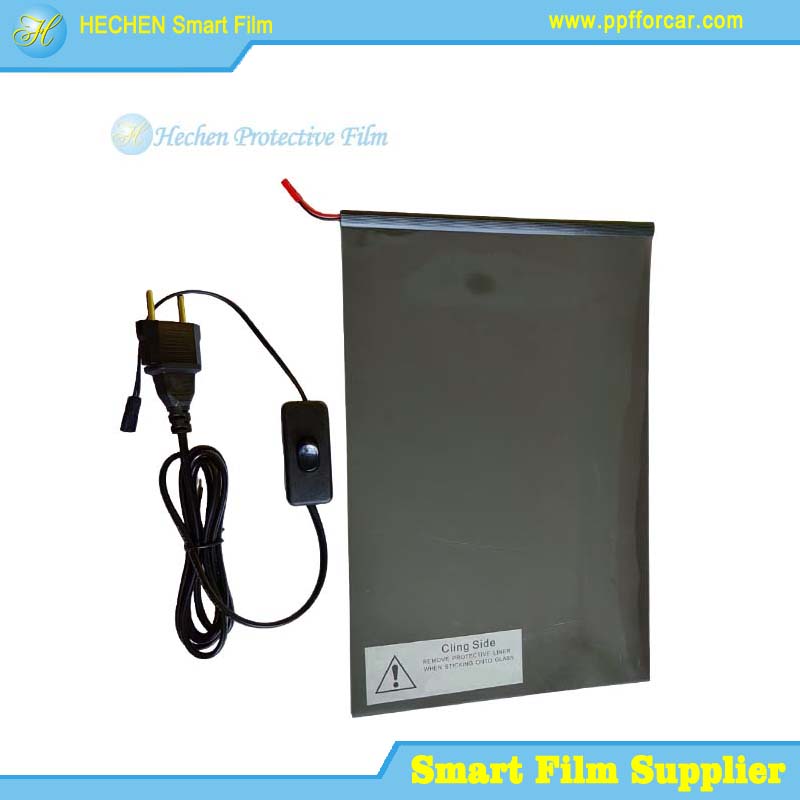
Dimming film, often called liquid crystal dimming film or Polymer Dispersed Liquid Crystal (PDLC) film, is an innovative electronic light-control product. Its core structure consists of two layers of transparent conductive film (typically ITO film) with a liquid crystal/polymer mixture sealed in between.
The magic of this technology lies in its two reversible states:
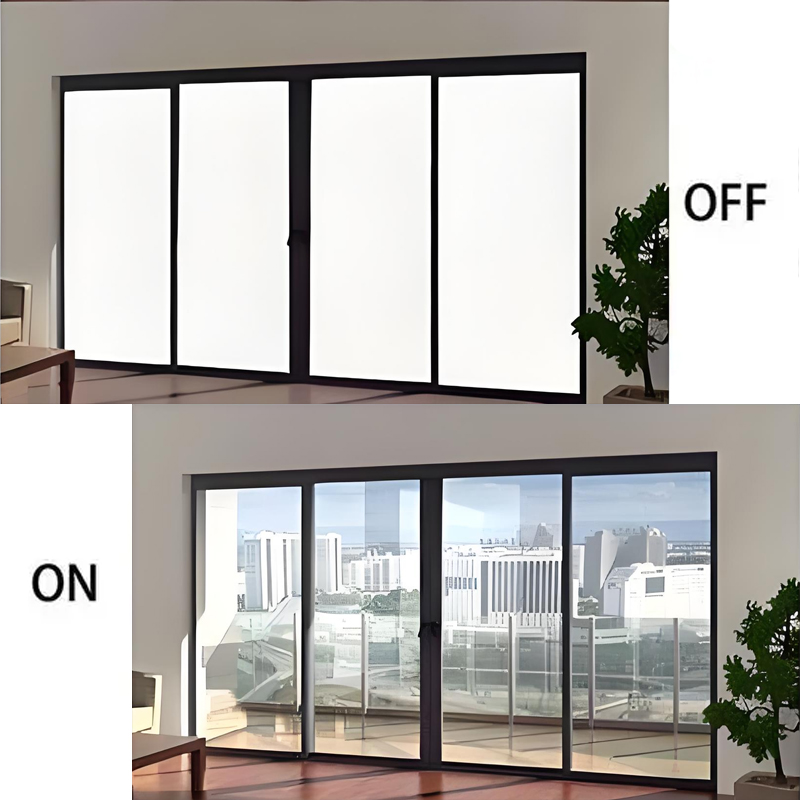
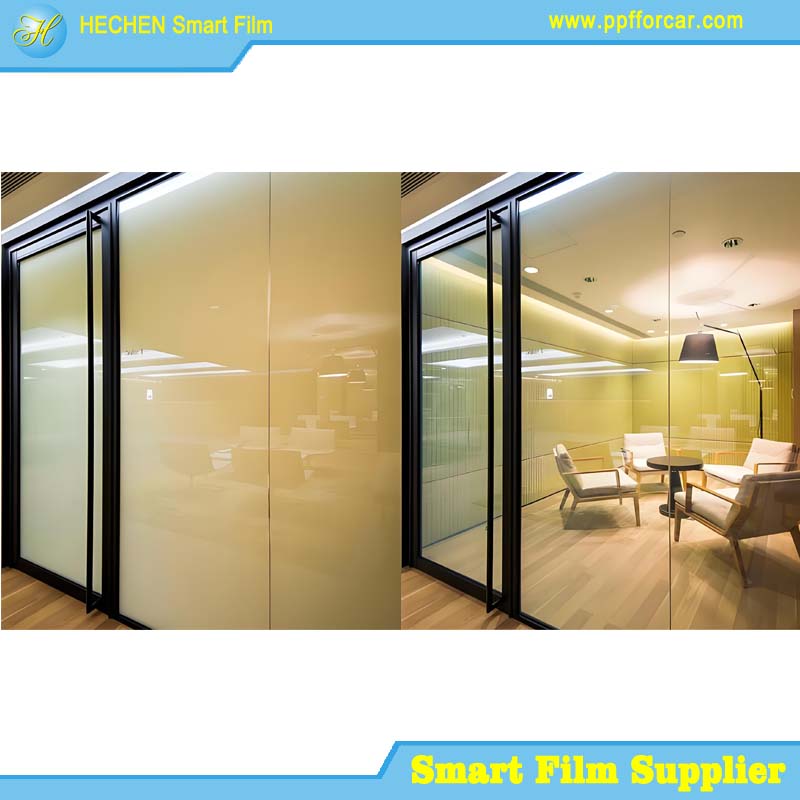
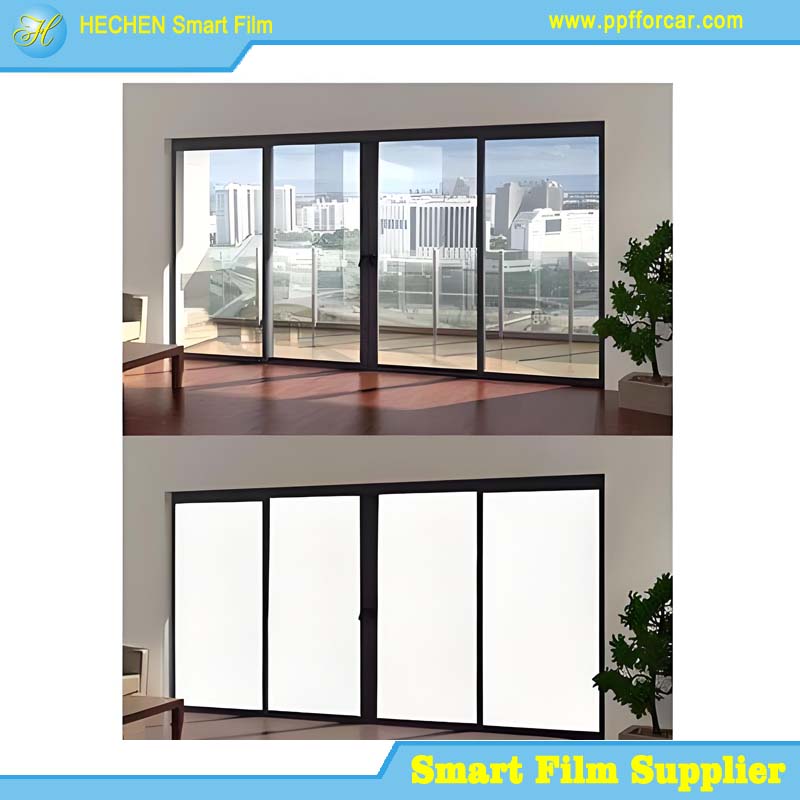
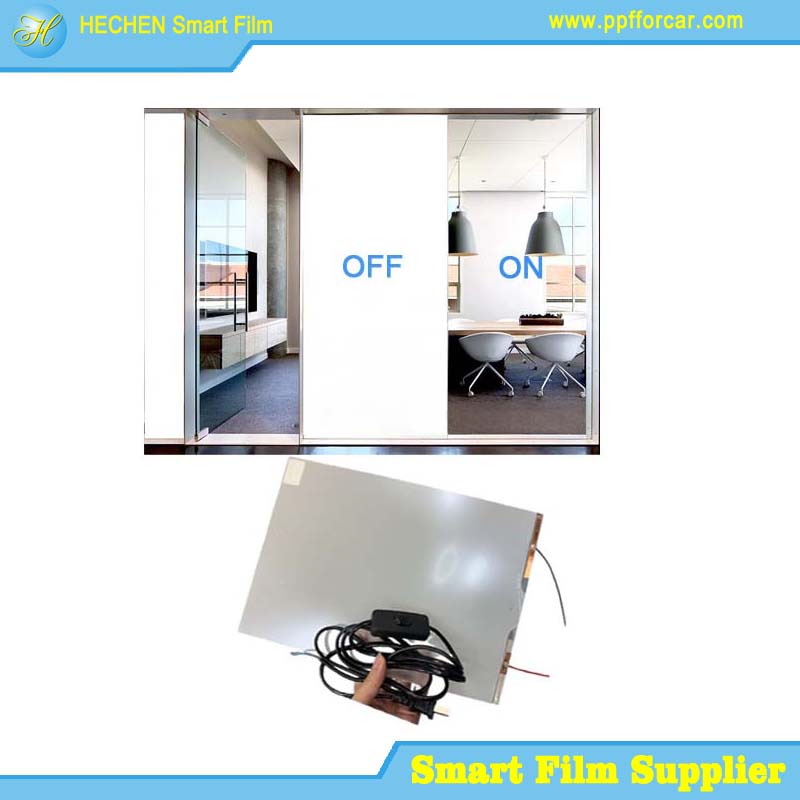
Opaque State (OFF State): When no power is applied, the liquid crystal molecules are randomly scattered. This disorder causes light to scatter in all directions as it passes through, making the film appear milky white or frosted. This state provides privacy and shades against direct sunlight.
Transparent State (ON State): When an alternating current (AC) is applied, the liquid crystal molecules align in an orderly fashion along the electric field. This alignment allows light to pass through directly, causing the film to switch to a clear, transparent state.
This transition between states happens very quickly, making dimming film a dynamic and efficient solution for managing light and privacy.
The Standard Operating Voltage and Power Consumption
The performance of dimming film is defined by a set of key technical parameters. Multiple independent sources confirm a consistent standard for its electrical characteristics.
Table: Key Technical Parameters of Liquid Crystal Dimming Film
Parameter | Typical Specification | Sources |
Operating Voltage | 18 - 75 V AC (50/60 Hz) | |
Power Consumption(Transparent State) | ~5 W/m² (One source cites 4 W/m²) | |
Response Time(OFF→ON) | < 5 ms (milliseconds) | |
Response Time(ON→OFF) | < 50 ms (milliseconds) | |
Transmittance(ON State) | ≥ 75% | |
Transmittance(OFF State) | ≤ 2% |
Analyzing Voltage and Power Specifications
Standard Operating Voltage Range: The universal specification for dimming film is an operating voltage of 18 to 75 Volts of Alternating Current (AC) with a standard frequency of 50/60 Hz. This low-voltage requirement is a key feature, meaning it requires a special power driver to convert standard mains electricity (e.g., 110V or 220V AC) to this precise voltage range for proper and safe operation.
Power Consumption per Unit Area: The answer to whether power consumption is ≤5W/m² in the transparent state is a definitive yes. Technical data indicates a power consumption of 5 watts per square meter (W/m²), with one specialized technical source even citing a lower figure of 4 W/m². This exceptionally low energy usage is one of the major advantages of dimming film, contributing to its energy-efficient profile.
Why These Specifications Matter: Advantages and Applications
The specific technical parameters of dimming film translate into direct practical benefits across numerous fields.
Energy Efficiency: The very low power consumption (≤5 W/m²) makes it an economical choice for long-term use, especially in large-scale applications like building facades, contributing to greener building management.
Rapid Response and Control: The ability to switch between states in milliseconds allows for instant privacy control and enables creative, dynamic lighting effects.
Excellent Optical Performance: With a transparent state transmittance of over 75% and an opaque state transmittance of 2% or less, the film ensures clear views when open and effective privacy when closed. A viewing angle of 140 degrees or more provides consistency from various perspectives.
Long Service Life: With a typical lifespan of over 50,000 hours, dimming film offers long-term reliability and value.
These advantages make dimming film suitable for a wide range of applications:
Architecture and Construction: Used in smart windows for office partitions, conference rooms, bathroom enclosures, and even full-scale building curtain walls to optimize natural light and privacy.
Retail and Displays: Creates attention-grabbing interactive display windows and projection screens that switch between opaque (for projection) and transparent (for viewing).
Transportation: Integrated into car sunroofs and window partitions to control light and privacy on demand.
Important Considerations and Future Trends
While the core specifications are well-established, several other factors are crucial for selection and application.
Driver and Control Systems: The dimming film itself requires a compatible driver to function. These drivers can be integrated with various control systems, including simple switches, remote controls, or smart building systems. Standard analogcontrol protocols like 0-10V are commonly used for dimming and control in lighting systems, and understanding these can be helpful for system integration.
Environmental Tolerance: These films are designed to operate reliably in a wide temperature range, typically from -20°C to 60°C or even up to 75°C, making them suitable for most indoor and many protected outdoor environments.
Customization and Technological Evolution: Dimming film is highly customizable. Manufacturers often offer products in large standard sizes and can accommodate custom sizes and shapes. The technology continues to advance, with developments including wider temperature tolerance, colored films, and even lower powerconsumption.
Conclusion
In summary, liquid crystal dimming film operates at a standardized low voltage of 18-75V AC and consumes very little power, consistently at or below the 5W/m² threshold in its transparent state. These specifications, combined with its fast switching speed and excellent optical properties, make it a highly efficient and versatile technology for modern light and privacy management. As material science advances, we can expect this technology to become even more efficient and widespread, further solidifying its role in the future of smart and sustainable building design.
For more about what is the standard operating voltage range of the dimming film, you can pay a visit to Hechen PDLC Smart Film Manufacturers for more info.