What Standards Do the Technical Parameters of PDLC Smart Window Film Meet to the Daily Office Needs?
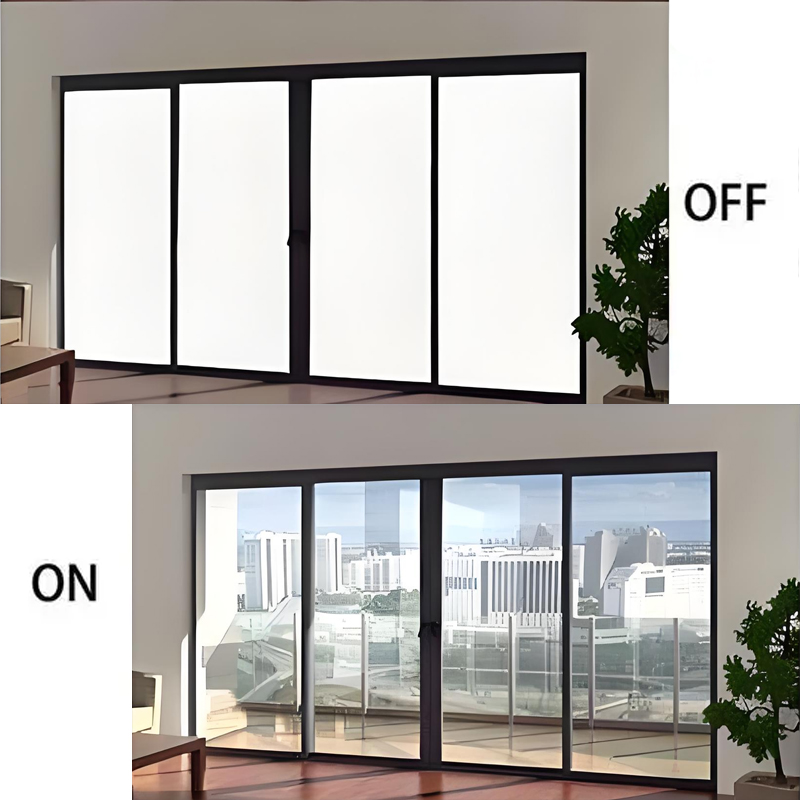
In modern office environments, where productivity, comfort, and sustainability intersect, innovative technologies like Polymer Dispersed Liquid Crystal (PDLC) smart window filmsare gaining prominence. These films transform ordinary glass into dynamic surfaces that can switch between transparent and opaque states with the flick of a switch or an app command. This adaptability addresses key office challenges: ensuring privacy during meetings, optimizing natural daylight for well-being and energy savings, and maintaining thermal comfort to reduce heating and cooling costs.
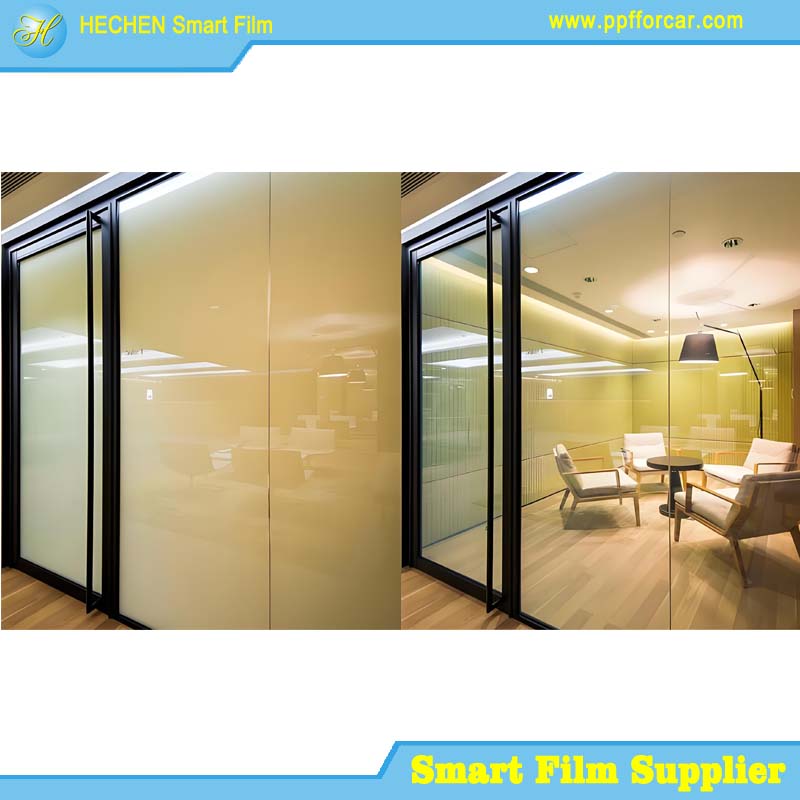
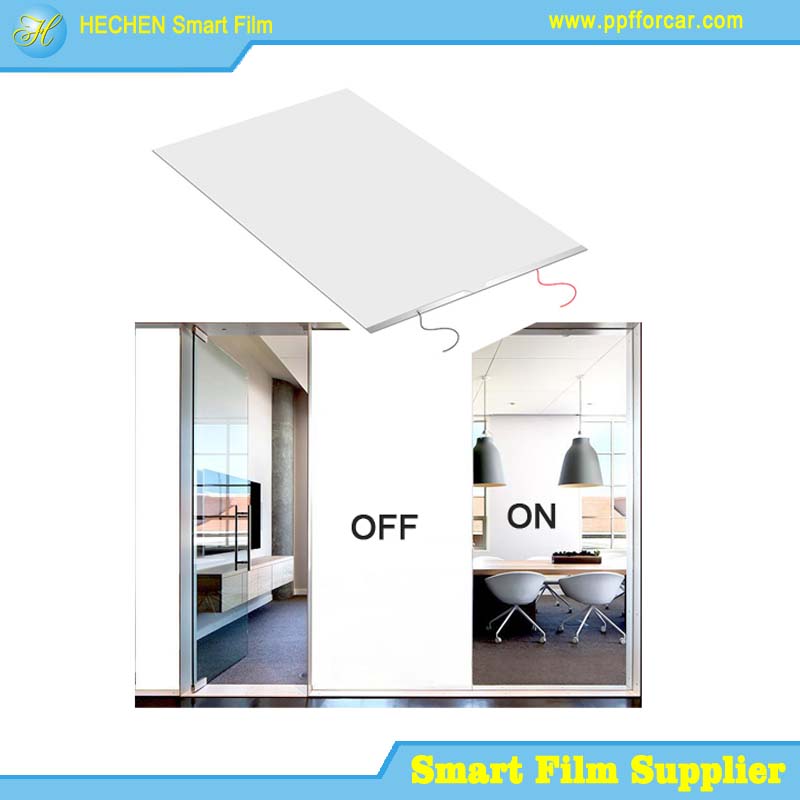
PDLC films consist of liquid crystals dispersed in a polymer matrix, sandwiched between conductive layers. When no voltage is applied, the crystals scatter light, rendering the film opaque for privacy. Applying voltage aligns the crystals, allowing light to pass through transparently. This technology is particularly suited for offices, where open-plan layouts demand flexible space management without permanent partitions.
Core technical parameters—light transmittance, response speed, and heat insulation performance—determine the film's effectiveness. For daily office needs, these must meet specific standards to balance visibility, speed of transition, and energy efficiency. Industry benchmarks, drawn from manufacturers like Gauzy and scientific studies, suggest light transmittance in the transparent state should exceed 80% for adequate daylighting, response times under 200 milliseconds for seamless use, and heat insulation capabilities that block at least 90% of infrared (IR) rays to support energy conservation. Failure to meet these can lead to glare issues, delayed privacy, or higher utility bills.
As offices strive for LEED certification and net-zero goals, PDLC films offer a path to smarter buildings. This article explores the required standards for these parameters, backed by research and real-world applications, to ensure they satisfy privacy, daylighting, and energy needs in professional settings.
Understanding PDLC Smart Window Film
PDLC smart window film represents a leap in electrochromic technology, evolving from static window treatments to responsive systems. Developed in the 1980s, PDLC has matured into a reliable solution for commercial spaces, with global market growth projected at 15% annually due to urbanization and green building trends.
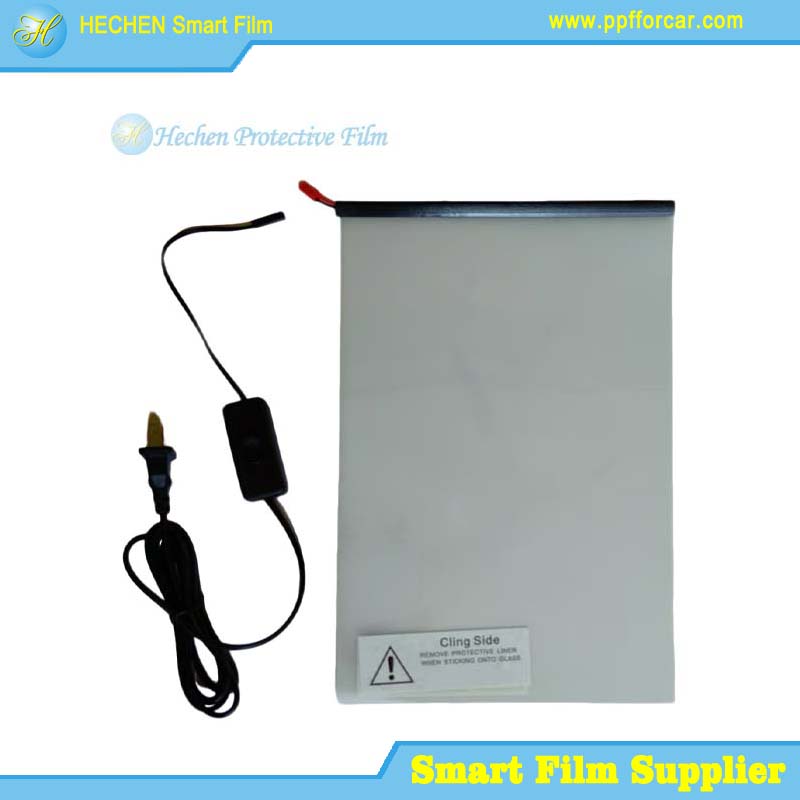
The film's structure includes a PDLC layer (typically 0.3-0.5 mm thick) applied to glass via lamination or self-adhesive methods. It operates on low voltage (24-70 VAC), consuming minimal power—around 1-5 W/m² when active—making it energy-efficient for continuous office use. Unlike traditional blinds, PDLC eliminates dust accumulation and mechanical failures, offering a sleek, maintenance-free alternative.
In offices, PDLC films are installed on conference rooms, executive offices, and partitions. They enable instant privacy without sacrificing space aesthetics, while integrating with smart building systems like IoT for automated control based on occupancy or sunlight intensity. This integration enhances user experience, as employees can adjust settings via apps, fostering a collaborative yet private atmosphere.
However, performance hinges on technical parameters. Subpar films may fade over time or consume excess energy, underscoring the need for standardized specs. Organizations like the International Window Film Association (IWFA) provide guidelines, emphasizing durability (over 10 years) and optical clarity (haze <3% in transparent mode). For offices, these films must comply with building codes such as ASTM E2190 for insulation and EN 410 for optical properties to ensure safety and efficiency.
Light Transmittance Standards for Office Applications
Light transmittance, or visible light transmission (VLT), is pivotal for PDLC films, dictating how much natural light enters a space. In the transparent (ON) state, high VLT ensures ample daylighting, reducing artificial lighting needs by up to 40% and boosting occupant mood and productivity. Conversely, in the opaque (OFF) state, low VLT provides privacy by diffusing light, though some transmission persists to avoid total darkness.
Typical standards require ON-state VLT of 80-89% to mimic clear glass, allowing offices to harness daylight without glare. For example, premium films from manufacturers achieve 88% VLT when powered, comparable to untinted windows. In OFF-state, VLT drops to 50-60%, with haze exceeding 90%, scattering light for privacy while permitting soft illumination—ideal for meetings where full blackout isn't needed.
For office daylighting, these values align with standards like ISO 9050, which recommends VLT >70% for visual comfort in workspaces. Lower values can cause eye strain, while higher ensure energy savings by minimizing electric lights. Research in Istanbul offices showed PDLC films maintaining illuminance levels of 300-500 lux, the ASHRAE standard for office tasks, by dynamically adjusting transmittance.
Privacy benefits are evident: OFF-state haze obscures views beyond 1 meter, satisfying needs in open offices. However, for energy conservation, integrated low-E coatings enhance performance by reflecting UV (99% blockage) and maintaining consistent VLT across states. Substandard films with VLT <75% ON may increase lighting costs, emphasizing the need for certified products.
Response Speed Requirements in Daily Office Use
Response speed—the time to switch between states—is crucial for user satisfaction in fast-paced offices. Delays can disrupt workflows, such as during impromptu meetings requiring quick privacy.
Standards typically demand OFF-to-ON transitions under 200 ms and ON-to-OFF under 50 ms, ensuring near-instant changes. High-quality films achieve 10 ms for ON-to-OFF, leveraging efficient liquid crystal alignment. This speed supports seamless integration with sensors, automating switches based on room occupancy.
In offices, rapid response meets privacy needs, like switching during confidential calls without interruption. Slower films (>500 ms) risk exposure, failing security protocols. For daylighting, quick adjustments prevent glare spikes from shifting sun positions, maintaining consistent lighting.
Energy-wise, fast speeds minimize power use, as the film only draws current during transitions (negligible) and holds states passively. Studies indicate response times under 100 ms correlate with 15% higher user acceptance in offices, per ergonomic guidelines from the Illuminating Engineering Society (IES). Thus, office installations should prioritize films meeting these thresholds for optimal functionality.
Heat Insulation Performance and Energy Standards
Heat insulation performance governs PDLC films' ability to regulate indoor temperatures, directly impacting energy conservation. Measured by U-value (heat transfer coefficient) and solar heat gain coefficient (SHGC), effective films reduce HVAC loads.
Standards call for U-values of 2.4-2.8 W/m²K, lower in opaque states for better insulation. With low-E coatings, U-values drop to 1.5 W/m²K, rivaling double glazing. SHGC should be 0.63-0.68, blocking 90-98% IR rays to prevent summer heat gain while retaining winter warmth.
In offices, this translates to 20-30% energy savings on cooling, as films reflect IR without darkening views. Privacy modes enhance insulation by diffusing heat, while transparent states allow passive solar heating. For conservation, films must meet ENERGY STAR criteria, with IR rejection >90% to cut emissions.
Real-world tests show PDLC reducing peak loads by 22% in Mediterranean offices, aligning with EU directives for building efficiency. Without adequate insulation, films may exacerbate heat issues, underscoring the need for certified performance.
How These Parameters Satisfy Office Needs
Integrating these parameters, PDLC smart window films holistically address office demands. For privacy, low OFF-state VLT and high haze provide on-demand seclusion, with fast response ensuring no lags. Daylighting benefits from high ON-state transmittance, reducing artificial light use and enhancing well-being—studies link natural light to 15% productivity gains.
Energy conservation is amplified: Combined IR blocking and low SHGC lower bills by 20-22%, supporting green certifications. In hybrid offices, automation optimizes all parameters, adapting to usage patterns for maximal efficiency.
Standards and Best Practices
While no universal PDLC standard exists, guidelines from ASTM, ISO, and IWFA recommend VLT >80% ON, response <200 ms, and U-value <3 W/m²K. Offices should select UL-certified films for safety, ensuring compliance with local codes like California's Title 24 for energy.
Conclusion
PDLC smart window films, with optimized light transmittance, response speed, and heat insulation, are essential for modern offices. Meeting these standards ensures privacy, superior daylighting, and significant energy savings, paving the way for sustainable workspaces.
For more about what standards do the core technical parameters of PDLC smart window film usually need to meet to satisfy daily office needs?, you can pay a visit to Hechen PDLC Smart Film Manufacturers for more info.