What are the Transparent and Opaque Switching Response Times of the Dimming Film?
Dimming film, also known as switchable film or smart film, represents a revolutionary advancement in materials science, enabling surfaces like windows, partitions, and displays to transition between transparent and opaque states at the flick of a switch. At its core, this technology relies on Polymer Dispersed Liquid Crystal (PDLC) films, which are composite materials consisting of liquid crystal (LC) droplets embedded within a polymer matrix. These films are sandwiched between transparent conductive layers, typically made of indium tin oxide (ITO), allowing an electric field to control their optical properties.
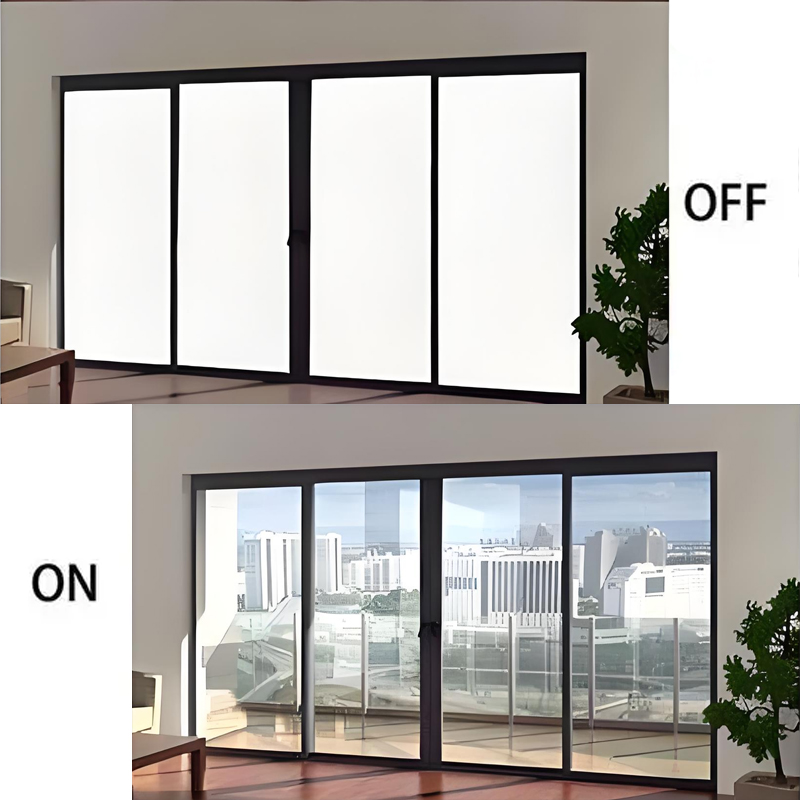
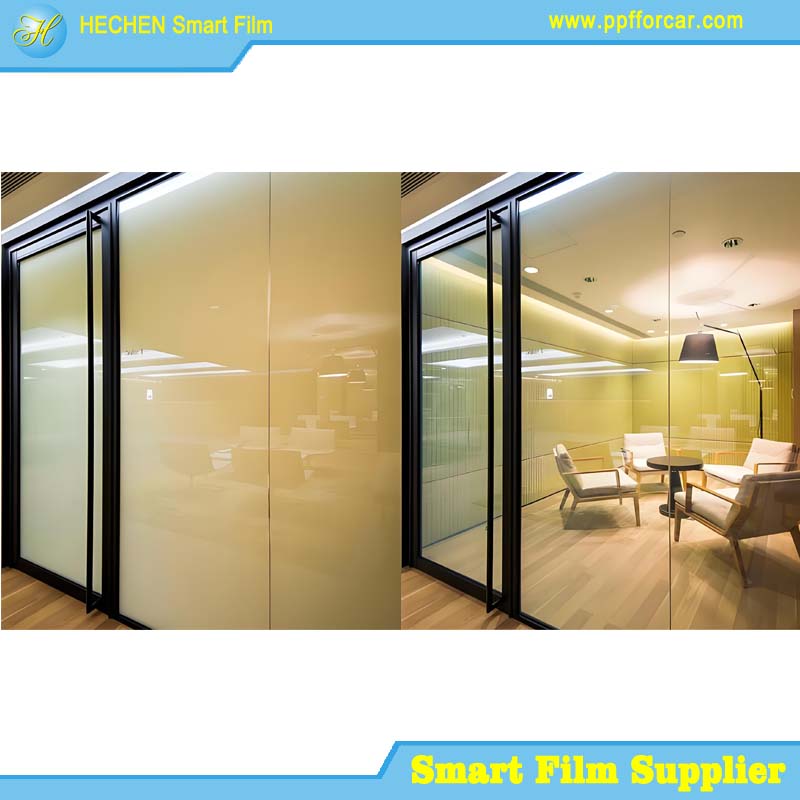
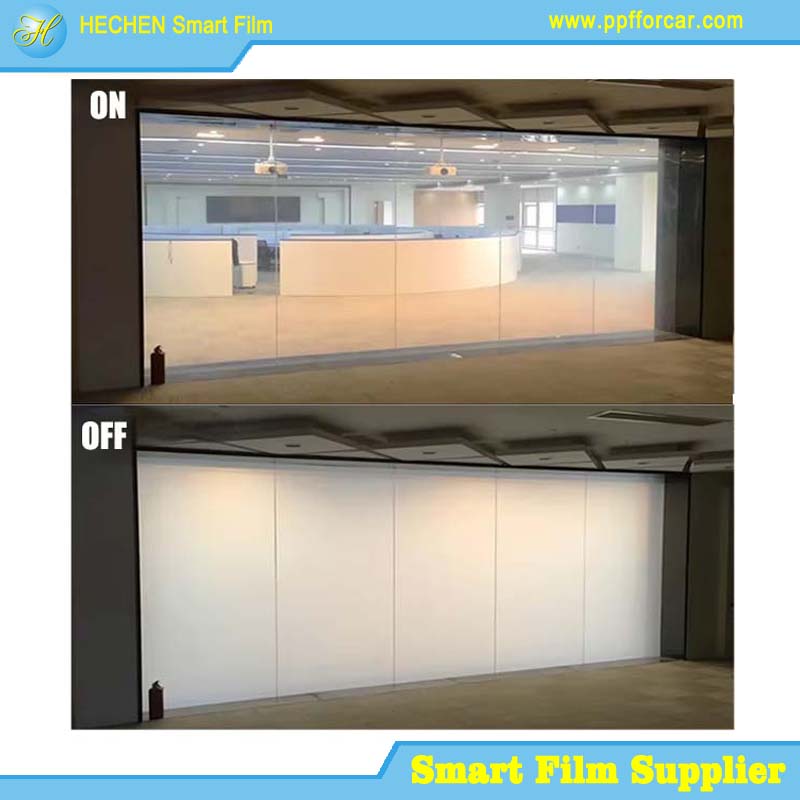
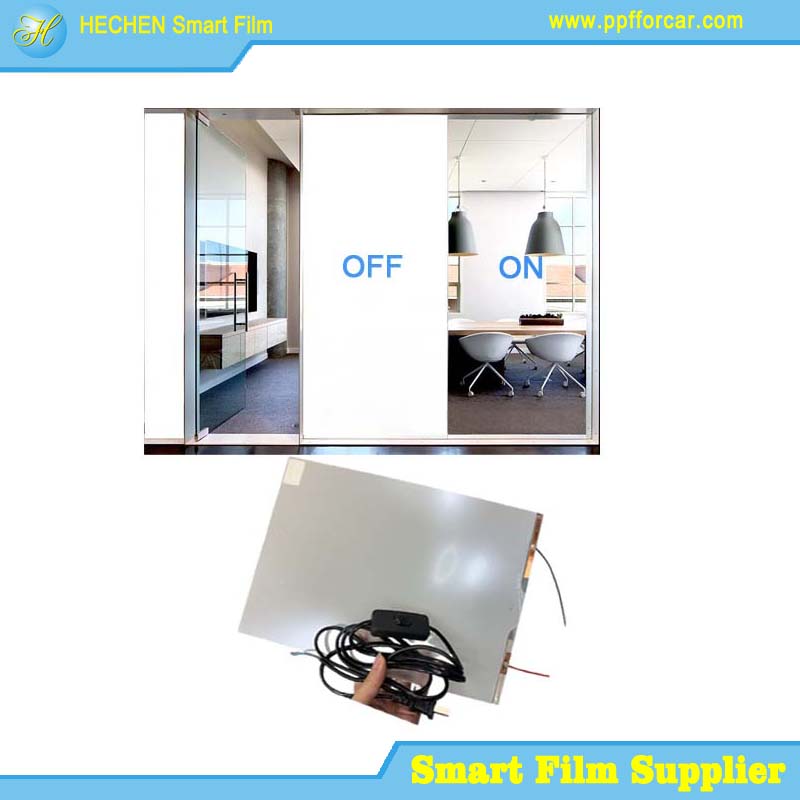
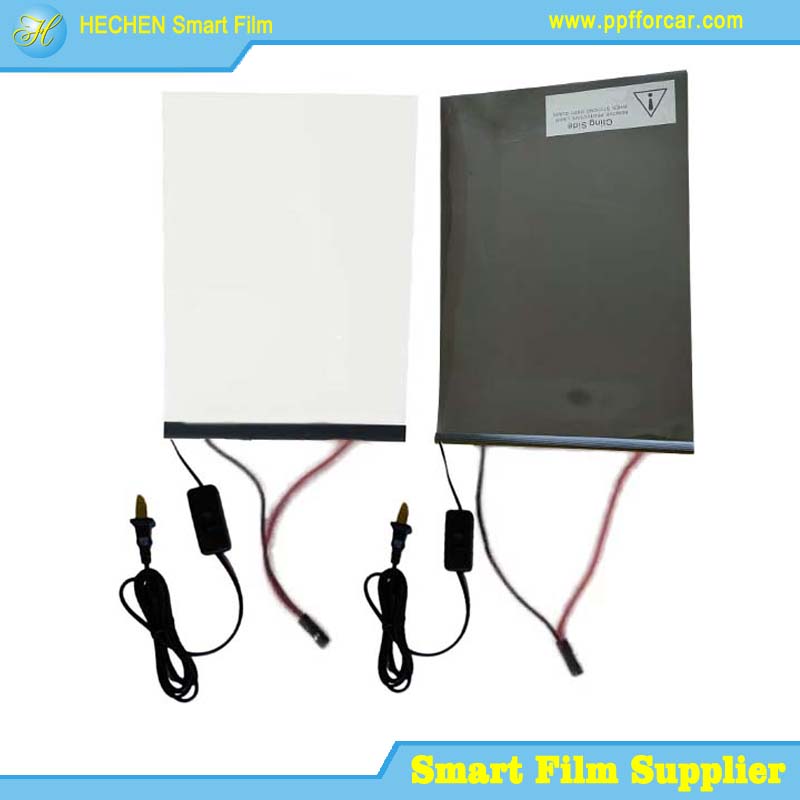
In the OFF state (no voltage applied), the LC droplets are randomly oriented, scattering light and rendering the film opaque or frosted. This provides privacy or blocks glare without the need for traditional blinds or curtains. When voltage is applied (ON state), the LC molecules align with the electric field, allowing light to pass through unimpeded, making the film transparent. This switchable behavior has found applications in architecture, automotive, healthcare, and consumer electronics, offering energy efficiency, UV protection, and dynamic control over light and privacy.
A critical aspect of dimming film's performance is its switching response time—the duration it takes to transition from OFF to ON (opaque to transparent) and from ON to OFF (transparent to opaque). These times are typically measured in milliseconds (ms), making the technology suitable for real-time applications. However, variations in response times exist due to material composition, manufacturing processes, and environmental factors. One of the most significant influences is temperature, which can alter the viscosity of the liquid crystals and, consequently, the film's electro-optical properties. This article delves into the typical switching response times of PDLC-based dimming films, explores the underlying mechanisms, and examines how temperature impacts these metrics. Drawing from scientific studies and commercial specifications, we aim to provide a comprehensive understanding for researchers, engineers, and end-users alike.
Working Principle of Dimming Film
To appreciate the switching dynamics, it's essential to understand how PDLC dimming film operates. The film is fabricated by dispersing nematic liquid crystals—elongated molecules that exhibit ordered phases—into a polymer precursor, which is then cured (often via UV light) to form a solid matrix with micron-sized LC droplets. The size, shape, and distribution of these droplets are pivotal to the film's performance.
In the absence of an electric field (OFF state), the refractive index mismatch between the LC droplets and the polymer causes light scattering, resulting in opacity. The degree of opacity can be quantified by haze, which measures the percentage of scattered light. Typical haze in the OFF state exceeds 90%, providing effective privacy. Upon applying an alternating current (AC) voltage—usually 30-60V at 50-60Hz—the electric field aligns the LC directors (the average orientation of molecules) parallel to the field, matching the refractive indices and allowing over 80% light transmittance in the ON state.
The power consumption is low, around 4-5W/m² when ON, and zero when OFF, making it energy-efficient compared to traditional shading systems. However, the transition between states isn't instantaneous; it involves physical reorientation of LC molecules, governed by dielectric anisotropy, elastic constants, and viscosity. Positive dielectric anisotropy LCs, common in PDLC, respond to the field by aligning their long axes accordingly. The response time is the interval from voltage application/removal to achieving 90% of the final transmittance change.
Switching Response Times: OFF→ON and ON→OFF
Switching response times are key performance indicators for dimming films, determining their suitability for applications requiring rapid changes, such as automotive windows or projection screens. These times are asymmetric: the OFF→ON transition (applying voltage) often differs from ON→OFF (removing voltage) due to the distinct physical processes involved.
For standard commercial PDLC films, the OFF→ON response time—transitioning from opaque to transparent—ranges from 10ms to 200ms. This process is driven by the electric torque overcoming viscous drag, aligning LC molecules quickly under a sufficient field strength. For instance, non-adhesive PDLC films report an OFF→ON time of 10ms, while other smart films specify less than 200ms.
pdlcglass.com +1
These values ensure near-instantaneous clarity, ideal for user comfort.
Conversely, the ON→OFF response time—from transparent to opaque—is typically 10ms to 40ms in room-temperature conditions but can extend to 500ms or more under certain circumstances. This relaxation phase relies on elastic forces restoring random orientation without external aid, making it inherently slower in viscous media. Commercial specifications include 40ms for ON→OFF in non-adhesive films and less than 10ms in optimized smart films.
pdlcglass.com +1
However, advanced formulations achieve sub-millisecond speeds: one study reports 0.65ms for OFF (relaxation) and 2.56ms for ON using field-oriented addressing techniques.
Variations arise from droplet size (smaller droplets switch faster due to reduced rotational inertia), polymer matrix rigidity, and applied voltage. Higher voltages (e.g., 60-100V) accelerate OFF→ON by strengthening the field but may increase power use or risk dielectric breakdown. In holographic PDLC variants, switching can reach 0.65ms relaxation, pushing boundaries for high-speed applications like laser shutters. Real-world tests show that while material physics allow fast switching, control electronics can limit performance to 50ms.
In specialized PDLC with nanocomposites, total response time (sum of OFF→ON and ON→OFF) reduces by 70%, from typical 50-100ms to under 20ms, enhancing usability. For context, human perception of motion requires changes below 50ms to appear seamless, so most dimming films meet this threshold at ambient conditions.
Factors Affecting Response Times
Beyond inherent material properties, several factors influence switching speeds. LC viscosity is paramount: lower viscosity enables quicker molecular reorientation. Additives like single-walled carbon nanotubes (SWCNTs) or octadecylamine (ODA) reduce viscosity, slashing response times by 70% and threshold voltages by 42%.
Voltage waveform and frequency also play roles. Square-wave AC voltages minimize ion migration, ensuring consistent speeds over millions of cycles (>100 million switches reported). Electrode design, such as interdigitated patterns, creates uniform fields for faster, even switching.
Film thickness affects times: thinner films (100-200μm) respond quicker due to shorter field paths. Size matters too; larger panels may exhibit slight delays from capacitance, though this is minimal in well-designed systems. Manufacturing parameters, like curing temperature, dictate droplet morphology: optimal curing at 32°C yields smaller droplets, faster alignment, and better contrast.
Environmental factors, including humidity and UV exposure, can degrade performance over time, but ageing-resistant formulations maintain speeds after 2000 hours at 80°C.
The Impact of Temperature on Switching Response Times
Temperature profoundly affects dimming film performance, primarily through its influence on LC viscosity and birefringence. Viscosity (γ) follows an exponential relationship: γ ∝ exp(B/T), where T is temperature in Kelvin and B is a constant. As temperature drops, viscosity surges—rising 3-5 times per 20°C decrease—impeding molecular rotation and elongating response times.
At low temperatures (e.g., -20°C), OFF→ON time can reach 74ms, while ON→OFF balloons to 895ms due to sluggish relaxation. Driving voltage also escalates: threshold voltage (V_th) and saturation voltage (V_sat) increase as molecules resist alignment. Conversely, at high temperatures (e.g., 80-90°C), viscosity plummets, shortening response times to sub-50ms and reducing V_th by up to 50%. However, excessive heat diminishes birefringence, lowering contrast ratio (e.g., from 100:1 at room temp to 48:1 at 90°C), and may cause phase separation or degradation.
Studies on wide-temperature-range PDLC films, using LCs with clearing points above 92°C and crystallization below -40°C, demonstrate stable operation from -30°C to 100°C. Optimized monomers like hexyl acrylate and cross-linkers like 1,4-butanediol diacrylate form resilient polymer networks, maintaining fast switching (100-300ms opaque to transparent, 200-500ms reverse) across extremes. High-temperature LC dopants further reduce on-state haze and voltage, improving efficiency.
Curing temperature during fabrication influences final properties: films cured at 32°C exhibit minimal V_th and high contrast, as moderate heat promotes uniform droplet formation. In automotive applications, where temperatures fluctuate from -20°C to 90°C, these advancements ensure reliable performance, with films achieving 5°C interior cooling compared to standard windows.
Extreme temperatures accelerate ageing: prolonged exposure above 80°C can degrade materials, slowing switches over time, while sub-zero conditions may crystallize LCs, halting function. Mitigation strategies include low-viscosity LC blends and protective coatings.
Improvements for Temperature-Resilient Dimming Films
Recent research focuses on enhancing temperature tolerance. Incorporating rigid monomers boosts ageing resistance, sustaining performance after extended high-temperature exposure. Dye-doped PDLC with high-temperature LCs minimizes haze and voltage across -20°C to 80°C. Nanocomposites reduce off-axis haze (<10% at 45°) while preserving fast responses in wide ranges.
Variable-frequency drivers adjust to temperature-induced changes, optimizing speed and energy use. For outdoor use, hybrid PDLC-SPD (Suspended Particle Device) films combine benefits, though PDLC remains dominant for cost and speed.
Applications and Practical Considerations
In architecture, dimming films enable energy-management smart windows, reducing HVAC loads by blocking 95-98% IR/UV while switching rapidly for occupant control. Automotive smart glass benefits from wide-temp films, providing instant privacy without mechanical parts. In healthcare, they create hygienic, switchable partitions.
Users should consider installation: films apply to existing glass, but temperature extremes require rated products. Maintenance involves avoiding harsh cleaners to preserve switching integrity.
Conclusion
The switching response times of dimming films—typically 10-200ms for OFF→ON and 10-500ms for ON→OFF—make them versatile for dynamic environments. Temperature significantly impacts these times, with colder conditions slowing responses due to increased viscosity and hotter ones accelerating them but risking contrast loss. Advances in LC formulations and manufacturing have expanded operating ranges to -30°C to 100°C, broadening applications. As research progresses, expect even faster, more resilient films, transforming how we interact with light and space.
For more about what are the transparent and opaque switching response times of the dimming film, you can pay a visit to Hechen PDLC Smart Film Manufacturers for more info.