Why “Privacy Smart Window Film” Searches Are Skyrocketing in 2025
Entering 2025, if you pay attention to home or tech trends, you might notice an interesting phenomenon: global search volumes for "Privacy Smart Window Film" are climbing sharply. From Google Trends to Amazon sales data, this once somewhat niche product is rapidly entering the mainstream public consciousness. This is not just a simple case of a product going viral; it is the result of technological maturity, shifting consumer mindsets, and market demands converging. This article delves into the four core logics behind this phenomenon.
1. Shift in Consumer Mindset: From "Light Blocking" to "Self-Fulfilling" Privacy Needs
By 2025, the public's understanding of privacy has far exceeded the simple notion of "preventing outsiders from seeing in." Accelerating urbanization, with high-density housing and open-plan offices becoming the norm, has created an urgent need for instant, light-preserving privacy solutions.
Data from a early 2025 homeowner survey indicates that among over 3,000 North American homeowners and renters, 58% of respondents prefer various types of window films for privacy solutions in their living spaces, while only 34% opt for traditional curtains or blinds. Among the younger demographic under 40, this preference soars to 68%. They are no longer satisfied with heavy fabric curtains but seek a solution that offers privacy without blocking natural light—a sense of "lightness" and "transparency."
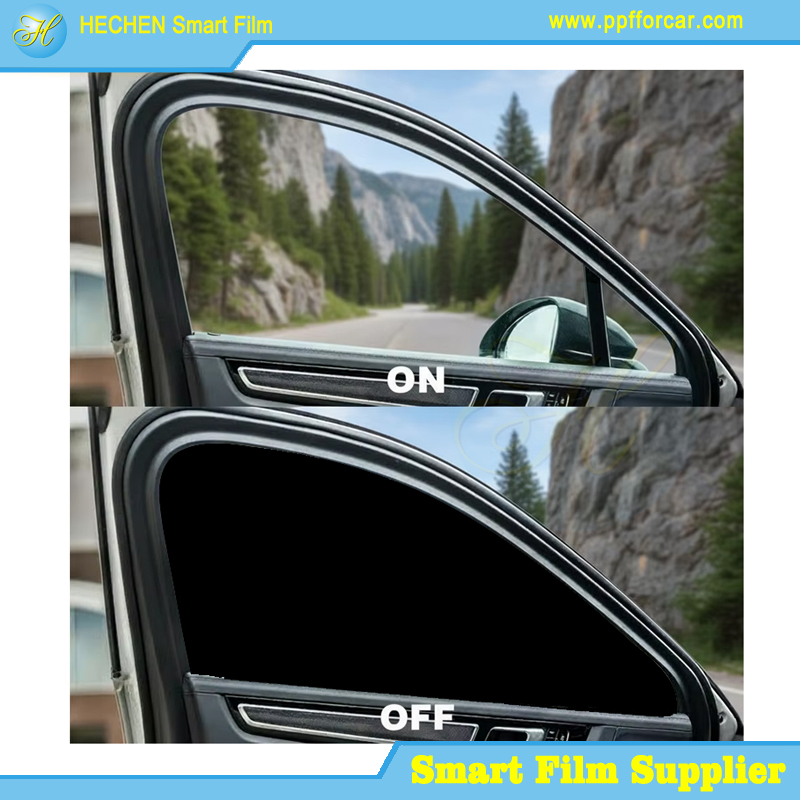
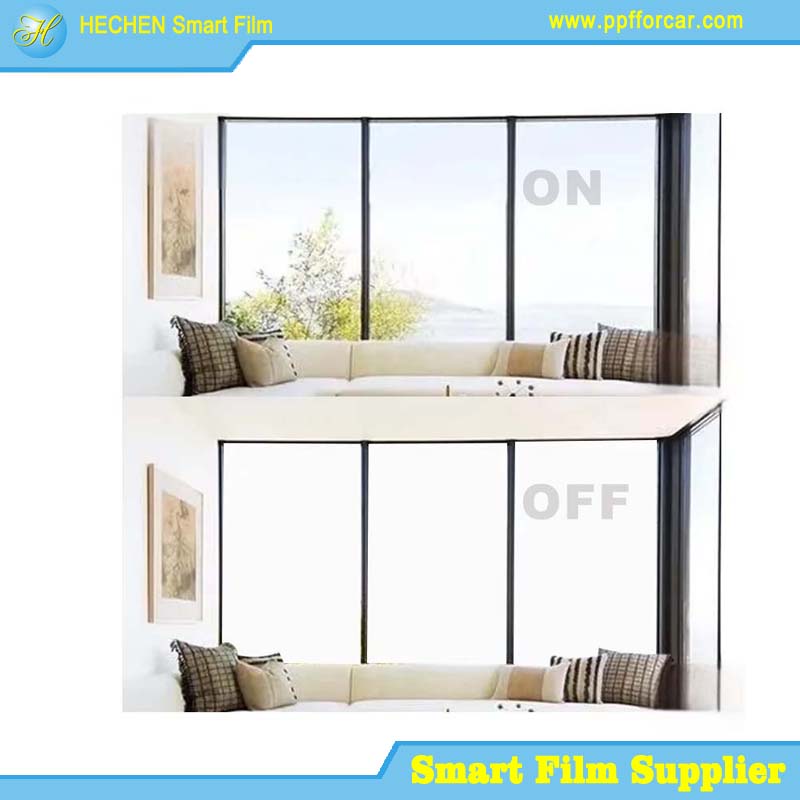
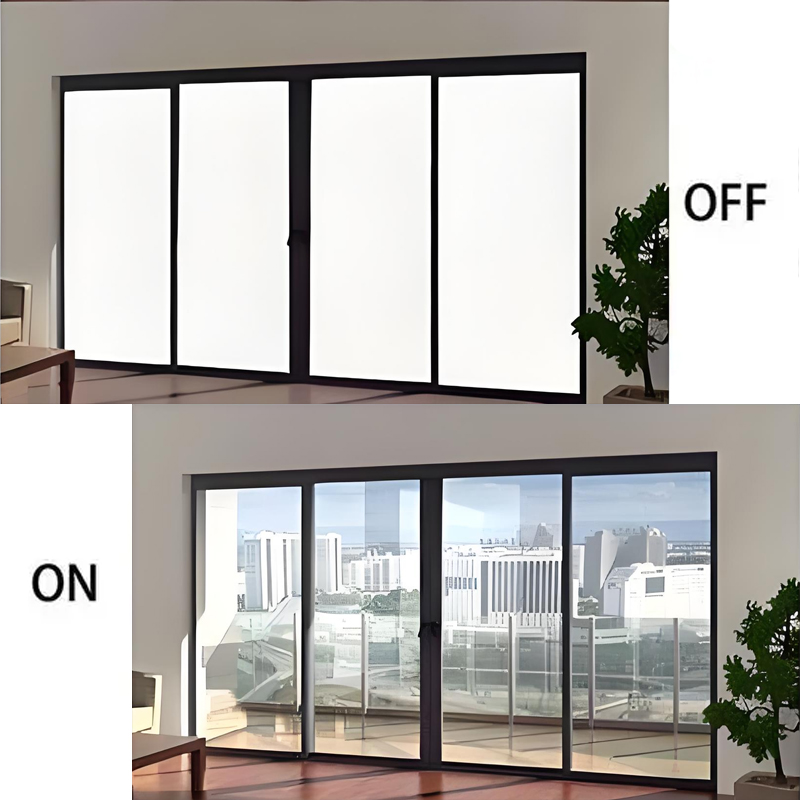
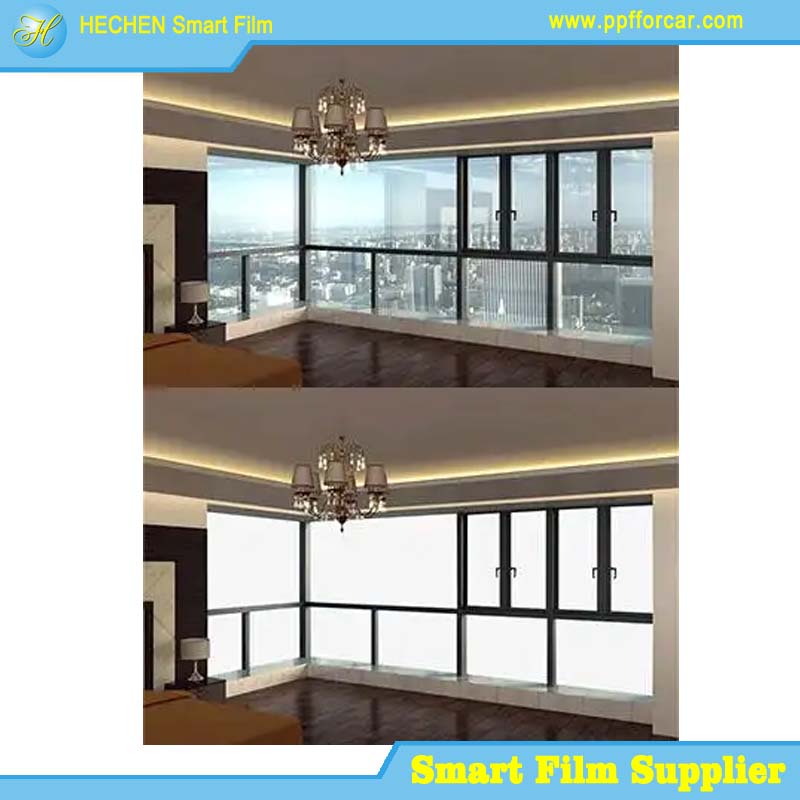
Smart window film perfectly addresses this pain point. It remains transparent when powered on and instantly switches to an opaque, frosted state when power is off, achieving "privacy on demand." This sense of instant control and minimalist aesthetic perfectly aligns with the modern urbanite's philosophy of "self-fulfillment" and pursuit of efficiency.
2. Technological Maturation: PDLC Dominates the Market, Black Film Technology Solves Key Issues
The surge in search volume is inseparable from breakthroughs in the product's core technology. Currently, the dominant technology in the smart window film market is PDLC (Polymer Dispersed Liquid Crystal) . Data shows that PDLC has become the market leader for privacy applications due to its fast response speed, long lifespan, flexible installation, and relatively cost-effective advantages.
However, PDLC technology previously had a notable drawback: in its power-off opaque state, it typically appears milky white. This could be visually jarring, and the opacity wasn't always deep enough, limiting its application in scenarios demanding ultimate privacy or specific aesthetics.
In 2025, this situation was fundamentally changed by domestic manufacturers introducing the PDCLC black film solution. This new type of smart film achieves a sophisticated gray-black color in its power-off opaque state. Not only is the visual effect more appealing, but privacy performance is also superior, effectively overcoming the limitations of traditional PDLC products and gaining significant favor from manufacturers and consumers alike. The maturation and diversification of technology have injected a strong boost into the market, elevating smart window film from merely "functional" to genuinely "high-performance."
3. Explosion of Application Scenarios: The Dual Drive from Smart Vehicles and Smart Homes
The skyrocketing search volume for privacy smart window film in 2025 benefits from the deep penetration and explosive growth in two core application scenarios.
1. Rapid Adoption in the Automotive Industry
In the automotive sector, panoramic sunroofs have become a popular design trend. However, this brings prominent user pain points: "sun protection/heat insulation" and "privacy protection." Tinted sunroofs, as a solution, are moving from high-end luxury vehicles to the mainstream mass market. In 2025, numerous popular car models, including the Zhiji L6, AITO M9, and Xiaomi YU7, have been featuring smart dimming glass as a core selling point. As consumers experience or consider purchasing these new cars, their awareness of and inclination to search for this technology significantly increases. Securities firms predict that, leveraging advantages like mature processes and lower costs, PDLC dimming film is poised to dominate the future dimming sunroof market, with its localization progress also leading compared to other technological routes.
2. Deep Integration with Smart Homes
In the residential sector, smart window film is no longer an isolated piece of hardware but an integral part of the smart home ecosystem. Trends in 2025 indicate that smart window film is increasingly being integrated with the Internet of Things (IoT). Users can control it remotely via smartphone apps, voice assistants (like Alexa, Google Home), or even automate it based on sunlight intensity and indoor temperature. This seamless technological experience strongly appeals to consumers seeking convenience and a smart lifestyle, prompting them to actively search for and learn about related products. In comparison, while traditional curtains are also becoming "smart," their mechanical structure and maintenance costs make them less competitive in terms of convenience compared to film-based solutions.
4. Market Drivers: The Tailwind of Energy Efficiency and Regulatory Policies
Beyond the obvious privacy needs, the latent factor of energy efficiency is equally critical in driving market growth. Global emphasis on building energy conservation is unprecedented.
According to data from the U.S. Department of Energy, buildings account for over 30% of global final energy consumption. Smart window film not only provides privacy but also effectively blocks solar heat radiation, reducing the load on air conditioning systems and saving energy. For instance, the updated Energy Performance of Buildings Directive in the EU mandates that new buildings meet higher energy efficiency standards, directly promoting the adoption of energy-efficient envelope solutions like smart glass. In the U.S., Energy Star certification and incentive policies for energy-efficient retrofits also make smart window films with thermal insulation properties a popular choice for both residential and commercial upgrades.
This characteristic of being a "multi-functional solution" (addressing privacy, energy saving, and UV protection simultaneously) significantly enhances the product's cost-effectiveness and appeal. Reports from market research firms like Research and Markets predict that the global smart window market is expanding at a compound annual growth rate exceeding 10%, with projections estimating a market size of $12.2 billion by 2032. The core driving forces behind this growth are precisely the pursuit of energy efficiency and sustainability.
Conclusion
In summary, the surge in searches for "Privacy Smart Window Film" in 2025 is far from coincidental. It reflects the new generation of consumers' pursuit of seamless privacy and minimalist aesthetics, represents a quantum leap in product capability driven by mature technologies like PDLC black film, is the result of intelligent penetration in both the automotive and home sectors, and epitomizes the global era's heightened focus on energy efficiency. As technology continues to reduce costs and consumer awareness grows, smart window film is poised to evolve from a "viral product" into a standard feature of future buildings and mobility, with its market momentum set to intensify in the coming years.
For more about Why“Privacy Smart Window Film” Searches Are Skyrocketing in 2025. Everything you need to know, you can pay a visit to https://www.ppfforcar.com/product/PDLC-Smart-Film/ for more info.