Energy Efficiency & UV Protection: How Smart Film Can Help Lower Home Energy Bills
Introduction: Can Smart Film Reduce Your Home Energy Bills?
Windows bring natural light into a home, but they can also contribute to overheating, unwanted solar heat gain, glare, and fading of interior furnishings. For homeowners looking to improve energy efficiency without replacing every window, smart film and other advanced window films may offer a practical retrofit option.
However, not all smart films provide the same energy-saving performance. PDLC smart film primarily switches between transparent and opaque states to provide privacy. Solar-control and low-emissivity (low-E) films are specifically engineered to manage solar heat gain or heat transfer. Some products combine multiple functions, but their performance must be verified through technical data rather than inferred from the term “smart film.”
Depending on the product and building conditions, an appropriate window film may help reduce summer cooling demand, protect furnishings from ultraviolet radiation, and improve comfort near windows. The actual reduction in household energy bills depends on the glazing, climate, window orientation, existing insulation, and heating and cooling systems.
This guide explains the key performance metrics, how different film technologies work, and how homeowners can evaluate potential savings before investing.
1. How Smart Film and Energy-Efficient Window Films Work
Smart window film is a broad product category that includes technologies designed for privacy, light control, solar management, and thermal performance.
PDLC Smart Film: Primarily Designed for Privacy
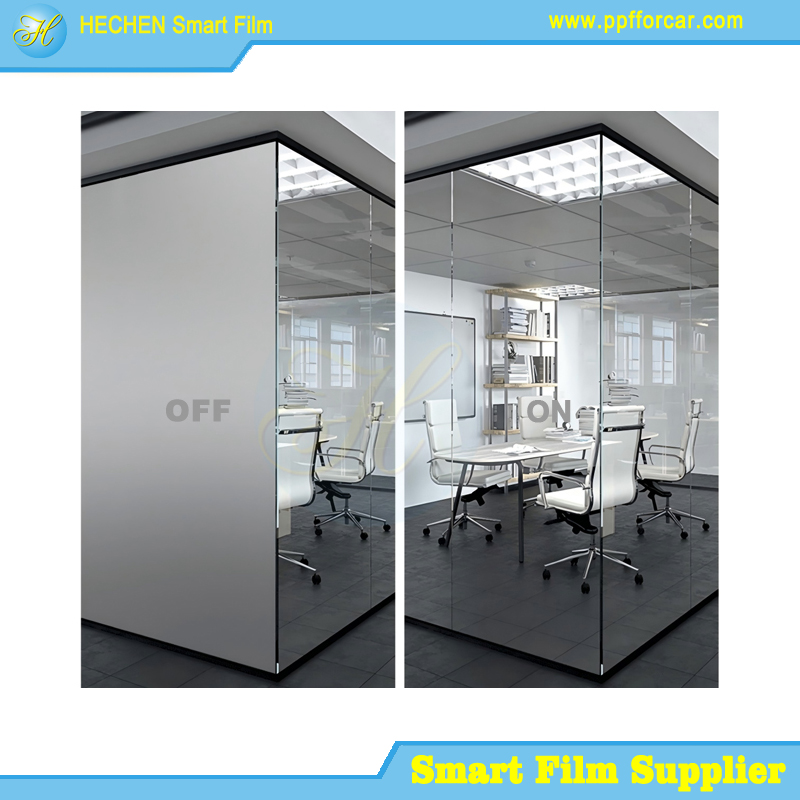
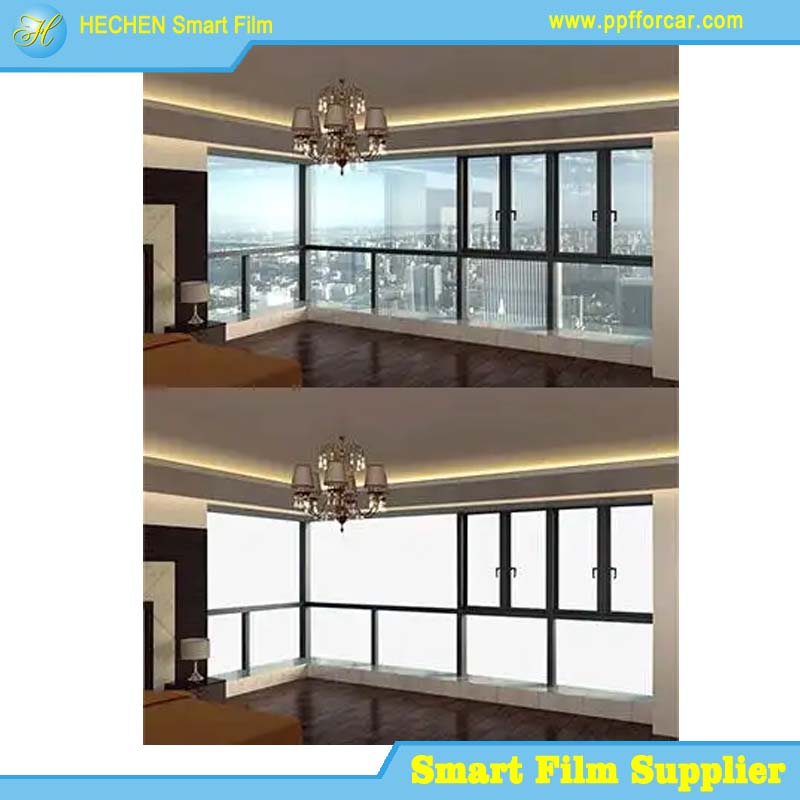
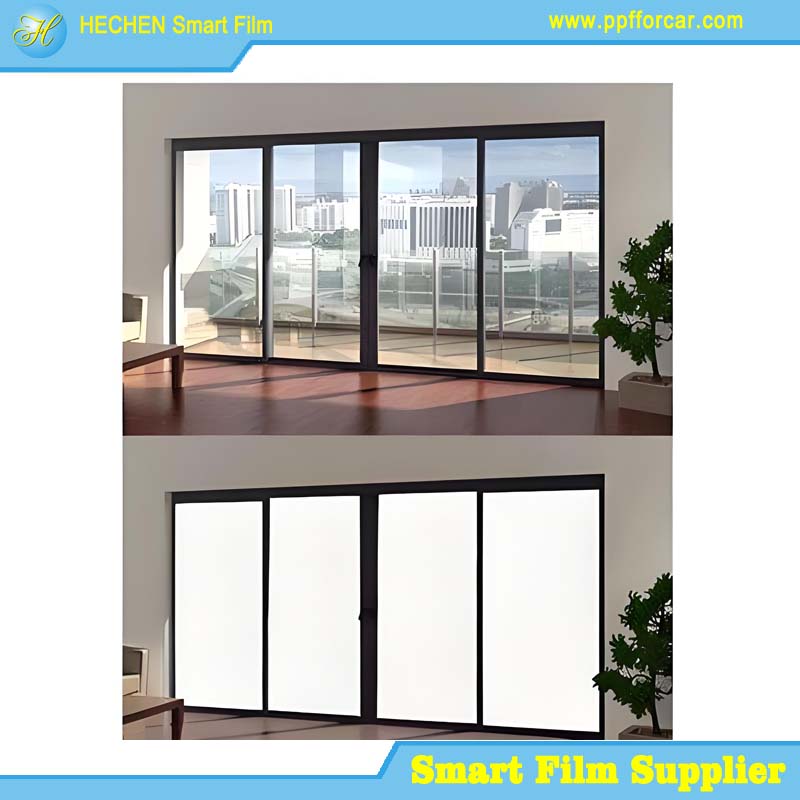
Polymer-dispersed liquid crystal (PDLC) smart film contains liquid crystal droplets dispersed within a polymer layer. When an appropriate electrical field is applied, the liquid crystals align to allow more direct light transmission, making the film appear transparent. When the power is switched off, light scattering makes the film appear frosted or opaque.
Typical residential applications include:
Bathroom windows and shower enclosures.
Glass partitions and home offices.
Bedroom windows where switchable privacy is needed.
Interior glass doors and selected glazed areas.
PDLC technology is valuable for privacy and flexible space management. However, switching from transparent to opaque does not automatically mean that the film significantly reduces solar heat gain. A standard PDLC film should not be treated as a substitute for a tested solar-control film unless its manufacturer provides appropriate performance data.
Solar-Control and Low-E Films: Designed to Manage Heat
Solar-control films reduce the amount of solar energy entering through windows by reflecting or absorbing selected portions of sunlight. Low-emissivity films are designed to reduce radiative heat transfer and may improve thermal performance when used in compatible glazing systems.
The U.S. Department of Energy explains that window energy performance depends significantly on the U-factor and solar heat gain coefficient (SHGC), while spectrally selective coatings can reduce solar heat transmission while allowing substantial visible daylight to pass through.
For homeowners, the key is to choose a product based on its measured performance and intended application—not simply its marketing category.
2. Understanding SHGC: A Key Metric for Window Energy Efficiency
The Solar Heat Gain Coefficient (SHGC) measures the fraction of incident solar radiation that enters a building through a complete glazing system, including directly transmitted solar energy and the inward-flowing portion of absorbed energy.
SHGC ranges from 0 to 1. A lower value means less solar heat gain through the tested window assembly.
For example:
| Window system | Illustrative SHGC | Interpretation |
|---|---|---|
| Existing glazing | 0.70 | Relatively high solar heat gain |
| Improved glazing or film system | 0.45 | Lower solar heat gain |
| Lower-SHGC system | 0.30 | Substantially lower solar heat gain |
These figures are illustrative examples, not measured specifications for a particular smart film.
This means the upgraded system has an SHGC approximately 35.7% lower than the original system. It does not mean that the home’s cooling bill will fall by 35.7%. Total energy savings depend on how much of the home's energy use is affected by solar heat entering through those windows.
Why SHGC Matters in Summer
Sunlight passing through windows can warm floors, walls, furniture, and indoor air. In a home with substantial sun-exposed glazing, this additional heat can increase indoor temperatures and make the air-conditioning system run longer.
A window system with a lower SHGC can reduce this solar heat load, particularly on exposed east- and west-facing windows. The benefit is generally more significant in cooling-dominated climates and rooms with strong direct sunlight.
Is a Lower SHGC Always Better?
No. In colder climates, solar heat gain can help warm a home during sunny winter days. A very low SHGC may reduce useful passive solar heating and increase heating demand under some conditions.
The U.S. Department of Energy recommends selecting window performance characteristics according to climate, including both SHGC and U-factor.
Homeowners should therefore consider year-round performance rather than choosing the lowest possible SHGC in every situation.
3. UV Blocking Window Film for Home: Protecting Furniture and Flooring
Ultraviolet radiation is one contributor to fading and deterioration of indoor materials. Sunlight can gradually alter the colour of hardwood floors, rugs, curtains, artwork, leather upholstery, and other furnishings.
A UV-blocking window film for home use can reduce the ultraviolet radiation passing through the treated glass.
Can Window Film Block 98%–99% of UV Rays?
Some window films advertise UV rejection of 98% or more, and certain products specify UV blocking above 99%. These values are product-specific, not universal specifications for all PDLC smart films.
For example, one published smart-film technical sheet lists UV blocking above 99% for a particular sticky PDLC variant, while its standard PDLC variants have a different stated UV-blocking value. This demonstrates why the precise product specification matters.
Before using a statement such as “blocks 99% of harmful UV rays” in product marketing, confirm:
The exact film model and construction.
The UV wavelength range used for testing.
Whether the figure applies to the film alone or the complete glass-and-film assembly.
The test standard and laboratory results.
Whether the performance applies to the product after installation.
Does UV Blocking Prevent All Furniture Fading?
No. UV protection can help, but fading is a complex process. Visible light, solar heat, material chemistry, dyes, exposure time, and the type of finish can also contribute to colour change.
A film that blocks 99% of UV radiation does not necessarily prevent 99% of furniture fading. It is more accurate to say that the film reduces one important source of exposure and may help extend the appearance and service life of interior furnishings.
For rooms containing expensive furniture, artwork, wood flooring, or textiles, combine UV protection with suitable curtains, blinds, or other shading strategies where necessary.
4. How Window Films Can Reduce HVAC Workload
Heating, ventilation, and air-conditioning (HVAC) systems respond to heat entering or leaving the building. Window upgrades can influence this load in two main ways.
Summer: Reducing Unwanted Solar Heat Gain
In summer, sunlight entering through windows increases the cooling load. A compatible solar-control film can reduce the solar energy transmitted indoors, potentially reducing the amount of heat the air-conditioning system must remove.
The effect is most likely to be useful when:
Windows receive strong direct sunlight.
The home has large glazed areas.
Existing glass has relatively high solar heat gain.
Air conditioning accounts for a meaningful share of household energy consumption.
The selected film has documented solar-control performance.
Government research supports the potential of appropriate window films to reduce building cooling demand. The U.S. General Services Administration reports that a Lawrence Berkeley National Laboratory evaluation of a spectrally selective solar-control film found up to 29% heating and cooling energy savings in a particular hot-climate application. That result is a project-specific finding, not a guaranteed residential saving.
Winter: Improving Insulation Requires the Right Film
Winter performance is more complicated. Heat escapes through windows by conduction, convection, radiation, and air leakage around the frame and seals.
A standard solar-control film may reduce solar heat gain without materially improving the window’s insulating performance. In some homes, blocking winter sunlight can offset part of the summer benefit.
Low-E retrofit films are different: appropriately designed products can reduce certain forms of heat transfer and may improve both heating and cooling performance. Results depend on the existing glazing, the film’s emissivity, installation position, and climate.
For homeowners in heating-dominated climates, ask the supplier for the complete window assembly’s U-factor or other applicable thermal-performance data—not just an infrared-rejection percentage.
Can PDLC Smart Film Reduce HVAC Energy Use?
PDLC smart film may improve privacy and help manage how a space is used, but privacy switching alone does not establish an energy-saving benefit. If energy reduction is a priority, select a product with verified SHGC, U-factor, or other relevant thermal-performance data for the intended glazing system.
5. How Much Can Smart Film Save on Utility Bills?
There is no single percentage that applies to every home. The most defensible approach is to distinguish savings in window-related heat transfer from savings in HVAC energy and savings on the total household bill.
A window film may substantially change solar heat gain through treated glass, yet the impact on the total energy bill may be smaller because energy is also used for water heating, appliances, lighting, cooking, and other loads.
A Practical Way to Estimate Potential Savings
Start by identifying the share of the household energy bill associated with heating and cooling. Then estimate how much of that load is attributable to the treated windows and how effectively the selected product reduces it.
This example is a calculation method, not a prediction of typical smart-film performance. Actual results could be lower or higher depending on the property.
| Variable | Why it matters |
|---|---|
| Window orientation | East- and west-facing glass may receive strong low-angle sunlight |
| Glazing area | Larger exposed window areas can create greater solar heat loads |
| Existing glass | Single glazing, double glazing, and low-E glazing perform differently |
| Film specification | SHGC, U-factor, emissivity, and visible light transmission affect performance |
| Climate | Hot summers and cold winters create different priorities |
| HVAC efficiency | Equipment type and operating efficiency affect bill savings |
| Installation quality | Poor compatibility or installation may reduce performance or damage glass |
How Should Homeowners Interpret Published Savings Percentages?
Published studies can provide useful evidence, but they must be read in context. The average 29% reduction in perimeter HVAC energy use for a particular low-E film application compared with single-pane clear glass. This is not the same as a 29% reduction in the whole-house energy bill, and it should not be transferred directly to standard PDLC privacy film.
For a credible estimate, request project-specific calculations based on the home's location, glazing type, window orientation, and the exact product specification.
6. Smart Film vs. Solar-Control Film vs. Low-E Film
| Feature | Standard PDLC smart film | Solar-control film | Low-E film |
|---|---|---|---|
| Main purpose | Switchable privacy | Reduce unwanted solar heat gain | Reduce selected forms of heat transfer |
| Changes appearance on demand | Yes, for compatible PDLC systems | Usually no | Usually no |
| UV blocking | Product-specific | Product-specific | Product-specific |
| SHGC reduction | Must be verified | A key design objective | Depends on product |
| Winter insulation benefit | Do not assume one | Product-dependent | A key objective for suitable products |
| Typical use | Privacy glass and partitions | Sun-exposed windows | Energy-efficiency retrofits |
| Key specification | Switching, haze, voltage, UV data | SHGC, solar transmittance, visible light transmission | U-factor, emissivity, SHGC |
The right product depends on the primary problem. If the goal is switchable privacy, PDLC smart film may be appropriate. If the goal is reducing summer overheating, consider a tested solar-control product. If winter heat loss is a major concern, evaluate low-E options and the performance of the complete glazing assembly.
Some products combine functions, but combined performance should be supported by test data.
7. How to Choose an Energy-Efficient Window Film for Your Home
Use the following checklist before purchasing:
Define the main objective. Decide whether the priority is privacy, solar heat reduction, UV protection, winter insulation, or a combination.
Check the glazing type. Identify whether the existing windows are single-glazed, double-glazed, laminated, or fitted with low-E coatings.
Review the SHGC. Compare the complete glazing system before and after treatment where reliable data are available.
Verify UV rejection. Ask for the tested UV wavelength range and exact product-specific result.
Check visible light transmission (VLT). A film that reduces solar gain may also reduce daylight or change the appearance of the glass.
Confirm glass compatibility. Some films can increase thermal stress in certain glass configurations. Ask the manufacturer or a qualified installer to assess the risk.
Evaluate electrical requirements. For PDLC products, confirm transformer specifications, wiring requirements, control options, and safe installation procedures.
Estimate payback. Compare the installed cost with a conservative estimate of annual energy savings, while also considering privacy, UV protection, and comfort benefits.
Do Not Rely on Infrared Rejection Alone
A high infrared-rejection percentage does not, by itself, establish total solar-energy rejection or annual energy savings. Solar performance should be evaluated using appropriate metrics for the complete window system, including SHGC, solar transmittance, and visible light transmission.
Likewise, a film’s ability to switch from transparent to opaque is not a substitute for thermal-performance testing.
8. Frequently Asked Questions
Does smart film really reduce home energy bills?
It can, but only when the selected product has relevant energy-performance characteristics and the home has a meaningful opportunity for savings. Solar-control and low-E films have different functions from standard privacy-focused PDLC film. Savings depend on the climate, glazing, window orientation, HVAC system, and product specifications.
Can smart film block 99% of UV rays?
Some products specify UV blocking above 99%, but this should be verified for the exact model and test method. Do not assume that all smart films have the same UV rejection.
Can window film reduce solar heat gain by 40%?
A particular film or glazing upgrade may achieve a reduction of that order under specified test conditions, but the percentage must be tied to a clearly defined metric and baseline. A 40% reduction in SHGC is not the same as a 40% reduction in cooling costs or total household energy bills.
Does smart film keep a house warmer in winter?
Standard PDLC privacy film should not be assumed to provide significant insulation. Certain low-E films are designed to reduce heat transfer, but performance depends on the product and glazing assembly. In colder climates, also consider whether reducing solar heat gain would remove useful passive heating.
Is smart film better than curtains or blinds?
They serve different purposes. Smart film can provide a clean glass appearance and, in PDLC applications, switchable privacy. Curtains and blinds can provide shading, privacy, and—in suitable designs—additional insulation. For energy performance, compare measured product data and consider combining solutions where appropriate.
How do I calculate the payback period?
Divide the total installed cost by the estimated annual financial savings. For example, a hypothetical $1,200 installation saving $150 per year would have a simple payback period of eight years. This calculation excludes maintenance, financing, energy-price changes, and non-energy benefits.
Conclusion: Choose Window Film Based on Measured Performance
Smart film and advanced window films can improve residential comfort, but energy efficiency depends on choosing the correct technology for the problem. Standard PDLC smart film is primarily a switchable privacy solution, while solar-control and low-E films are designed to manage heat transfer in different ways.
For homeowners seeking lower energy bills, compare SHGC, U-factor where applicable, UV rejection, visible light transmission, glass compatibility, and installation costs. Treat claims such as “99% UV blocking” or “40% less solar heat gain” as product-specific results that require supporting test data.
A properly selected and professionally assessed window upgrade can help control unwanted solar heat, reduce UV exposure, and improve indoor comfort. The most reliable savings estimate comes from matching verified product performance to the home's actual windows, climate, and energy-use patterns.
Recommended linking:
The Ultimate Guide to Smart Film for Residential Windows
Recommend related products:
Smart Film For Residential Windows