PDLC Smart Film vs Traditional Window Tint: Which Is Better?
The automotive industry is entering a new era of intelligent glass technology. While traditional window tint has been used for decades to reduce glare and improve privacy, modern vehicle owners are increasingly turning to PDLC smart film for cars as a more advanced alternative.
Today’s consumers want more than static dark windows. They expect:
Intelligent privacy control
Premium aesthetics
Smart vehicle integration
Better thermal management
Luxury user experience
As a result, the debate around PDLC smart film vs tint is becoming more important for vehicle owners, distributors, and automotive customization companies.
In this technical guide, we’ll compare:
Smart tint vs regular tint
Performance differences
Technology advantages
Privacy capabilities
UV protection
Smart control functions
Installation considerations
Cost and long-term value
If you are evaluating electronic tint for cars, this article will help you understand which solution is better for your automotive project.
What Is Traditional Window Tint?
Traditional automotive tint is a thin film applied to vehicle windows to reduce sunlight transmission and improve appearance.
Its main functions include:
Reducing glare
Providing fixed privacy
Blocking some UV radiation
Improving cabin comfort
Traditional tint comes in several types:
Dyed film
Metalized film
Carbon film
Ceramic tint
Although conventional tint remains popular, it has one major limitation:
The darkness level is permanent and cannot be adjusted dynamically.
What Is PDLC Smart Film?
PDLC stands for Polymer Dispersed Liquid Crystal.
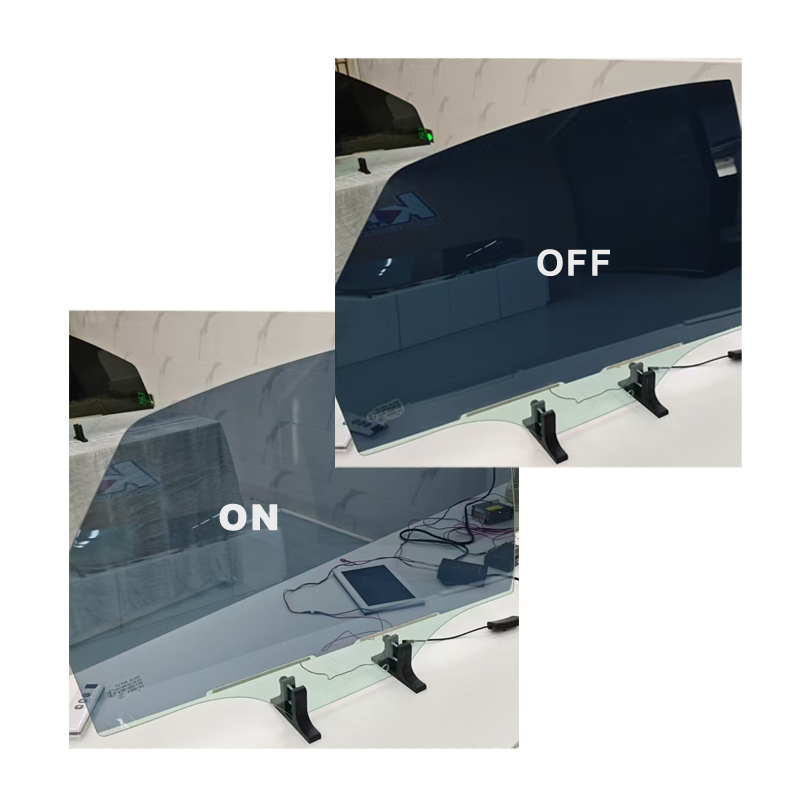
Unlike traditional tint, electronic tint for cars uses smart liquid crystal technology to switch between:
Transparent mode
Opaque privacy mode
This transparency switching happens instantly through voltage control.
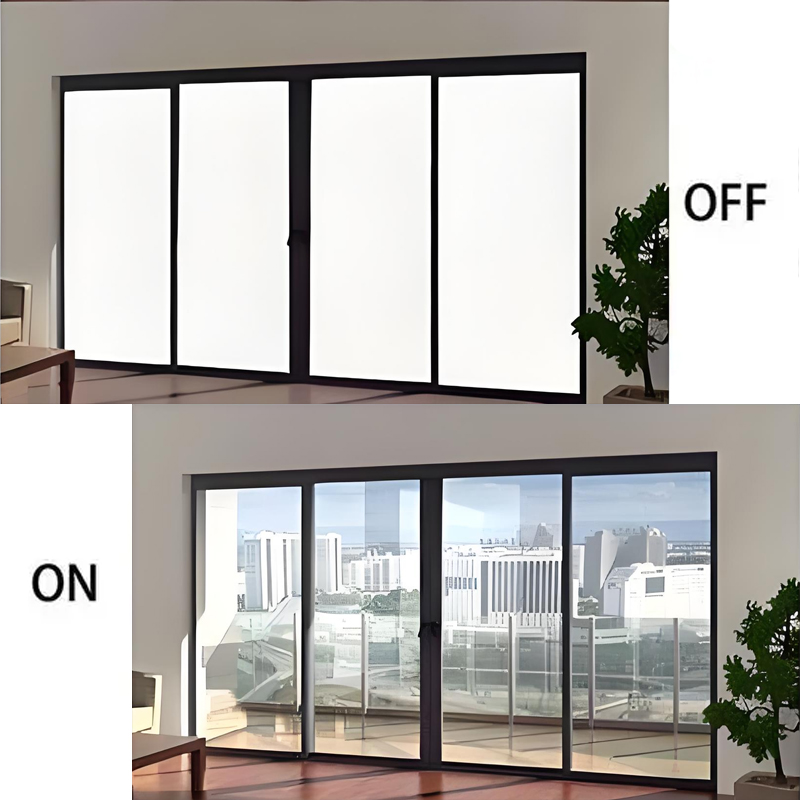
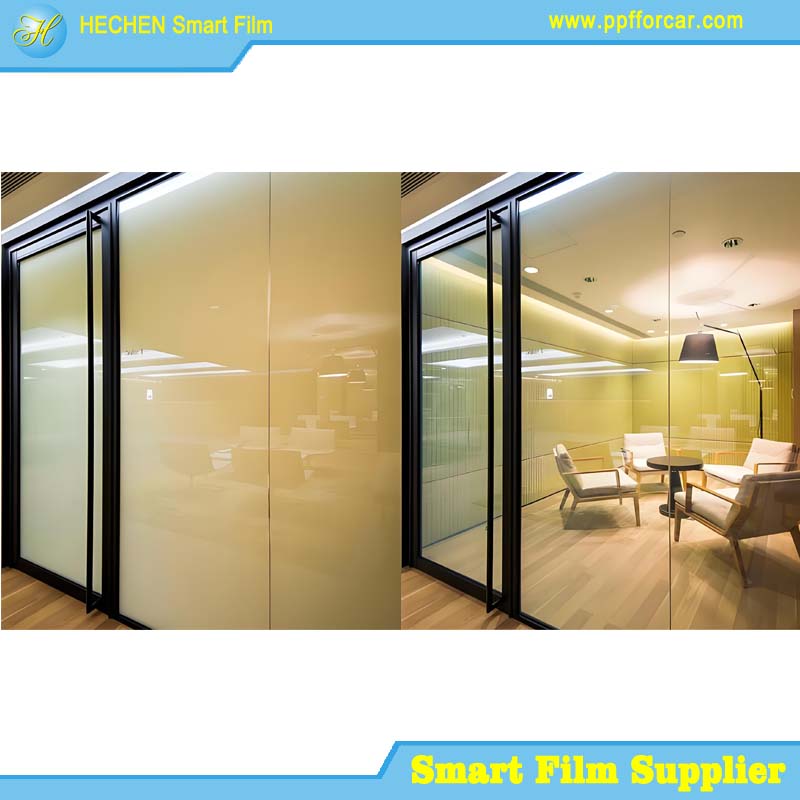
When power is OFF:
Liquid crystals scatter randomly
The glass appears frosted
When power is ON:
Liquid crystals align uniformly
The glass becomes transparent
This intelligent functionality is why many luxury vehicles now use smart tint vs regular tint solutions.
PDLC Smart Film vs Tint: Key Differences
The biggest difference between traditional tint and PDLC smart film is dynamic control.
Traditional tint is static.
PDLC smart film is intelligent and switchable.
Comparison Table: PDLC Smart Film vs Traditional Window Tint
| Feature | PDLC Smart Film | Traditional Window Tint |
|---|---|---|
| Privacy | Dynamic switchable privacy | Fixed privacy |
| UV Protection | Excellent UV blocking | Moderate UV blocking |
| Smart Control | Yes – electronic control | No |
| Cost | Higher initial investment | Lower initial cost |
Privacy Comparison
Privacy is one of the main reasons vehicle owners choose window film solutions.
Traditional Tint Privacy
Traditional tint provides constant shading.
Advantages:
Simple installation
Consistent appearance
Basic privacy protection
Limitations:
Cannot switch transparency
Reduced visibility at night
Permanent darkness level
PDLC Smart Film Privacy
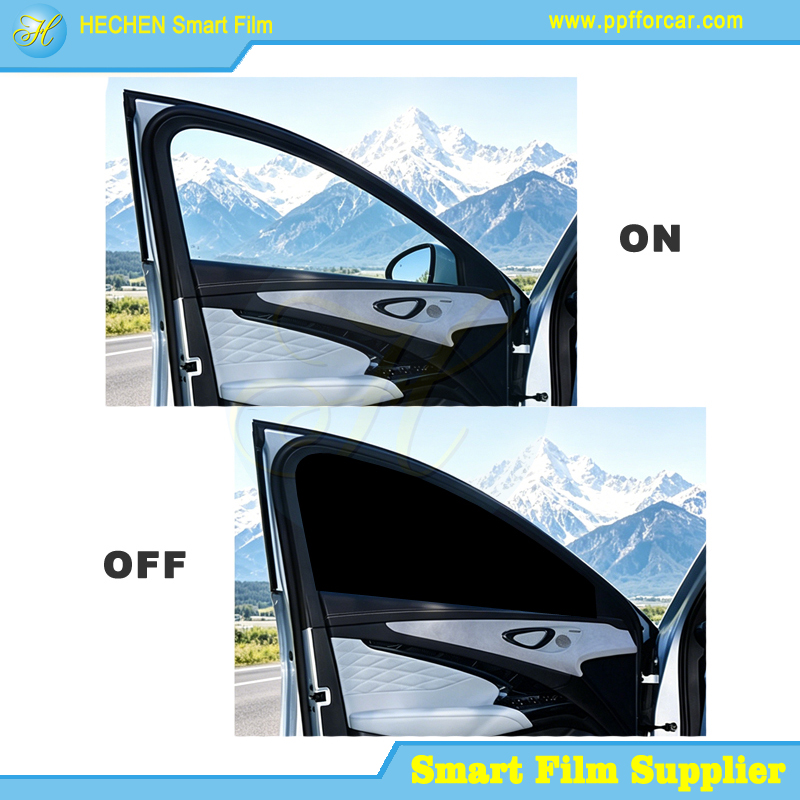
Electronic tint for cars offers dynamic privacy control.
Users can instantly switch between:
Transparent driving mode
Frosted privacy mode
Advantages include:
On-demand privacy
VIP passenger protection
Luxury appearance
Intelligent control
This makes PDLC technology ideal for:
Executive sedans
VIP vans
Luxury SUVs
Commercial mobility vehicles
UV Protection Comparison
UV rejection is critical for:
Passenger comfort
Interior protection
Skin safety
Traditional Tint UV Blocking
Standard tint can reduce some UV radiation depending on material quality.
However, lower-end films may:
Fade over time
Lose effectiveness
Provide inconsistent protection
PDLC Smart Film UV Blocking
High-quality PDLC smart film for cars can block up to:
99% UV rays
This helps protect:
Leather seats
Dashboard materials
Electronic components
Interior surfaces
Advanced smart film also improves cabin comfort in hot climates.
Smart Control Comparison
This is where the biggest difference exists between smart tint vs regular tint.
Traditional Tint
Traditional tint has:
No electronic functionality
No transparency adjustment
No smart integration
Once installed, the tint remains fixed permanently.
PDLC Smart Film
PDLC smart film provides intelligent electronic control.
Users can operate the film using:
Buttons
Remote controls
Mobile apps
Voice systems
Vehicle automation systems
This smart functionality creates a premium automotive experience.
Cost Comparison
Cost is often the biggest factor when comparing PDLC smart film vs tint.
Traditional Tint Cost
Traditional tint is generally more affordable because:
Materials are simpler
Installation is easier
No electrical system is required
This makes it suitable for:
Budget-conscious users
Standard passenger vehicles
PDLC Smart Film Cost
Electronic tint for cars has a higher initial investment because it includes:
Liquid crystal technology
Conductive layers
Electrical systems
Smart control modules
However, many buyers consider the premium worthwhile because of:
Intelligent functionality
Luxury aesthetics
Advanced privacy control
High-tech vehicle appeal
Technology Comparison
The technology gap between traditional tint and PDLC film is significant.
Traditional Tint Technology
Traditional tint mainly relies on:
Dye absorption
Metal reflection
Ceramic heat reduction
Its functionality remains passive.
PDLC Smart Film Technology
PDLC technology uses:
Liquid crystal science
Voltage-controlled transparency
Intelligent electronic systems
This creates a far more advanced automotive glass solution.
Vehicle Aesthetics Comparison
Modern consumers increasingly value smart automotive design.
Traditional Tint Appearance
Traditional tint offers:
Darkened glass appearance
Sporty styling
Standard customization
However, it does not provide interactive functionality.
PDLC Smart Film Appearance
PDLC smart film creates:
Futuristic aesthetics
Intelligent glass effects
Premium luxury styling
This technology is especially popular in:
Tesla modifications
Luxury limousines
Executive vehicles
High-end EVs
Installation Comparison
Installation requirements differ significantly between the two systems.
Traditional Tint Installation
Traditional tint installation is relatively straightforward:
Clean glass
Apply film
Remove bubbles
No electrical components are involved.
PDLC Smart Film Installation
PDLC installation is more technical because it requires:
Power transformers
Electrical wiring
Busbar connections
Voltage control systems
Professional installation is strongly recommended.
Energy Efficiency and Heat Management
Heat reduction is increasingly important in modern vehicles.
Traditional Tint Heat Reduction
Ceramic and carbon tint can reduce solar heat to some extent.
However, heat control performance depends heavily on tint quality.
PDLC Smart Film Heat Reduction
High-performance electronic tint for cars can provide:
UV rejection
Infrared heat reduction
Improved cabin comfort
This is especially beneficial for:
Electric vehicles
Luxury transportation
Hot climate regions
Which Option Is Better?
The answer depends on vehicle type, budget, and desired functionality.
Choose Traditional Tint If You Want:
Lower installation cost
Simple appearance upgrades
Basic privacy
Standard heat reduction
Choose PDLC Smart Film If You Want:
Dynamic privacy control
Intelligent glass technology
Luxury aesthetics
Smart vehicle integration
Premium passenger experience
Why More Luxury Vehicles Are Switching to Smart Film
The automotive industry is rapidly shifting toward:
Smart mobility
Intelligent electronics
Luxury customization
Advanced user experiences
As a result, PDLC smart film for cars is becoming increasingly popular among:
Luxury car owners
Vehicle modification companies
EV manufacturers
Commercial transportation businesses
Frequently Asked Questions
What is the difference between PDLC smart film and regular tint?
Traditional tint provides fixed shading, while PDLC smart film offers switchable transparency through electronic control.
Is electronic tint for cars worth it?
For users seeking premium privacy, intelligent functionality, and luxury aesthetics, electronic smart tint can provide significant value.
Does PDLC smart film block UV rays?
Yes. High-quality PDLC smart film can block up to 99% of UV radiation.
Which is better for luxury vehicles?
PDLC smart film is generally preferred for luxury vehicles because it provides dynamic privacy and advanced smart functionality.
Is PDLC smart film more expensive?
Yes. The initial investment is higher due to advanced materials and electrical systems.
Final Thoughts
The comparison between PDLC smart film vs tint reflects the broader transformation happening in the automotive industry.
Traditional window tint remains a practical solution for basic privacy and solar control. However, smart tint vs regular tint comparisons clearly show that PDLC technology offers a much more advanced experience.
With features like:
Dynamic privacy
Smart electronic control
Premium aesthetics
Intelligent transparency switching
Advanced UV protection
Electronic tint for cars is becoming the preferred choice for modern luxury and smart mobility applications.
Whether you are:
An automotive distributor
Vehicle customization company
Smart mobility integrator
Luxury vehicle owner
investing in high-quality PDLC smart film technology can help you stay ahead in the growing intelligent automotive market.