An In-Depth Look at the Advantages and Disadvantages of Smart Tinted Window Film
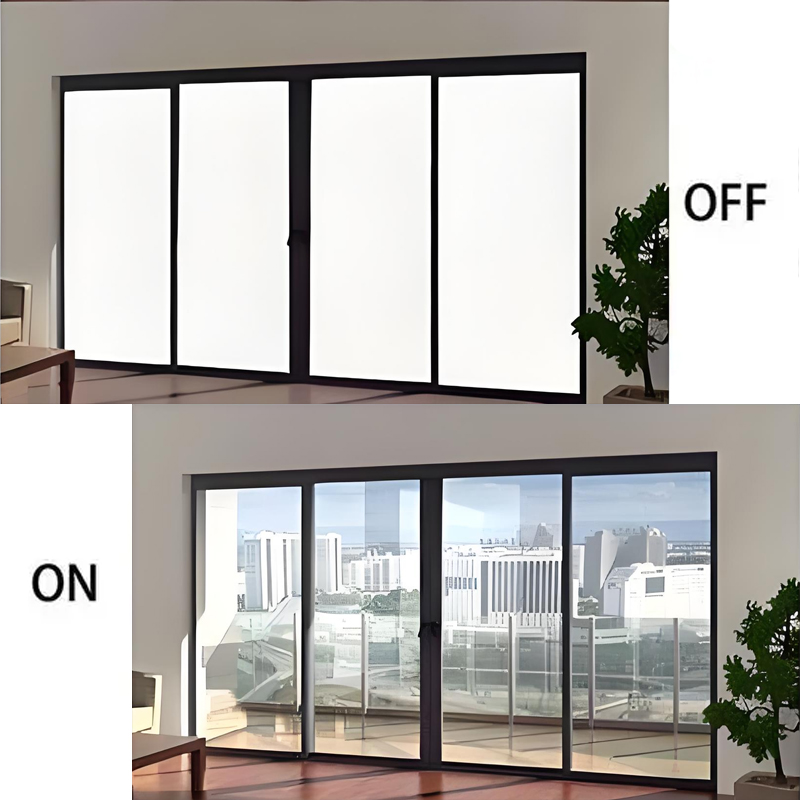
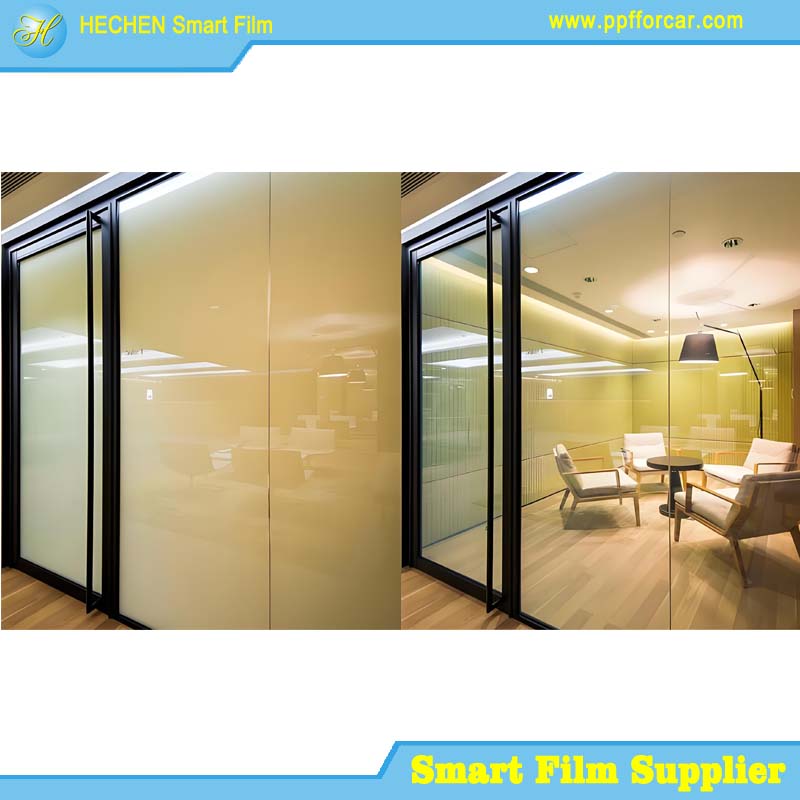
In the rapidly evolving world of architectural and interior design, smart tinted window film has emerged as a cutting-edge solution that blends technology with functionality. Also known as switchable window tint, privacy film, or electrochromic film, this innovative material allows users to alter the transparency or tint of glass surfaces on demand. By applying a thin layer of film to existing windows or integrating it into glass panels, homeowners, businesses, and architects can control light, privacy, and energy flow with the touch of a button, a remote, or even a smart home integration.
The origins of smart tinted window film trace back to the 1980s with the development of electrochromic materials, but it gained traction in the 21st century as sustainability and smart living became priorities. Today, in 2025, the global market for smart glass and film is projected to exceed $10 billion, driven by applications in residential homes, commercial offices, healthcare facilities, and even automobiles. This growth is fueled by increasing awareness of energy efficiency, privacy concerns in urban environments, and the desire for modern, minimalist aesthetics that eliminate traditional blinds or curtains.
However, like any advanced technology, smart tinted window film comes with a balance of benefits and drawbacks. While it promises enhanced comfort and cost savings over time, the initial investment and technical requirements can be daunting. This article provides an in-depth exploration of these advantages and disadvantages, drawing from expert analyses, user experiences, and industry reports. We'll examine how the film works, its various types, and real-world implications to help you decide if it's a worthwhile addition to your space. Whether you're retrofitting a home office for better focus or outfitting a corporate building for dynamic workspaces, understanding the pros and cons is essential for making an informed choice.
What is Smart Tinted Window Film?
Smart tinted window film refers to a category of adaptive materials that can change their optical properties—such as transparency, opacity, or color—in response to external stimuli like electricity, light, or temperature. Unlike traditional static window tints that provide a fixed level of shading, smart films offer dynamic control, making them "smart" in their responsiveness.
At its core, the technology relies on advanced materials embedded within a thin, flexible film that can be applied to glass surfaces. The most common types include:
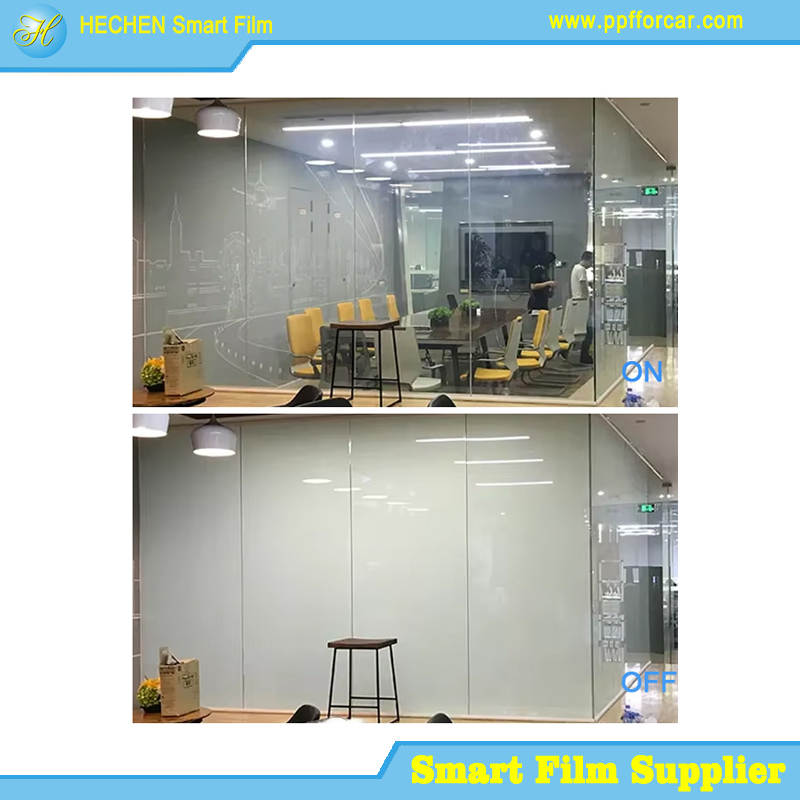
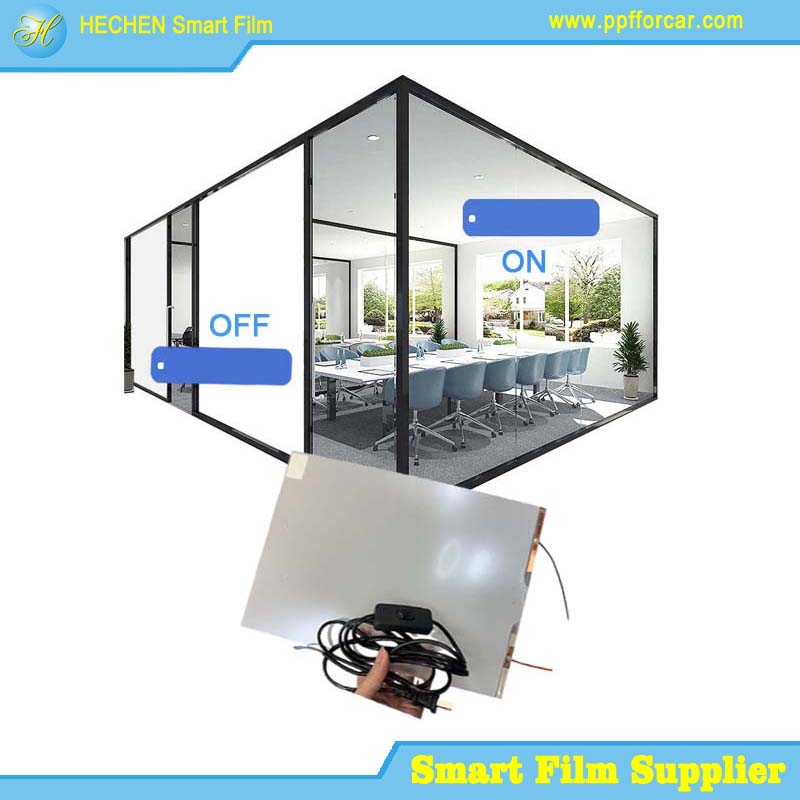
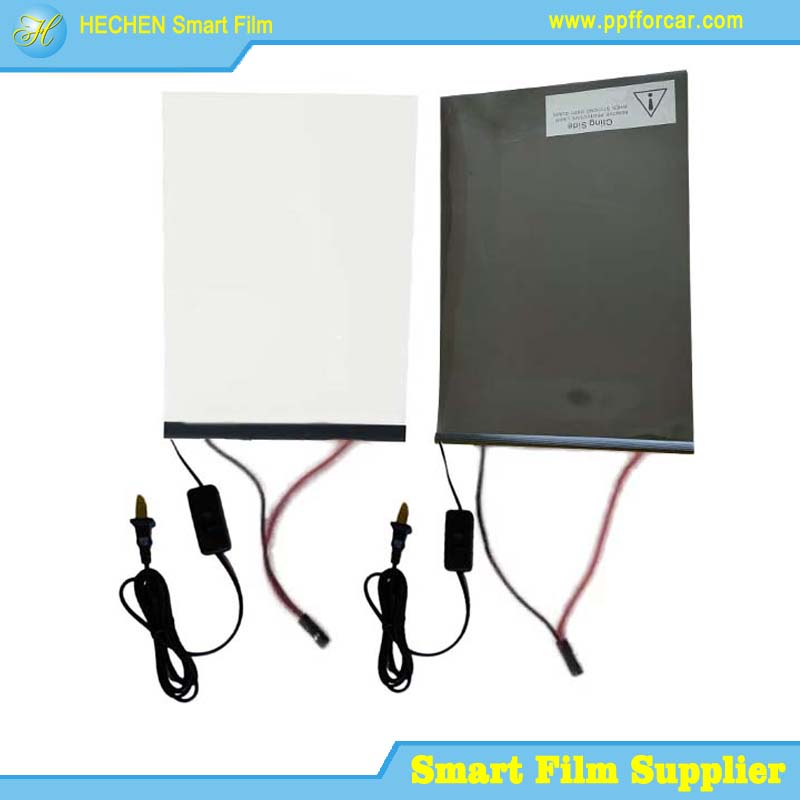
· Polymer-Dispersed Liquid Crystal (PDLC) Film: This is the backbone of many switchable privacy films. Liquid crystals are suspended in a polymer matrix between two conductive layers. When no voltage is applied, the crystals scatter light, rendering the glass opaque or frosted for privacy. Applying a low voltage (typically 48-110V) aligns the crystals, allowing light to pass through for transparency. Switching happens almost instantly, in under a second, and it's ideal for interior applications like conference rooms or bathrooms.
· Electrochromic Film: This type uses a chemical reaction triggered by electricity to change tint levels. Ions move between layers, altering the film's color from clear to various shades of blue, gray, or green. It takes 5-12 minutes to fully transition but holds its state without continuous power, making it energy-efficient for large windows or facades where gradual dimming is preferred.
· Suspended Particle Device (SPD) Film: Microscopic particles suspended in a liquid respond to voltage by aligning to control light transmission. It offers variable tinting rather than full opacity, useful for automotive or skylight applications.
· Photochromic and Thermochromic Films: These are passive variants that react automatically to UV light or heat without electricity. Photochromic darkens in sunlight, while thermochromic adjusts based on temperature. They're simpler and cheaper but lack user control.
The film is typically applied as a retrofit to existing glass, making it more accessible than replacing entire windows with smart glass. Installation involves cleaning the surface, applying the film with a soapy solution to avoid bubbles, and connecting it to a power source via bus bars. Brands like Smart Tint, ElectraTint, and Magic Film offer self-adhesive options, with thicknesses around 0.4mm for durability. Overall, smart tinted window film transforms static windows into interactive elements, enhancing spaces with technology that adapts to user needs and environmental conditions.
Advantages of Smart Tinted Window Film
The appeal of smart tinted window film lies in its multifaceted benefits, which extend beyond mere aesthetics to tangible improvements in energy use, health, and functionality. Let's delve into these advantages in detail.
l Energy Efficiency and Cost Savings
One of the most compelling pros is the film's contribution to energy conservation. By dynamically controlling solar heat gain and light transmission, it reduces the need for heating, ventilation, and air conditioning (HVAC) systems. For instance, in its tinted or opaque state, it can block up to 88.9% of solar heat, leading to 20-30% reductions in peak cooling loads and overall energy savings of 6-30 kWh per square foot annually. This is particularly beneficial in commercial buildings, where electrochromic films have demonstrated 36-48% total energy reductions in lighting and HVAC. Residential users might see utility bills drop by 15-30% during summer months, with payback periods as short as 3-5 years in sunny climates. Additionally, by allowing natural light while minimizing glare, it cuts artificial lighting needs, further amplifying savings.
l Privacy and Security on Demand
Privacy is a hallmark advantage, with the film switching from transparent to opaque instantly or gradually, depending on the type. This eliminates the need for bulky blinds or curtains, creating a sleek, modern look while providing confidentiality in offices, hospitals, or homes. In healthcare settings, it supports patient privacy without sacrificing natural light, which can reduce hospital stays by 8.5% and pain medication use by 22%. For security, the opaque mode deters prying eyes, and the laminated structure holds glass together if broken, enhancing safety. Users in urban environments appreciate this for bedrooms or bathrooms, where views can be enjoyed without exposure.
l UV Protection and Health Benefits
Smart films block over 95-99% of harmful UV rays, far surpassing standard glass's 55%. This protects interiors from fading—extending the life of furniture, artwork, and flooring—and safeguards occupants from skin damage. Health-wise, optimized natural light through these films regulates circadian rhythms, reducing stress, headaches, and seasonal affective disorder. Studies show improved cognitive performance (up to 42% higher scores), better sleep (37 extra minutes), and enhanced mood in spaces with electrochromic windows. In workplaces, this translates to higher productivity, with faster task completion and lower absenteeism.
l Aesthetic and Functional Versatility
The film adds a futuristic elegance, allowing for customizable designs that fit modern architecture. It can double as a projection screen or whiteboard in opaque mode, ideal for presentations in offices. Noise reduction is another perk, with better acoustic insulation in noisy areas. Low maintenance—requiring only standard cleaning—makes it convenient, and its retrofit nature suits existing structures without major renovations. For transitional films, automatic adaptation to sunlight provides hands-free comfort.
l Environmental and Long-Term Value
By promoting energy efficiency, smart films contribute to sustainability, potentially saving the U.S. 0.77 quads of energy by 2030 if widely adopted. Their durability, with lifespans of 10-20 years when properly installed, ensures long-term value, often outweighing initial costs through savings and property value increases.
Disadvantages of Smart Tinted Window Film
Despite its innovations, smart tinted window film has notable limitations that can impact adoption.
l High Initial Costs
The most significant drawback is the expense. Film alone costs $25-80 per square foot, with full installations reaching $50-150, far exceeding traditional tints. Premiums for electrochromic types add $35-85 per square foot, and minimum orders (e.g., $2,500-$10,000) deter small projects. While energy savings provide ROI, the upfront barrier is steep for budget-conscious users.
l Installation Complexity and Requirements
Professional installation is often necessary, involving glaziers, tint experts, and electricians for wiring, adding $100-500 per window. DIY attempts risk voids in warranties or poor performance, and the process is labor-intensive. Electrical integration complicates renovations, especially in older buildings.
l Power Dependency and Reliability Issues
Active films require electricity (3-5 watts per square meter), defaulting to opaque during outages, which can be inconvenient. User reports highlight degradation, like reduced opacity after 10 months or haze in clear mode. Durability concerns include heat buildup leading to cracks if overused, and a limited lifespan of 10-20 years. Electrochromic transitions take minutes, not ideal for quick changes.
l Limited Applications and Customization
Not suited for exteriors due to weather vulnerability, and some types lack full UV/heat control or color options (mostly gray/blue). Transparency may have slight haze, and availability is limited, often requiring online orders. Passive films offer no manual control, reducing versatility.
l Other Drawbacks
Maintenance, though low, can be specialized for electronics, and power use adds minor costs. In some cases, dark tints reduce natural light, potentially increasing lighting needs.
Conclusion
Smart tinted window film represents a leap forward in window technology, offering substantial advantages in energy efficiency, privacy, health, and aesthetics that can transform living and working spaces. However, its high costs, installation demands, and reliability issues make it a considered investment rather than a universal solution. For those in high-energy-use environments or seeking modern upgrades, the pros often prevail, with long-term savings justifying the expense. Ultimately, weighing your specific needs against these factors will determine if smart film is the right choice—consult professionals and review case studies for the best outcome.
For more about an in-depth look at the advantages and disadvantages of smart tinted window film, you can pay a visit to Hechen PDLC Smart Film Manufacturers for more info.