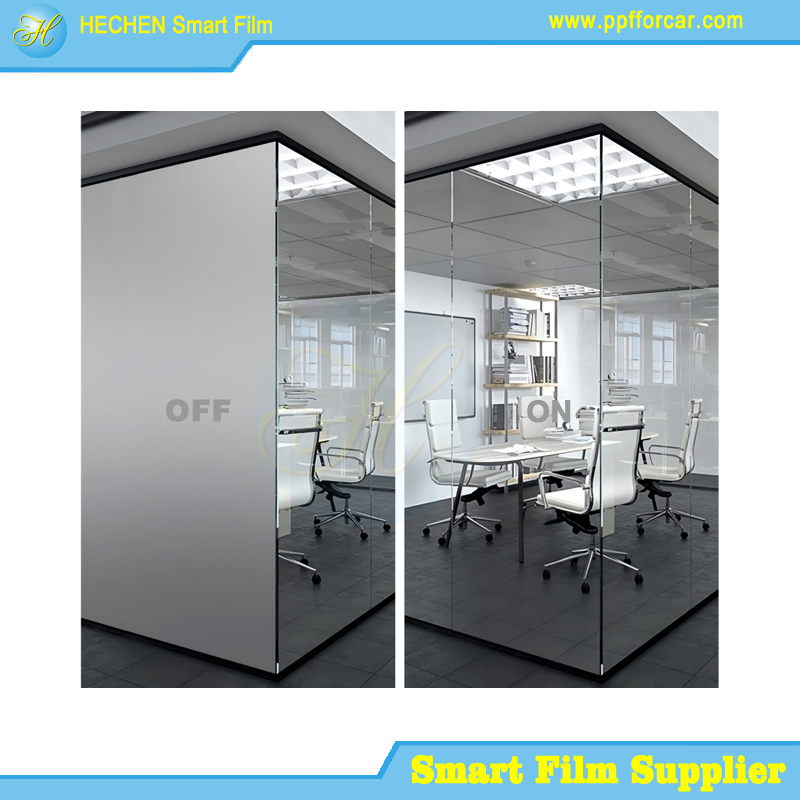
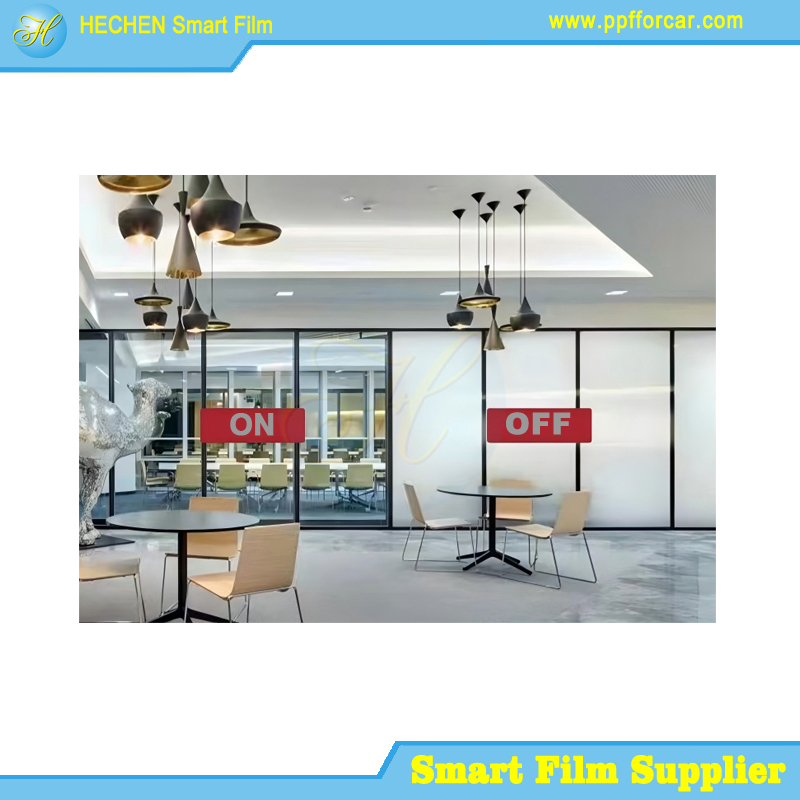
Best PDLC Film for Cars 2026: Top Options for Windows & Sunroof
TL;DR: This buyer’s guide presents the best PDLC (polymer-dispersed liquid crystal) film options for automotive windows and sunroofs in 2026. Since no brand or model names are mentioned, the “top options” are defined by technical specifications, application types, and user scenarios. The guide covers four main categories: (1) all‑around side window kits (four windows, USD 200–400), (2) sunroof‑specific films (higher UV/IR rejection, curved compatibility), (3) dual‑state vs. gradient (variable transparency) films, and (4) pre‑laminated glass units for replacement windows. Key selection parameters include switching speed, off‑state haze, on‑state clarity, temperature range, edge sealing quality, driver type (RF, Bluetooth, or automatic), and pre‑curving for curved glass. The article also provides a 2026 technology update: lower haze (<2%), thinner films (0.2 mm) for tight window channels, and integrated photopic sensors for automatic dimming. No specific brands are endorsed; instead, the guide teaches you how to identify top‑tier products by their specifications and test results.
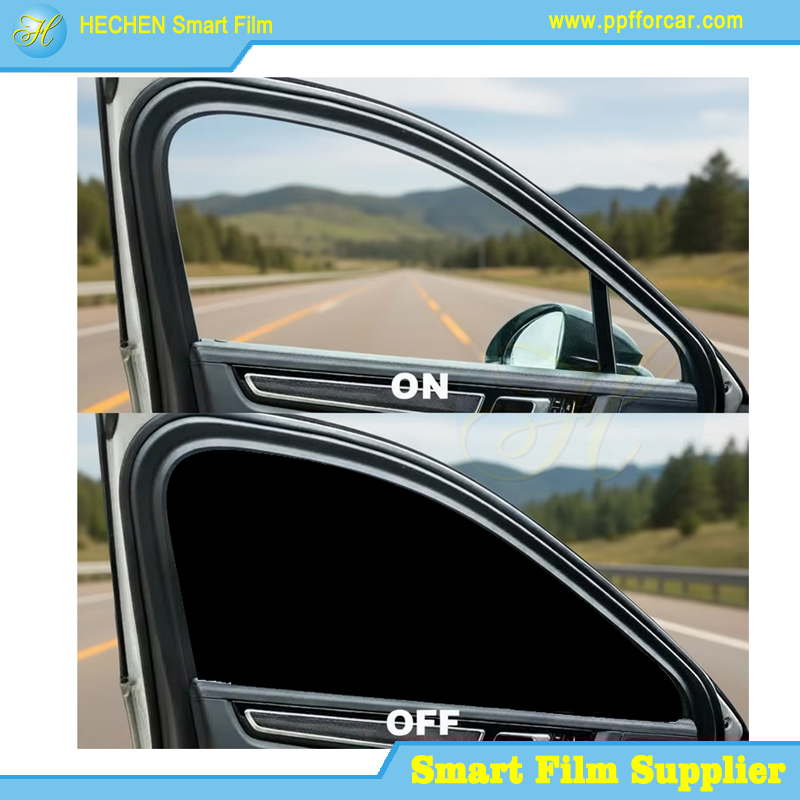
1. Introduction: The 2026 PDLC landscape
By 2026, PDLC film for cars has matured significantly. Early issues – poor durability, slow switching, and high haze – have been largely resolved. Today’s automotive‑grade PDLC films offer faster response (<0.5 seconds), lower on‑state haze (<2%), wider operating temperatures (-40°C to +95°C), and better conformability to curved glass. The market now provides specialized options for different vehicle applications: side windows, rear windshields, and sunroofs.
This guide does not list brand names or specific models. Instead, it describes the top options in terms of product categories, technical specifications, and suitability for various use cases. You will learn how to identify a high‑quality PDLC film based on measurable parameters, what to look for when buying for a sunroof (which has unique challenges), and which features justify a premium price in 2026.
2. Category 1: All‑Around Side Window Kits (4‑window sets)
This is the most common PDLC purchase. These kits are designed to cover the driver, passenger, and two rear side windows.
2.1 What to expect in 2026
Price range: USD 200–400 for the film + driver + wiring (installation extra)
Total area: Approximately 0.6–1.0 m² depending on vehicle size
Film thickness: 0.20–0.35 mm (thinner than previous 0.4–0.5 mm, allowing easier fit in window channels)
Driver type: Compact AC inverters (30–50V, 50–400 Hz) with RF remote or Bluetooth app control
2.2 Top sub‑options within this category
Option A: Standard automotive kit (USD 200–280)
On‑state haze: 3–4% (acceptable, slightly visible in very bright conditions)
Off‑state haze: 80–85%
Switching time: 1–2 seconds
Temperature range: -20°C to +80°C (suitable for moderate climates)
Edge sealing: Basic (silicone bead)
Driver: Manual rocker switch or basic remote
Best for: Budget‑conscious buyers in mild climates; occasional use.
Option B: Premium automotive kit (USD 280–350)
On‑state haze: 1.5–2.5% (excellent, nearly invisible when clear)
Off‑state haze: 88–92%
Switching time: 0.3–0.8 seconds
Temperature range: -30°C to +90°C
Edge sealing: Double‑sealed (UV‑cured epoxy + silicone)
Driver: RF remote with soft‑start and auto‑opaque on ignition off
Best for: Daily drivers in hot or cold climates; users who demand optical perfection.
Option C: Pre‑curved conformable kit (USD 350–450)
All premium specs plus:
Film is heat‑formed to match common glass curvatures (cylindrical and spherical)
Thinner substrate (0.20 mm) for extreme conformability
Includes additional edge sealant for curved edges
Best for: Vehicles with highly curved side windows (e.g., hatchbacks, sports cars, some SUVs). Flat glass vehicles do not need this.
2.3 How to choose the best for your side windows
Ask your supplier for three things:
A sample piece to test haze and switching in your own car (park in sun for a day).
A written temperature specification – reject any film rated below -20°C or above 80°C.
Clear statement on edge sealing – if the seller does not mention edge sealing, assume it is absent.
In 2026, the best side‑window PDLC films are those that combine low on‑state haze (<2.5%) with wide temperature tolerance and robust edge sealing. Avoid films that are simply repackaged architectural PDLC – they will fail within months.
3. Category 2: Sunroof‑Specific PDLC Films
Sunroofs (including panoramic roofs) present unique challenges: higher solar exposure, more extreme temperatures (glass can exceed 100°C), and often complex curvature. By 2026, dedicated sunroof PDLC products have emerged.
3.1 Why sunroof PDLC is different
Higher UV/IR rejection required: Sunroof glass lets in intense overhead sun. A good sunroof PDLC film must block ≥99% UV and ≥80% IR (even in transparent mode, using IR‑reflective ITO coatings).
Wider temperature tolerance: Roof glass in summer can reach 100–110°C. Sunroof PDLC must survive up to 105°C without delamination or permanent haze.
Curved glass compatibility: Panoramic roofs are often deeply curved. Pre‑curved films or liquid‑applied PDLC (a newer 2026 technology) is recommended.
Electrical integration: Sunroofs often have limited space for wiring; low‑profile drivers and flat ribbon cables are preferred.
3.2 Top options for sunroofs
Option D: Standard sunroof film (retrofit, USD 150–250 per panel)
Designed for fixed or tilting sunroofs (moderate curve)
IR rejection: 70–80% in opaque mode, 40–50% in transparent mode
UV rejection: 99%
Haze (on‑state): <3%
Includes a small driver (can be hidden in overhead console)
Best for: Aftermarket installation on existing sunroof glass. Note: Some sunroofs have factory tint; compatibility must be checked.
Option E: Premium panoramic roof film (USD 300–600 for large roof)
For large, curved panoramic roofs (often split into front and rear sections)
Pre‑curved to specific glass shapes (custom order may be needed)
IR rejection: 85–90% in opaque mode, 55–65% in transparent mode (dual‑layer ITO)
On‑state haze: <2%
Temperature range: -40°C to +105°C
Driver with smartphone control and automatic sun‑response (sensor dims based on light level)
Best for: Luxury SUVs, electric vehicles with large glass roofs; owners who want automated glare control.
Option F: Liquid‑crystal‑on‑glass (factory‑style retrofit)
A 2026 innovation: PDLC layer is laminated directly onto the sunroof glass by a specialist (removing the existing glass unit, laminating, and reinstalling). This eliminates the flexible film layer, improving optical clarity and durability.
Cost: USD 600–1000 per roof panel (professional service)
On‑state haze: <1% (virtually indistinguishable from clear glass)
Lifespan: 10+ years (no adhesive or edge seal failure)
Best for: Owners willing to invest in a permanent, factory‑grade solution for a car they plan to keep long‑term.
3.3 Important note for sunroofs
Do not install standard side‑window PDLC film on a sunroof. The higher heat will cause rapid degradation (yellowing, permanent opacity). Always use a film explicitly rated for roof applications. In 2026, many reputable suppliers offer separate sunroof lines.
4. Category 3: Dual‑State vs. Gradient (Variable Transparency) PDLC
Traditional PDLC is binary: fully opaque or fully clear. By 2026, gradient PDLC (also called variable‑transparency or “smart dimming”) has become commercially available for automotive use.
4.1 How gradient PDLC works
Instead of a simple on/off driver, gradient PDLC uses a more complex controller that applies variable voltage (or PWM) to achieve intermediate haze levels. For example:
0V → 90% haze (opaque)
20V → 60% haze (translucent)
40V → 30% haze (lightly frosted)
60V → 2% haze (clear)
This allows stepless dimming, similar to electrochromic glass but at a lower cost.
4.2 Top options
Option G: Basic gradient kit (USD 400–600 for four windows)
Provides 3–5 preset haze levels (e.g., clear, light frost, medium, opaque)
Controlled via a rotary dial or smartphone slider
Switching speed between presets: 1–2 seconds
On‑state haze (at max voltage): <3%
Best for: Users who want adjustable privacy without full opacity.
Option H: Full gradient with auto‑sensor (USD 600–900)
Includes a photopic sensor that automatically adjusts tint based on sunlight intensity
Stepless dimming from clear to opaque (0–100% in 1% increments)
Switching response: <0.5 seconds
Can be integrated with vehicle’s existing ambient light sensor (professional installation required)
Best for: Tech enthusiasts and drivers in highly variable lighting conditions (e.g., frequent tunnels, sunrise/sunset commutes).
4.3 Is gradient worth the extra cost?
For most drivers, binary (on/off) PDLC is sufficient. The opaque state already provides privacy and heat blocking; the clear state is for driving. Gradient is useful for:
Sunroofs: where partial dimming can reduce glare without total opacity.
Front side windows (in jurisdictions where full opaque is illegal): partial dimming may stay within legal VLT limits.
Luxury applications where a smooth transition is desired.
If you are on a budget, stick with binary. If you want the latest technology and have the budget, gradient is a premium option.
5. Category 4: Pre‑Laminated PDLC Glass Units (Replacement Windows)
For the ultimate in durability and optical quality, some companies now offer complete replacement window units with PDLC laminated between two glass layers (similar to laminated glass construction). This is not a retrofit film – it replaces the entire window.
5.1 Advantages over film
No adhesive or edge seal to fail (moisture cannot reach PDLC layer)
On‑state haze <1% (no PET substrate scattering)
Lifespan: 15+ years (limited only by the liquid crystal itself)
Shatter resistance: inherent in laminated glass (PVB interlayer + PDLC)
No visible film edges – factory look.
5.2 Disadvantages
High cost: USD 800–2000 per window (including glass unit and installation)
Not DIY – requires removing door panels and replacing glass
Limited vehicle fitment (mostly available for popular sedan and SUV models)
Heavier than film (adds ~1–2 kg per window)
5.3 Top option: Aftermarket laminated PDLC glass (2026)
Several aftermarket glass suppliers now offer pre‑laminated PDLC units for the most common car models (e.g., family sedans, compact SUVs). The process:
You send your original window measurements or order by vehicle model.
The supplier manufactures a laminated glass unit with PDLC embedded.
A professional installer removes your old glass and fits the new unit (including electrical connection to the driver).
Price indication: USD 1200–2000 for four side windows (glass + installation). This is 2–4 times the cost of film‑based PDLC. It is only cost‑effective for owners who plan to keep the car for 8+ years or who demand the absolute best optical performance.
6. 2026 Technology Updates That Define “Best”
Compared to 2024–2025 models, the best PDLC films of 2026 share these improvements:
| Parameter | 2024 typical | 2026 best‑in‑class |
|---|---|---|
| On‑state haze | 3–5% | 1–2% (pre‑laminated <1%) |
| Off‑state haze | 80–85% | 90–95% |
| Switching speed | 1–2 seconds | 0.2–0.5 seconds |
| Temperature range | -20°C to +80°C | -40°C to +105°C |
| Film thickness | 0.35–0.5 mm | 0.18–0.25 mm |
| UV rejection | 98% | 99.5% |
| IR rejection (opaque) | 60–70% | 80–90% |
| Edge seal | Basic silicone | UV‑epoxy + silicone double seal |
| Driver connectivity | RF remote only | Bluetooth, Wi-Fi, or CAN bus integration |
When evaluating “top options,” prioritize films that meet or exceed the 2026 best‑in‑class numbers. Any film still at 2024 specs is outdated and should be discounted.
7. Selection Guide: Which Option Is Best for You?
Use this decision matrix based on your vehicle and needs.
| If you have… | And you want… | Then choose… |
|---|---|---|
| Standard side windows, flat or mild curve | Basic privacy and heat blocking on a budget | Option A (standard kit) |
| Standard side windows, daily driver in extreme climate | Optical clarity and long life | Option B (premium kit) |
| Highly curved side windows (sports car, hatchback) | Bubble‑free installation | Option C (pre‑curved kit) |
| A sunroof (especially panoramic) | Heat and glare reduction without film degradation | Option D or E (sunroof‑specific) |
| A large panoramic roof and high budget | Factory‑grade clarity and auto dimming | Option F (liquid‑crystal‑on‑glass) |
| Any windows | Smooth dimming and tech features | Option G or H (gradient) |
| A long‑term vehicle (8+ years) and high budget | Maximum durability and optical perfection | Pre‑laminated glass units |
8. Installation and Warranty Considerations for 2026
Even the best PDLC film will fail if poorly installed. In 2026, professional installation standards have improved:
Dust‑free booths are now common for PDLC installation (reduces bubble risk).
Edge sealing is performed using UV‑cured epoxy that hardens in 10 seconds under a UV lamp – much more reliable than air‑dried silicone.
Pre‑curving is offered by many installers using heat‑forming tables.
Warranty expectations for top options:
Premium film: 3–5 years against delamination, yellowing, electrical failure.
Pre‑laminated glass: 5–10 years.
Gradient systems: 2–3 years (electronics are more complex).
Always ask for a warranty in writing that explicitly covers automotive use (temperature extremes, vibration, moisture). Avoid sellers who offer only a 1‑year warranty or none.
9. Conclusion: No Single “Best” – But a Best Fit
In 2026, there is no single “best PDLC film for cars” because the optimal choice depends on your window type (side vs. sunroof), curvature, climate, budget, and desired features. However, the top options can be categorized by specifications:
Best value for side windows: Premium automotive kit (Option B) with on‑state haze <2.5%, double edge seal, and wide temperature range. This covers 80% of drivers.
Best for sunroofs: Dedicated sunroof film with IR rejection >80% and temperature rating to 105°C (Option E or F).
Best optical quality: Pre‑laminated glass units (though expensive).
Best technology: Gradient systems with auto sensor (for those who want adjustable dimming).
Use the technical parameters listed in this guide to evaluate any product, regardless of brand. Ask for samples, test them in your car, and verify temperature ratings. The right PDLC film will transform your driving experience with on‑demand privacy, heat rejection, and a modern smart feel – without compromising safety or clarity.
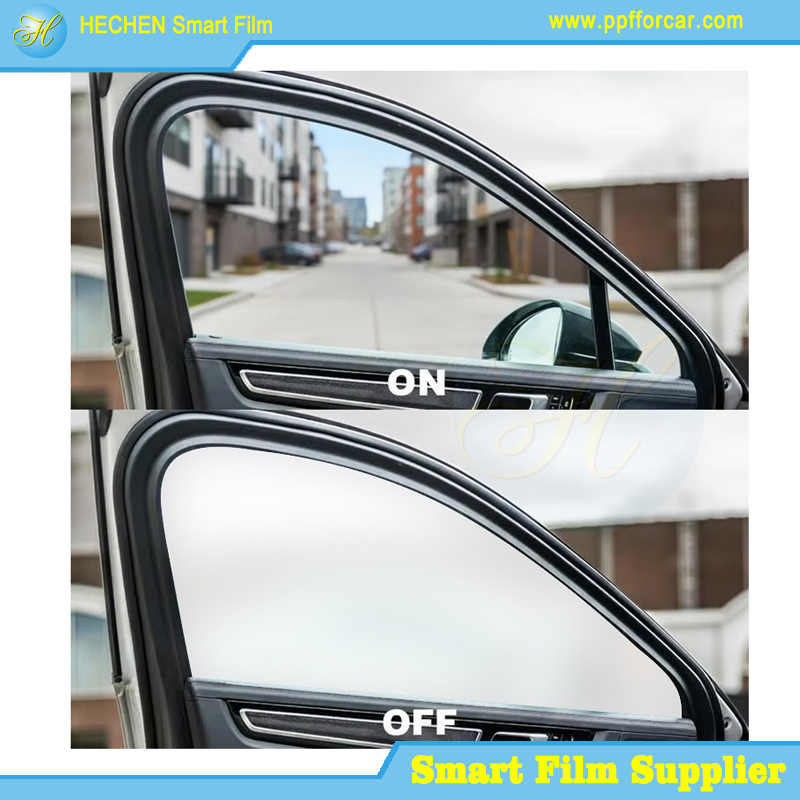
Key Takeaways
Four main PDLC categories in 2026: side window kits, sunroof films, gradient (variable) films, and pre‑laminated glass units. Each serves different needs.
Best side window option for most drivers: Premium automotive kit (USD 280–350) with on‑state haze <2.5%, double edge seal, and -30°C to +90°C range.
Sunroofs require dedicated film rated for ≥105°C and ≥80% IR rejection. Do not use side‑window film on a sunroof.
2026 improvements: Lower haze (1–2%), faster switching (<0.5s), thinner films (0.2 mm), and better edge sealing (UV epoxy).
Gradient PDLC offers stepless dimming but costs 2× binary systems; useful for sunroofs and front windows where full opacity may be illegal.
Pre‑laminated glass units are the most durable and optically clear (haze <1%) but cost USD 1200–2000 for a set – only for long‑term owners.
Always verify temperature specifications – cheap films fail above 80°C. Look for -30°C to +90°C minimum.
Edge sealing is critical: Double‑sealed (UV epoxy + silicone) is the 2026 standard. Single silicone bead is outdated.
Professional installation is strongly recommended – 2026 dust‑free booths and heat‑forming tables ensure bubble‑free results.
No brand recommendations – use the technical checklist (haze, switching speed, temperature range, edge seal) to compare any product objectively.
For more about Best PDLC Film for Cars 2026: Top Options for Windows & Sunroof. Everything you need to know, you can pay a visit to https://www.ppfforcar.com/product/PDLC-Smart-Film/ for more info.