What Is the Difference Between PDLC Film and Electrochromic Glass Comparison
In the realm of modern architecture and interior design, smart glass technologies have revolutionized how we interact with our built environments. These innovative materials allow glass to adapt dynamically to user needs, offering control over privacy, light, and energy efficiency. Among the leading technologies are Polymer Dispersed Liquid Crystal (PDLC) film and electrochromic glass. PDLC film, often referred to as switchable privacy film, enables instant toggling between transparent and opaque states, making it a favorite for privacy-focused applications. Electrochromic glass, on the other hand, provides gradual tinting to manage sunlight and heat, excelling in energy-saving scenarios. As of 2025, with growing emphasis on sustainable buildings and smart offices, understanding the differences between these technologies is crucial for architects, builders, and facility managers.
This comparison article delves into the core mechanisms, advantages, disadvantages, applications, and future prospects of PDLC film and electrochromic glass. By examining their technical specifications, performance metrics, and real-world implementations, we aim to provide a comprehensive guide to help stakeholders decide which technology best suits their projects. Drawing from industry insights and recent advancements, this analysis highlights how PDLC film's rapid privacy switching contrasts with electrochromic glass's subtle light modulation. Whether retrofitting an existing office or designing a new skyscraper, the choice between these smart glass solutions can significantly impact functionality, cost, and user experience.
The evolution of smart glass dates back to the late 20th century, but recent innovations have made them more accessible and efficient. PDLC film, developed in the 1980s, has seen widespread adoption due to its ease of application as a retrofit solution. Electrochromic glass, pioneered around the same time, has gained traction in high-end commercial buildings for its energy-conserving properties. Both technologies operate on electrical stimuli but serve distinct purposes: PDLC for on-demand privacy and electrochromic for adaptive shading. This distinction is key in sectors like healthcare, hospitality, and corporate offices, where balancing natural light with occupant comfort is essential.
As global energy regulations tighten and remote work influences office designs, smart glass adoption is projected to grow by 15% annually through 2030. However, selecting the right technology requires weighing factors like switching speed, installation complexity, and long-term durability. In the following sections, we break down each technology in detail before pitting them head-to-head.
Understanding PDLC Film
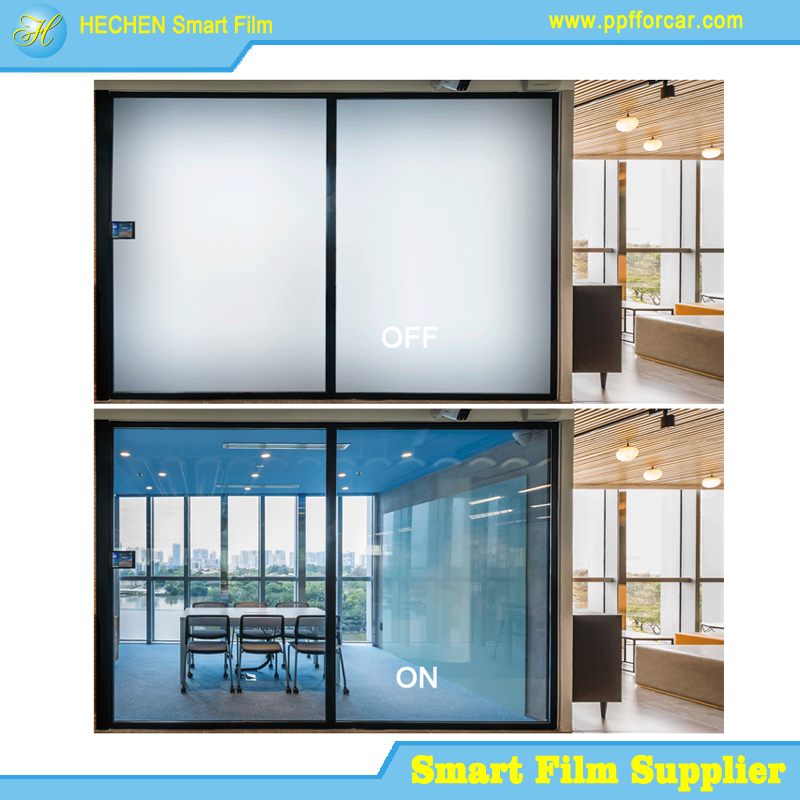
Polymer Dispersed Liquid Crystal (PDLC) film is a versatile smart material that transforms glass from clear to frosted at the flick of a switch. At its core, PDLC consists of liquid crystal droplets dispersed within a polymer matrix, sandwiched between two layers of conductive film, typically polyethylene terephthalate (PET) coated with indium tin oxide (ITO).
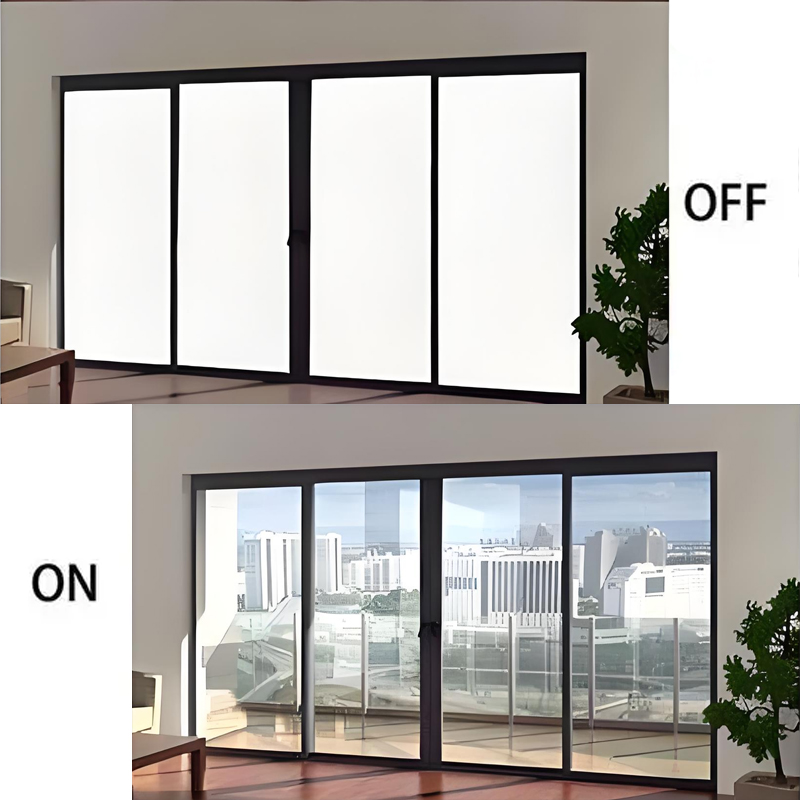
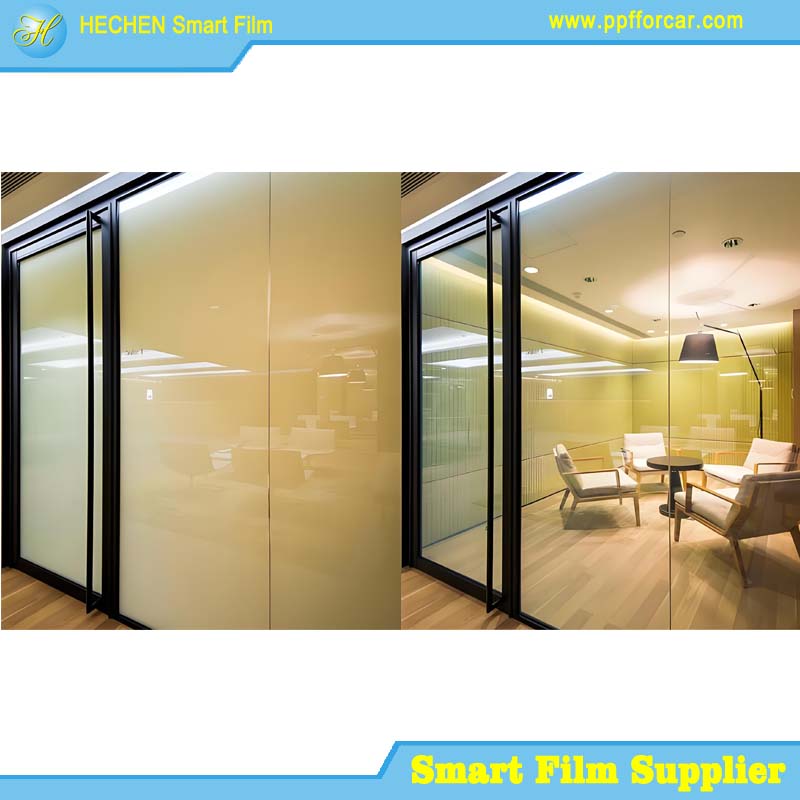
When no voltage is applied, the liquid crystals are randomly oriented, scattering light and creating an opaque, milky appearance that blocks visibility while still allowing some diffuse light to pass through. Applying a low-voltage electric current (usually 24-110V AC) aligns the crystals, enabling light to pass straight through and rendering the glass transparent.
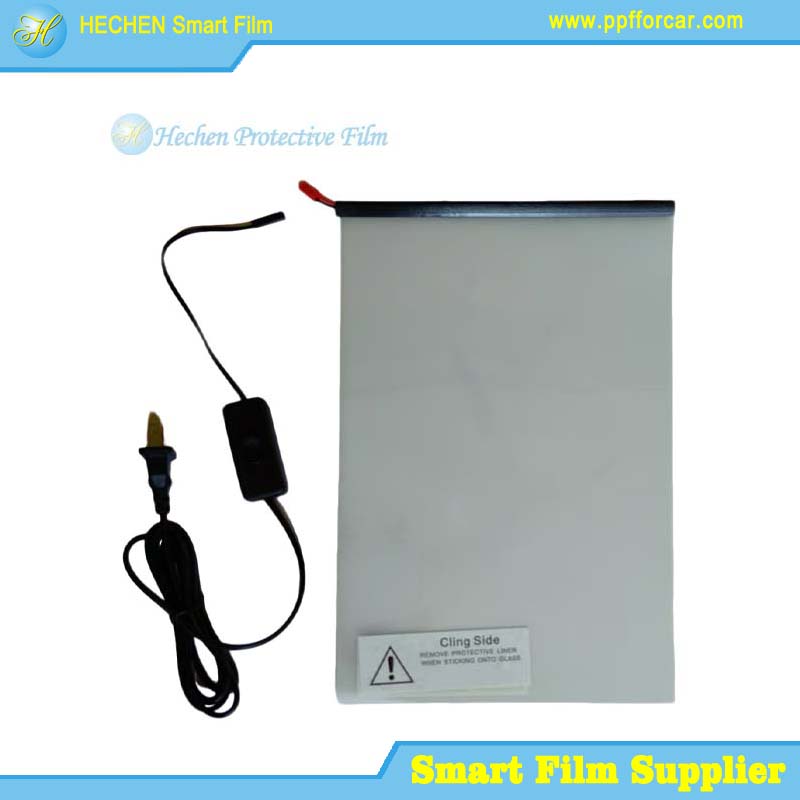
This switching mechanism is remarkably fast, occurring in milliseconds to seconds, making PDLC ideal for applications requiring immediate changes. The film's light transmittance in the clear state can reach up to 80-90%, comparable to regular glass, while in the opaque state, it provides complete privacy without compromising ambient lighting. PDLC is available in two primary forms: as a self-adhesive film for retrofitting existing glass surfaces or as laminated glass where the film is embedded between glass panes during manufacturing.
One of PDLC's standout features is its energy efficiency in operation. Power is only consumed when the glass is in the transparent state; in the default opaque mode, no electricity is needed. This "fail-safe" privacy mode is particularly useful in security-sensitive areas. Additionally, PDLC film blocks up to 99% of UV rays, reducing fading of interior furnishings and protecting occupants from harmful radiation. Installation is straightforward for the film version—simply peel and stick onto clean glass—though professional lamination is recommended for durability.
Over the years, PDLC has evolved with enhancements like color-tinted options and integration with smart home systems for voice or app control. Its low maintenance requirements, with a lifespan exceeding 10-15 years under proper use, make it a cost-effective choice for dynamic interiors. However, it's worth noting that PDLC does not significantly alter heat transmission, focusing primarily on visual privacy rather than thermal control.
Understanding Electrochromic Glass
Electrochromic glass represents a sophisticated approach to dynamic glazing, allowing users to adjust the tint level to control incoming light and heat. This technology involves a multi-layered structure: transparent conductive oxides (like ITO) on glass substrates, an electrochromic layer (often tungsten oxide), an ion conductor (electrolyte), an ion storage layer, and a counter electrode. When a small DC voltage (1-5V) is applied, lithium ions migrate from the storage layer through the electrolyte to the electrochromic layer, causing a reversible chemical reaction that darkens the glass. Reversing the voltage clears the tint.
Unlike PDLC's binary states, electrochromic glass offers variable tinting levels, from fully transparent (up to 60-70% light transmission) to deeply tinted (as low as 1-5%), providing nuanced control over glare and solar heat gain. The transition is gradual, taking seconds to several minutes depending on pane size and ambient temperature, which can be a drawback for instant needs but beneficial for seamless automation.
A key advantage is its bistable nature: once tinted, the glass maintains its state with minimal or no ongoing power, only requiring short pulses for changes. This leads to low energy consumption, often less than 0.5 W/m² during switching. Electrochromic glass excels in blocking infrared radiation, reducing HVAC loads by up to 20-30% in buildings, and it preserves outward views even when tinted, unlike opaque alternatives.
Typically manufactured as insulated glass units (IGUs), electrochromic glass is suited for new constructions or major renovations. Recent advancements include electrochromic films for retrofits, though they are less common and more complex to install than PDLC films. Integration with building management systems (BMS) allows automatic adjustments based on sensors for light, temperature, or occupancy, enhancing smart building capabilities.Durability is strong, with warranties up to 20-30 years, but initial costs and longer lead times (6-12 months) can be hurdles. It's particularly effective in climates with high solar exposure, contributing to LEED certifications through energy savings.
Key Differences Between PDLC Film and Electrochromic Glass
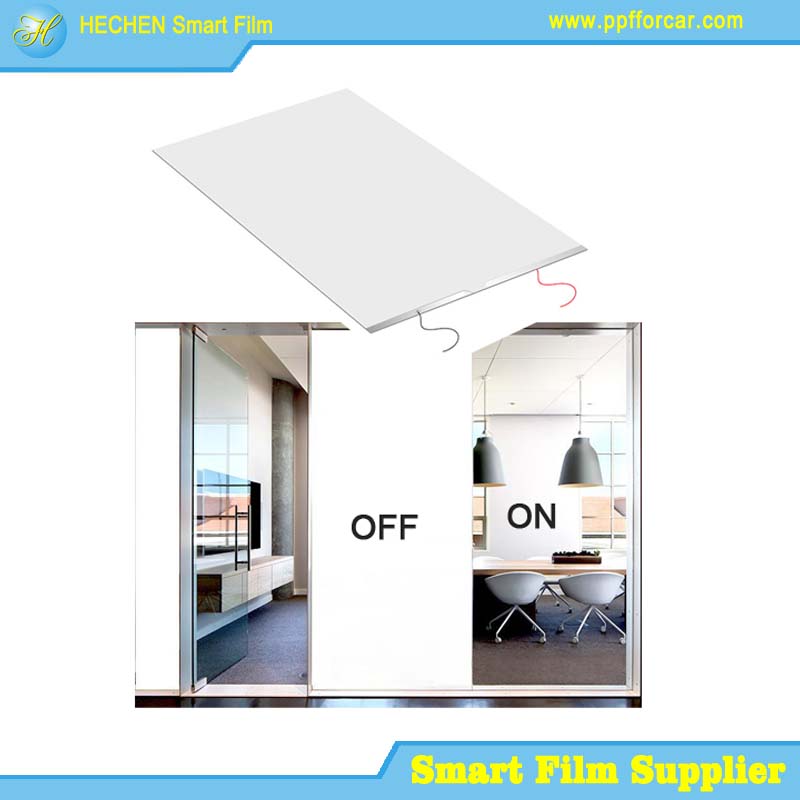
When comparing PDLC film and electrochromic glass, several core differences emerge in technology, performance, and usability. Technologically, PDLC relies on liquid crystal alignment for scattering light, resulting in a frosted opaque state that prioritizes privacy.
Electrochromic uses ion intercalation for color change, producing a tinted transparent state focused on shading and heat control. Switching speed is a stark contrast: PDLC changes instantly (milliseconds), ideal for quick privacy toggles, while electrochromic takes minutes, better for gradual environmental adaptations. Power usage differs too—PDLC consumes energy only in the clear state (about 5-10 W/m²), defaulting to opaque, whereas electrochromic uses minimal power overall but requires it for transitions.
Installation and flexibility vary: PDLC film is retrofit-friendly, with no minimum order quantities and short lead times (around 6 weeks), making it accessible for small projects. Electrochromic glass often demands large minimum orders (e.g., 5000 sq. ft.) and extended lead times (6 months+), suiting large-scale builds. In terms of optical properties, PDLC offers high clarity (80% transmittance) but no variable tinting, while electrochromic provides adjustable shading but may appear uneven during transitions in large panes. Heat and UV management favor electrochromic, which actively reduces solar gain, unlike PDLC's limited thermal impact.These differences influence their integration: PDLC pairs well with interior automation, while electrochromic thrives in exterior facades linked to BMS for energy optimization.
Advantages and Disadvantages
PDLC film's advantages include rapid switching for instant privacy, easy retrofit installation, and low upfront costs for small applications. It enhances aesthetics by eliminating blinds and serves as a projection screen in opaque mode. Disadvantages encompass limited solar control, potential haze in clear state, and higher power use when transparent.
Electrochromic glass boasts superior energy efficiency, reducing cooling costs and maintaining views while tinted. Its variable states allow precise light management, and bistability minimizes ongoing energy draw. Drawbacks include slow switching, high initial costs, and complex installation, plus longer production times.Overall, PDLC excels in versatility and speed, while electrochromic leads in sustainability.
Applications in Real-World Scenarios
PDLC film shines in interior settings like office partitions, conference rooms, hospitals, and bathrooms, where privacy is paramount. For instance, in corporate offices, it creates flexible spaces without permanent walls. Electrochromic glass is preferred for exteriors, such as building facades, skylights, and airports, optimizing daylight in structures like The Edge in Amsterdam. Hybrid approaches combine both for comprehensive solutions.
Cost and Economic Considerations
PDLC film starts at $50-100 per sq. ft., with quick ROI through privacy enhancements. Electrochromic glass costs $100-300 per sq. ft. but offers greater savings via energy reductions (up to 30%). Long-term, electrochromic's durability yields better value in large projects.
Future Trends and Innovations
By 2025, advancements include faster electrochromic films and PDLC with integrated sensors. Hybrid systems and AI integration promise smarter, more efficient glass.
Conclusion
PDLC film offers quick privacy, while electrochromic glass provides energy-efficient shading. Choose based on needs: PDLC for interiors, electrochromic for exteriors. Both advance sustainable design.
For more about the PDLC film vs electrochromic glass comparison, you can pay a visit to Hechen PDLC Smart Film Manufacturers for more info.