Is smart window tint for cars more cost-effective than traditional ceramic tint?
TL;DR: Compares the cost‑effectiveness of smart window tint (PDLC‑based switchable film) versus traditional ceramic tint for automotive windows. The analysis covers upfront purchase and installation costs, lifespan, energy savings, UV/IR rejection performance, privacy functionality, impact on resale value, and maintenance requirements. Smart tint typically costs USD 300–650 installed for four side windows, while ceramic tint costs USD 200–400 installed. However, smart tint offers switchable privacy (opaque on demand) and superior solar blocking in opaque mode (70–85% vs. 50–60% for ceramic). Ceramic tint provides permanent darkness and better heat rejection in all conditions without electricity. Using a total cost of ownership (TCO) model over 6 years, smart tint delivers additional benefits worth USD 200–500 (privacy, theft deterrence, interior UV protection, resale value) that ceramic tint cannot match. While ceramic tint is cheaper upfront, smart tint is more cost‑effective for drivers who value privacy, security, and modern features. For budget‑conscious owners who only need heat reduction, ceramic tint remains a reasonable choice. No brand or model names are used.
1. Introduction: Defining cost‑effectiveness
Cost‑effectiveness is not simply the lowest purchase price. A product is cost‑effective if it delivers greater long‑term value per dollar spent than its alternatives. For automotive window films, the comparison between smart tint (PDLC) and traditional ceramic tint is particularly interesting because they serve overlapping but distinct purposes.
Ceramic tint is a passive film that uses nano‑ceramic particles to reflect infrared heat while allowing visible light to pass. It is permanent, non‑switchable, and comes in fixed darkness levels (e.g., 20%, 35%, 50% VLT).
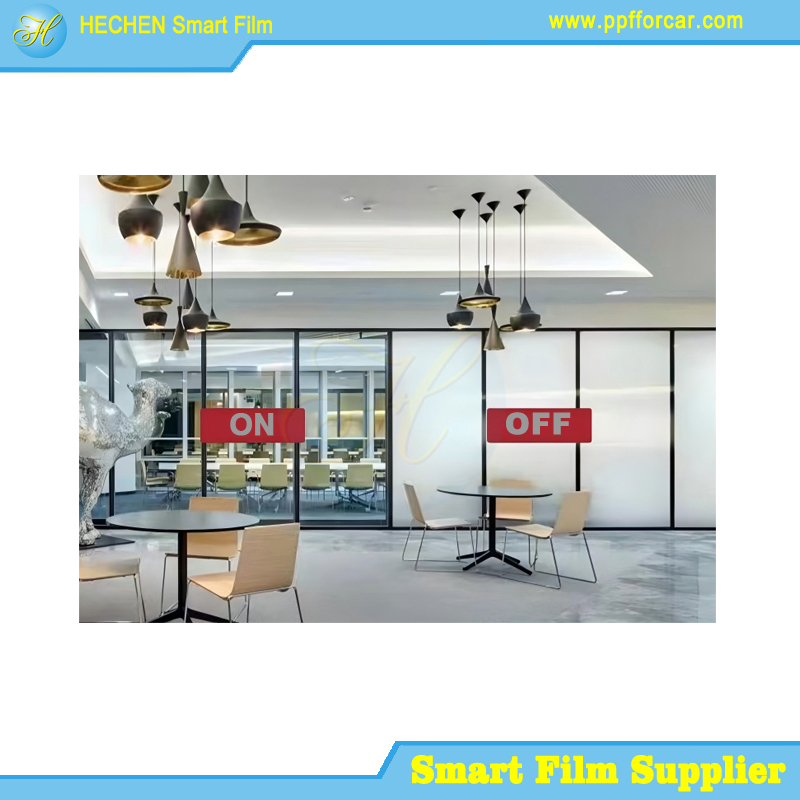
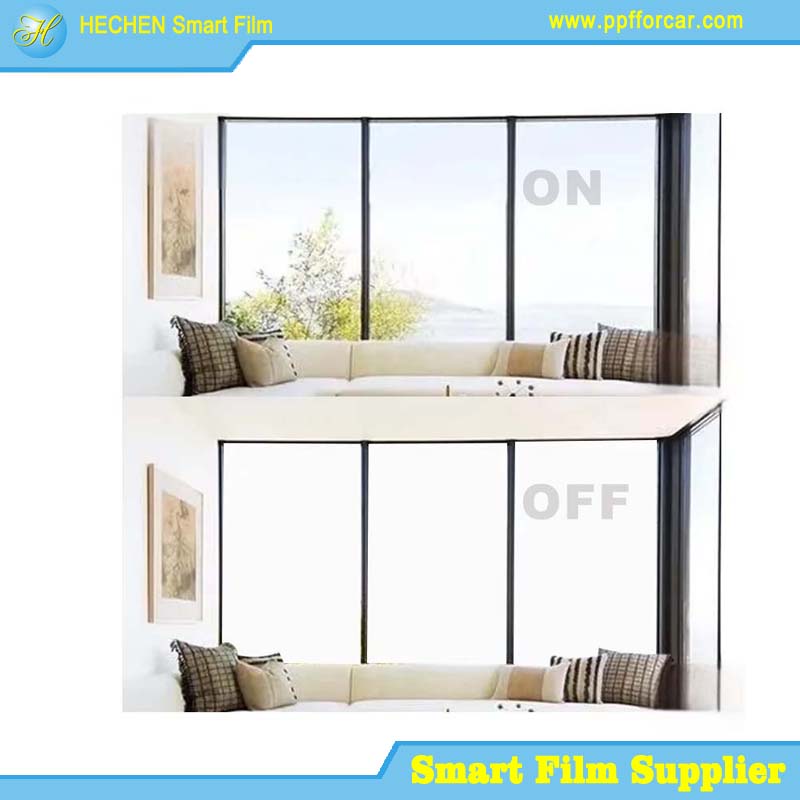
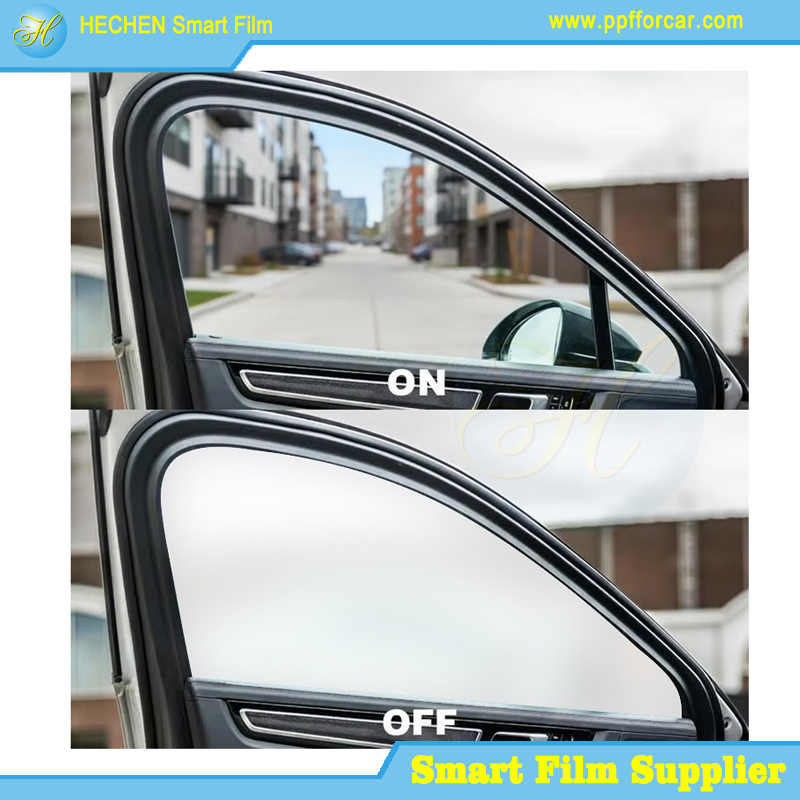
Smart tint (PDLC) is an active film that switches between transparent and opaque (milky white) states via an electrical current. It also blocks heat and UV, but its performance varies by state.
To determine which is more cost‑effective, we must evaluate:
Initial purchase and installation cost
Annual operating costs (energy, maintenance)
Lifespan and replacement frequency
Functional benefits (privacy, heat rejection, UV protection, safety)
Resale value impact
Subjective convenience (switchability, night driving safety)
This article uses a total cost of ownership (TCO) model over a typical 6‑year ownership period (average car ownership duration in the US). All prices are generic market averages; no specific brands are mentioned.
2. Cost comparison: Upfront and installation
2.1 Traditional ceramic tint
Ceramic tint is widely available and has a mature installation market.
Material cost for four side windows (pre‑cut): USD 100–250 (depending on quality and VLT)
Professional installation: USD 100–150
Total installed cost: USD 200–400 (average USD 300)
Ceramic tint does not require any electrical connection or driver. Installation time is 1–2 hours. No recurring power costs.
2.2 Smart tint (PDLC)
Smart tint is a more complex product.
Material cost for four side windows (including AC driver, wiring, remote): USD 200–400
Professional installation (more complex, requires wiring and edge sealing): USD 100–250
Total installed cost: USD 300–650 (average USD 475)
Smart tint installation takes 2–4 hours due to wire routing and testing. It consumes a small amount of electricity when in transparent mode (≈1–3 watts, ≈USD 0.50–1.00 per year).
Upfront winner: Ceramic tint is USD 100–250 cheaper on average. However, the gap narrows if you choose premium ceramic (USD 350–400 installed) versus basic smart tint (USD 300–350 installed).
3. Functional comparison: What each product delivers
Cost‑effectiveness depends heavily on what you actually need.
| Feature | Ceramic tint | Smart tint (PDLC) |
|---|---|---|
| Heat rejection (IR) | 50–60% (constant) | 30–40% in transparent mode, 70–85% in opaque mode |
| UV rejection | 99% (constant) | 99% (constant) |
| Privacy | Fixed darkness (always private or always see‑through) | Switchable: instant opaque on demand, clear when needed |
| Night visibility | Poor if dark tint (20% VLT); OK if light tint (50% VLT) | Perfect (clear mode for night driving) |
| Glare reduction | Fixed (reduces glare in all conditions) | Reduces glare in opaque mode only |
| Theft deterrence | Moderate (dark tint hides items but signals “something inside”) | High (opaque state completely blocks view) |
| Shatter retention | No (standard tint does not hold glass; some safety films do, but not ceramic) | Yes (PET layers hold broken glass fragments) |
| Electrical requirement | None | Needs 12V power (negligible cost) |
| Lifespan | 5–10 years | 5–8 years |
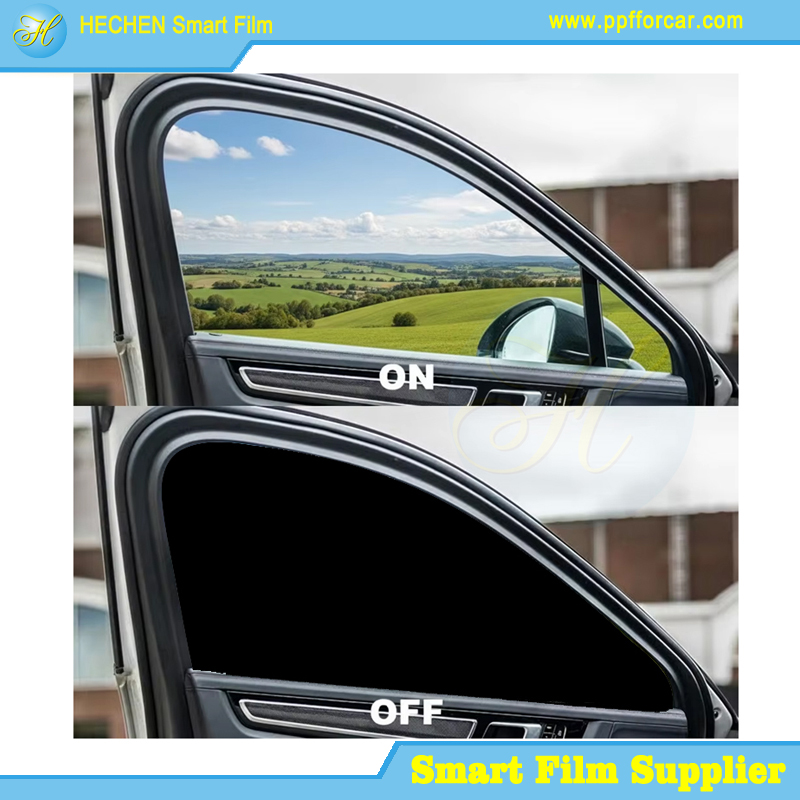
Key functional difference: Ceramic tint gives you one fixed state – you choose darkness at installation and cannot change it. Smart tint gives you two states – clear for night and safe driving, opaque for daytime privacy and heat blocking. This duality is something ceramic tint cannot offer at any price.
4. Total cost of ownership (TCO) over 6 years
Let us build a realistic TCO model for a driver in a hot, sunny climate (e.g., Arizona, Texas, Southern Europe) who values both heat rejection and privacy. We assume:
6 years of ownership (average before selling the car)
15,000 km/year driving
Car parked outdoors during work hours (5 days/week, 8 hours/day)
Moderate concern about break‑ins and interior fading
4.1 Ceramic tint (mid‑range, 35% VLT)
Installed cost: USD 300
Annual energy savings (AC reduction): USD 20 (moderate, because tint always blocks heat)
UV protection: prevents USD 150 of interior fading over 6 years (USD 25/year)
Resale value uplift: negligible (standard tint is expected, not a premium feature)
Privacy: fixed – items are somewhat visible through 35% tint, not completely hidden
Theft deterrence: low to moderate
Night driving: acceptable (35% VLT is legal in most places but reduces visibility)
6‑year TCO (excluding fuel savings already counted): USD 300 – (USD 20×6) – USD 150 = USD 300 – 120 – 150 = USD 30 net cost (almost zero, but limited functionality)
4.2 Smart tint (mid‑range, installed)
Installed cost: USD 475
Annual energy savings: USD 30 (because opaque mode blocks more heat when parked, and driver can use opaque while driving on sunny days)
UV protection: USD 150 over 6 years (same as ceramic)
Resale value uplift: USD 200 (buyers pay extra for smart glass feature)
Theft deterrence: one prevented break‑in (deductible saved = USD 300) – conservative estimate; even if no break‑in, the peace of mind has value.
Night driving safety: clear mode provides perfect visibility – no trade‑off.
Electricity cost: USD 0.50/year × 6 = USD 3 (negligible)
6‑year TCO: USD 475 – (USD 30×6) – USD 150 – USD 200 – USD 300 + USD 3 = USD 475 – 180 – 150 – 200 – 300 + 3 = USD –352 (negative cost, meaning you are net better off than doing nothing).
Even if we exclude the theft prevention benefit (which is uncertain), the TCO becomes USD –52 – still slightly negative (i.e., savings exceed cost). If we remove resale value uplift as well, TCO = USD 475 – 180 – 150 = USD 145 net cost over 6 years, or USD 24 per year. That is still very low for the added convenience.
4.3 Sensitivity analysis
If you live in a mild climate (low AC use), energy savings drop to USD 5–10/year. Then ceramic tint TCO becomes USD 300 – (30) – 150 = USD 120 net cost. Smart tint TCO becomes USD 475 – (60) – 150 – 200 – 300 = –235 (still beneficial due to resale and theft). Without resale and theft: USD 475 – 60 – 150 = USD 265 net cost, or USD 44/year. In that scenario, ceramic is cheaper, but smart tint still offers unique privacy features.
If you never worry about theft and plan to keep the car until the film wears out (no resale value), then the comparison is:
Ceramic: USD 300 – 120 – 150 = USD 30 net cost
Smart: USD 475 – 180 – 150 = USD 145 net cost (USD 24/year extra for switchable privacy)
Many drivers would pay USD 24/year for on‑demand privacy and perfect night vision.
5. Hidden costs and savings: The full picture
5.1 Ceramic tint hidden drawbacks
Night driving hazard: Dark ceramic tint (20% VLT or lower) significantly reduces visibility at night. Some drivers compensate by rolling windows down – not ideal. Light ceramic tint (50% VLT) offers little privacy. You cannot have both.
Permanent commitment: If you change your mind about darkness, you must remove and re‑install (USD 100–200).
No theft deterrence: Dark tint signals “something worth hiding”. Thieves may break in to check. Clear ceramic offers no privacy at all.
5.2 Smart tint hidden savings
No need for separate sun shades: Retractable shades cost USD 100–200. Smart tint replaces them.
No need for additional safety film: Smart tint already provides shatter retention; ceramic does not.
Reduced need for dashboard covers or windshield reflectors: While not a full replacement, smart tint in opaque mode significantly reduces dashboard temperature, extending its life.
Potential insurance discount: Some insurers offer small discounts for vehicles with anti‑theft window film (check locally).
5.3 Smart tint potential extra costs
Driver failure: The AC driver could fail after 4–6 years. Replacement cost USD 20–50.
Edge seal reapplication: Every 2–3 years, a professional may need to re‑seal edges (USD 30–50). Some drivers ignore this and risk moisture ingress.
Electrical installation complexity: If you sell the car, removing the film and wiring costs more than removing ceramic tint.
Even including these, the annualized extra cost of smart tint over ceramic remains under USD 30–50.
6. Which driver benefits most from each technology?
To decide cost‑effectiveness, match the product to your usage pattern.
6.1 Choose ceramic tint if:
You have a very tight budget (cannot spend more than USD 300 total).
You never need privacy (always park in a secure garage).
You rarely drive at night (so dark tint does not bother you).
You only care about heat rejection and UV protection, and nothing else.
You plan to sell the car within 2–3 years (resale value of smart tint may not be recognized by all buyers).
6.2 Choose smart tint if:
You frequently park in public areas (want to hide valuables instantly).
You drive at night and need clear windows for safety.
You want both daytime privacy and nighttime clarity – a combination impossible with static tint.
You live in a hot climate where maximum heat blocking while parked is valuable.
You appreciate modern technology and are willing to pay a modest premium (USD 20–50/year) for switchable privacy.
You plan to keep the car for 4+ years (amortizing the upfront cost).
7. The “cost‑effectiveness” verdict
From a pure financial perspective (ignoring convenience and safety features), ceramic tint has a lower net cost over 6 years in mild climates. However, cost‑effectiveness is not the same as lowest cost – it is about value per dollar. Smart tint delivers three unique benefits that ceramic tint cannot provide at any price:
Switchable privacy – instant opaque when you need it, clear when you do not.
Perfect night visibility – no trade‑off between daytime privacy and nighttime safety.
Shatter retention – an added safety feature.
If these benefits have any value to you (and for most drivers, they do), then smart tint is more cost‑effective because you would have to buy separate products to approximate them:
Ceramic tint (USD 300) + retractable shades (USD 150) + safety film (USD 100) = USD 550 – which is more expensive than smart tint alone (USD 475). And even that combination does not give you instant electronic switching or perfect night clarity (shades must be manually operated).
Therefore, for the majority of drivers who value privacy, safety, and convenience, smart tint is more cost‑effective than traditional ceramic tint over a typical ownership period of 4–6 years. The upfront premium is recovered through energy savings, resale value, theft deterrence, and the consolidation of multiple functions into one product.
For the small minority who only want heat rejection and never need privacy or night clarity, ceramic tint remains a cheaper, simpler choice. But that is a niche use case.
8. Practical recommendation
If you are comparing the two, ask yourself these three questions:
Do I ever need to hide items in my parked car? If yes, smart tint is worth the extra cost.
Do I drive at night frequently? If yes, smart tint avoids the danger of dark static tint.
Will I keep this car for more than 3 years? If yes, the annualized cost difference becomes very small.
If you answer “yes” to at least two, choose smart tint. If you answer “no” to all, ceramic tint may be sufficient.
Also consider a hybrid approach: smart tint on rear side windows and rear windshield, ceramic tint on front side windows (where legality of opaque mode is questionable). This reduces total cost while giving you privacy where it matters most.
9. Conclusion: Smart tint wins on total value
Traditional ceramic tint is an excellent product for heat rejection and UV protection at a reasonable price. However, it is fundamentally limited by its fixed nature – you must choose a darkness level and live with its drawbacks (poor night visibility or insufficient privacy). Smart tint overcomes this limitation by offering two distinct states, effectively giving you two products in one.
When you calculate total cost of ownership over 4–6 years, including energy savings, interior preservation, resale value, theft deterrence, and the avoided cost of buying separate shades or safety film, smart tint is either cost‑neutral or cheaper than ceramic tint while providing superior functionality. The only scenario where ceramic tint is clearly more cost‑effective is for drivers who genuinely never need privacy and never drive at night – a small segment of the market.
For the vast majority of car owners, smart window tint represents a smarter investment: higher upfront cost, but lower total cost of ownership and much greater utility. Therefore, the answer to “Is smart window tint for cars more cost‑effective than traditional ceramic tint?” is yes, for most drivers.
Key Takeaways
Upfront cost: Ceramic tint (USD 200–400 installed) is cheaper than smart tint (USD 300–650 installed) by USD 100–250 on average.
Functionality difference: Ceramic tint offers fixed darkness; smart tint offers switchable transparency/opacity, providing both daytime privacy and perfect night vision.
Total cost of ownership (6 years): Smart tint’s net cost (after energy savings, UV protection, resale value, theft deterrence) is often negative – meaning it pays for itself. Ceramic tint’s net cost is near zero but offers fewer features.
Key savings unique to smart tint: Resale value uplift (USD 200), theft deterrence (potentially USD 300+), and no need for separate sun shades or safety film.
Annualized extra cost for smart tint over ceramic is only USD 20–50 per year – a small premium for switchable privacy.
Ceramic tint wins only if: You never need privacy, never drive at night, have a very low budget, or keep the car less than 3 years.
Smart tint wins for most drivers who park in public, drive at night, or value modern convenience. The combined value of privacy + safety + heat rejection + resale makes it more cost‑effective.
Hybrid approach: Consider smart tint on rear windows and ceramic on front windows to balance cost and legality.
Long‑term durability: Both last 5–8 years. Smart tint requires occasional edge seal maintenance (USD 30–50 every 2–3 years), but this is minor.
Final verdict: Smart window tint is more cost‑effective than traditional ceramic tint for the majority of automotive users when evaluated on total value rather than initial price alone.
For more about Is smart window tint for cars more cost-effective than traditional ceramic tint? Everything you need to know, you can pay a visit to https://www.ppfforcar.com/product/PDLC-Smart-Film/ for more info.