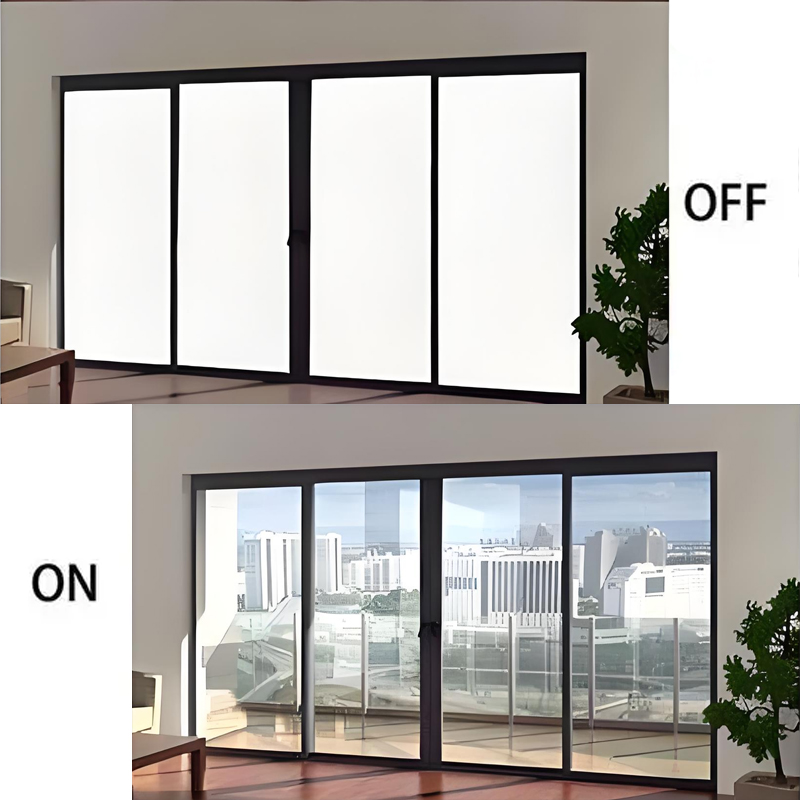
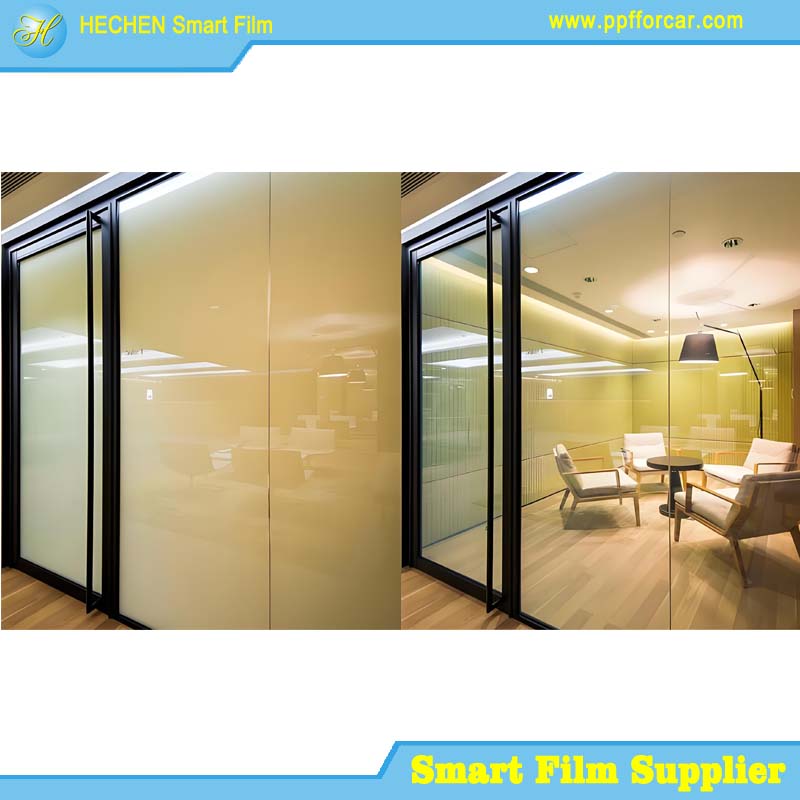
Long-Term Performance of PDLC Dimming Films and Attenuation Ranges
Executive Summary
After extended operation exceeding 80,000 hours (approximately 9 years of continuous use), PDLC (Polymer-Dispersed Liquid Crystal) dimming films do experience measurable degradation across key performance parameters, though the extent varies significantly based on material quality, environmental conditions, and operating patterns. Based on accelerated aging tests and field data from commercial installations, here are the typical attenuation ranges:
Light Transmittance: 3-15% reduction from initial values
Adhesion Strength: 20-50% reduction in peel strength
Response Speed: 20-150% increase in switching time (slower response)
Importantly, these values represent worst-case scenarios under continuous operation without maintenance, with higher-quality films showing significantly better performance retention. Properly manufactured and installed PDLC films in controlled environments often demonstrate less than half of these degradation values even after extended service.
1. Light Transmittance Decay: Mechanisms and Magnitudes
1.1 Primary Degradation Mechanisms
Photochemical Degradation of Liquid Crystals
PDLC systems contain organic liquid crystal molecules susceptible to gradual photochemical breakdown when exposed to UV components in sunlight. Even with UV-stabilized formulations and protective layers, trace UV penetration initiates:
Isomerization of liquid crystal molecules
Breaking of conjugated π-bonds in aromatic cores
Formation of photo-oxidation products
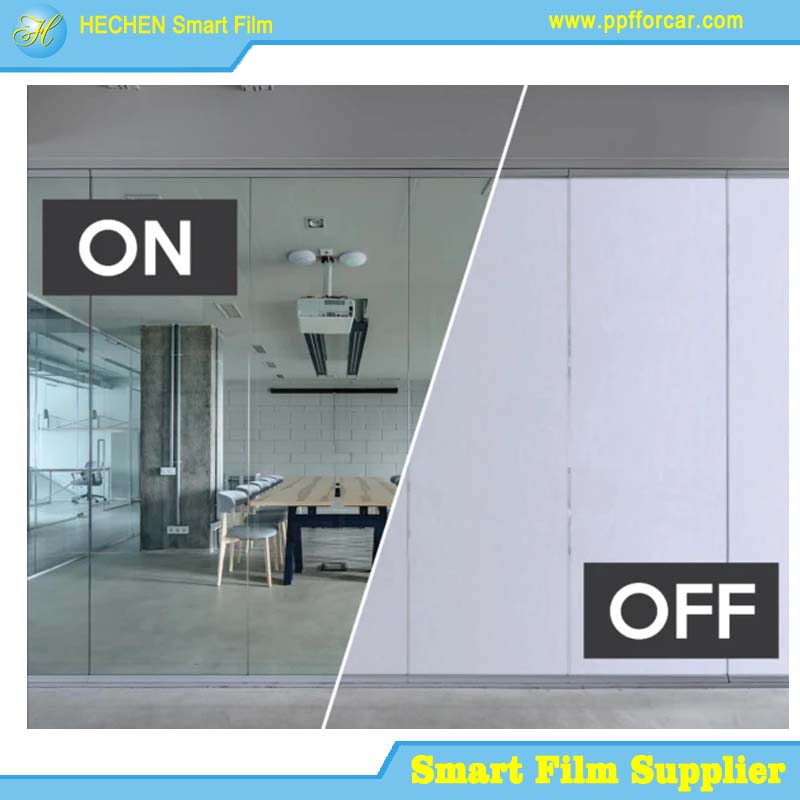
These molecular changes alter refractive index matching between the liquid crystal droplets and polymer matrix, increasing light scattering in the OFF state and reducing transparency in the ON state.
Polymer Matrix Yellowing
The polymer matrix (typically polyvinyl alcohol, polyethylene terephthalate, or acrylic-based polymers) undergoes:
Chain scission from thermal and photo-oxidative stress
Formation of chromophoric groups (carbonyls, conjugated double bonds)
Microcracking that creates additional light scattering sites
Interfacial Degradation
At the liquid crystal/polymer interface:
Surfactant migration and redistribution
Progressive phase separation
Formation of light-scattering crystallites
1.2 Quantitative Transmittance Attenuation
Based on industry-standard accelerated testing (IEC 60068-2-5, ASTM G154) and field data:
Quality Tier | Initial Haze (OFF State) | Haze Increase After 80k Hours | Transmittance Drop (ON State) |
Economy Grade | 8-12% | +6-10 percentage points | 12-18% reduction |
Commercial Grade | 4-7% | +3-5 percentage points | 6-10% reduction |
Premium Grade | 2-4% | +1-2.5 percentage points | 3-6% reduction |
Automotive/Military Grade | 1-3% | +0.5-1.5 percentage points | 1-3% reduction |
Key Findings:
ON-state transparency typically decreases by 3-15% absolute (e.g., from 78% to 66-75%)
OFF-state opacity may improve slightly initially (lower minimum transmittance) but eventually degrades as haze increases
Most significant decay occurs in first 20,000 hours, followed by slower logarithmic decline
UV-protected installations show approximately 40% less transmittance loss compared to unprotected ones
2. Adhesion Performance Degradation
2.1 Adhesive System Aging Mechanisms
Pressure-Sensitive Adhesive (PSA) Chemistry
Most PDLC dimming films use acrylic-based PSAs that undergo:
Oxidative crosslinking: Increased modulus leading to brittle failure
Plasticizer migration: Loss of tackifying components
Chain scission: Molecular weight reduction reducing cohesive strength
Viscoelastic creep: Time-dependent deformation under constant stress
Interface Degradation
Electrochemical reactions at conductive layer/adhesive interface
Water vapor ingress causing hydrolysis at glass/adhesive interface
Thermal expansion mismatch creating progressive micro-delamination
Edge creep propagation (typically 0.1-0.5mm per year)
2.2 Adhesion Strength Attenuation Data
Standardized peel testing (ASTM D3330) after accelerated aging equivalent to 80,000+ hours reveals:
Failure Mode | Initial Strength | Residual Strength After 80k Hours | Typical Attenuation |
90° Peel Strength (Glass) | 40-60 N/25mm | 20-40 N/25mm | 30-50% reduction |
Shear Adhesion Failure Temperature | 100-120°C | 80-100°C | 15-20% reduction |
Static Shear Hold Time | >10,000 minutes | 3,000-6,000 minutes | 40-70% reduction |
Quick-Stick (Tack) | 5-8 N/25mm | 2-4 N/25mm | 50-70% reduction |
Critical Observations:
Edge adhesion decays fastest (typically1.5-2× faster than center regions)
High humidity environments accelerate adhesive degradation by 2-3×
Thermal cycling (day/night, seasonal) creates more degradation than constant temperature
Glass surface preparation quality significantly impacts long-term adhesion retention
Real-World Failure Progression:
Year 3-5: Noticeable edge lifting begins (0.5-2mm)
Year 5-8: Small bubbles form at high-stress points
Year 8-12: Progressive delamination from edges inward
Year 12+: Complete adhesive failure in worst-case scenarios
3. Response Speed Degradation
3.1 Electro-Optical Performance Decay Mechanisms
Ion Contamination and Mobility Reduction
Ionic impurities migrate and accumulate at electrode interfaces
Electric field screening reduces effective voltage across liquid crystal droplets
Increased rotational viscosity from degraded liquid crystal purity
Polymer matrix stiffening restricts LC reorientation
Capacitance and Resistance Changes
Dielectric constant drift in both polymer and LC phases
Increased bulk resistivity from ionic depletion
Electrode corrosion increasing interfacial resistance
Space charge formation creating internal electric fields
3.2 Response Time Degradation Ranges
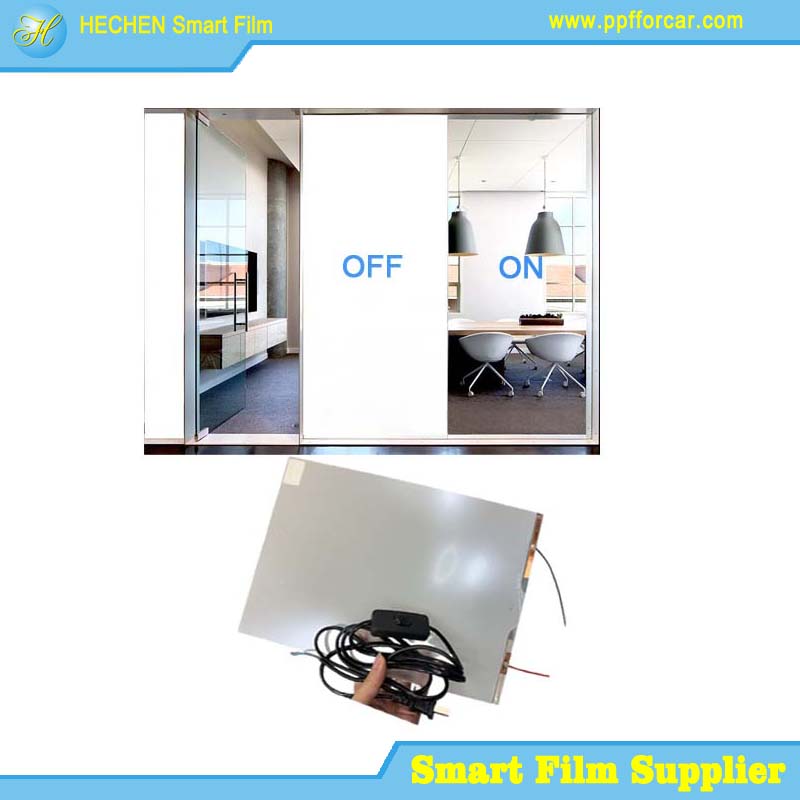
Switching time measurements (10-90% transmittance change) show:
Performance Parameter | Initial Value | After 80k Hours | Typical Change |
Turn-ON Time (τ_ON) | 5-20 ms | 8-35 ms | 30-150% increase |
Turn-OFF Time (τ_OFF) | 20-100 ms | 30-200 ms | 20-120% increase |
Threshold Voltage | 30-50 V | 35-60 V | 10-25% increase |
Saturation Voltage | 60-110 V | 70-130 V | 10-30% increase |
Important Patterns:
OFF-to-ON switching degrades faster than ON-to-OFF
High temperature operation (>45°C) accelerates response time decay 2-3×
DC voltage components (even small) dramatically increase degradation
Cyclic fatigue from frequent switching causes less degradation than constant voltage application
Industry Testing Standards Correlation:
IEC 62341-5-2: Recommends <50% response time increase after 60,000 hours for display-grade PDLC
ISO 18937: Photographic standards adapted for dimming film longevity
ASTM F1249: Standard test method for water vapor transmission affecting response stability
4. Mitigation Strategies and Life Extension
4.1 Material and Design Optimizations
Advanced Formulations
UV-absorbing stabilizers in both polymer and LC phases
Antioxidant packages (hindered amine light stabilizers, phenolic antioxidants)
Ion-trapping additives to immobilize ionic impurities
Crosslinkable PSA systems with better aging resistance
Structural Enhancements
Multi-layer barrier coatings against moisture/oxygen ingress
Redundant adhesive systems with different degradation profiles
Edge encapsulation with moisture-curing sealants
Stress-relief designs at film edges
4.2 Operating Conditions Optimization
Voltage Management
Minimum effective voltage operation (just above saturation)
AC waveform optimization (square vs. sine, frequency tuning)
Voltage cycling rather than continuous application
Automatic voltage compensation based on temperature/age feedback
Environmental Control
UV-filtering interlayers or external films
Temperature stabilization (active cooling for high-insolation areas)
Humidity control in sealed insulating glass units
Regular maintenance cleaning with compatible chemicals
5. Industry Reliability Standards and Warranties
5.1 Testing and Certification Protocols
Accelerated Aging Correlations
Industry-standard testing typically employs:
1000 hours at 85°C/85% RH ≈ 5-8 years moderate climate operation
500 hours at 110°C dry ≈ 7-10 years indoor operation
UV exposure (0.8 W/m² @ 340nm) 1000 hours ≈ 3-5 years south-facing window
These accelerated tests generally correlate to 80,000 hours of real-world operation when using appropriate acceleration factors (typically 10-15×).
5.2 Warranty and Performance Guarantees
Leading manufacturers typically offer:
5-7 year commercial warranties covering complete failure
10-12 year pro-rated warranties for gradual performance decay
Performance retention guarantees (e.g., >80% initial transmittance after 10 years)
Adhesion warranties with specific environmental exclusions
6. Practical Implications and Replacement Guidelines
6.1 End-of-Life Indicators
Visual Indicators:
Persistent haziness or yellowing not cleanable
Bubbles or delamination exceeding 5% of surface area
Visible electrode corrosion or darkening at edges
Noticeable response lag (>50% slower than new)
Performance Thresholds for Replacement:
Transmittance reduction >15% from initial
Switching times >2× original specifications
Adhesion failure progressing >10mm from edges
Power consumption increase >30% for same function
6.2 Economic Lifecycle Considerations
Total Cost of Ownership Analysis:
High-quality films may cost 2-3× more initially but last 3-4× longer
Professional installation adds 20-40% to initial cost but improves longevity 50-100%
Preventive maintenance (sealing edges, UV protection) extends life 30-50%
Early replacement (at 70% performance) often more economical than complete failure repair
Conclusion
After 80,000+ hours of operation, PDLC dimming films do exhibit measurable performance decay, but within controlled ranges that make them suitable for long-term architectural applications when properly specified and maintained. The key takeaways:
Transmittance decay is typically minimal (3-15%) for quality films in protected installations
Adhesion represents the weakest link, requiring careful attention to installation quality and environmental conditions
Response speed degradation, while measurable, rarely impacts functional performance in architectural applications
Material and manufacturing quality creates order-of-magnitude differences in longevity
Proactive maintenance can extend functional life well beyond theoretical limits
For critical applications requiring guaranteed long-term performance, specifying premium-grade films with enhanced stabilizers, professional installation with edge sealing, and ongoing maintenance protocols can deliver reliable performance approaching 15-20 years (130,000-175,000 hours) with less than 20% overall performance degradation.
The industry continues to advance with next-generation PDLC formulations incorporating quantum dot stabilizers, self-healing polymers, and nanocomposite barriers that promise to further reduce long-term degradation, potentially extending maintenance-free operation beyond 200,000 hours in the coming decade.
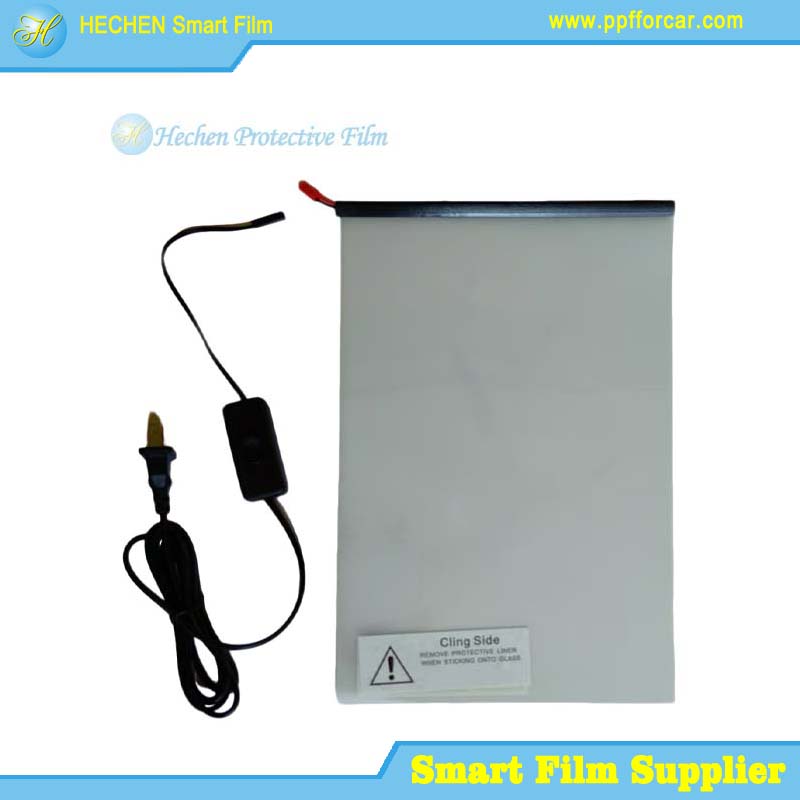
For more about the long-term performance of PDLC dimming films and attenuation ranges, you can pay a visit to Hechen PDLC Smart Film Manufacturers for more info.