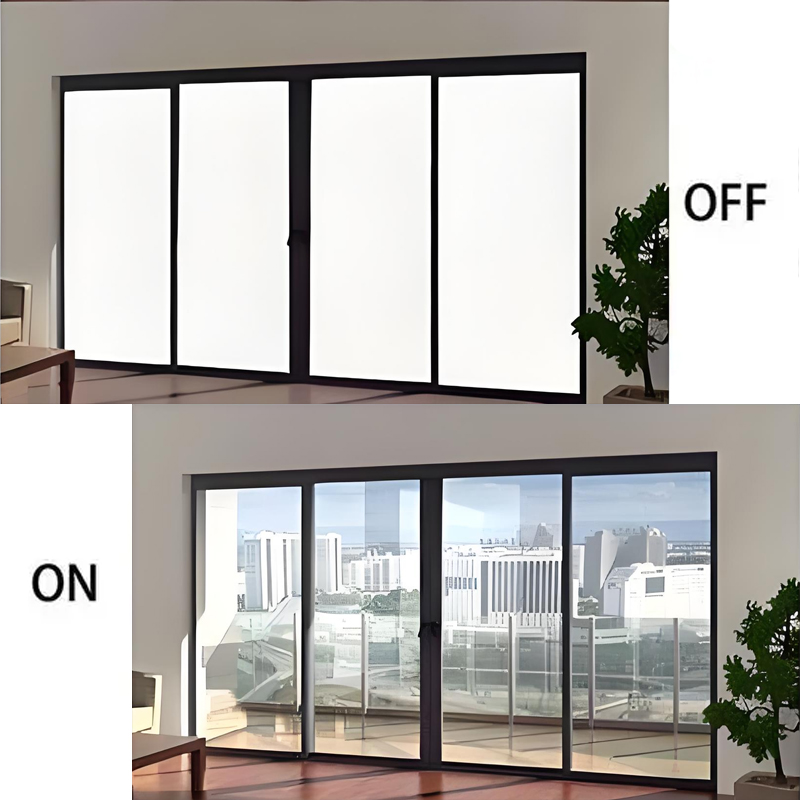
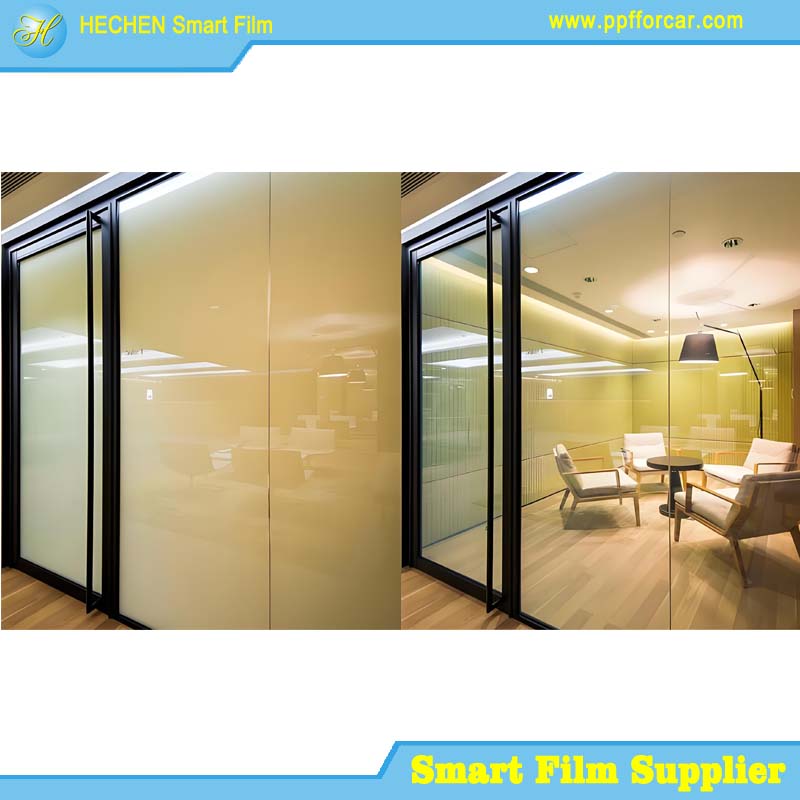
Ordinary Glass Can Be Instantly Transformed into Smart Dimmable Glass
In an era where smart homes and offices are no longer futuristic dreams but everyday realities, the boundaries between ordinary and extraordinary are blurring faster than ever. Imagine peering through your living room window or office partition, only to flip a switch and watch the glass seamlessly shift from crystal clear to a soft, frosted veil of privacy. No hammers, no replacements, no messy renovations—just an instant transformation. This isn't science fiction; it's the power of smart dimmable glass, and remarkably, it can be achieved by retrofitting everyday glass with a simple adhesive film. Welcome to the world of switchable smart film, a technology that's revolutionizing how we interact with our environments.
Smart dimmable glass, often powered by Polymer Dispersed Liquid Crystal (PDLC) technology, allows users to control light transmission and opacity at will. But what makes this particularly exciting is its accessibility: ordinary glass—be it a window pane, shower door, or conference room divider—can be upgraded in minutes, without the need for costly overhauls. This article delves into the mechanics of this innovation, explores its applications across various sectors, weighs its benefits against traditional solutions, and peers into a future where such transformations are as commonplace as installing a light bulb. By the end, you'll see why smart film isn't just a gadget—it's a gateway to smarter living.
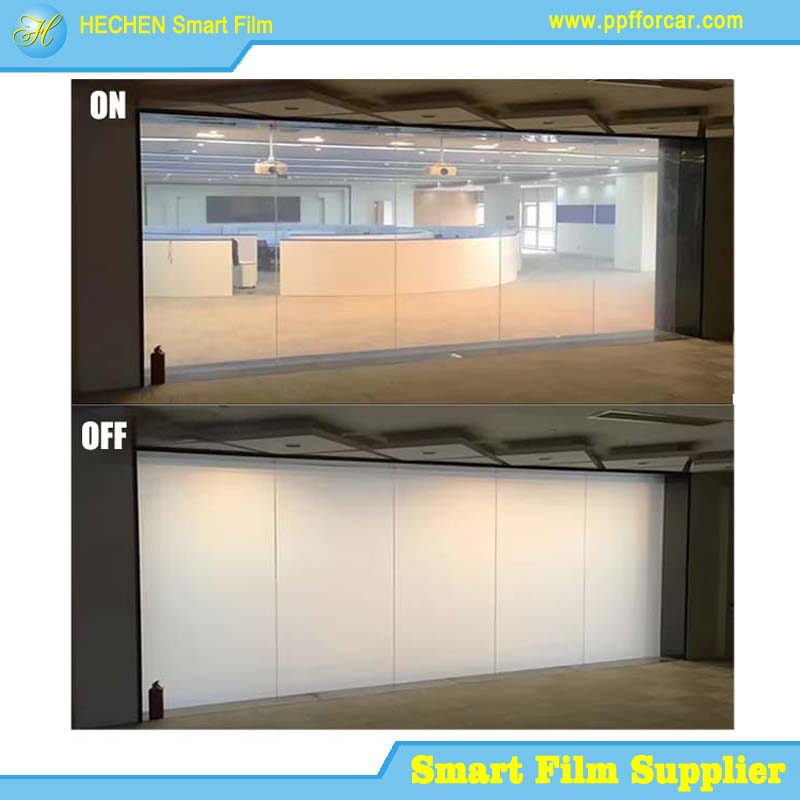
The Science Behind the Switch: Understanding PDLC Technology
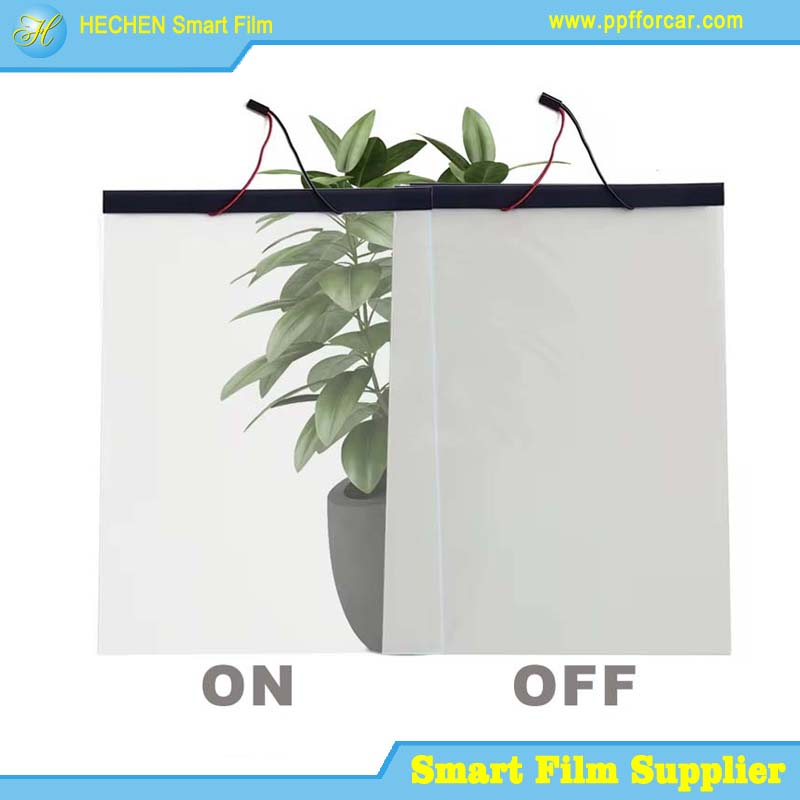
At the heart of smart dimmable glass lies PDLC, a clever fusion of polymers and liquid crystals that responds to electrical stimuli like a chameleon to its surroundings. PDLC stands for Polymer Dispersed Liquid Crystal, a material where microscopic liquid crystal droplets are suspended within a polymer matrix. In its default state—without power—these droplets are randomly oriented, scattering incoming light in all directions. This diffusion creates the frosted, opaque appearance that blocks views while still allowing diffused light to pass through, maintaining a sense of openness without sacrificing privacy.
Apply a low-voltage electric current (typically 24-110 volts AC), and the magic happens. The electric field aligns the liquid crystal molecules in a uniform direction, permitting light to travel straight through the film unimpeded. The glass reverts to transparency almost instantly, often in under a tenth of a second. This bidirectional switching—clear when on, frosted when off—is the hallmark of most PDLC films, though reverse variants (like Flip Tint) exist for those who prefer the opposite behavior.
The beauty of PDLC lies in its simplicity and efficiency. Unlike electrochromic glass, which relies on ion movement and can take minutes to tint, PDLC responds in milliseconds, making it ideal for dynamic environments. Power consumption is minimal—around 3-5 watts per square meter—ensuring it won't spike your energy bills. Moreover, these films boast impressive UV blocking (up to 99%), shielding interiors from harmful rays and fading, while reducing solar heat gain by as much as 49%, which translates to tangible savings on air conditioning.
Historically, PDLC technology emerged in the late 20th century from research into liquid crystal displays (LCDs), but it wasn't until the 2010s that adhesive films made it practical for consumer use. Early iterations were bulky and required lamination between glass sheets, but advancements in self-adhesive backings have democratized it. Today, films like Smart Tint or those from SmartGlass Country are factory-direct, ETL-certified, and customizable in hues from white to gray or black.
The allure of smart dimmable glass isn't just in its functionality—it's in the ease of adoption. Transforming ordinary glass takes no more than an afternoon, akin to applying a smartphone screen protector. Here's how it unfolds, step by step, drawing from proven installation guides.
First, preparation is key. Clean the glass surface meticulously with isopropyl alcohol to remove dust, oils, or residues that could compromise adhesion. The film, typically 0.2-0.5mm thick, comes in rolls up to 71 inches wide and 196 feet long, cut to fit your pane. Peel away the protective liner from the film's self-adhesive side—often called Smart Cling for its residue-free grip—and align it carefully on the glass. A squeegee or roller ensures bubble-free application, and for curved surfaces, the film's flexibility allows it to conform without creases.
Next, wiring. Thin copper busbars along the edges connect to a low-voltage transformer, which can be tucked discreetly behind the frame. Controls vary: a simple wall switch, remote, app via Wi-Fi/Bluetooth, or integration with smart ecosystems like Siri, Crestron, or Lutron. Power it up, and voilà—the glass dims on command. No drilling, no glazing; it's a retrofit that preserves the original structure.
For DIY enthusiasts, kits are available online, including samples for testing. Professionals recommend it for larger installs, citing the film's durability—warrantied for 10+ years against yellowing or delamination. Challenges? Humidity can affect adhesion in bathrooms, so silicone edging seals edges. Overall, it's a low-risk upgrade, reversible if needed.
This instant transformation empowers homeowners and businesses alike. A Reddit user chronicled their DIY project for bedroom privacy, praising the film's responsiveness and cost savings over full smart glass replacement. Videos demonstrate the process in under five minutes, underscoring its user-friendliness.
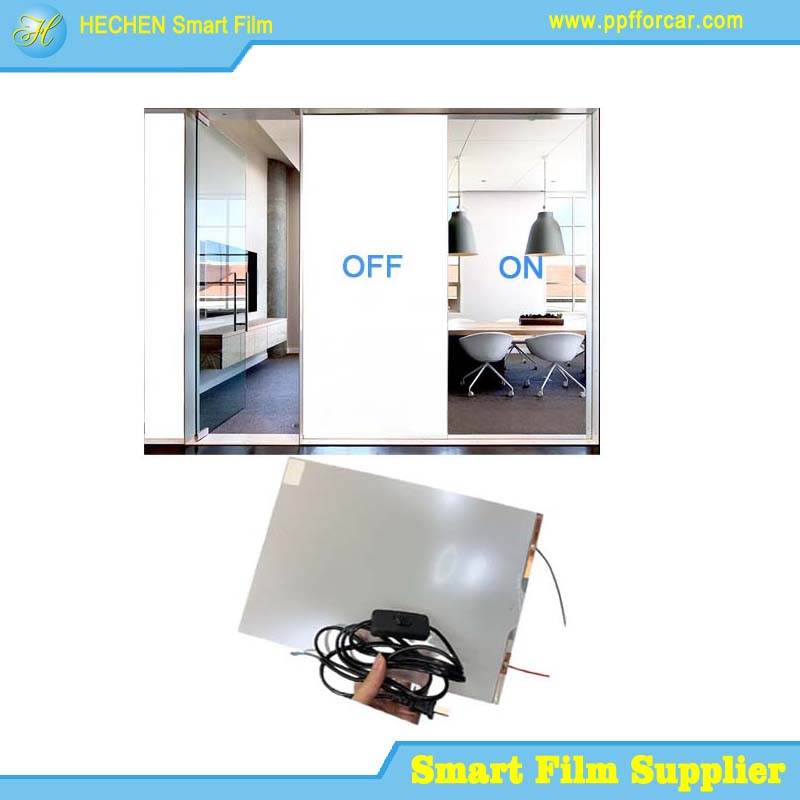
Applications: Where Smart Film Shines
The versatility of smart dimmable glass via film application spans industries, turning mundane surfaces into multifunctional assets.
In residential settings, it's a game-changer for privacy without curtains. Apply it to shower doors for on-demand seclusion, or bedroom windows to block late-night lights while preserving views. Kitchens gain sophistication with frosted cabinet inserts that clear for display, and kids' rooms benefit from play-area dividers that switch moods.
Commercially, offices thrive on it. Conference rooms equipped with smart film partitions foster collaborative openness or confidential huddles at a button's press, as seen in KGA Architecture's redesign where voice-activated controls integrated seamlessly. Retail storefronts use it for dynamic displays—clear by day for visibility, opaque at night for security. Hospitals and clinics apply it to exam room windows, ensuring patient dignity without bulky blinds.
Automotive and marine sectors are emerging frontiers. Tinted windshields or boat partitions adapt to glare, enhancing safety. Museums protect artifacts with UV-blocking films that dim under gallery lights, preventing degradation. Even projection screens benefit: the film doubles as a rear-projection surface when frosted.Educational spaces like classrooms use it for flexible zoning—divide a lab for group work, then open it for lectures. Hotels install it in suites for balcony privacy, elevating guest experiences without permanent alterations.
Benefits: Beyond Privacy to Efficiency and Aesthetics
Why choose smart film over traditional options? The advantages are multifaceted, blending practicality with elegance.
Privacy tops the list: instant, silent control trumps noisy blinds or static frosted glass. Energy efficiency follows—by modulating light, it cuts cooling needs by up to 30% in sunny climates, per studies on dynamic glazing. UV protection safeguards furnishings, potentially extending their life by years.
Aesthetically, it modernizes spaces. Ultra-clear variants offer 99% transparency when on, rivaling untreated glass, while tinted options add warmth. Health perks include reduced glare for eye comfort and better sleep cycles via controllable light.
Environmentally, it's green: low power draw, recyclable materials, and no hazardous substances. Compared to replacing glass (costing $50-150/sq ft), film runs $10-30/sq ft, with installation under $5/sq ft. Drawbacks? Initial cost, though ROI via energy savings hits in 2-3 years, and occasional cleaning to maintain clarity.
Costs, Challenges, and Installation Realities
Budgeting for smart film? Entry-level rolls start at $15/sq ft for standard PDLC, climbing to $25 for crystal-clear. A 10 sq ft window might total $200-400, including wiring ($50-100). Bulk buys drop prices, and samples ($50) let you test.
Challenges include compatibility—best on flat, smooth glass; textured surfaces need custom prep. Wiring requires basic electrical know-how, though plug-and-play kits simplify it. Sign makers note bubbles if rushed, but pros mitigate this.
The Future: Smarter, Greener, More Integrated
Looking ahead, PDLC film evolves rapidly. Nanotech enhancements promise faster switching and wireless power. Integration with AI could auto-adjust based on occupancy or sunlight, via IoT sensors. Sustainability drives bio-based polymers, reducing carbon footprints.
Market growth? Projected to hit $10B by 2030, fueled by green building codes favoring dynamic facades. Innovations like color-shifting films or self-healing adhesives beckon.
Conclusion: Embrace the Instant Upgrade
Ordinary glass, once static and unyielding, now bends to our whims through smart film. This instant transformation isn't merely convenient—it's empowering, sustainable, and stylish. Whether shielding a home office or reimagining a boardroom, PDLC technology invites us to rethink transparency in every sense. Ready to dim the ordinary? The switch is yours to flip.
For more about the ordinary glass can be instantly transformed into smart dimmable glass, you can pay a visit to Hechen PDLC Smart Film Manufacturers for more info.