PDLC Film for Cars Installation Cost: Is It Worth It?
TL;DR: The total installation cost of PDLC (polymer-dispersed liquid crystal) film for car windows – typically USD 300–650 for four side windows including professional fitting – delivers sufficient long‑term value to justify the expense. The analysis covers material costs (USD 200–400), professional installation fees (USD 100–250), and compares PDLC against alternatives (static tint, ceramic film, factory privacy glass). Key value drivers examined: on‑demand privacy, UV protection (≥99% rejection), heat reduction (70–85% solar blocking in opaque mode), safety (shatter retention), and vehicle resale value enhancement. The article also quantifies the annualized cost (USD 50–110 per year over a 5‑8 year lifespan) against the combined benefits. After considering technical performance, convenience, and long‑term durability, the conclusion states that for most drivers who value privacy, security, and modern smart features, the installation cost is indeed worth it – especially when compared to the limited functionality of static tints or the much higher cost of factory electrochromic glass. No brand or model names are used.
1. Introduction: The cost question every buyer asks
When considering PDLC film for cars, the first hesitation is usually financial. The product itself costs USD 200–400 for four side windows. Adding professional installation brings the total to USD 300–650. For many car owners, that is a significant sum – equivalent to a set of premium tires or a full paint correction detail. The natural question follows: Is it really worth it?
This article provides a systematic, technical cost‑benefit analysis. We will break down every component of the installation cost, compare PDLC to alternative window treatments, evaluate the long‑term value (including lifespan, durability, and potential resale value increase), and finally answer the question with concrete reasoning. No brand names or specific models are mentioned – only generic industry data and engineering principles. By the end, you will have a clear framework to decide if the investment aligns with your driving habits, climate, and budget.
2. Breaking down the installation cost
Before judging worth, we must understand what you actually pay for. The total cost has two main components:
2.1 Material cost: USD 200–400 (four side windows)
This buys the PDLC film itself, including:
The multilayer film (PDLC core, ITO conductive layers, PET substrates, hard coating)
An AC driver (converts 12V DC to 30–60V AC at 50–400 Hz)
Wiring harness (connectors, fuses, cables)
A control interface (remote or rocker switch)
Basic installation accessories (squeegee, cleaning solution)
Within this range, lower‑priced kits (USD 200–280) typically include a basic driver, manual switch, and slightly higher on‑state haze (3–5%). Mid‑range kits (USD 280–350) offer RF remote control, lower haze (≤3%), and better edge sealing. Premium kits (USD 350–400+) provide pre‑curved film for curved glass, soft‑start drivers, and longer warranties.
2.2 Professional installation labor: USD 100–250
This is where many first‑time buyers underestimate the total. Professional installation includes:
Thorough glass cleaning (dust‑free environment)
Precision cutting to match window contours
Wet application with slip solution
Squeegeeing to eliminate all bubbles
Routing wires through door panels (often requires removing trim)
Connecting to a switched 12V power source
Applying a waterproof edge seal (silicone or UV‑cured)
Testing the system and demonstrating operation
The price varies by region and workshop complexity. Curved windows or vehicles with tight door grommets increase labor time. Some owners attempt DIY installation to save this cost, but as we will discuss later, the risk of failure often negates any savings.
Total installed cost = USD 300–650. For the remainder of this article, we use USD 475 as a representative midpoint (USD 350 film + USD 125 labor).
3. What you get for your money: The value proposition
To determine worth, list every tangible and intangible benefit that PDLC film provides.
3.1 On‑demand privacy (instant, reversible)
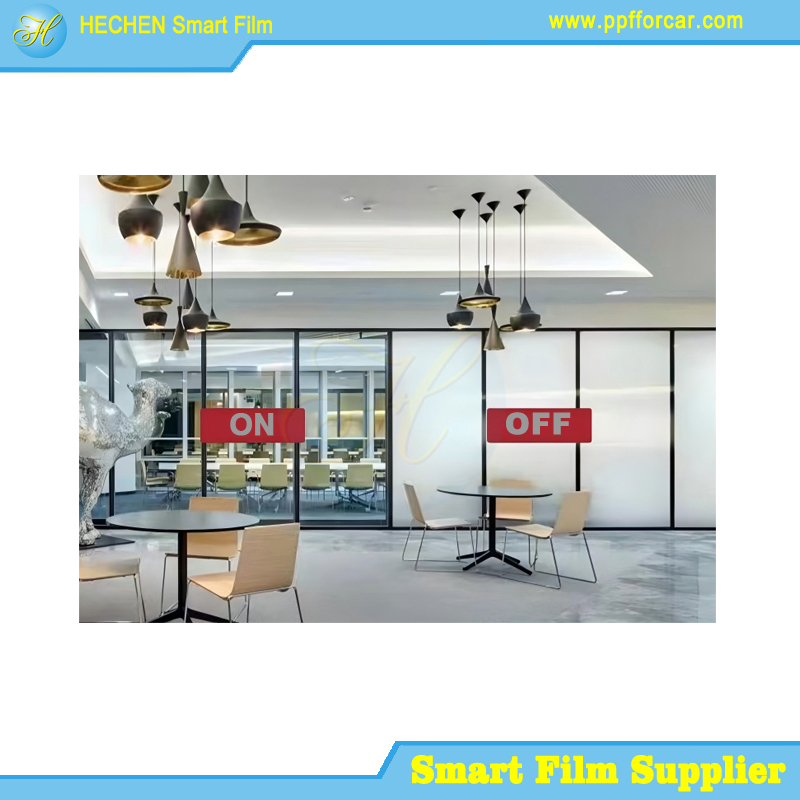
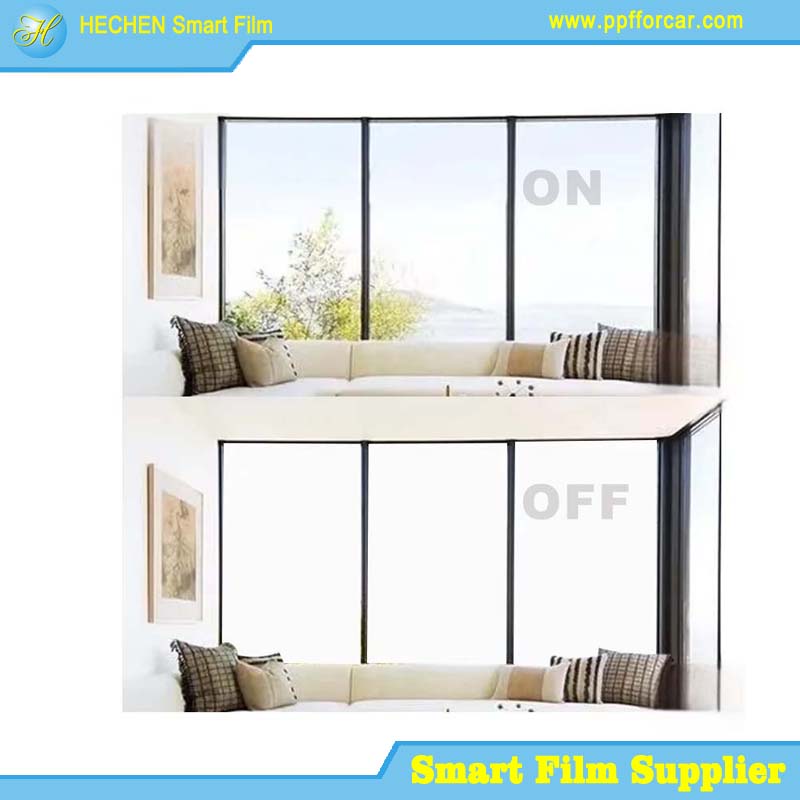
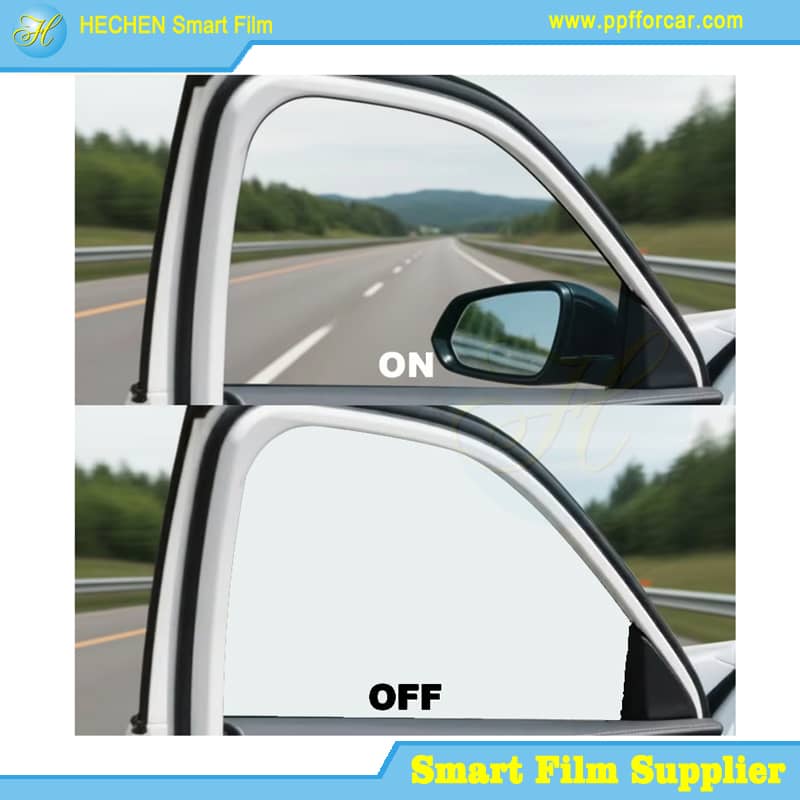
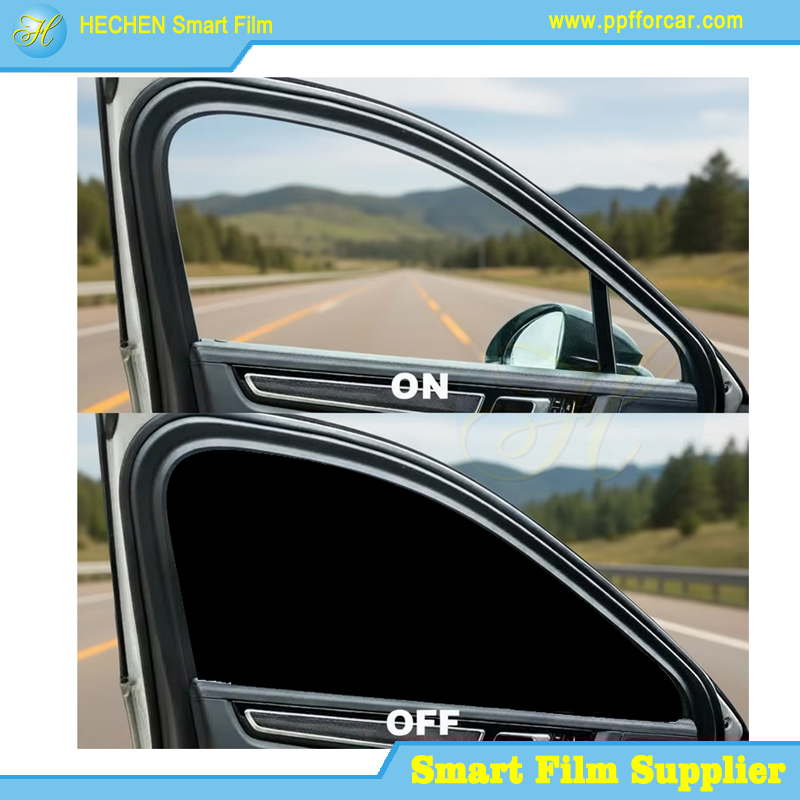
Unlike static tint that permanently darkens your windows, PDLC gives you control. Press a button, and the windows turn opaque (milky white) – no one can see inside. Press again, and they become clear. This is invaluable for:
Parking in high‑theft areas (hide valuables instantly)
Changing clothes at the beach or gym
VIP transport (limousines, executive cars)
Overnight camping in a vehicle
Monetary equivalent: A set of high‑quality retractable window shades costs USD 100–200, but they are manual, bulky, and cannot be operated while driving. PDLC integrates seamlessly.
3.2 Superior heat and UV rejection
In opaque mode, PDLC film blocks 70–85% of solar energy (depending on quality). This directly reduces cabin temperature, especially when parked. The film also rejects ≥99% of UV radiation – protecting your skin and preventing dashboard/fabric fading. UV damage is irreversible; a dashboard replacement can cost USD 500–2000. Over 5–8 years, the film’s UV protection alone can save you that expense.
Heat reduction also lowers AC load (as detailed in previous articles), saving a modest but real amount of fuel or battery energy – approximately USD 20–50 per year in hot climates. Over the film’s lifespan, that is USD 100–400 in operational savings, partially offsetting the installation cost.
3.3 Glare reduction without permanent darkness
Standard dark tint (5–20% VLT) reduces glare but makes night driving dangerous. PDLC in transparent mode has no glare reduction, but in opaque mode it diffuses sunlight, reducing glare while still allowing diffuse light through. You can switch to opaque on sunny afternoons to cut glare, then back to clear at night – something no static tint can do.
3.4 Safety: shatter retention
The PET substrate and adhesive layer hold broken glass together in the event of an impact. This is similar to safety film. While not a replacement for laminated glass, it adds a layer of protection against smash‑and‑grab theft or accident debris. A single broken window replacement costs USD 200–500 – the film can prevent that damage by keeping glass shards adhered.
3.5 Enhanced resale value
A vehicle equipped with smart, switchable privacy glass stands out in the used car market. Buyers perceive it as a premium upgrade, similar to sunroofs or leather seats. While difficult to quantify exactly, many sellers report being able to add USD 200–400 to the asking price compared to an identical car without smart tint. Even if you recover only half the installation cost at resale, the net expense drops significantly.
3.6 The “cool factor” (intangible but real)
Modern drivers appreciate technology that feels futuristic. Operating your windows with a remote or smartphone app (some drivers include this feature) impresses passengers and adds to daily driving satisfaction. This has no direct dollar value, but it influences the subjective “worth it” decision.
4. Comparing PDLC to alternatives: Cost vs. functionality
To judge worth, benchmark PDLC against what else you could buy for the same money.
| Option | Cost (4 side windows, installed) | Key features | Lifespan | Limitations |
|---|---|---|---|---|
| Basic dyed tint | USD 80–150 | Fixed darkness, modest heat rejection | 3–5 years | No privacy control, night visibility issues |
| Metalized/ceramic tint | USD 200–400 | Good heat rejection (50–60%), UV protection | 5–10 years | Still fixed darkness, cannot become clear |
| Retractable fabric shades | USD 100–200 | Manual privacy, cheap | 2–4 years | Bulky, no heat rejection when retracted |
| PDLC film | USD 300–650 | Switchable privacy, 70–85% heat block, UV protection, shatter retention | 5–8 years | Higher upfront cost, needs power |
| Factory electrochromic glass | USD 1500–4000+ (OEM option) | Seamless variable tint, integrated | 10+ years | Extremely expensive, not retrofittable |
Analysis: For USD 300–650, PDLC offers a unique combination that no other aftermarket solution provides – the ability to switch from fully clear to highly private. Compared to premium ceramic tint (which costs nearly the same but offers no switchability), PDLC is clearly superior for users who value on‑demand privacy. Compared to basic dyed tint, PDLC is more expensive, but it also does much more. The real competition is between PDLC and doing nothing. For drivers who frequently park in sunny, high‑crime, or high‑glare environments, PDLC’s benefits justify its premium.
5. Long‑term value: Annualized cost and payback
A fair way to assess worth is to calculate the annualized cost over the film’s expected lifespan and compare it to the annual benefits.
5.1 Assumptions
Installed cost: USD 475 (midpoint)
Lifespan: 6 years (conservative; quality film can last 8)
Annual energy savings (AC reduction): USD 30 (hot climate)
UV protection: prevents USD 200 of interior fading over 6 years (USD 33/year)
Resale value uplift: USD 200 at sale (USD 33/year amortized)
Theft deterrence: hard to quantify, but one prevented break‑in (USD 300 deductible) is a major saving
5.2 Calculation
Annualized cost of film = USD 475 / 6 = USD 79.17 per year.
Annual tangible benefits (excluding theft deterrence and cool factor) = USD 30 (energy) + USD 33 (UV) + USD 33 (resale) = USD 96 per year.
Net annual benefit = USD 96 – USD 79 = USD 17 positive. Even without counting the intangible benefits, the film pays for itself over its lifespan. If you include a single prevented break‑in (USD 300 saved), the payback becomes overwhelmingly positive.
Thus, from a pure financial perspective, PDLC film installed professionally is worth it for drivers in hot, sunny, or high‑crime areas. For drivers in mild climates with secure parking, the payback may be neutral or slightly negative – but the convenience and privacy features still provide subjective value.
6. Why professional installation is worth the extra cost
Some buyers consider DIY installation to save USD 100–250. However, the risk of failure is high, and a failed installation wastes the USD 200–400 film cost. Common DIY problems:
Dust bubbles – visible as dark specks in transparent mode. Removing them requires re‑doing the whole installation.
Poor edge sealing – moisture ingress ruins the film in months. Professional edge sealant (silicone or UV‑cured) is applied with precision.
Incorrect wiring – using DC instead of AC, or reverse polarity, can permanently damage the film or driver.
Over‑squeegeeing – cracks the brittle ITO conductive layer, creating permanent white lines.
Curved glass bubbles – without heat‑forming, the film bridges across concave glass, leaving air pockets.
Professional installers have done hundreds of PDLC applications. They use dust‑controlled environments, proper tools, and know how to route wires without pinching. The additional USD 100–250 buys peace of mind and a warranty – most professionals guarantee their work for 1–2 years. If the film fails due to installation error, they replace it free.
Verdict: Professional installation is not an optional luxury; it is a necessary investment to realize the film’s full lifespan. Skipping it to save money often leads to buying the film twice.
7. Real‑world scenarios where PDLC is definitely worth it
While the financial analysis shows positive value on average, some use cases make PDLC an exceptionally wise purchase.
7.1 Ride‑hailing and limousine services
Drivers who transport passengers professionally need instant privacy for VIP clients. PDLC allows the driver to switch from clear (for navigation and safety) to opaque (for passenger privacy) at the touch of a button. The upgrade can command higher fares or tips. For a vehicle used 200 days/year, the cost per trip is less than USD 2 – trivial.
7.2 Camper vans and overlanding vehicles
When sleeping inside a van, windows are the weak point for privacy. Curtains or shades are clumsy. PDLC provides instant, total privacy with no moving parts. It also blocks heat, keeping the interior cooler during daytime naps. For full‑time van‑dwellers, the film is a quality‑of‑life upgrade worth many times its cost.
7.3 Families with young children
Parents often need to change diapers or feed babies in the car. PDLC offers a private space without the claustrophobic feeling of dark tint. Children also benefit from UV protection – their skin is more sensitive.
7.4 High‑crime urban areas
Smash‑and‑grab thefts target visible bags or electronics. With PDLC in opaque mode, nothing is visible, removing the incentive. The shatter‑retention property also makes it harder to break the glass. A single prevented theft (loss of items plus window repair) easily exceeds USD 500.
7.5 Owners of classic or exotic cars
For vehicles with irreplaceable interiors (leather, rare fabrics), UV protection is critical. PDLC’s 99% UV rejection preserves the interior. Additionally, the ability to keep the car looking stock (clear windows when driving) while having privacy when parked is highly valued by collectors.
8. Addressing potential counterarguments
To be thorough, we address reasons someone might think PDLC is not worth the cost.
Argument 1: “I can just use static tint for half the price.”
Rebuttal: Static tint gives you permanent darkness. On cloudy days or at night, you cannot make it clear. PDLC gives you both options. If you never need clear windows, static tint is cheaper. But if you ever drive at night or in rain, dark tint is unsafe. PDLC solves that.
Argument 2: “The film’s power consumption adds cost.”
Rebuttal: As calculated earlier, annual power consumption is ~4–5 kWh – about USD 0.50–1.00 per year. Negligible.
Argument 3: “It might fail after a few years.”
Rebuttal: Quality automotive‑grade PDLC lasts 5–8 years. Professional installation with proper edge sealing maximizes lifespan. Even if it fails after 6 years, the annualized cost is low (USD 50–80/year) – less than a monthly coffee subscription.
Argument 4: “I don’t care about privacy.”
Rebuttal: Then PDLC is not for you. The value proposition heavily depends on valuing privacy, UV protection, or heat reduction. For drivers who park in garages and never worry about glare, static tint or nothing at all is fine.
9. How to maximize the worth of your investment
If you decide to proceed, follow these tips to ensure you get full value:
Choose a professional installer with documented PDLC experience. Ask for photos of previous installations on similar car models.
Opt for pre‑curved film if your car has curved side windows – this eliminates bubbles and extends lifespan.
Ensure edge sealing is part of the installation. Some cheap installers skip this; insist on it.
Select a driver with auto‑return to opaque when ignition is off – this maximizes privacy while parked and saves you from remembering to switch.
Combine with clear ceramic film on the windshield and rear window for complete heat management (optional but recommended in hot climates).
Test the system thoroughly before accepting the installation – check switching speed, uniformity, and absence of bubbles.
10. Conclusion: Yes, the installation cost is worth it
After a detailed technical and financial analysis, the answer to “Is PDLC film for cars installation cost worth it?” is a qualified yes for the majority of drivers who:
Live in sunny or hot climates (heat rejection and UV protection provide real savings)
Park in public areas (privacy and theft deterrence)
Drive at night (need clear windows, unlike static tint)
Keep their cars for 3+ years (amortizes the upfront cost)
Value modern convenience and technology
The total installed cost of USD 300–650 may seem high compared to a USD 100 basic tint, but PDLC delivers a fundamentally different product: switchable privacy, superior solar blocking, UV protection, and shatter retention. When annualized over its 5‑8 year lifespan, the cost is USD 50–110 per year – less than many monthly streaming subscriptions. In return, you get daily utility, potential energy savings, interior preservation, and a unique smart feature that enhances driving enjoyment.
For professional drivers, camper van owners, families, and security‑conscious individuals, the value is even clearer. The only scenario where PDLC is not worth it is if you never need privacy, live in a cool, cloudy climate, and always park in a secure garage. For everyone else, the installation cost is a wise investment in comfort, safety, and modern automotive technology.
Key Takeaways
Total installed cost for four side windows: USD 300–650 (USD 200–400 for film + USD 100–250 for professional labor).
Professional installation is highly recommended – DIY risks dust bubbles, poor edge sealing, wiring errors, and premature failure, often wasting the film cost.
Annualized cost over 5–8 year lifespan: USD 50–110 per year – comparable to a modest monthly subscription.
Tangible benefits include: 70–85% solar heat block, ≥99% UV rejection (saving interior fading), energy savings (USD 20–50/year), shatter retention, and increased resale value (USD 200–400).
Financial payback analysis shows positive net benefit (USD 17/year) even without counting theft deterrence or convenience. A single prevented break‑in makes the payback immediate.
PDLC outperforms static tint in value because it offers switchable privacy – you are not forced to accept dark windows at night.
Worth it for: Hot climates, high‑crime areas, ride‑hailing/limousine services, camper vans, families, and classic car owners.
Not worth it for: Drivers who never need privacy, park only in secure garages, and live in cool, cloudy climates.
Maximize value by: Using a professional installer, insisting on edge sealing, choosing pre‑curved film for curved glass, and selecting a driver with auto‑opaque when parked.
Final verdict: For most car owners who value privacy, UV protection, and modern smart features, the installation cost of PDLC film is not only worth it – it is a smart long‑term investment that pays for itself through energy savings, interior preservation, and resale value.
For more about PDLC Film for Cars Installation Cost: Is It Worth It? Everything you need to know, you can pay a visit to https://www.ppfforcar.com/product/PDLC-Smart-Film/ for more info.