PDLC Film vs. Smart Glass: Which Retrofit Solution Is Right for Your Windows?
As smart building technologies become more accessible, homeowners and facility managers are increasingly looking to upgrade their windows with intelligent privacy and energy-saving features. Two popular retrofit solutions have emerged: PDLC smart film and fully integrated smart glass. Both offer the ability to switch between transparent and opaque states, but they differ fundamentally in how they are installed, their performance characteristics, and overall cost. This article provides a technical comparison to help you decide which solution best fits your specific needs.
Understanding the Technologies
PDLC Smart Film
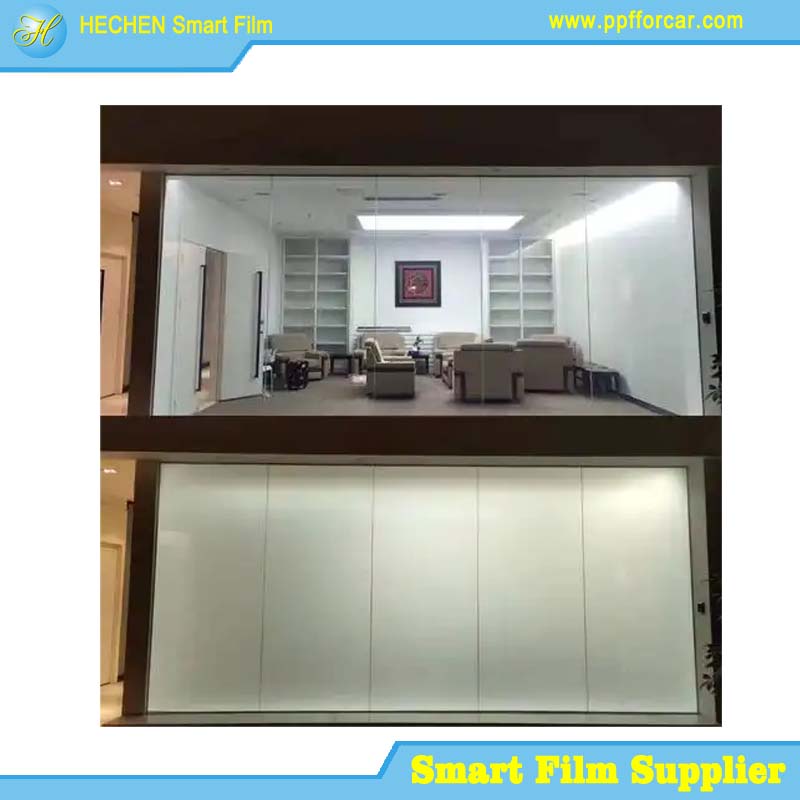
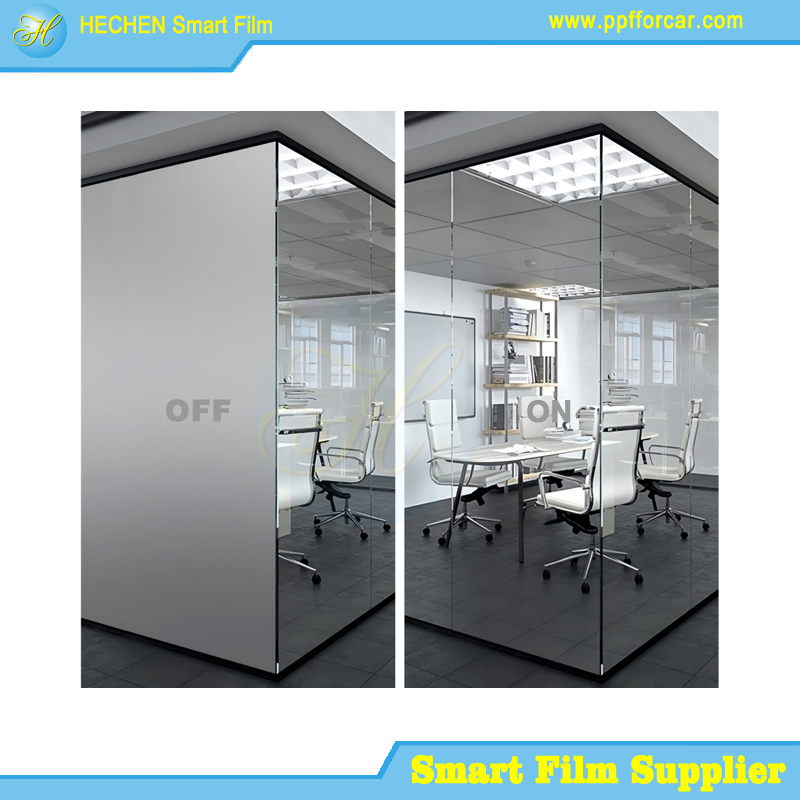
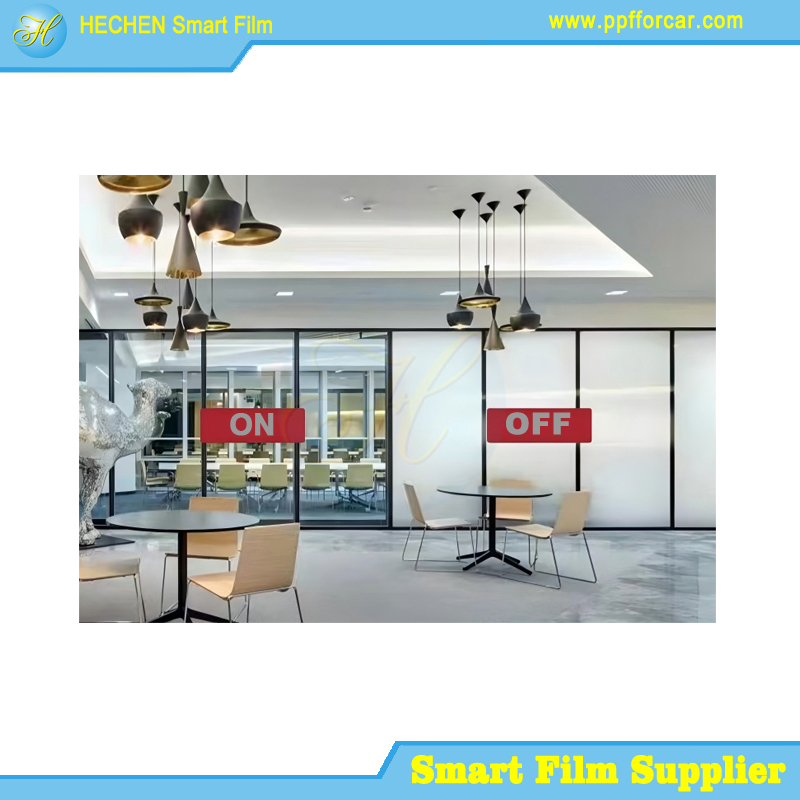
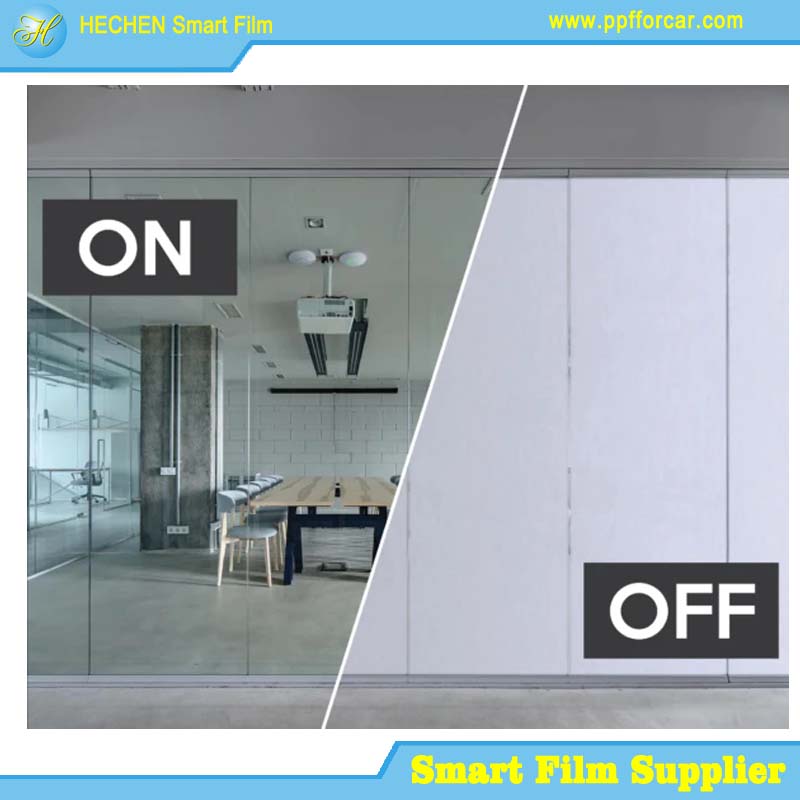
PDLC film is a thin, flexible laminate that contains a layer of liquid crystal droplets dispersed in a polymer matrix. When no voltage is applied, the liquid crystals are randomly oriented, scattering light and giving the film a frosted, opaque appearance. When an electric current is applied (typically 24–60V AC), the crystals align, allowing light to pass through and rendering the film transparent. This switchable privacy effect occurs almost instantaneously.
As a retrofit solution, PDLC film is applied directly to existing glass surfaces using a pressure-sensitive adhesive, similar to traditional window tinting. It can be installed on single-pane or insulated glass units without removing the existing window. The film is connected to a power source and a switch, which can be manual or integrated with home automation systems. Because it adheres to the glass, it adds a thin layer that does not significantly alter the window’s dimensions or structural integrity.
Smart Glass (Switchable Glazing)
Smart glass, in the context of this comparison, refers to complete glass units that incorporate switchable technology within the glazing itself. This can include PDLC, suspended particle device (SPD), or electrochromic technologies. Unlike film, smart glass is manufactured as a sealed insulated glass unit (IGU) with the active layer sandwiched between two or more panes. It requires professional removal of the existing window and installation of the new unit.
Smart glass offers a more integrated appearance, with no visible films or adhesive layers. It is typically controlled via low-voltage wiring and can be connected to building management systems. Because it is a complete window replacement, it also provides an opportunity to upgrade other aspects like frame insulation, gas fills, and low-E coatings.
Head-to-Head Comparison
Installation Complexity and Cost
The most significant difference lies in installation. PDLC film can be installed in a matter of hours by trained professionals, with minimal disruption to occupants. The cost of the film itself is relatively low, and installation labor is comparable to high-end window tinting. However, electrical work is required to bring power to the film, which may involve running wires to each window.
Smart glass requires full window replacement, which is a major construction project. It involves removing existing frames, potentially modifying the opening, and installing new IGUs. This process is time-consuming, expensive, and may require permits. The cost of smart glass per square foot can be several times that of PDLC smart film, and installation labor adds significantly to the total.
Optical Performance
Both technologies provide excellent privacy on demand, but there are differences in optical quality. PDLC film typically has a slight haze in the transparent state (typically 2–5% haze), which may be noticeable in critical viewing conditions. In the opaque state, it appears milky white and scatters light, providing privacy while still allowing ambient light to pass through. Some newer formulations offer improved clarity and lower haze.
Smart glass, particularly electrochromic and SPD types, can achieve very high transparency with minimal haze. PDLC-based smart glass shares similar haze characteristics to the film, but because the active layer is encapsulated within the unit, it is protected from environmental degradation. Smart glass also often incorporates additional features like low-E coatings and gas fills, which can enhance thermal performance.
Energy Efficiency
PDLC film offers some energy benefits by reflecting solar radiation and reducing heat gain when in the opaque state. However, its insulating value is minimal because it is a single layer applied to the existing glass. It does not significantly improve the overall U-factor of the window.
Smart glass, being a complete IGU, can be designed with advanced thermal breaks, argon or krypton gas fills, and low-E coatings. This can substantially improve the window’s insulation properties, reducing heating and cooling loads. Some smart glass technologies (like electrochromic) can also dynamically control solar heat gain, further enhancing energy savings.
Durability and Maintenance
PDLC film has a typical lifespan of 5–10 years, depending on exposure to UV light and temperature extremes. Over time, the adhesive may degrade, and the film can yellow or delaminate. It is also susceptible to scratches and damage from cleaning. Replacement involves removing the old film and applying new material.
Smart glass units are designed for a lifespan of 20+ years, with the active layer protected inside the sealed unit. They are more resistant to environmental factors and can be cleaned like ordinary glass. However, if the electronics fail, the entire unit may need replacement.
Aesthetics and Integration
PDLC film can sometimes be visible on the glass surface, especially along the edges where electrical connections are made. The adhesive may also cause slight optical distortions. However, modern films are designed to be as unobtrusive as possible. The film can be cut to fit any shape and can even be applied to curved glass.
Smart glass provides a seamless appearance, indistinguishable from ordinary glass when transparent. It can be manufactured in various shapes and sizes, but custom orders may have longer lead times. The electrical connections are hidden within the frame, offering a cleaner look.
Application Scenarios
Residential Retrofit
For homeowners seeking to add privacy to bathrooms, bedrooms, or home offices without replacing existing windows, PDLC film is often the most practical choice. It is cost-effective, quick to install, and can be a DIY project for the handy homeowner (though professional installation is recommended). The ability to switch instantly from clear to frosted is ideal for spaces where privacy is needed on demand.
If the windows are already due for replacement due to age or poor energy performance, investing in smart glass may be worthwhile. It combines the benefits of new energy-efficient windows with integrated privacy control, offering a long-term solution.
Commercial and Office Spaces
In offices, conference rooms, and executive suites, PDLC film can be applied to glass partitions and exterior windows to create instant meeting privacy. The low installation cost and minimal disruption make it attractive for retrofitting existing leased spaces. Additionally, some films are compatible with projection systems, allowing the glass to double as a projection screen—a valuable feature for conference rooms.
For new construction or major renovations, smart glass is often specified for its durability and integrated appearance. It can be tied into building automation systems for automated privacy control based on time of day or occupancy.
Specialized Requirements
If the window serves a dual purpose—such as a storefront that needs daytime transparency and nighttime privacy for projection advertising—PDLC smart film may be the better option due to its lower cost and flexibility. However, if the application demands the highest optical clarity and long-term reliability, smart glass is preferable.
Decision Framework
To decide between PDLC film and smart glass, consider the following factors:
Budget: If cost is a primary constraint, PDLC film is the clear winner. It delivers switchable privacy at a fraction of the cost of full glass replacement.
Window Condition: If your existing windows are in good condition and you wish to retain them, film is the only non-destructive option. If windows are old, drafty, or in need of replacement, smart glass combines two upgrades into one.
Performance Needs: For maximum energy efficiency, smart glass with thermal enhancements outperforms film. For occasional privacy with minimal impact, film suffices.
Aesthetic Expectations: If a seamless, built-in look is essential, smart glass is superior. If slight visibility of the film is acceptable, PDLC film works well.
Installation Constraints: Consider whether you can tolerate construction disruption. Film installation is quick and quiet; glass replacement is invasive and time-consuming.
Future-Proofing: Smart glass is a permanent solution with a longer lifespan. Film may need replacement in 5–10 years, which could be a consideration for long-term ownership.
Future Trends
Both technologies are evolving. PDLC films are becoming thinner, more transparent, and more durable, with improved adhesive systems and lower power consumption. Some films now incorporate dye-doped formulations that offer a darker opaque state for better light blocking. The cost of film continues to decline, making it accessible for more applications.
Smart glass is also advancing, with faster switching times, lower voltage requirements, and integration with IoT platforms. Electrochromic glass, in particular, offers gradual tinting without the need for power to maintain a state, making it energy-efficient for constant privacy or shading. Costs are gradually decreasing as manufacturing scales up.
Conclusion
Choosing between PDLC film and smart glass for your window retrofit depends on a balance of budget, existing window condition, performance expectations, and long-term goals. PDLC film offers an affordable, minimally invasive way to add on-demand privacy to virtually any glass surface. It is ideal for quick retrofits, rented spaces, and applications where cost sensitivity is high.
Smart glass provides a premium, integrated solution that combines privacy control with enhanced thermal performance and a clean aesthetic. It is best suited for new construction, major renovations, and situations where the highest durability and optical quality are required.
By carefully assessing your specific needs and constraints, you can select the retrofit solution that will transform your windows into intelligent, adaptable elements of your living or working environment.
For more about PDLC smart Film vs. Smart Glass. Everything you need to know, you can pay a visit to https://www.ppfforcar.com/product/PDLC-Smart-Film/ for more info.