PDLC Smart Film in Automotive Industry: Privacy Solutions for Panoramic Skylights
The automotive landscape is undergoing a profound transformation, driven by electrification, connectivity, and a relentless pursuit of enhanced user experience. A central pillar of this evolution is the passenger cabin’s metamorphosis into a "third space"—a seamless extension of one’s living and working environment. Within this trend, the panoramic sunroof or skylight has emerged as a coveted feature, flooding interiors with natural light and creating an airy, open atmosphere that connects occupants with the outside world. However, this t, lack of privacy, and thermal inefficiency. Enter Polymer Dispersed Liquid Crystal (PDLC) Smart Film—a dynamic glazing technology that is redefining the concept of the panoramic skylight by offering on-demand privacy, comfort, and control at the touch of a button.architectural marvel presents a significant dichotomy: the very feature that offers liberation and openness can also become a source of discomfor
The Allure and Challenge of Panoramic Skylights
Panoramic sunroofs, often stretching from windshield to rear seat, have become a key differentiator in the premium and luxury vehicle segments. They transform the cabin experience, offering breathtaking views, reducing the sense of claustrophobia, and enhancing the perceived value of the vehicle. For passengers on scenic routes or during night drives under starry skies, the experience is unparalleled.
Yet, this expansive glass surface introduces several persistent challenges:
Privacy Compromise: A transparent roof offers a clear view into the cabin’s interior, whether the vehicle is parked in a busy lot, stuck in traffic, or driving through urban areas. This can be a significant concern for passengers, deterring the use of electronic devices, compromising personal space, and raising security questions.
Solar Load and Glare: Unfiltered sunlight, especially in summer or in regions with high solar intensity, leads to excessive heat buildup (the greenhouse effect). This increases the load on the air conditioning system, directly impacting energy efficiency—a critical metric for electric vehicles where range is paramount. Simultaneously, glare can make screens unreadable and cause passenger discomfort.
Limited Dynamic Control: Traditional solutions like manual shades or retractable blinds add mechanical complexity, take up headliner space, and offer only a binary state: fully open or fully closed. They do nothing to mitigate heat while blocking light.
The Science of Clarity and Opacity: How PDLC Smart Film Works
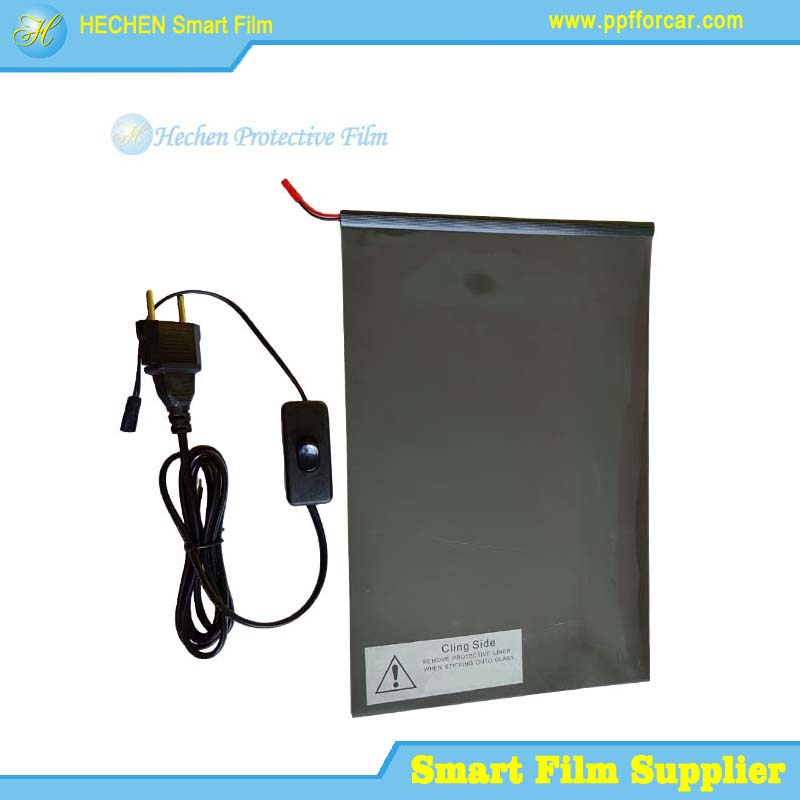
PDLC Smart Film is an electrochromic technology that enables glass to switch between transparent and opaque states. Its core structure is an elegant sandwich:
Two layers of conductive material (typically PET-ITO film) act as electrodes.
A polymer matrix is laminated between these electrodes.
Embedded within this matrix are millions of microscopic liquid crystal droplets.
The magic lies in the behavior of these liquid crystals in response to an electric current:
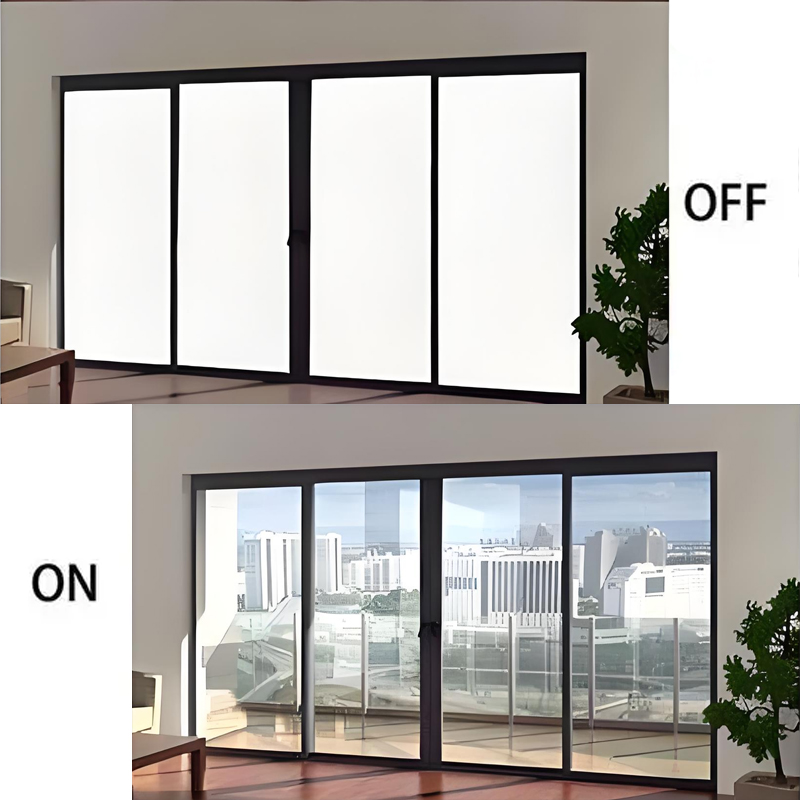
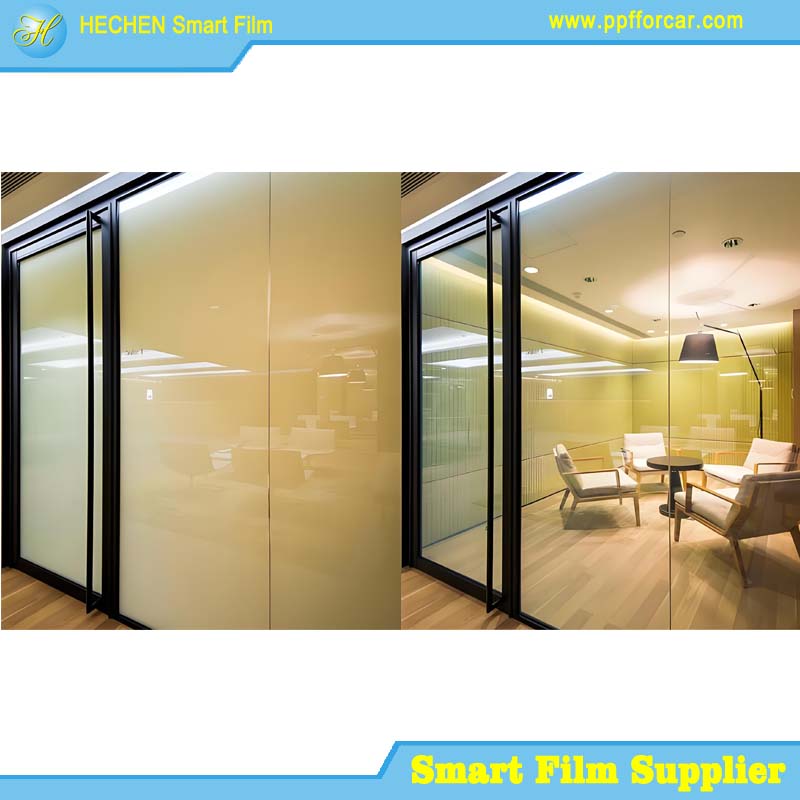
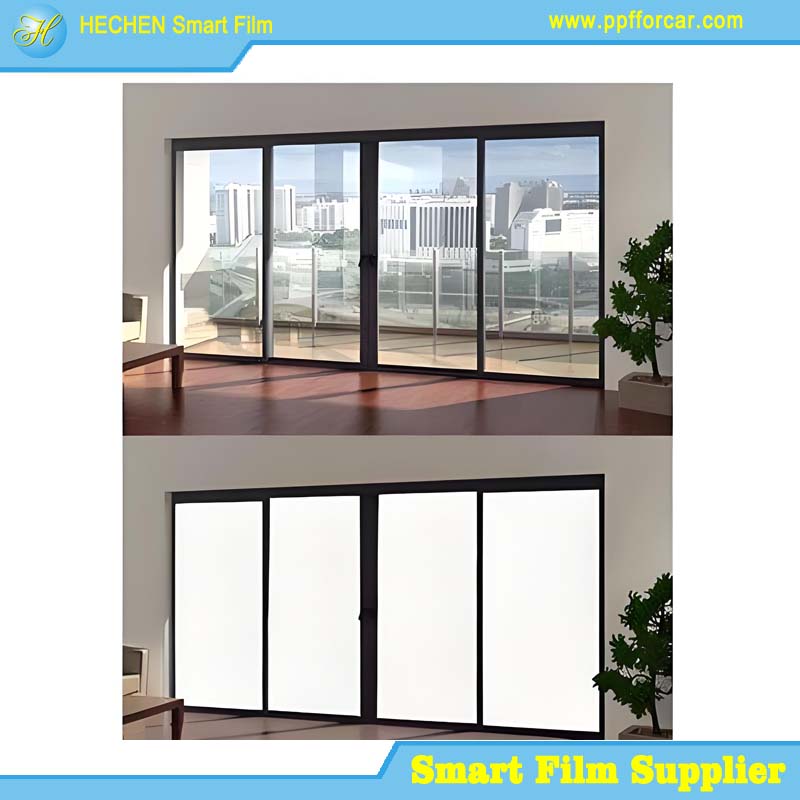
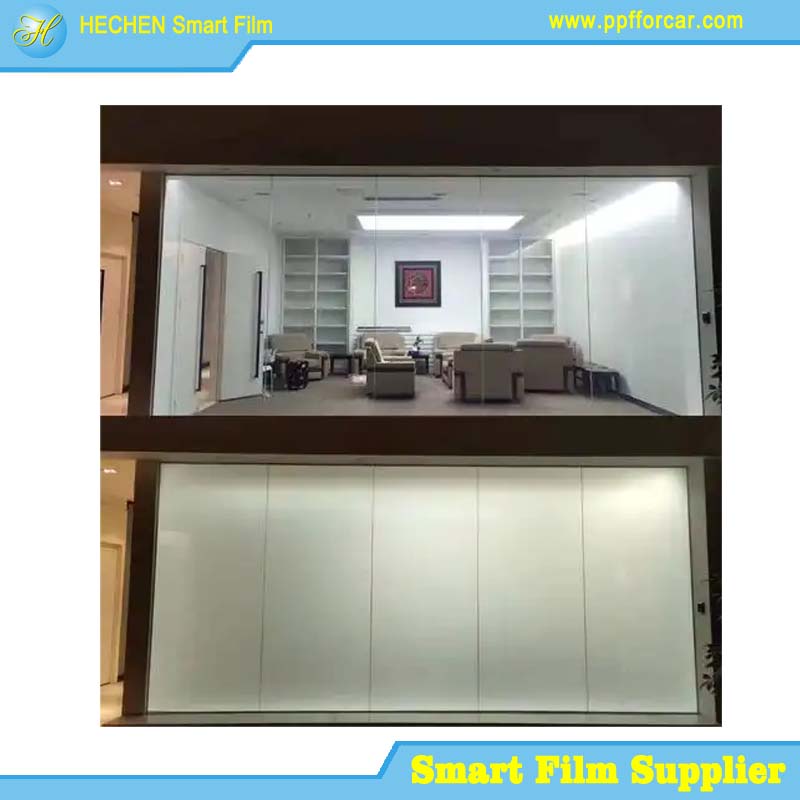
In the "Off" State (Opaque/Frosted): When no voltage is applied, the liquid crystals are randomly oriented within their polymer pockets. They scatter incident light in all directions, creating a translucent, milky-white appearance that provides privacy while still allowing diffuse light to pass through.
In the "On" State (Transparent/Clear): When an electrical voltage is applied across the conductive layers, the liquid crystals align uniformly parallel to the electric field. In this aligned state, light passes through the film with minimal scattering, rendering the glass perfectly clear and offering an unobstructed view.
This transition is rapid (often within milliseconds), seamless, and requires power only during the state change, not to maintain a given state. For automotive skylights, the film is typically integrated as a laminated layer within the glass panel, creating a durable, solid-state solution with no moving parts.
Transforming the Panoramic Experience: Applications and Benefits
Integrating PDLC Smart Film into automotive panoramic skylights unlocks a suite of transformative benefits that address the core challenges while adding new functionalities:
1. On-Demand Privacy and Security:
The most immediate benefit is the instant creation of a private sanctuary. At the touch of a button, a shimmering frosted layer appears, obscuring the interior from external view. This is invaluable in urban settings, during valet parking, or when the vehicle is stationary. It allows passengers to use devices, converse, or simply relax without feeling exposed. This feature is particularly appealing for luxury chauffeur services, VIP transport, and privacy-conscious consumers.
2. Enhanced Thermal Management and Energy Efficiency:
While the opaque state of standard PDLC diffuses light, advanced iterations can be combined with infrared (IR)-reflective or low-emissivity (low-E) coatings. This means the film can be switched to an opaque state that not only provides privacy but also reflects a significant portion of solar infrared radiation. By reducing solar heat gain, the cabin stays cooler, dramatically decreasing the energy required for air conditioning. For electric vehicles, this directly translates to preserved battery range, making PDLC a technology that contributes to both comfort and sustainability.
3. Glare Reduction and Visual Comfort:
The translucent state acts as a giant, uniform light diffuser. Harsh, direct sunlight is softened into a gentle, even glow, eliminating glare on displays, instruments, and passengers' eyes. This improves readability and reduces eye strain, enhancing the overall comfort for all occupants during daytime journeys.
4. Aesthetic Versatility and Design Innovation:
PDLC film offers designers new tools. The "frosted" state can be used to create a clean, minimalist roof lining when privacy is desired. Furthermore, the technology can be segmented or zoned. Imagine a skylight where only the section over the rear seats can be frosted for child privacy, while the front remains clear for the driver. It also opens possibilities for integrated lighting; when opaque, the surface could serve as a canvas for ambient LED lighting systems, transforming the roof into a dynamic mood-setting element.
5. Durability and Space Efficiency:
As a solid-state technology laminated within the glass, PDLC systems are more robust and reliable than mechanical shades with motors, tracks, and fabrics prone to wear and tear. They also free up precious headliner space, allowing for sleeker interior designs and potentially more headroom.
Current Implementation and Industry Adoption
The adoption of PDLC Smart Film in the automotive industry is accelerating, moving from niche applications to broader integration.
Premium and Luxury EVs: Brands like BMW (in the iX), and NIO (in models like the ET7 and ES8) offer electrochromic panoramic roofs as a flagship feature, often marketed as "smart glass roofs" or "privacy glass." These implementations highlight the synergy between cutting-edge EV platforms and smart cabin technologies.
Sunroof Specialists and Tier-1 Suppliers: Major automotive glass suppliers like Webasto, Saint-Gobain, and Corning are actively developing and supplying PDLC-integrated glass solutions to OEMs, signaling serious supply chain readiness.
Aftermarket and Retrofitting: A growing aftermarket sector also allows owners of vehicles with standard panoramic roofs to retrofit PDLC film, though this requires professional installation to ensure proper integration and electrical safety.
Challenges and Considerations for Widespread Adoption
Despite its promise, PDLC technology faces hurdles on the path to ubiquity:
Cost: The materials and specialized lamination process make PDLC glass significantly more expensive than standard sunroof glass or even traditional shaded sunroof assemblies. This currently limits it to higher-end vehicle segments.
Power Consumption & Integration: While low, the system requires integration into the vehicle’s electrical architecture. In an industry obsessed with minimizing vampire drain, especially in EVs, engineers must ensure the system’s power draw is negligible.
Performance Parameters: Key metrics like switching speed, haze levels in both states, long-term UV stability, and performance in extreme temperatures (-40°C to +85°C) are critical and under continuous improvement by material scientists.
Regulatory and Safety Compliance: The laminated glass must meet all automotive safety standards for impact resistance, roof crush strength, and occupant protection, which the inclusion of the film layer must not compromise.
The Future Horizon: Intelligent and Interactive Skylights
The future of PDLC in automotive skylights is not static but intelligently dynamic. The next evolution involves integrating the film into the vehicle’s broader sensory and control ecosystem:
Automated Control: Using light and thermal sensors, the roof could auto-dim in response to intense sunlight or high external temperatures, optimizing comfort and efficiency without driver input.
Geofencing and User Profiles: The vehicle could automatically frost the roof upon entering a predefined "privacy zone" (like one’s office parking lot) or set preferences based on driver profiles.
Integration with ADAS and V2X: In a future of autonomous vehicles, the roof could become a multifunctional surface for communication, entertainment, or productivity, with PDLC providing the necessary privacy backdrop.
Conclusion: More Than Just a Privacy Screen
PDLC Smart Film represents a paradigm shift for panoramic skylights, transforming them from passive windows to the sky into active, intelligent components of the vehicle’s environmental control and user experience system. It elegantly resolves the fundamental tension between openness and enclosure, light and heat, transparency and privacy.
As the technology matures, costs decline, and integration deepens, it is poised to move from a luxury novelty to a mainstream expectation. In an era where the cabin is the new battleground for automotive innovation, PDLC Smart Film for panoramic skylights is more than just a privacy solution; it is a critical enabler for the comfortable, efficient, and personalized "third space" on wheels, ensuring that the connection to the outside world is always on the driver’s—and passengers’—own terms.
For more about the PDLC smart film in automotive industry: privacy solutions for panoramic skylights, you can pay a visit to Hechen PDLC Smart Film Manufacturers for more info.