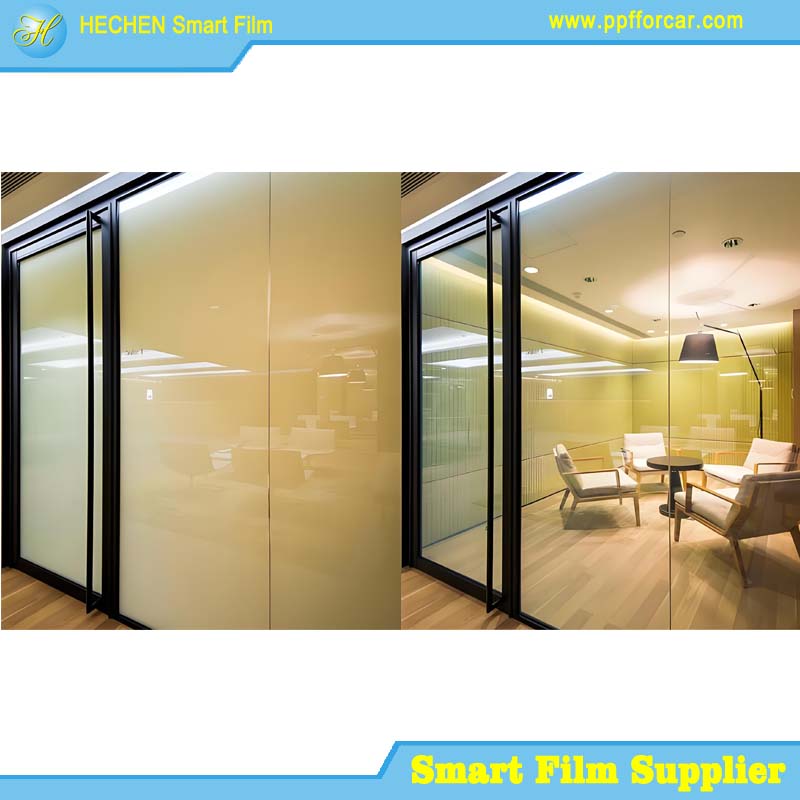
PDLC Smart Film in Commercial Spaces: Hotels, Offices & Hospitals Applications
Polymer Dispersed Liquid Crystal (PDLC) smart film represents a transformative glazing technology for modern commercial environments. By electronically controlling the alignment of liquid crystal droplets within a polymer matrix, the film transitions between opaque (scattering) and transparent states, offering dynamic privacy, solar control, and aesthetic flexibility. This article provides a technical examination of PDLC smart film applications across three demanding commercial sectors: hospitality, corporate offices, and healthcare facilities. It discusses operational principles, integration methods, energy performance, hygiene benefits, and user experience enhancements, while avoiding proprietary product references.
1. Introduction
The built environment increasingly demands adaptable interfaces between interior spaces and occupants. Fixed transparency glazing—whether clear glass for daylighting or frosted glass for privacy—cannot reconcile conflicting requirements that shift throughout the day. A conference room may need transparency during collaborative sessions but opacity for private negotiations. A hospital patient room requires visibility for clinical observation yet visual privacy for patient dignity. A hotel bathroom might need natural light without sacrificing seclusion.
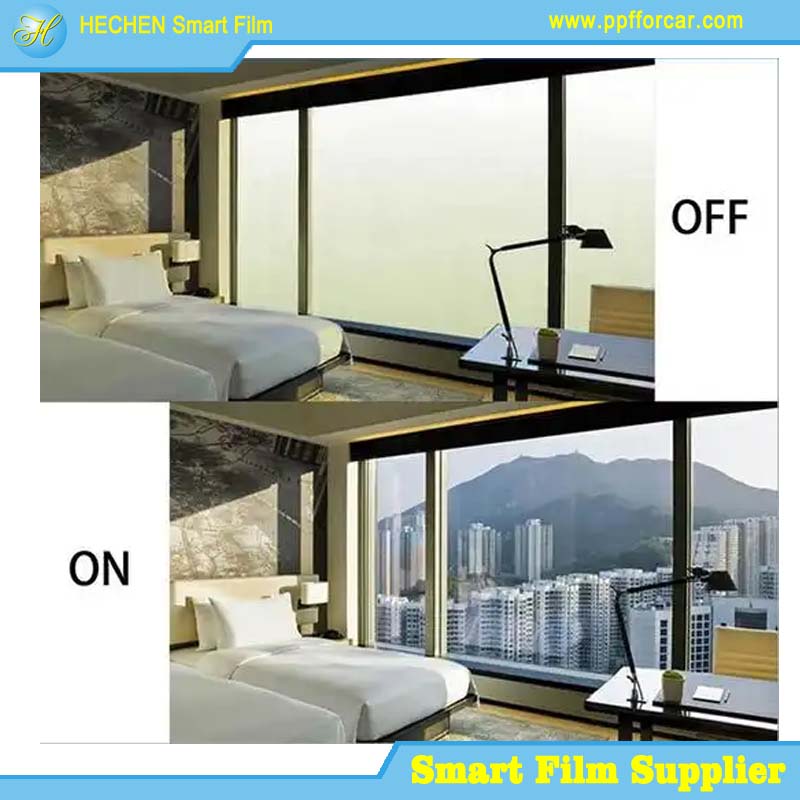
PDLC smart film addresses this challenge by enabling electrically switchable opacity. When voltage is applied, the film becomes transparent; when power is removed, it reverts to a translucent, light-scattering state. This technology, matured over decades of materials science research, now offers reliable, energy-efficient solutions for retrofitting existing glass or integrating into new curtain wall systems. This article explores technical specifications, installation considerations, and sector-specific performance criteria for PDLC film in hotels, offices, and hospitals.
2. Principles of PDLC Technology
2.1 Basic Construction
PDLC film is a multilayer composite. At its core lies a 15–30 µm thick layer of polymer-dispersed liquid crystal material sandwiched between two transparent conductive coatings (typically indium tin oxide, ITO) on polyester substrates. The entire assembly is laminated with protective layers, often integrated into safety glass via lamination with polyvinyl butyral (PVB) or ethylene-vinyl acetate (EVA). The finished product operates at low voltage—typically 40–70 V AC at 50/60 Hz—drawing less than 5 W/m² in the transparent state.
2.2 Switching Mechanism
In the off-state (no electric field), liquid crystal droplets dispersed within the polymer matrix assume random orientations. Incident light undergoes multiple scattering events as it encounters refractive index mismatches between the liquid crystal (ordinary refractive index ~1.5, extraordinary ~1.7) and the polymer (matched to the ordinary index). This results in a milky white appearance with high haze (>90%) and low direct transmittance (<10%).
Applying an AC voltage across the conductive layers generates an electric field that aligns the liquid crystal molecules parallel to the field direction. When the extraordinary index aligns with the polymer’s refractive index, scattering is suppressed, and the film becomes transparent. Haze drops below 5%, and visible light transmittance reaches 70–80%, depending on film formulation.
2.3 Performance Parameters
Key technical specifications for commercial-grade PDLC films include:
Switching time: 10–100 milliseconds (on/off)
Operating voltage: 40–70 V AC
Power consumption: <5 W/m² (transparent state); 0 W (opaque state)
Viewing angle: >140°
Operating temperature: -10°C to 70°C
UV blocking: >99% (depending on additives)
Solar heat gain coefficient (SHGC): 0.50–0.65 (clear state), 0.60–0.75 (opaque state)
Durability: >50,000 switching cycles
3. Applications in Hotels
The hospitality industry demands flexible spatial configurations, guest comfort, and differentiated ambience. PDLC smart film addresses these through partition walls, shower enclosures, and exterior glazing.
3.1 Bathroom Partitions and Shower Enclosures
Hotel bathrooms often lack natural light when positioned in interior cores. Traditional frosted glass provides privacy but blocks views. PDLC film on clear glass partitions allows guests to switch between transparent (for daylight penetration and spatial openness) and opaque (for shower privacy). In high-end suites, this feature becomes a signature amenity. Technically, the film must withstand high humidity and temperature fluctuations. Laminated PDLC glass with sealed edges and moisture-resistant ITO coatings ensures long-term reliability. Control can be via wall switches, motion sensors (opaque when occupied), or integration with room automation systems.
3.2 Sliding Doors and Room Dividers
Open-plan hotel suites increasingly use movable glass partitions. PDLC film enables instant conversion between studio-style transparency and enclosed sleeping areas. For example, a living area can remain visually connected to the bedroom during daytime, but at night the partition switches to opaque for privacy. Acoustic performance is also relevant: PDLC film alone offers negligible sound insulation, but when laminated with acoustic PVB interlayers (e.g., 0.76 mm thickness), sound transmission class (STC) ratings of 35–40 dB are achievable, sufficient for hotel interior divisions.
3.3 Exterior Windows with Solar Control
Hotels in sunny climates face glare and heat gain challenges. PDLC film in its opaque state scatters incoming sunlight, reducing direct glare and diffusing illumination. However, it does not significantly reduce total solar heat transmission because scattering eventually converts to absorbed heat re-radiated inward. To achieve true solar control, PDLC is often combined with low-emissivity coatings or spectrally selective films. Some products integrate PDLC with suspended particle devices (SPD) or electrochromic technologies, but pure PDLC remains simpler and more cost-effective. For hotel exteriors, the opaque state provides visual privacy while admitting diffused daylight, eliminating the need for blackout curtains.
3.4 Skylights and Atriums
Hotels with overhead glazing can use PDLC film on skylights to control brightness. In transparent mode, natural light floods the space; in opaque mode, the skylight becomes a luminous ceiling panel, reducing heat load and glare. Because PDLC film does not require continuous power to remain opaque, it offers energy savings compared to motorized shades.
4. Applications in Offices
Modern office design emphasizes flexibility, collaboration zones, and employee well-being. PDLC film supports these goals through dynamic meeting room partitions, private phone booths, and exterior shading.
4.1 Conference and Meeting Rooms
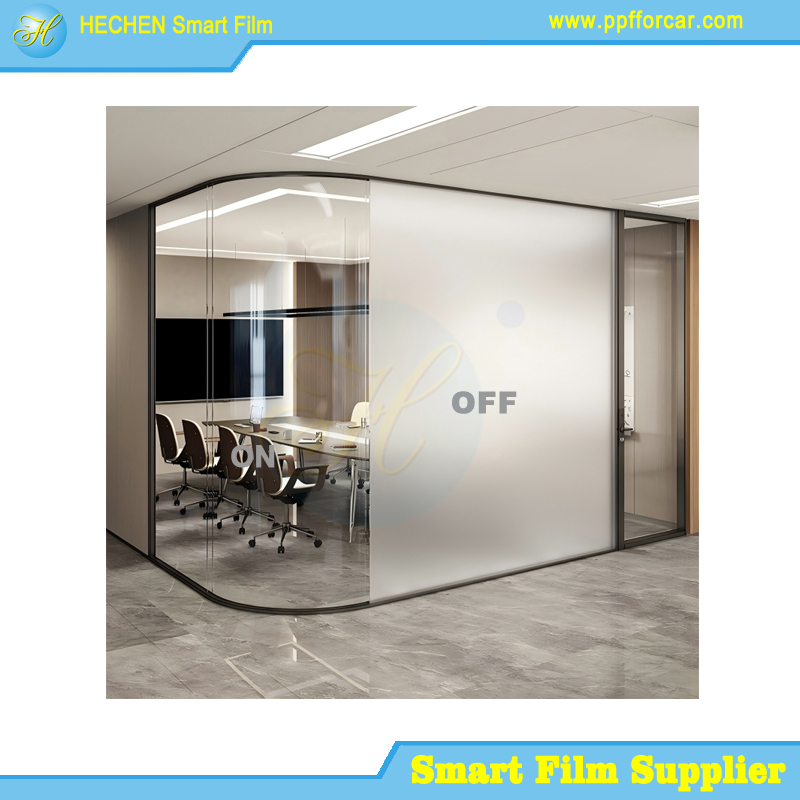
The most common office application is switchable privacy for glass-walled meeting rooms. Traditional blinds or curtains collect dust, require maintenance, and fail mechanically. PDLC film integrated into glass partitions offers instant, silent switching. At the touch of a button, a transparent wall becomes opaque for confidential discussions or video conferencing. For open-plan offices, floor-to-ceiling PDLC glass creates "on-demand" enclosed spaces without permanent walls.
Technical considerations include wiring: power must be supplied to each glass panel via concealed conduits in floor or ceiling frames. Low-voltage DC-to-AC inverters (electronic drivers) convert building 120/230 V AC to the required 40–70 V AC. Multiple panels can be controlled in zones via relay modules or building automation systems.
4.2 Phone Booths and Focus Rooms
As open offices reduce private offices, demand for acoustic privacy booths has risen. PDLC glass enclosures allow users to see if a booth is occupied (transparent when empty, opaque when in use) and to control privacy on demand. The film’s power consumption is negligible, and switching cycles exceed 50,000—sufficient for decades of daily use.
4.3 Exterior Glazing and Employee Comfort
Large office windows provide views but cause glare on computer screens. PDLC film in opaque state diffuses direct sunlight, reducing contrast ratios on displays. However, because PDLC scatters rather than absorbs or reflects light, some glare may persist. For optimal performance, exterior PDLC glazing should be paired with a low-emissivity coating or be part of a double-glazed unit with the film on the inner surface. In the opaque state, the film also provides after-hours privacy for nighttime cleaning crews or security.
4.4 Projection Surfaces
When switched to the opaque state, PDLC film becomes a high-gain projection screen with a matte white appearance. This allows glass walls to double as presentation surfaces in training rooms or brainstorming areas. Projector brightness should be at least 3000 lumens for a 100-inch diagonal image, as the film’s reflectance is approximately 70% (compared to 85–90% for dedicated projection screens). The surface also supports dry-erase markers in some laminated versions.
5. Applications in Hospitals
Healthcare facilities impose stringent requirements for infection control, patient dignity, staff workflow, and regulatory compliance. PDLC film addresses these in patient rooms, intensive care units (ICUs), operating theaters, and mental health wards.
5.1 Patient Room Windows and Partitions
Standard hospital patient rooms require a balance between staff visibility for monitoring and patient privacy. Curtains and blinds harbor pathogens, require frequent laundering, and impede rapid access during emergencies. PDLC glass offers a seamless, cleanable surface that can be switched instantly. For semi-private rooms, a central PDLC partition allows each patient to control their side’s opacity, providing visual separation without structural walls. Exterior windows with PDLC eliminate the need for drapes, reducing infection vectors.
From a clinical perspective, the transparent state enables remote visual checks by nurses, while the opaque state gives patients control over their environment—shown to improve psychological outcomes. In ICUs, where continuous monitoring is essential, PDLC can be integrated with nurse call systems: an opaque window becomes transparent automatically when an alarm triggers, ensuring staff can see the patient instantly.
5.2 Operating Theaters and Procedure Rooms
Operating rooms require both privacy and sterility. PDLC film on viewing windows between operating theaters and observation galleries allows surgical training without physical entry. In transparent mode, trainees observe procedures; in opaque mode, patient privacy is preserved during sensitive portions. The film’s smooth, non-porous surface withstands chemical disinfectants (quaternary ammonium compounds, hydrogen peroxide wipes) without degradation, provided the glass edges are sealed.
5.3 Mental Health and Behavioral Health Units
In psychiatric facilities, patient safety prohibits traditional hanging fixtures (curtains, blinds, cords) that pose ligature risks. PDLC film integrated into laminated safety glass provides ligature-free privacy control. The glass surface has no moving parts, cords, or gaps. In the opaque state, patients gain visual privacy; in transparent state, staff maintain line-of-sight supervision. The switching mechanism is housed in tamper-resistant enclosures (e.g., key-operated switches or remote control). Moreover, PDLC film does not produce sharp fragments if broken—laminated construction retains glass shards.
5.4 Laboratory and Pharmacy Windows
Hospital pharmacies and research labs often require visual access for safety but occasional privacy for confidential drug preparation. PDLC film offers instant switching without mechanical blinds that accumulate dust. The smooth surface is easy to clean with alcohol-based wipes, meeting USP <797> cleanroom standards.
6. Technical Integration and Control Strategies
6.1 Power Supply and Wiring
PDLC film requires an AC power supply at 40–70 V, 50/60 Hz. Electronic drivers convert line voltage to this range. Each driver can typically power 10–20 m² of film, depending on capacitance. Wiring must be installed in wall or floor channels, with connections made via busbars along the film edges. For retrofits, surface-mounted channels are possible but aesthetically inferior. New construction allows embedding wiring in frames.
6.2 Control Interfaces
Common control options include:
Wall switches: Momentary or latching types; can include dimming for partial opacity (though PDLC has only two stable states; intermediate states require pulse-width modulation and reduce film life).
Remote controls: Infrared or RF, suitable for medical isolation rooms.
Occupancy sensors: Film switches to opaque when room is occupied, clear when empty.
Building automation systems (BAS): Integration via relay modules and digital inputs. For example, a hospital’s BAS can set patient room windows to opaque during nighttime hours and clear during morning rounds.
Voice control: Compatible with smart assistants through internet-of-things (IoT) gateways.
6.3 Fail-Safe and Fail-Safe Modes
PDLC film is normally opaque (power-off = scattering). This fail-safe behavior is advantageous for privacy: during a power outage, windows become opaque, protecting occupant confidentiality. Conversely, for applications requiring failsafe transparency (e.g., fire escape routes), designers must specify normally transparent films, which use different liquid crystal formulations (reverse-mode PDLC) or incorporate uninterruptible power supplies.
7. Energy and Sustainability Considerations
PDLC film’s energy impact depends on usage patterns. In transparent state, it consumes 3–5 W/m². In opaque state, consumption is zero. Annual energy use is typically 5–10 kWh per square meter when switched 8 hours daily. Compared to motorized blinds (which require maintenance and replacement), PDLC has lower lifetime embodied energy if glass recycling is available.
However, PDLC does not significantly reduce heating or cooling loads. Its solar heat gain coefficient changes only modestly between states. For exterior applications, PDLC should be combined with low-e coatings or used as the inner pane of insulated glass units (IGUs) to prevent heat loss. Some manufacturers offer PDLC with suspended particle devices (SPD) for true solar control, but at higher cost and complexity.
8. Limitations and Maintenance
PDLC film has several limitations:
Viewing angle: Transparency degrades at oblique angles (>60° from normal), appearing slightly hazy.
Temperature sensitivity: Below -10°C, switching speed slows; above 70°C, polymer degradation accelerates.
UV degradation: Prolonged direct sunlight causes yellowing; UV-absorbing interlayers or laminated glass with UV filters mitigate this.
Cleaning: Abrasive cleaners scratch ITO layers; only soft cloths and non-alkaline detergents should be used.
Switching life: After 50,000–100,000 cycles, haze in transparent state may increase; high-quality films exceed this by a factor of 3–5.
Conclusion
PDLC smart film offers a mature, reliable solution for dynamic privacy and light control in commercial spaces. In hotels, it enhances guest experience through adaptable bathroom and room-dividing glass. In offices, it enables flexible meeting spaces, focus rooms, and projection surfaces. In hospitals, it supports infection control, patient dignity, staff workflow, and ligature safety. While not a substitute for active solar control or acoustic isolation, PDLC film excels where instant, silent, and maintenance-free privacy switching is required. With proper integration into building systems and attention to environmental conditions, PDLC technology can improve spatial efficiency, user satisfaction, and energy-aware operation across the commercial built environment.
For more about PDLC Smart Film in Commercial Spaces: Hotels, Offices & Hospitals Applications. Everything you need to know, you can pay a visit to https://www.ppfforcar.com/product/PDLC-Smart-Film/ for more info.