PDLC Smart Window Film for Offices Has Higher Technical Standards And Design
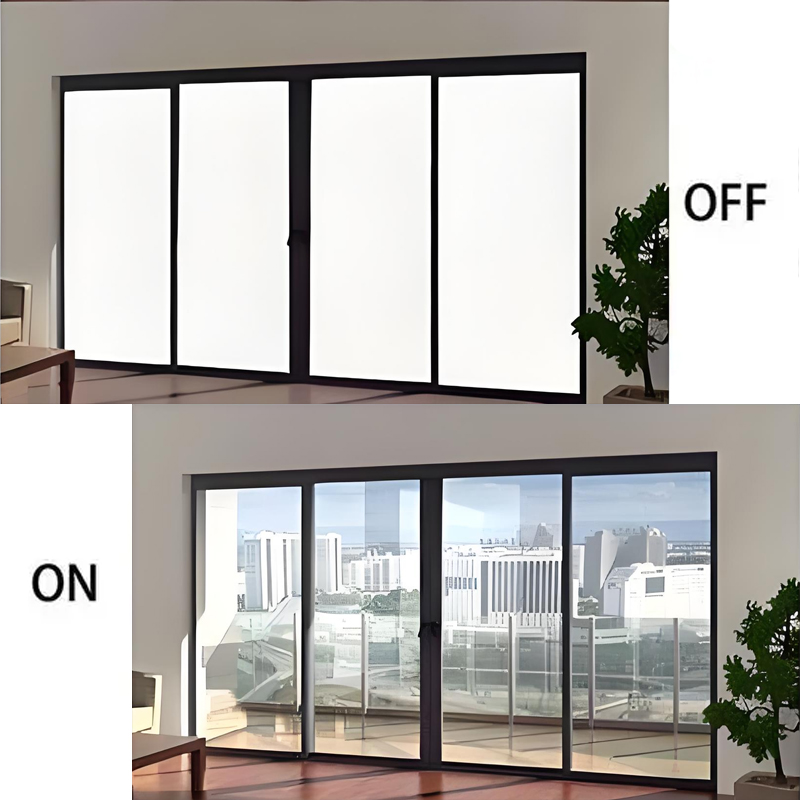
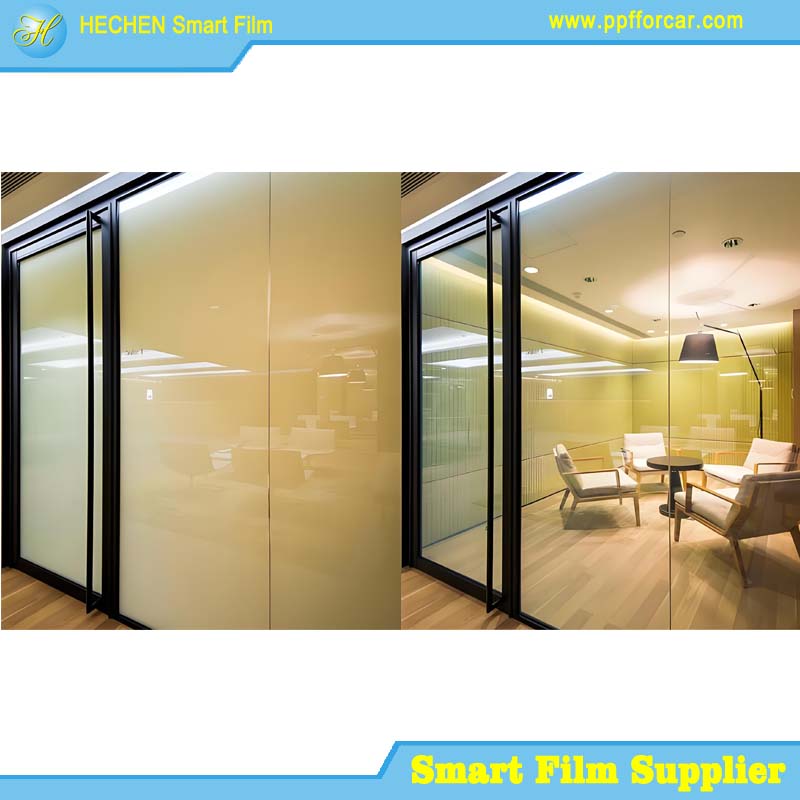
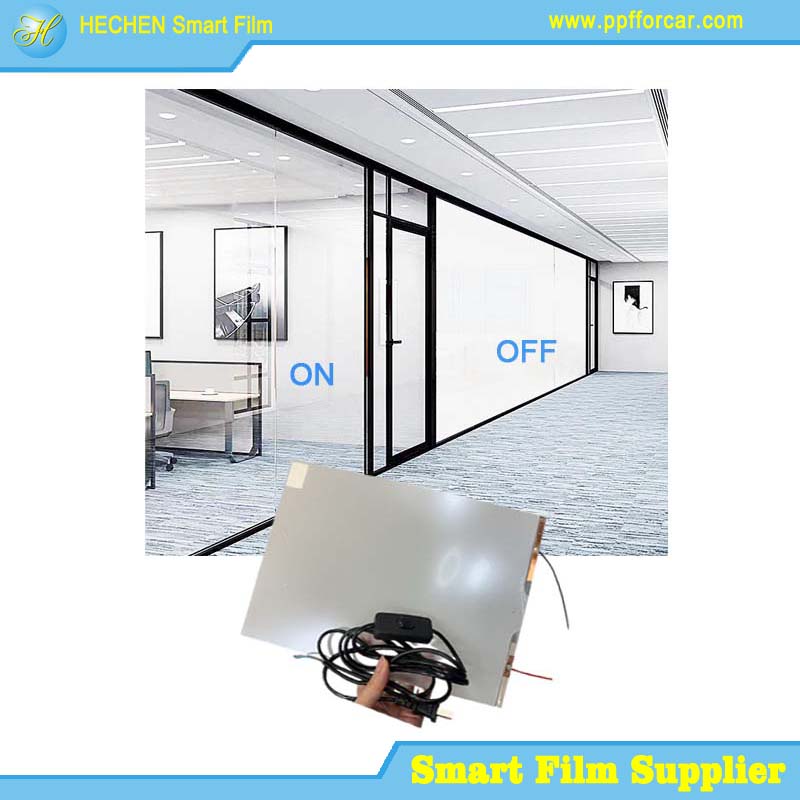
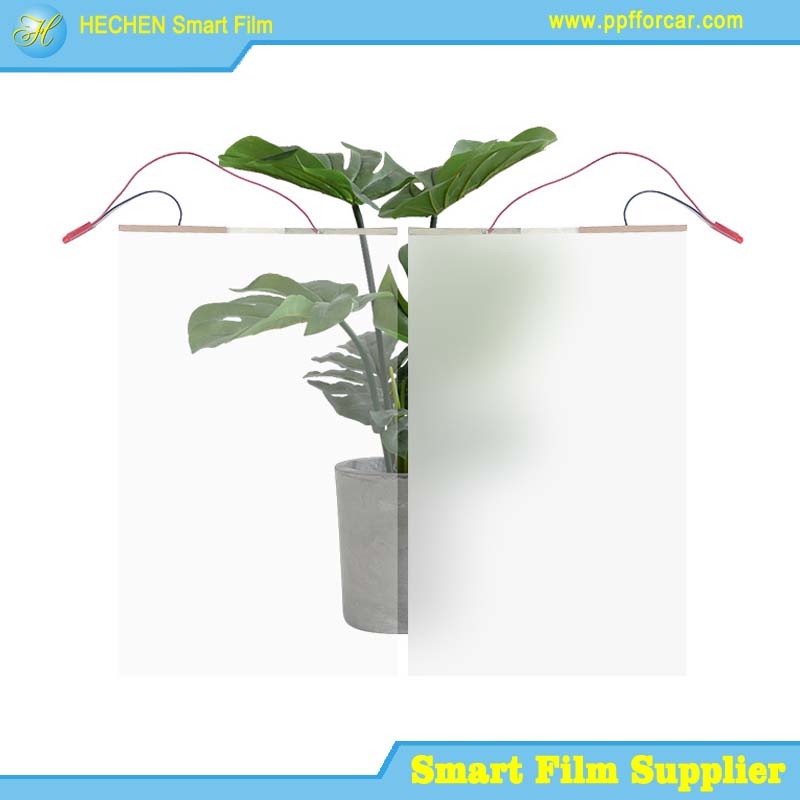
Polymer Dispersed Liquid Crystal (PDLC) smart window film represents a cutting-edge innovation in architectural glazing, enabling dynamic control over light transmission, privacy, and energy efficiency. At its core, PDLC technology involves microscopic liquid crystal droplets dispersed within a polymer matrix, sandwiched between conductive ITO (indium tin oxide) layers. When an alternating current (AC) voltage—typically 42-70 VAC—is applied, the liquid crystals align, allowing light to pass through and rendering the film transparent. In the off state, the crystals scatter light, creating an opaque, frosted appearance for instant privacy. This switchable functionality, with response times as quick as 10-50 milliseconds, makes PDLC films versatile for modern interiors.
In household scenarios, PDLC smart window films are popular for bathrooms, bedrooms, and home offices, where they enhance privacy without permanent alterations to existing windows. Applied as self-adhesive layers, they offer an affordable retrofit solution, blocking up to 99% of UV rays and reducing glare for family comfort. Energy savings come from reflecting infrared (IR) heat, potentially lowering cooling costs by up to 15°C in sunny rooms. However, homes typically see low-traffic use, with films enduring occasional cleaning and moderate environmental exposure.
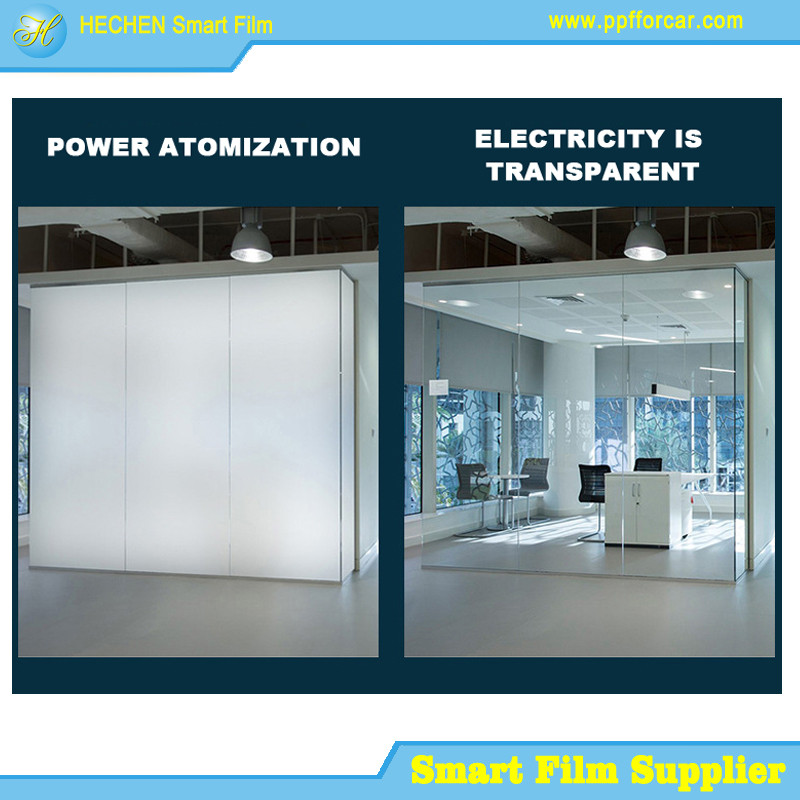
Offices, by contrast, demand robust performance in high-stakes environments. Commercial spaces like conference rooms, executive suites, and open-plan layouts use PDLC films to partition areas dynamically, fostering collaboration while maintaining confidentiality. Here, films must withstand intensive daily cycling—up to thousands of switches per day—intense foot traffic, professional cleaning regimens, and proximity to sensitive electronics. Regulatory compliance, such as fire ratings and acoustic insulation, further elevates standards. The return on investment (ROI) is amplified in offices, where reduced HVAC demands and minimized signage costs justify premium installations.
This article examines whether PDLC smart window films for offices indeed exhibit higher technical standards in stain resistance, wear resistance, and electromagnetic interference (EMI) resistance compared to household variants. Drawing on manufacturer specifications and industry insights, we explore the rationale—rooted in usage intensity and compliance needs—and detail specific enhanced designs that bridge these gaps. Ultimately, while base PDLC technology is similar, office-grade films incorporate tailored reinforcements to ensure longevity and reliability in demanding settings.
Stain Resistance: Navigating Chemical Exposures in High-Use Environments
Stain resistance in PDLC films refers to the material's ability to repel or withstand contaminants like fingerprints, spills, dust, and cleaning agents without degrading optical clarity or structural integrity. In households, stains arise from everyday mishaps—greasy fingerprints from cooking, pet marks, or soap residues in bathrooms. Cleaning is often casual, using household wipes or mild detergents. Standard PDLC films, with their PET (polyethylene terephthalate) outer layers, offer basic resistance, blocking over 99% UV to prevent yellowing from sun exposure. However, prolonged exposure to harsh household chemicals, like ammonia-based glass cleaners, can etch the surface, leading to haze or delamination over 5-10 years.
Offices elevate these challenges exponentially. High-traffic areas accumulate smudges from multiple users, coffee spills, and marker residues from brainstorming sessions. Professional janitorial services employ industrial cleaners—disinfectants, solvents, and abrasives—to meet hygiene standards, especially post-pandemic. Consequently, office PDLC films must achieve superior chemical resistance, often certified to withstand pH extremes (2-12) and common agents like isopropyl alcohol (up to 99% concentration) without bubbling or discoloration. Manufacturers report that premium commercial films resist stains 20-30% better than residential ones, with surface treatments enduring 500+ cleaning cycles before measurable degradation.
This disparity stems from usage volume: a home film might face 50 cleanings annually, while an office counterpart endures 200-300, accelerating wear from repeated chemical contact. Regulatory bodies like OSHA emphasize non-porous, easy-clean surfaces in workplaces to curb allergen buildup, pushing office films toward higher benchmarks.
Specific enhanced designs address these needs. One innovation is the multi-layer hard-coat PET encapsulation, where a 2H-3H pencil hardness topcoat—versus 1H in basic household films—forms a hydrophobic barrier. This repels water-based stains (e.g., inks, beverages) and oleophobic oils, reducing adhesion by 40%. Gauzy's Adhesive High Performance (AHP) series, tailored for offices, integrates nano-ceramic additives that enhance chemical inertness, allowing safe use of quaternary ammonium disinfectants without residue. For extreme cases, like healthcare offices, films feature UV-cured silicone overlays, boosting resistance to bleach (up to 10% solutions) while maintaining haze below 3%.
Another design is edge-sealed variants, preventing moisture ingress that could exacerbate stains. In residential films, open edges allow vapor diffusion, fostering microbial growth; commercial versions use silicone gaskets, certified IP65 waterproof, to isolate the PDLC core. Puye Tech's exclusive hard-film structure, with >99% UV blocking, doubles as a stain shield by minimizing polymer degradation from acidic spills. These enhancements not only extend lifespan to 15-20 years in offices but also cut maintenance costs by 25%, as verified in case studies from corporate installations.
In practice, office films undergo rigorous ASTM D1308 testing for stain susceptibility, far exceeding household informal checks. This ensures that even after simulated 1,000-hour exposures to coffee, ink, and cleaners, transmission efficiency remains >80%. Thus, yes—office PDLC films set a higher bar for stain resistance, driven by design ingenuity that anticipates professional rigors.
Wear Resistance: Enduring the Grind of Daily Operations
Wear resistance measures a PDLC film's tolerance to mechanical stresses—scratches, abrasions, and flexing—over its lifecycle. Household applications involve gentle interactions: occasional dusting or child-induced scuffs. Basic films, at 0.4-0.5mm thick, provide adequate protection via ITO-conductive layers, lasting 10-15 years with <5% haze increase from minor abrasions. Yet, without reinforcements, they falter under repeated microfiber cloth friction, developing micro-scratches that scatter light unevenly.
Offices, however, are abrasion battlegrounds. Partitions in lobbies or meeting rooms endure cart bumps, leaning briefcases, and high-velocity cleaning tools. With 8-10 hour daily operation and 50-100 user interactions per panel, wear accelerates exponentially. Commercial standards demand films survive 10,000+ abrasion cycles (per Taber test ASTM D1044) with <2% weight loss, compared to 5,000 for residential. This translates to 2-3x higher durability, justified by economic imperatives: replacing a single office panel costs $500-1,000, versus $100-200 at home.
The premium stems from traffic density and warranty expectations. Office installations carry 10-15 year guarantees, versus 5-7 for homes, necessitating robust baselines. In regulated sectors like finance or law firms, films must comply with ANSI Z97.1 impact standards, simulating accidental strikes without delamination.
Enhanced designs shine here. Foremost is the scratch-resistant hardcoat, elevating surface hardness from HB (household) to 3H-4H in office-grade films. This acrylic-urethane layer, applied via plasma deposition, deflects quartz-tipped styluses and steel wool, reducing scratch depth by 60%. UniteGlass's non-adhesive films for commercial lamination incorporate alumina nanoparticles, boosting abrasion resistance to withstand 2,000g loads without visible marks.
Laminated smart glass variants—preferred for offices—embed PDLC between tempered panes, shielding it from direct wear. Unlike peel-and-stick household films, this "bulletproof" design endures hail-like impacts (up to 2x ANSI standards) and thermal cycling (-20°C to +70°C) without cracking. Gauzy's AHP films add anti-reflective microlenses, distributing stress evenly during flexing, ideal for curved office facades. For ultra-high-wear zones like reception areas, hybrid films with Kevlar-infused polymers offer tensile strength >200 MPa, preventing tears from heavy contact.
Cycling endurance is another pillar: office films achieve >18 million on/off switches and 800,000 hours of operation, versus 5-10 million for homes, thanks to stabilized liquid crystals that resist dielectric fatigue. Field data from corporate deployments shows <1% failure rate after 5 years, underscoring these upgrades.
In essence, office PDLC films' superior wear resistance—fortified by advanced coatings and lamination—ensures seamless performance amid relentless demands, far outpacing household counterparts.
Electromagnetic Interference Resistance: Safeguarding Sensitive Office Ecosystems
Electromagnetic interference (EMI) resistance in PDLC smart window films pertains to minimizing emissions or susceptibility to electromagnetic fields, crucial for environments dense with gadgets. Household setups rarely contend with this; a single router or smart TV poses negligible risk, and standard films' low power draw (1-5W/m² at 50-60Hz) generates minimal interference, compliant with basic FCC Part 15 Class B limits. Capacitive coupling is absent, but unshielded edges can induce minor noise in nearby audio systems.
Offices amplify EMI concerns manifold. Proximity to servers, VoIP phones, and wireless networks in trading floors or tech hubs risks data corruption or signal disruption. Films must adhere to stringent EMC directives (EN 55032/55035), emitting <30 dBµV/m beyond 30MHz—10-15 dB lower than residential thresholds—to prevent crosstalk. With panels spanning meters, cumulative fields could otherwise jam RFID badges or Bluetooth devices, violating ISO 18000-6C standards.
This heightened bar reflects operational stakes: EMI-induced downtime in offices costs thousands per hour, versus trivial home glitches. Commercial certifications, like CE marking, mandate full-spectrum testing (150kHz-6GHz), ensuring zero capacitive effects that could trigger false alarms in security systems. Enhanced designs prioritize shielding. Office films embed mu-metal foils within ITO layers, attenuating EMI by 40-60 dB across RF bands, absent in household versions. Filmbase's FB-500W series, EMC-tested to CISPR 32, uses grounded busbars to dissipate fields, ideal for data centers. Low-ESR (equivalent series resistance) electrolytes in premium PDLC reduce harmonic distortions, keeping noise floors <20 dB below residential norms.
Integrated Faraday cages in laminated office glass—thin copper meshes between panes—block 99% of external interference, enabling safe co-location with medical equipment in hybrid office-clinics. Variable frequency drivers (40-100Hz) allow tuning to avoid resonance with office Wi-Fi (2.4/5GHz), a feature unnecessary at home.
These innovations ensure office PDLC films not only resist but actively suppress EMI, fostering interference-free zones.
Conclusion
In comparing PDLC smart window films for offices versus households, the verdict is clear: office variants uphold markedly higher technical standards across stain resistance, wear resistance, and EMI resistance. Driven by intense usage, regulatory demands, and ROI imperatives, these films transcend basic functionality to deliver resilient, future-proof solutions. Stain resistance benefits from hydrophobic hardcoats and edge seals; wear from nanoparticle reinforcements and lamination; EMI from shielded layers and tuned electronics. Specific designs—like Gauzy's AHP series or Puye's hard-film structures—exemplify how targeted enhancements extend lifespans to 20+ years while slashing operational costs.
As smart buildings evolve, these advancements democratize high-performance glazing, blurring lines between commercial and residential. Yet, for offices, the elevated bar remains non-negotiable, ensuring privacy, efficiency, and reliability in an always-on world. Architects and facility managers should prioritize certified commercial-grade films to unlock their full potential.
For more about the PDLC smart window film for offices has higher technical standards and design, you can pay a visit to Hechen PDLC Smart Film Manufacturers for more info.