Smart Tint Film: PDLC vs. SPD vs. EC Technology - Which is Best?
In an era where architectural design increasingly prioritizes both aesthetics and functionality, smart tint films have emerged as a transformative technology for windows and glass surfaces. These dynamic glazing solutions allow users to alter the transparency of glass with the flick of a switch, offering unprecedented control over privacy, light, and energy efficiency. Among the various technologies available, three stand out: Polymer Dispersed Liquid Crystal (PDLC), Suspended Particle Device (SPD), and Electrochromic (EC) technology. Each operates on distinct scientific principles and offers unique advantages, catering to different needs across residential, commercial, automotive, and aerospace applications. This article provides a comprehensive comparison of PDLC, SPD, and EC smart tint technologies, guiding you toward the optimal choice for your specific project.
The Need for Smart Glass: Beyond Conventional Solutions
Traditional window solutions—blinds, curtains, tints, and fritted glass—present limitations. They often require manual adjustment, offer limited control over light spectrum, and can compromise views or design aesthetics. Smart tint films address these issues by embedding intelligence into the glazing itself. Key drivers for adoption include:
Energy Efficiency: Dynamic control over solar heat gain reduces HVAC costs.
User Comfort: Glare reduction and optimized natural light improve occupant well-being.
Privacy & Security: Instant opacity provides on-demand seclusion.
Architectural Innovation: Enables sleek, modern designs with adaptable facades.
Understanding the core technology behind each option is essential for making an informed decision.
1. Polymer Dispersed Liquid Crystal (PDLC) Technology
How It Works
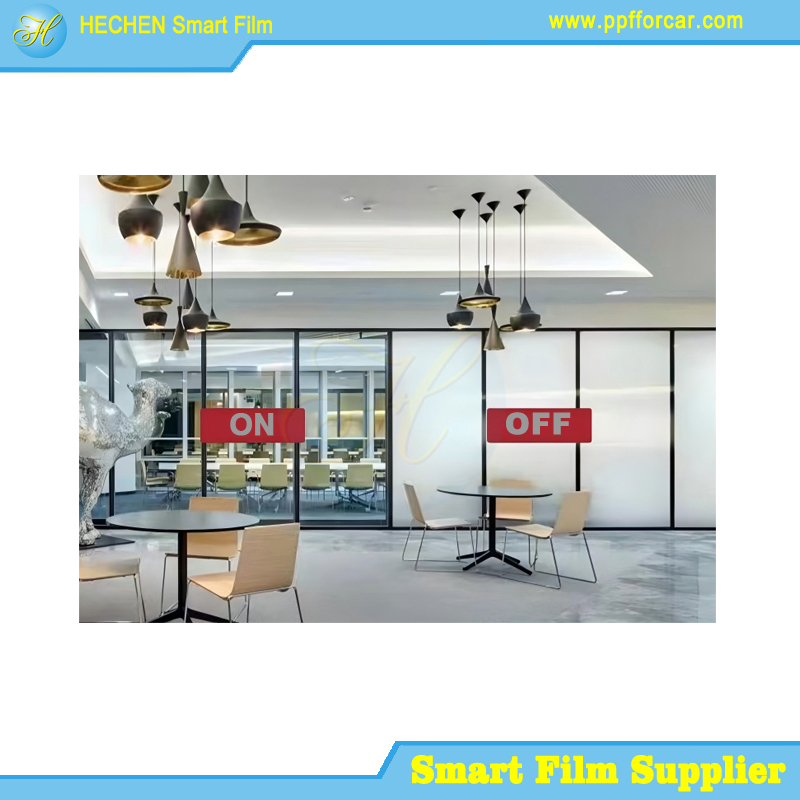
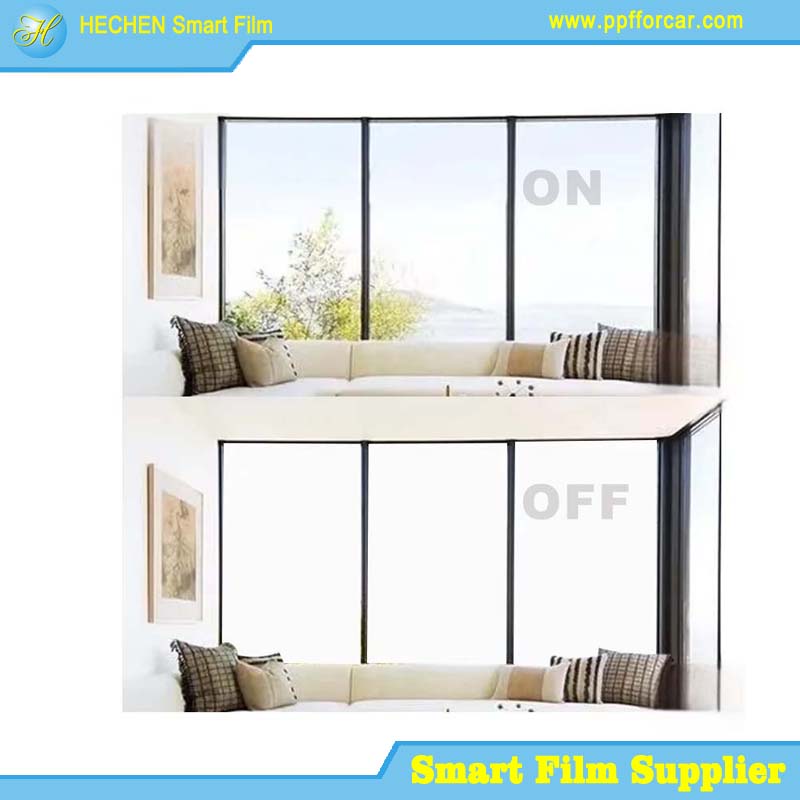
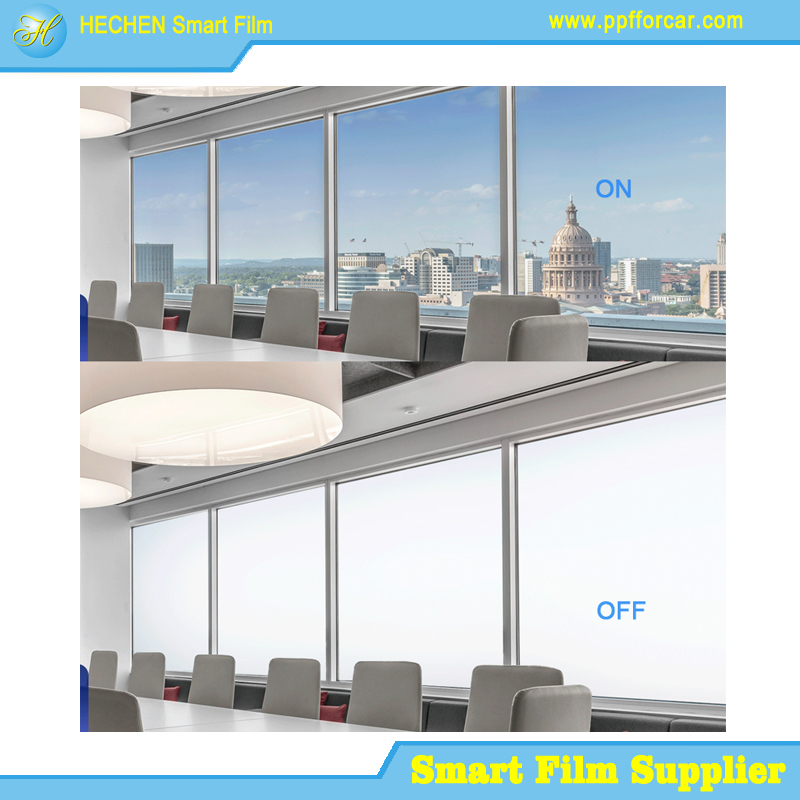
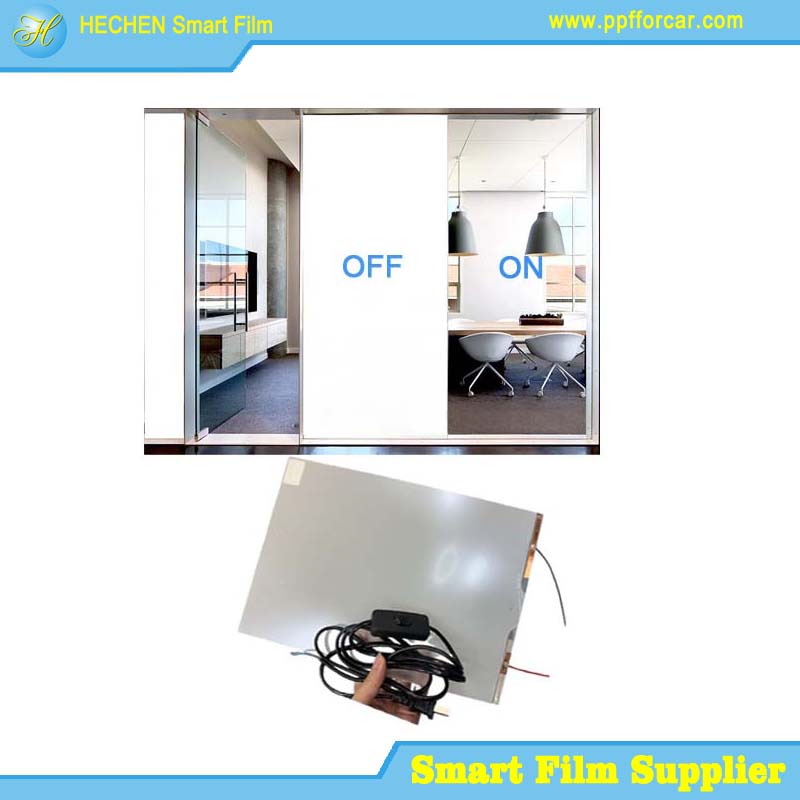
PDLC film consists of a layer of liquid crystal droplets suspended in a polymer matrix, sandwiched between two conductive layers. In its default off state (no power), the liquid crystals are randomly oriented, scattering light and rendering the glass translucent or "frosted." When an AC voltage is applied, the crystals align, allowing light to pass through clearly, creating a transparent state.
Key Characteristics
Primary Function: Privacy switching. It toggles between transparent and translucent (milky white) states.
Light Control: Does not significantly dim light or block solar heat; it primarily scatters it. Transparency is typically around 78-82% in the clear state and <5% in the opaque state.
Power Requirement: Requires constant power to maintain transparency. It defaults to opaque when off.
View-Through Capability: In its opaque state, it diffuses light but does not provide a visual "view-through."
Color: Almost always neutral/clear in transparent mode, milky white in opaque mode.
Best For:
Instant Privacy Partitions: Conference rooms, hospital room dividers, bathroom windows.
Retail Displays & Projection Screens: Surfaces that double as transparent displays or projection canvases.
Interior Design: Decorative glass partitions, doors, and shower enclosures.
2. Suspended Particle Device (SPD) Technology
How It Works
SPD film contains microscopic, needle-like particles suspended in a fluid within a thin film. In the off state, these particles are randomly arranged, absorbing and blocking a significant portion of incoming light. When voltage is applied, the particles align parallel to the electric field, opening "shades" that allow light to pass through. Crucially, the voltage level can be varied, enabling continuous, graded control over the tint level.
Key Characteristics
Primary Function: Continuous dimming and solar control. It offers precise, variable tint from very dark (<1% VLT) to relatively clear (20-35% VLT).
Light & Heat Control: Excellent at blocking glare and a substantial portion of infrared (IR) and ultraviolet (UV) radiation, improving energy efficiency.
Power Requirement: Requires a small, constant voltage to maintain any state other than fully dark. Power consumption is very low.
View-Through Capability: Maintains visual clarity and view-through at all tint levels, though colors may have a slight blue or gray hue.
Color: Typically deep blue or gray when tinted.
Best For:
Solar Management: Large commercial windows, skylights, and building facades where glare and heat are primary concerns.
Automotive & Marine: Sunroofs, side windows, and yacht windows for dynamic shading.
Aviation: Aircraft windows for passenger-controlled dimming.
3. Electrochromic (EC) Technology
How It Works
Electrochromic technology operates on an electrochemical principle. A multi-layer assembly includes an electrochromic layer (often tungsten oxide). When a low DC voltage is applied, lithium ions move from an ion storage layer into the electrochromic layer, causing it to darken through a chemical reaction (coloration). Reversing the voltage moves the ions back, bleaching the film to clear. This is a persistent-state technology.
Key Characteristics
Primary Function: Energy-efficient, persistent tinting. It switches between distinct states and maintains them without continuous power.
Light & Heat Control: Provides good glare reduction and moderate solar heat gain control, particularly in the darkened state.
Power Requirement: Only requires power during the transition (seconds to minutes). It maintains its tint state passively with zero energy draw ("zero holding power").
View-Through Capability: Clear view-through in all states, though the tint is uniform and may have a color cast (often blue or bronze).
Switching Speed: The slowest of the three, typically taking 30 seconds to several minutes to fully transition.
Best For:
Exterior Building Windows & Curtain Walls: Where long-term, stable tint for energy savings and comfort is prioritized over speed.
Sustainable Architecture: Projects targeting LEED or other green building certifications due to passive energy savings.
Residential Skylights & Windows: For homeowners seeking "set-and-forget" solar control.
Head-to-Head Comparison Table
Feature | PDLC | SPD | EC |
Primary Use | Privacy Switching | Continuous Dimming & Solar Control | Persistent Tinting & Energy Control |
Transparency Range | Clear ↔ Frosted (No View) | Variable: ~35% ↔ <1% (Clear View) | Discrete Tint Levels (e.g., 60% ↔ 2%) (Clear View) |
Power Requirement | Constant AC Power (Clear) | Constant Low Voltage (Any Tint) | Power Only During Transition |
Default State (No Power) | Opaque/Frosted | Dark | Maintains Last State |
Switching Speed | Instant (<1 sec) | 1-3 seconds | Slow (30 sec - 10+ min) |
Solar/UV/IR Control | Minimal | Excellent | Good to Very Good |
View-Through in Tinted | No (Light Diffused) | Yes | Yes |
Energy Efficiency | Low | High (via solar rejection) | Very High (via passive state) |
Typical Cost | $$ (Moderate) | $$$ (Higher) | $$$$ (Highest - often glass, not film) |
Lifespan/Cycles | Very High (>100,000 cycles) | High (>100,000 cycles) | High, but can degrade over years |
Which Technology is Best? A Scenario-Based Guide
The "best" technology is entirely dependent on the project's specific requirements.
Choose PDLC if:
Your paramount need is instant, on-demand privacy between clear and an opaque, frosted state for interior applications. It is the cost-effective choice for partition walls, privacy windows, and spaces where solar control is not a priority. Think conference rooms, luxury bathrooms, or high-tech office dividers.
Choose SPD if:
You need rapid, precise, and variable control over light and glare while maintaining a clear view to the outside. It is ideal for environments where conditions change rapidly and user comfort is key. This makes it perfect for executive office windows, automotive sunroofs, high-end residential settings, and anywhere superior solar heat rejection is required.
Choose EC if:
Your project focuses on long-term, architectural-scale energy efficiency and you can accept a slower transition time. Its ability to maintain a tint state without power makes it the most energy-efficient option for exterior building facades, curtain walls, and sustainable building projects where reducing cooling loads and achieving green certifications are critical.
The Future of Smart Tint Films
The industry is rapidly evolving. Future trends include:
Integration & IoT: All three technologies are being integrated with building management systems, voice assistants, and light sensors for automated, smart building ecosystems.
Hybrid Solutions: Combining technologies (e.g., EC for base tint with PDLC for privacy) to leverage multiple benefits.
Improved Formulations: Research is focused on faster switching times for EC, lower power consumption for PDLC/SPD, and wider tint ranges.
Cost Reduction: As adoption increases, economies of scale, particularly for EC and SPD, are expected to make these technologies more accessible.
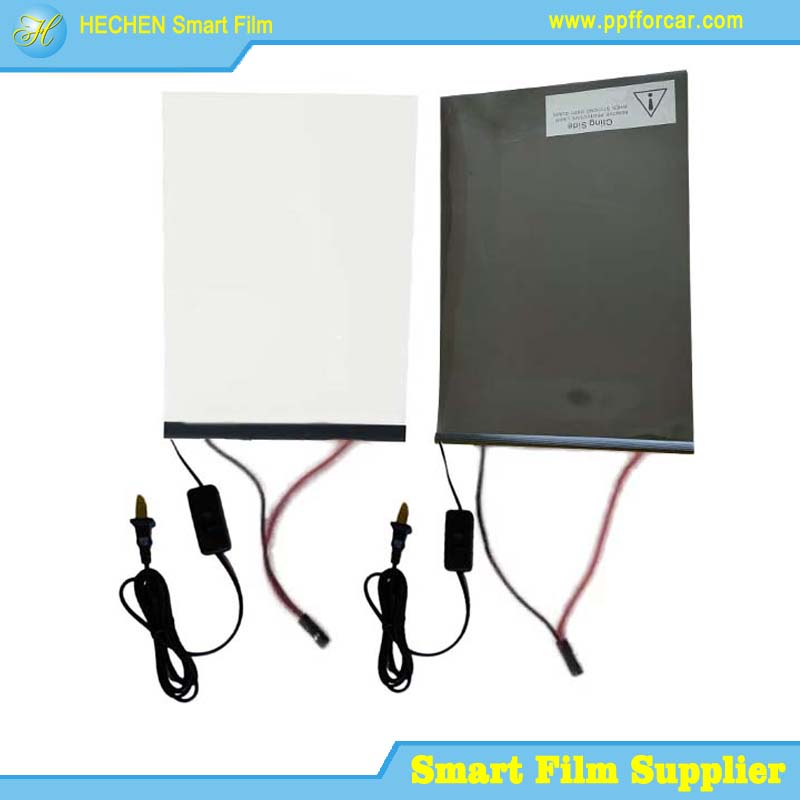
Conclusion
There is no single "winner" in the PDLC vs. SPD vs. EC debate. Each smart tint technology occupies a distinct niche:
PDLC is the Privacy Specialist.
SPD is the Performance & Comfort Master.
EC is the Energy Efficiency Champion.
The optimal choice hinges on a careful analysis of your priorities: Is it instantaneous privacy, granular control over sunlight and glare, or maximizing passive energy savings? By aligning the core strengths of PDLC, SPD, and EC technology with the specific functional, aesthetic, and budgetary demands of your project, you can harness the power of smart glass to create spaces that are not only more intelligent and responsive but also more comfortable, sustainable, and human-centric. The future of glazing is dynamic, and the power to choose its state lies literally at your fingertips.
For more about the smart tint film: PDLC vs. SPD vs. EC technology - which is best, you can pay a visit to Hechen PDLC Smart Film Manufacturers for more info.