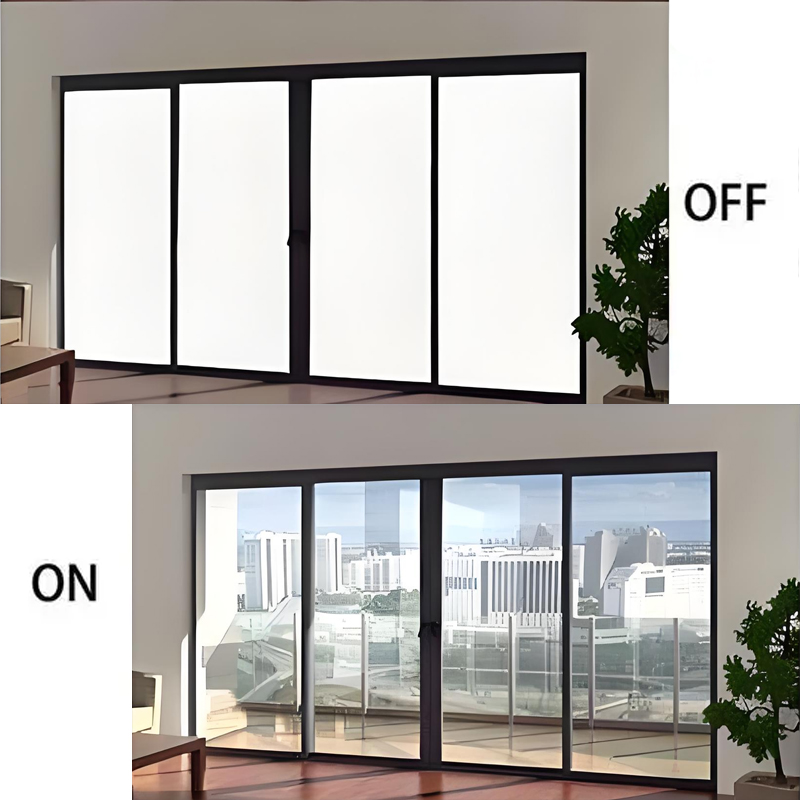
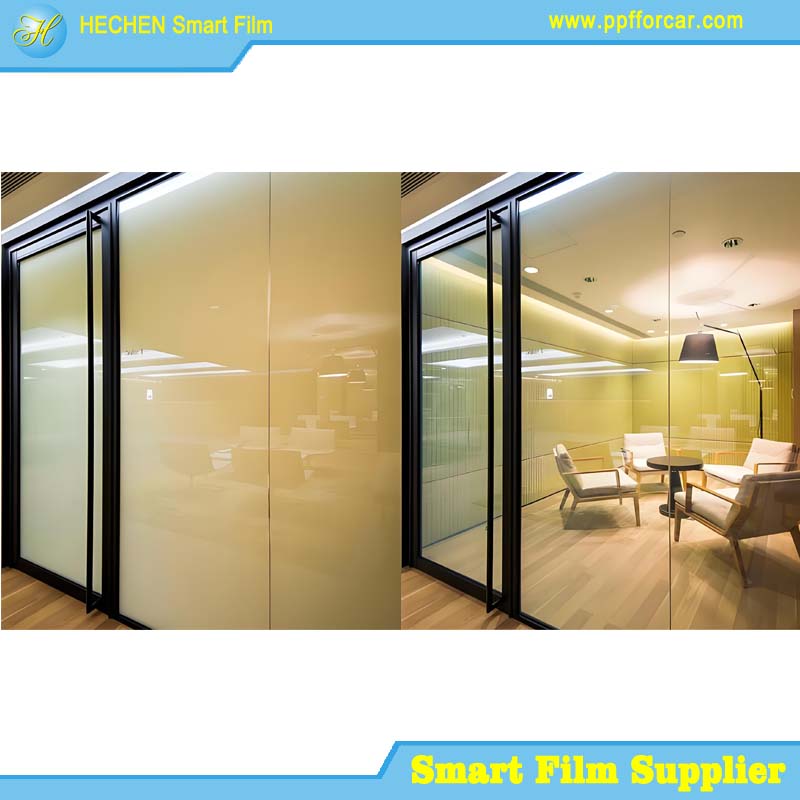
Stop Applying Frosted Films! This Is the Ultimate In Smart Dimming Technology: PDLC Film
In a world where privacy, energy efficiency, and aesthetic appeal are paramount, traditional frosted films have long been the go-to solution for obscuring views through windows and glass surfaces. These static, adhesive films provide a simple way to diffuse light and block prying eyes, but they come with significant limitations. Once applied, they're permanent—offering no flexibility to switch back to transparency when needed. Imagine being stuck in a dimly lit room on a sunny day or sacrificing natural views for constant privacy. It's time to stop relying on these outdated methods. Enter PDLC (Polymer Dispersed Liquid Crystal) film, the pinnacle of smart dimming technology that revolutionizes how we interact with glass. This innovative film allows glass to instantly toggle between frosted (opaque) and transparent states with just a flick of a switch, app control, or even voice command, combining the best of privacy and openness without compromise.
PDLC film isn't just a upgrade; it's a game-changer for modern living and working spaces. Unlike traditional frosted films that trap heat, reduce light transmission, and require messy installation or removal, PDLC offers dynamic control, energy savings, and seamless integration into smart systems. As we approach the end of 2025, with advancements in smart glass pushing boundaries, PDLC stands out for its versatility across residential, commercial, and automotive sectors. This article will explore why you should ditch static frosted films, delve into PDLC's mechanics, highlight its superior benefits, showcase real-world applications, discuss recent developments, and look ahead to its future—all while emphasizing why PDLC is the ultimate smart dimming solution.
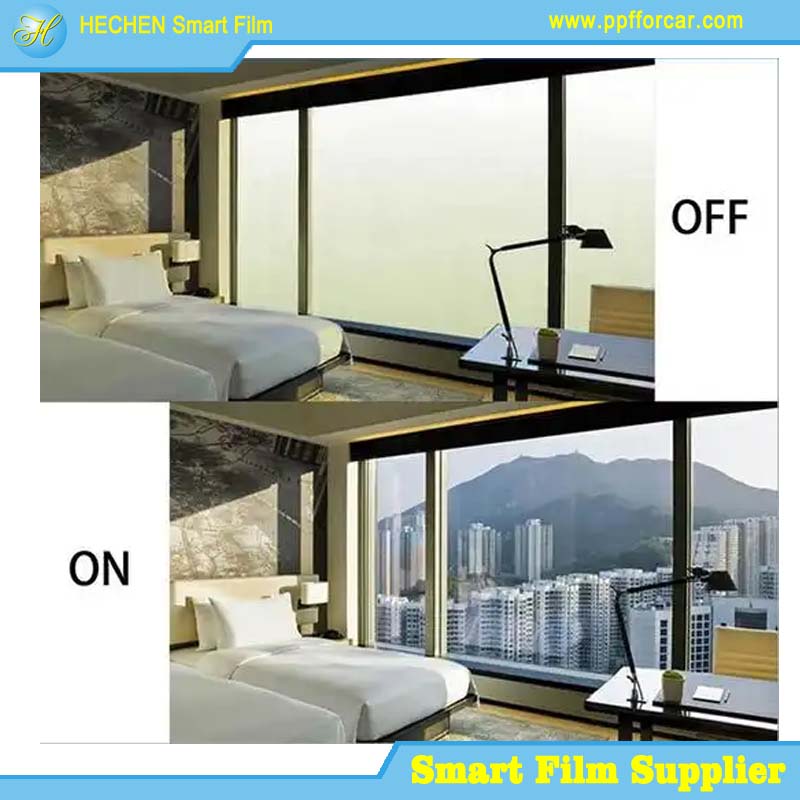
What are Traditional Frosted Films and Their Drawbacks?
Traditional frosted films are thin, vinyl-based adhesives applied to glass to create a matte, opaque appearance. They scatter light, providing privacy by blurring visibility while allowing some ambient light through. Popular in homes for bathroom windows, offices for conference rooms, and retail for displays, these films are affordable and easy to install, often costing just a few dollars per square foot. However, their static nature is a major flaw. Once applied, the frosting is irreversible without removing the film entirely, which can damage the glass or leave residue. This lack of adaptability means users must choose between constant privacy or none at all—leading to over-reliance on artificial lighting during the day, increasing energy bills. Moreover, traditional films offer minimal UV protection, fading furniture and floors over time, and they don't block heat effectively, contributing to higher cooling costs in summer.
Installation woes abound: bubbles, wrinkles, and imperfect cuts are common, especially on curved or large surfaces. Durability is another issue; cheap films yellow, peel, or crack under sunlight exposure. In commercial settings, they fail to meet modern demands for multifunctional spaces, where rooms need to transform from collaborative to private instantly. Environmentally, these films add to plastic waste when replaced. In essence, while they solve basic privacy needs, traditional frosted films are relics in an era demanding smart, responsive materials.
Unveiling PDLC Film: The Smart Alternative
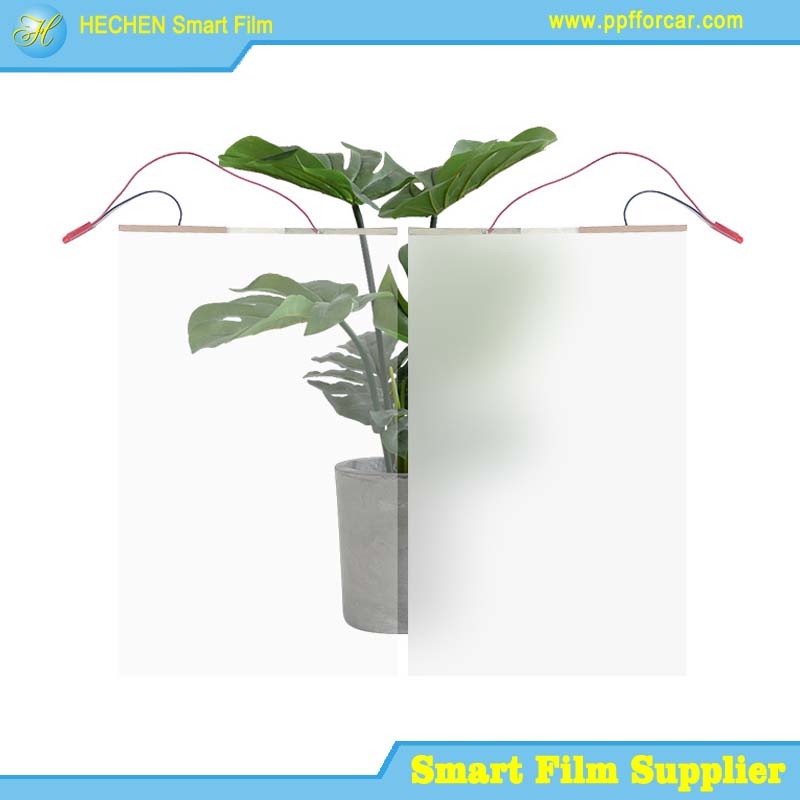
PDLC film emerges as the superior successor, a thin, flexible layer that can be retrofitted onto existing glass or integrated into new panes. Composed of liquid crystals dispersed in a polymer matrix, it switches states via low-voltage electricity, going from opaque (frosted) to transparent in milliseconds. This "switchable glass" technology, also known as smart film, allows users to control privacy on demand without physical barriers like blinds or curtains.
Unlike static frosted films, PDLC maintains high light transmission in both states—diffuse in opaque mode for soft illumination and crystal-clear in transparent mode for unobstructed views. It's powered by a mere 5-10 watts per square meter when active, consuming zero power in the default opaque state. Available in self-adhesive forms for easy application, PDLC films like those from leading brands offer warranties up to 10 years, resisting yellowing and degradation. This makes it ideal for retrofitting, turning ordinary windows into intelligent surfaces without major renovations.
How PDLC Technology Works
At the heart of PDLC is a sophisticated electro-optical system. The film consists of microscopic liquid crystal droplets (1-5 microns) embedded in a polymer matrix, sandwiched between two conductive layers, often indium tin oxide (ITO) on PET substrates. In the off state, without voltage, the crystals are randomly aligned, causing light to scatter and create a frosted effect—blocking direct sightlines while permitting up to 50-60% light passage.
Applying a low AC voltage (24-110V) aligns the crystals, matching refractive indices between crystals and polymer, allowing light to pass straight through for 80-90% transparency with minimal haze. This reversible process is instantaneous and silent, with no moving parts for enhanced durability—lasting over 100,000 cycles. Manufacturing involves mixing liquid crystals with prepolymers, coating onto substrates, and UV-curing to form droplets. Advanced versions incorporate UV blockers and tints for customization.
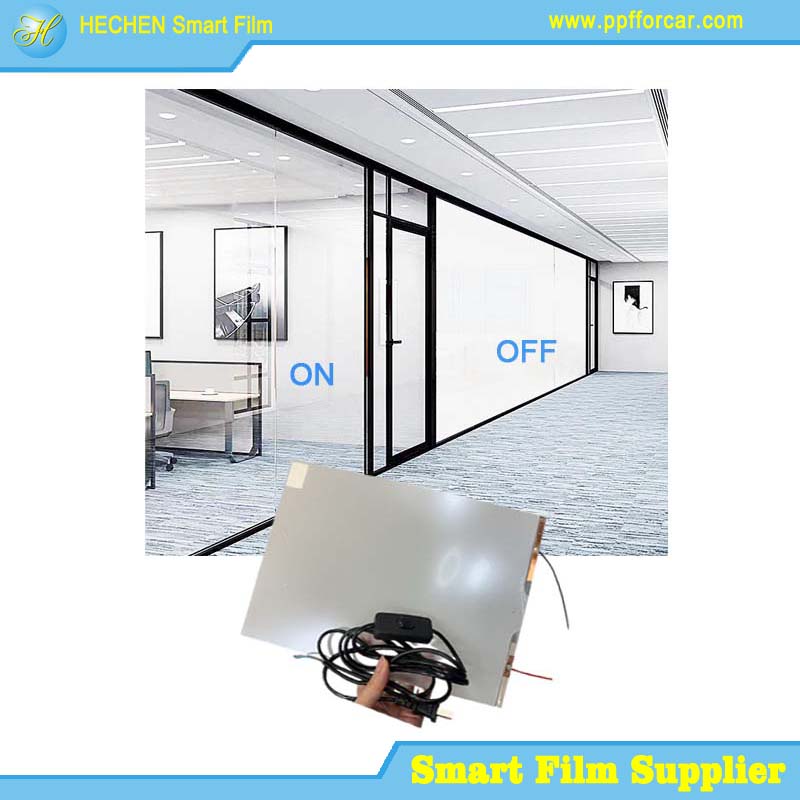
Key Advantages of PDLC Over Traditional Frosted Films
PDLC's edge lies in its dynamic functionality. Instant privacy control lets users switch modes via remotes, apps, or automation, eliminating the need for static opacity.
Energy savings are substantial: by blocking up to 99% UV and reducing solar heat gain, it cuts HVAC usage by 15-20%, far surpassing traditional films. Natural light optimization maintains brighter interiors even in opaque mode, reducing artificial lighting needs. Aesthetically, PDLC provides a sleek, modern look without visible adhesives or seams. It also serves as projection screens in frosted state, adding multifunctionality absent in static films. Durability and low maintenance—resistant to scratches and easy to clean—make it cost-effective long-term, despite higher upfront costs ($50-150/sq ft vs. $5-10 for frosted). Environmentally, it promotes sustainability by lowering energy consumption and waste.
Diverse Applications and Case Studies
PDLC shines in architecture: office partitions switch for open or private meetings. In healthcare, hospitals use it for patient rooms, enhancing dignity without curtains. A case study from Mayo Clinic shows reduced infection risks and improved light control. Residentially, it's perfect for bathrooms and home theaters, providing privacy without darkening spaces. Retail applications include dynamic displays that reveal products on command. Automotive integration, like Mercedes-Benz's sunroofs, offers glare control. A 2025 case in aviation features PDLC in cockpits for pilot privacy. In education, classrooms use it for interactive whiteboards. The Edge building in Amsterdam saved 20% on energy with PDLC facades.
Latest Developments in PDLC Film Technology (as of 2025)
By 2025, PDLC has seen explosive growth, with the market reaching $239 million. Innovations include seamless IoT integration for smart home control. Gauzy's prefabricated stacks enable scalable automotive adoption. Enhanced formulations improve clarity and speed, with new samples offering instant transitions. Tiered options from Smart Glass Country provide customizable warranties. Hybrid PDLC-SPD tech in vehicles like Mercedes Vision V combines dimming and shading. Sustainability focuses on energy-efficient drivers and recyclable materials. Global market projections hit $16.74 billion by 2034.
Challenges and Considerations
Despite advantages, PDLC's cost remains a barrier, though dropping with scale. Power dependency means opacity during outages, solvable with batteries. Temperature sensitivity (0-70°C) and slight haze (2-5%) persist, but improvements mitigate. Installation requires professionals for wiring. Competition from SPD or electrochromic exists, but PDLC's speed wins.
Future Prospects
Looking ahead, PDLC will integrate with AI for predictive dimming, solar-powered variants, and flexible films for wearables. Market CAGR of 10.2% through 2030 signals ubiquity in smart cities. Entertainment applications, like in Star Trek sets, hint at creative uses.
Conclusion
Ditching traditional frosted films for PDLC is a no-brainer in 2025. This smart technology offers unparalleled control, efficiency, and versatility, transforming spaces intelligently. As innovations accelerate, PDLC isn't just the future—it's the now of dimming tech.
For more about stop applying frosted films! this is the ultimate in smart dimming technology: PDLC film, you can pay a visit to Hechen PDLC Smart Film Manufacturers for more info.