The Electric Self-adhesive PDLC Film: Smart Dimming Film for Glass Windows and Doors Tint
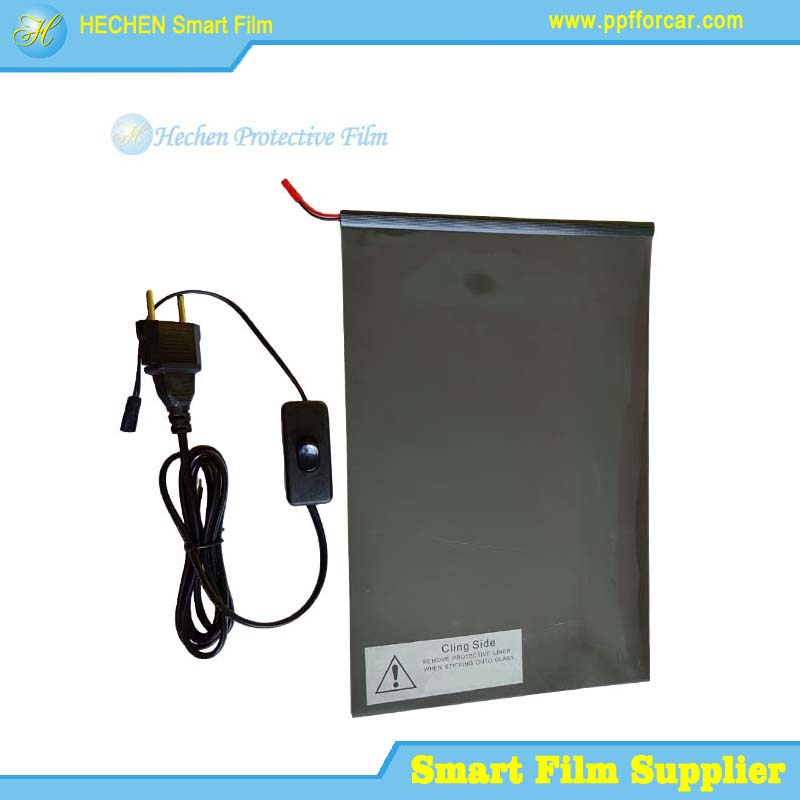
In an era where technology seamlessly integrates into our daily lives, the concept of "smart" materials has revolutionized how we interact with our environments. One such innovation is the electric self-adhesive PDLC (Polymer Dispersed Liquid Crystal) film, commonly known as smart dimming film. This advanced tinting solution transforms ordinary glass windows and doors into dynamic, controllable surfaces that can switch from transparent to opaque with the flick of a switch or a tap on a smartphone app. Designed for both residential and commercial applications, this film offers privacy, energy efficiency, and aesthetic versatility without the need for permanent alterations to existing structures.
 What is PDLC Film?
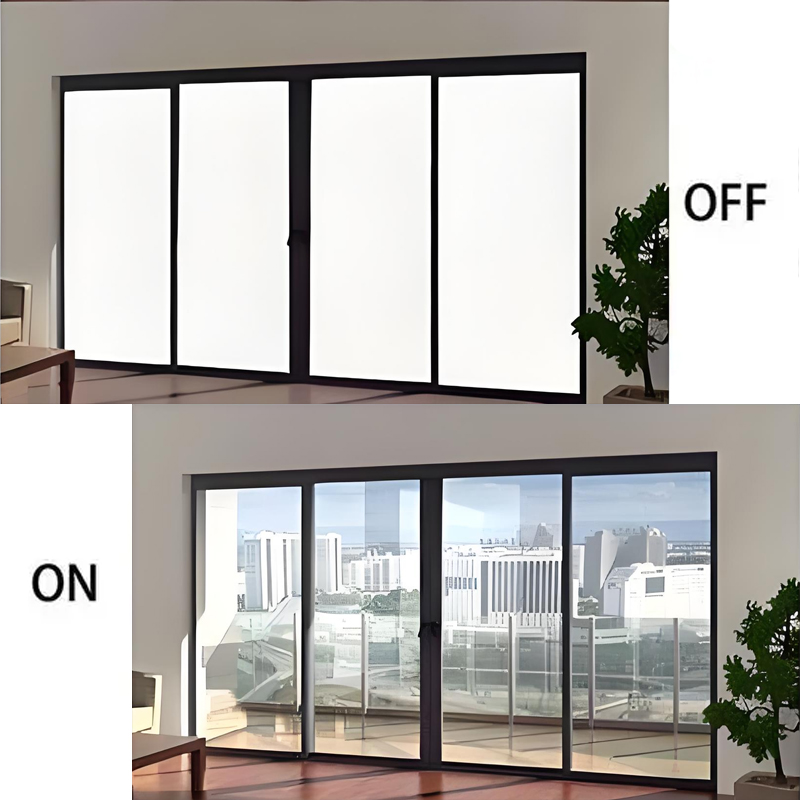
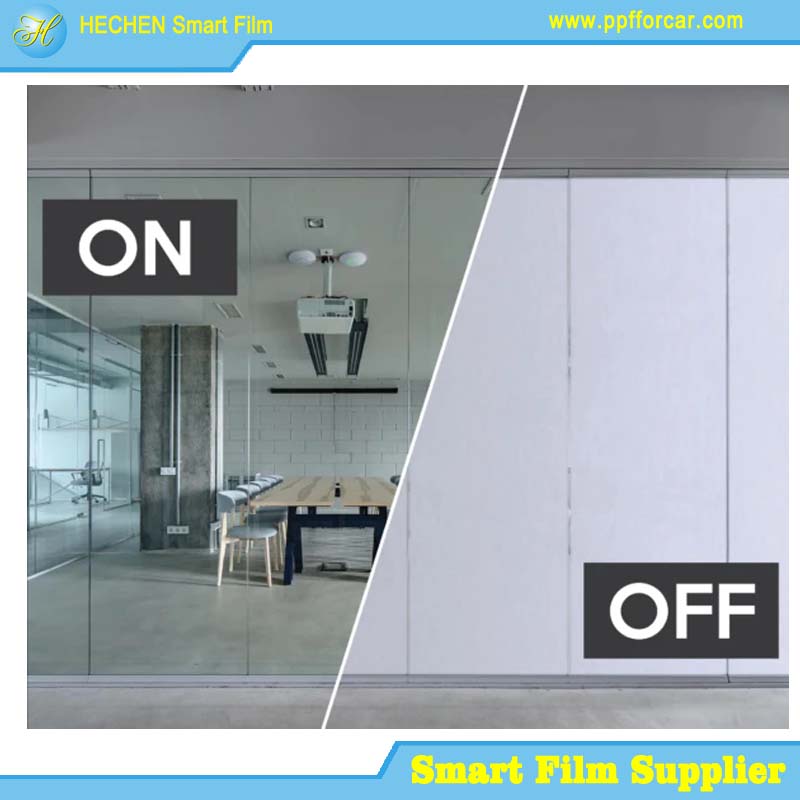
PDLC film is a type of switchable smart glass technology that embeds liquid crystals within a polymer matrix. The "PDLC" acronym stands for Polymer Dispersed Liquid Crystal, a material that scatters light when in its default state, rendering the film opaque or frosted. When an electric current is applied, the liquid crystals align, allowing light to pass through and making the film transparent.
The self-adhesive variant of PDLC film is particularly user-friendly. It features a pressure-sensitive adhesive backing, similar to that found on stickers or decals, which allows it to be applied directly to existing glass surfaces without the need for specialized tools or professional installation in many cases. This makes it an ideal retrofit option for windows, doors, partitions, and even automotive glass.
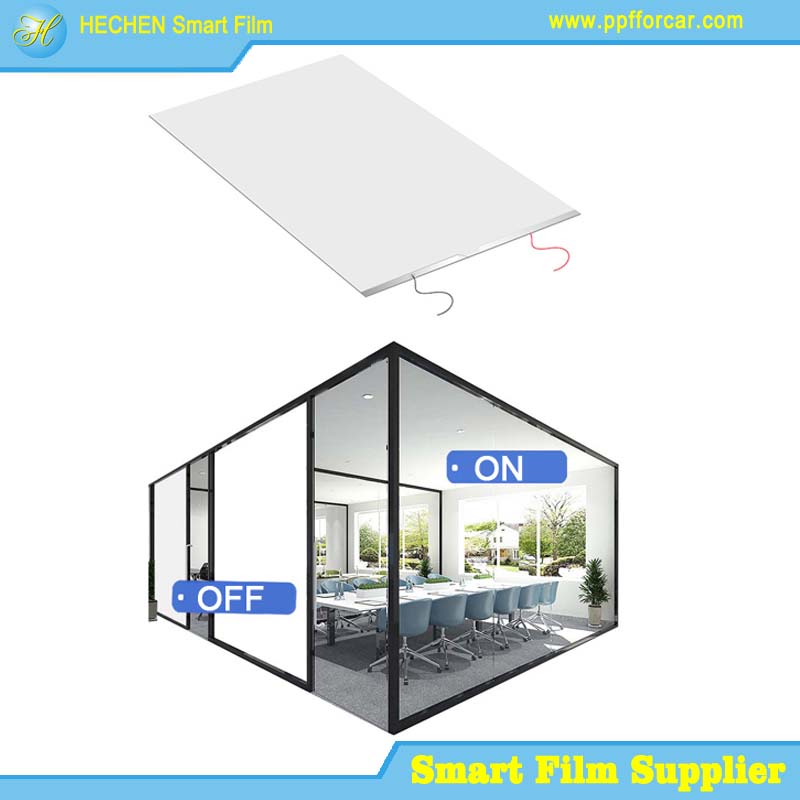
Liquid Crystal Layer: The core element consisting of tiny droplets of liquid crystals suspended in a polymer. These crystals respond to electrical fields.
Conductive Layers: Typically made from indium tin oxide (ITO), these transparent electrodes sandwich the liquid crystal layer and facilitate the application of voltage.
Protective Films: Outer layers that shield the internal components from damage, UV rays, and environmental factors.
Adhesive Backing: A peel-and-stick layer that bonds the film to glass.
Available in various thicknesses—usually ranging from 0.3mm to 0.5mm—the film can be cut to custom sizes, making it adaptable to different window and door dimensions. Manufacturers often offer it in rolls or sheets, with options for different voltage requirements (e.g., 24V, 48V, or 110V) to suit global electrical standards.
How Does It Work?
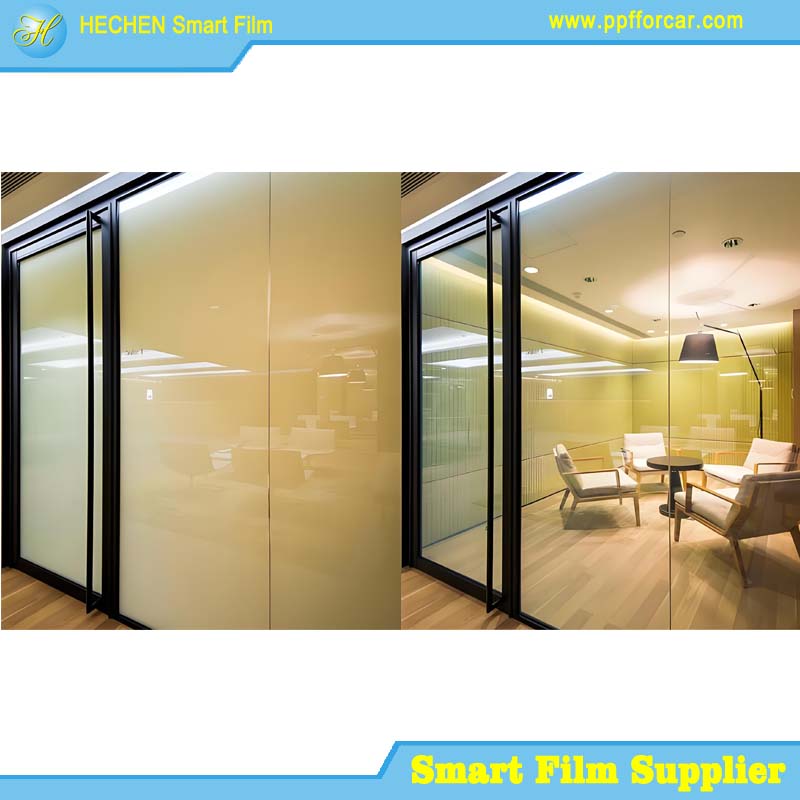
The magic of PDLC film lies in its electro-optical properties. In its off state (no electricity applied), the liquid crystals are randomly oriented, scattering incoming light and creating a milky, translucent appearance. This blocks direct views while still allowing diffused light to enter, maintaining natural illumination without harsh glare.
When voltage is applied—typically through a simple wall switch, remote control, or integrated smart home system—the electric field causes the liquid crystals to align parallel to the field. This alignment permits light rays to pass straight through, turning the film crystal clear. The transition is nearly instantaneous, often taking less than a second, and consumes minimal power—around 5-7 watts per square meter when active.
Power sources for PDLC film are versatile. Low-voltage transformers convert standard household AC to DC, ensuring safety and efficiency. Integration with IoT devices like Amazon Alexa, Google Home, or Apple HomeKit allows voice or app-controlled operation. For larger installations, such as office buildings, building management systems (BMS) can automate dimming based on time of day, occupancy sensors, or sunlight intensity.
One notable feature is the film's ability to achieve variable opacity. Advanced models support dimmer switches, enabling partial transparency (e.g., 50% opacity) for customized light control. This is particularly useful in environments where full privacy isn't always needed but some diffusion is desired.
Benefits of Electric Self-Adhesive PDLC Film
The advantages of PDLC smart dimming film extend far beyond mere convenience, encompassing energy savings, privacy enhancement, and health benefits.
Energy Efficiency: By controlling solar heat gain, the film reduces the need for air conditioning in summer and heating in winter. Studies indicate it can lower energy bills by up to 20-30% in buildings with extensive glass facades. Unlike static tints, it allows maximum natural light when transparent, minimizing reliance on artificial lighting.
UV Protection and Glare Reduction: The film blocks up to 99% of harmful UV rays, protecting interiors from fading and occupants from skin damage. It also mitigates glare on screens and surfaces, boosting productivity in offices and comfort in homes.
Aesthetic and Functional Versatility: Self-adhesive application means no messy glues or structural changes. It's removable and reusable in some cases, making it renter-friendly. Custom patterns or colors can be incorporated for branding or decorative purposes.
Health and Well-Being: Natural light regulation supports circadian rhythms, improving mood and sleep. In healthcare settings, it facilitates patient privacy without dark, isolating curtains.
Cost-Effectiveness: Initial costs range from $50-100 per square foot, but long-term savings on energy and maintenance offset this. Durability exceeds 10-15 years with proper care, outlasting traditional blinds.
 Applications Across Industries
The versatility of electric self-adhesive PDLC smart dimming film has led to widespread adoption in various sectors.
Residential Use: Homeowners apply it to windows, shower doors, and skylights for privacy and light control. In open-plan homes, it creates temporary partitions, enhancing space flexibility.
Commercial and Office Spaces: Conference rooms benefit from switchable privacy during meetings. Retail stores use it for dynamic displays—transparent for showcasing products, opaque for backroom operations.
Hospitality: Hotels employ it in bathrooms and suites for luxurious, tech-savvy experiences. Restaurants can dim sections for intimate dining atmospheres.
Healthcare: Hospitals use PDLC film for patient rooms, observation windows, and ICU partitions, ensuring hygiene (easy to clean) and quick privacy adjustments.
Automotive and Transportation: Applied to vehicle windows or train partitions, it offers tinting without violating regulations, as it can be cleared for safety.
Educational Institutions: Classrooms and libraries use it to control distractions and light, fostering better learning environments.
Architectural Innovations: In modern buildings, it's integrated into facades for energy management and aesthetic effects, like projection screens when opaque.
Preparation: Clean the glass surface thoroughly with isopropyl alcohol to remove dust, oils, and residues. Measure and cut the film to size using a sharp utility knife.
Application: Peel back a small section of the backing and align the film with the glass edge. Use a squeegee to press it down, working out air bubbles from center to edges. For electrical connections, attach bus bars (conductive strips) to the film's edges and wire them to a power source.
Wiring and Testing: Connect to a transformer and controller. Test the switching function to ensure even opacity changes.
Maintenance: Clean with mild soap and water; avoid abrasives. Regular inspections prevent issues like edge lifting.
Static Window Films: Cheaper but non-adjustable; PDLC offers dynamic control.
Electrochromic Glass: Similar functionality but requires full glass replacement; PDLC is retrofit-friendly and less expensive.
Mechanical Blinds/Shades: Bulkier, prone to dust; PDLC is sleek and low-maintenance.
Liquid Crystal Alternatives (e.g., SPD): Suspended Particle Devices are faster but costlier and less transparent.
 Conclusion
Electric self-adhesive PDLC film epitomizes the fusion of technology and design, offering unparalleled control over light and privacy. As we move toward smarter, more efficient living spaces, this innovation stands out as a practical, forward-thinking solution for windows and doors.
For more about the electric self-adhesive PDLC film: smart dimming film for glass windows and doors tint, you can pay a visit to Hechen PDLC Smart Film Manufacturers for more info.