The Future of Automotive Glazing: A Deep Dive into Smart Tint Film for Car Technology
The automotive industry is undergoing a profound transformation, driven by electrification, connectivity, and advanced materials science. Among the most visually striking and functionally significant innovations is the integration of smart tint film for car windows and sunroofs. Moving far beyond traditional static tints or mechanical sunshades, smart tint film for car applications represent a dynamic, electronically controlled glazing solution that promises to enhance comfort, safety, energy efficiency, and aesthetic customization. This 2000-word technical article explores the underlying principles, current implementations, benefits, challenges, and future trajectory of smart tint film for car systems, a technology poised to redefine the in-cabin experience.
1. Introduction: Beyond the Static Tint
For decades, automotive window tinting has been a passive, aftermarket modification primarily aimed at privacy, UV protection, and glare reduction. However, these static films offer a fixed solution to a dynamic problem—the sun’s angle changes, driving conditions vary, and user preferences shift. Enter smart tint film for car glazing: an active technology that allows the light transmission properties of glass to be altered on demand at the touch of a button or automatically via sensor input. This evolution from passive to active glazing marks a pivotal moment in automotive interior design and energy management.
At its core, smart tint film for car applications involve a laminated, multi-layer composite that can be applied to existing glass or integrated into new glass assemblies. When an electrical signal is applied, the film changes its optical state, transitioning from transparent to various shades of tint (often including a near-opaque privacy mode). This capability transforms car windows from mere openings into programmable, interactive surfaces, forming a critical component of the modern "digital cockpit" and the evolving paradigm of the software-defined vehicle. The adoption of smart tint film for car systems represents a convergence of nanotechnology, materials science, and automotive electronics.
2. Core Technologies: How Smart Tint Film for Car Applications Work
Several electro-optical technologies enable the smart tint film for car functionality, each with distinct mechanisms and characteristics. The three primary types relevant to automotive applications are:
2.1 Suspended Particle Device (SPD) Technology in Smart Tint Film for Car Windows
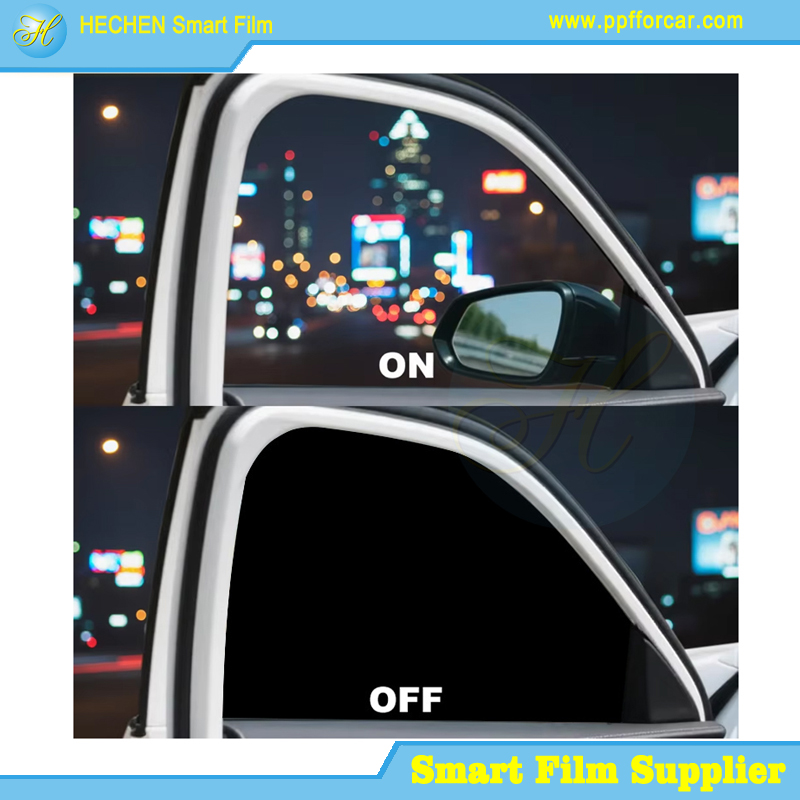
SPD-based smart tint film for car products contain millions of nano-scale light-absorbing particles suspended in a fluid within a thin film laminate. In their default, unpowered state (which can be engineered to be either clear or dark), these particles are randomly oriented, absorbing and blocking light. When an alternating current (AC) voltage is applied (typically around 50-110V AC), the particles align parallel to the electric field, allowing light to pass through. The degree of tint is controlled by varying the voltage: higher voltage increases alignment and transparency, while lower voltage increases random orientation and darkness. SPDs in smart tint film for car systems offer a wide dynamic range, fast switching speeds (1-2 seconds), and a neutral gray color in the tinted state, which is desirable for true color perception and is particularly suited for panoramic roofs and side windows.
2.2 Polymer Dispersed Liquid Crystal (PDLC) Technology for Automotive Use
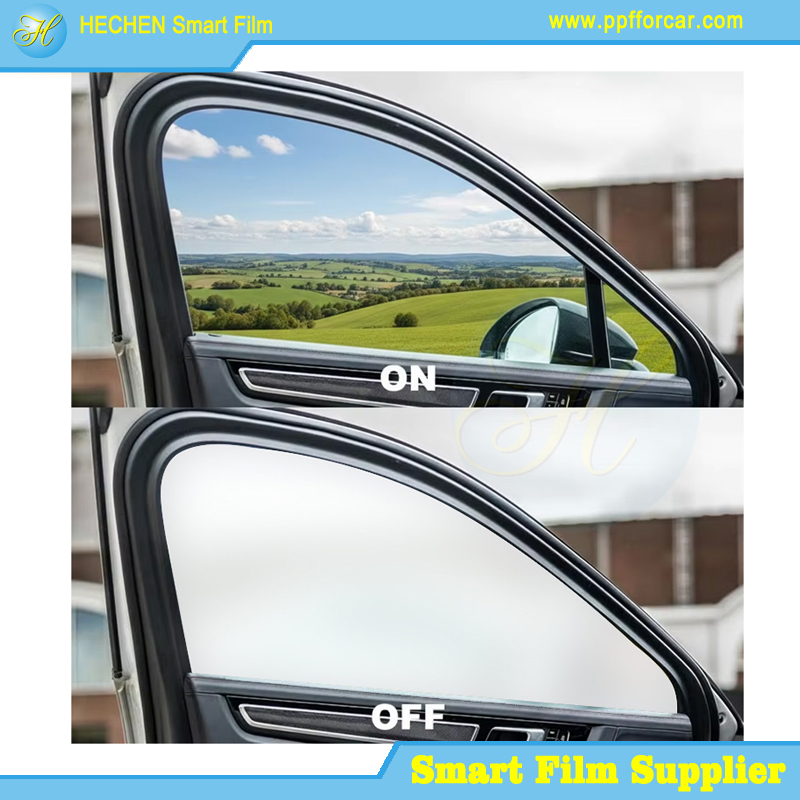
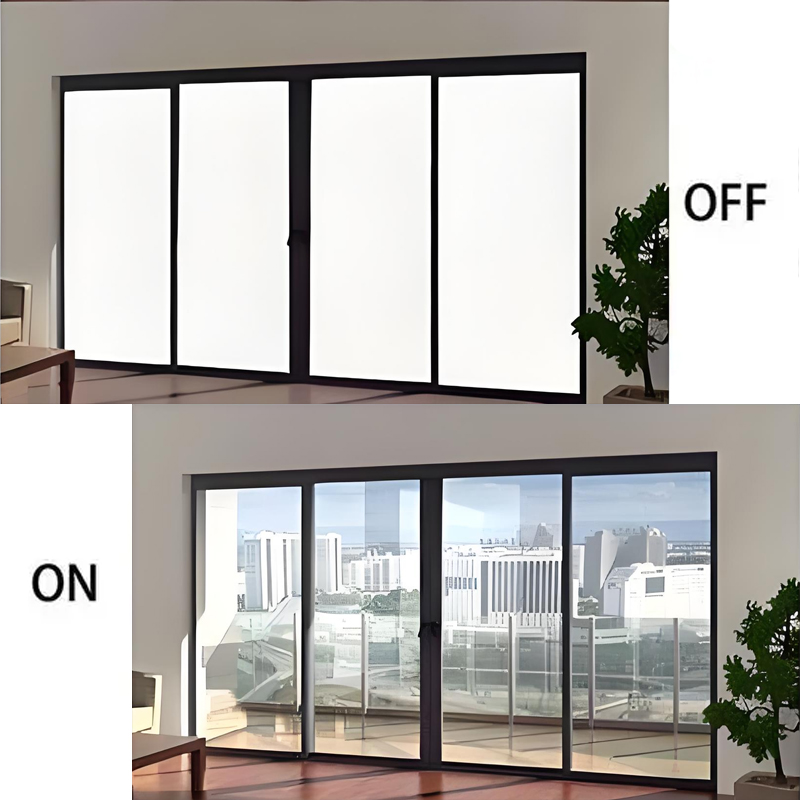
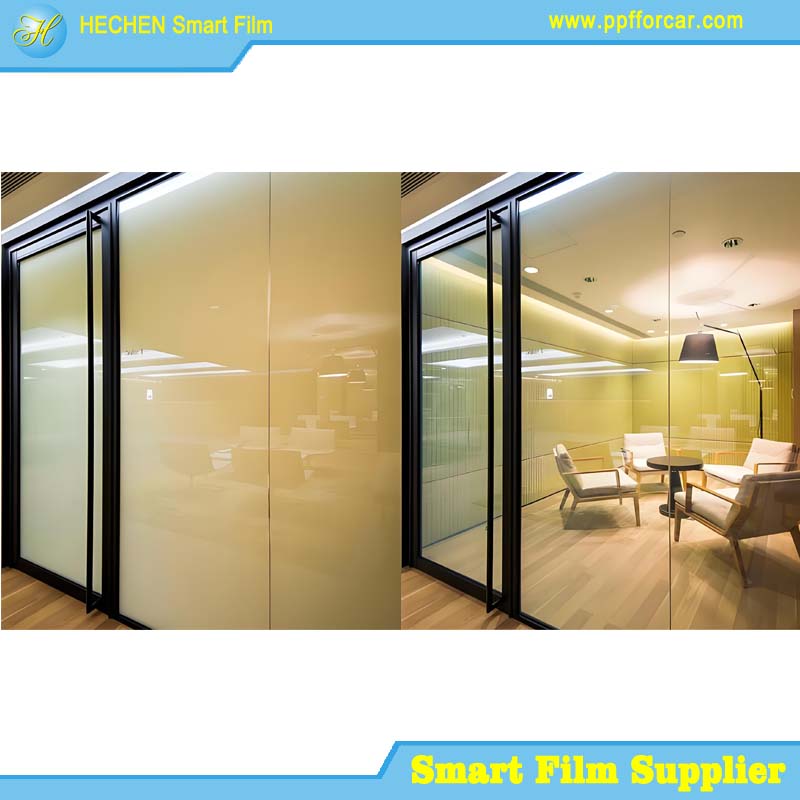
PDLC smart tint film for car implementations consist of droplets of liquid crystal dispersed within a polymer matrix. In the off state (no voltage), the liquid crystals are randomly oriented, scattering light and creating an opaque, milky-white "privacy" mode. When voltage is applied, the crystals align, allowing light to pass through clearly. PDLC serves as a privacy-focused smart tint film for car solution, switching between opaque and clear states rather than offering a graded tint. It is commonly used for partition windows but finds automotive application in sunroofs or privacy partitions in luxury and mobility-as-a-service vehicles where instant privacy is required.
2.3 Electrochromic (EC) Smart Tint Film for Car Applications
Electrochromic devices in smart tint film for car products operate on the principle of electrochemical redox reactions. A typical EC film stack includes an ion-conducting electrolyte sandwiched between an electrochromic layer (e.g., tungsten oxide) and an ion storage layer. When a small direct current (DC) voltage (1-3V) is applied, ions (like lithium+) move from the storage layer, through the electrolyte, and into the electrochromic layer, causing it to change color and absorb light. Reversing the voltage bleaches the film back to clear. EC technology in smart tint film for car systems is known for its zero-power hold (it maintains its tint state without continuous power), very low energy consumption during switching, and deep blue-gray tint. However, switching speeds are slower (10-60 seconds for full transition) and cycle life can be a consideration for high-use applications.
Comparison Table: Core Smart Tint Film for Car Technologies
| Feature | SPD for Car Tint | PDLC for Car Tint | Electrochromic for Car Tint |
|---|---|---|---|
| Primary Function | Variable Solar Transmission | Privacy / Opaque-Clear Switch | Variable Solar Transmission |
| Power Requirement | AC Voltage (50-110V), continuous hold | AC Voltage, continuous hold | Low DC Voltage (1-3V), zero-power hold |
| Switching Speed | Very Fast (1-3 sec) | Very Fast (<1 sec) | Slow to Moderate (10-60 sec) |
| Tint Color | Neutral Gray | Milky White (opaque state) | Blue/Gray |
| Energy Efficiency | Lower (requires continuous power) | Lower (requires continuous power) | High (power only for switching) |
| Best Automotive Use | Sunroofs, Side Windows | Privacy Partitions, Sunroofs | Large Glass Areas, Windshield Visor Bands |
3. Integration and Implementation of Smart Tint Film for Car Systems
Integrating smart tint film for car technology into a vehicle is a complex engineering challenge that extends beyond the film itself to encompass the entire electrical, control, and thermal management systems.
3.1 Film Construction and Durability for Automotive Environments
Automotive-grade smart tint film for car applications require a rugged laminate designed to withstand harsh conditions. A typical construction includes:
Outer Protective Layer: A scratch-resistant, hard-coated polyester engineered for automotive interior conditions.
Conductive Electrode Layers: Typically Indium Tin Oxide (ITO) or newer, more flexible alternatives like silver nanowire or conductive polymers, which form the transparent electrodes necessary for smart tint film for car functionality.
Active Layer: The SPD, PDLC, or EC material specifically formulated for automotive temperature ranges.
Adhesive & Laminating Layers: High-performance, optically clear adhesives that bond the film to the glass and ensure long-term durability without yellowing or delamination.
The assembly must pass rigorous automotive testing for UV stability, temperature cycling (-40°C to 85°C+), humidity resistance, abrasion, and impact safety—standards far exceeding those for architectural smart films.
3.2 Power Electronics and Control Systems for Smart Tint Film for Car Applications
The "brain" of the smart tint film for car system is the Electronic Control Unit (ECU). For SPD and PDLC films, this includes an inverter to generate the required AC voltage from the vehicle's 12V/48V DC system. EC devices require a precise DC driver. The ECU receives commands from:
Manual User Interfaces: Dedicated buttons, touchscreen menus, or voice commands specifically for controlling the smart tint film for car windows.
Automatic Sensors: Ambient light sensors, infrared cabin sensors (for occupant thermal load), and GPS (to anticipate sun angle based on time and location) that trigger the smart tint film for car system.
Vehicle Network: Integration via CAN (Controller Area Network) or newer Ethernet networks, allowing scenarios like tinting all windows upon locking the car, or synchronizing sunroof tint with climate control settings—key features of integrated smart tint film for car systems.
3.3 Glazing Integration: Film vs. OEM Glass in Smart Tint Film for Car Manufacturing
Smart tint film for car implementations can be approached in two ways:
Aftermarket Film Application: Similar to traditional tint, the smart tint film for car product is applied to the interior surface of existing glass. This is more accessible but can present challenges with edge sealing, electrical connection, and compatibility with defrosters and antennae embedded in the glass. The aftermarket approach brings smart tint film for car technology to existing vehicle fleets.
OEM Integrated Laminated Glass: The smart tint film for car component is laminated between two layers of glass during manufacturing, creating a "smart glass" unit. This is the superior method for durability, optical quality, and seamless integration with vehicle systems. It is the preferred approach for new vehicle platforms, particularly in premium electric vehicles (EVs) like the Tesla Cybertruck (which features an electrochromic roof) or Mercedes-Benz EQS, where smart tint film for car technology is designed in from the initial concept phase.
4. Multifaceted Benefits of Smart Tint Film for Car Applications
The advantages of implementing smart tint film for car systems extend across multiple domains of vehicle design and user experience.
4.1 Thermal Comfort and Energy Efficiency via Smart Tint Film for Car Windows
This is arguably the most significant benefit, especially for EVs. By dynamically blocking up to 99% of infrared (IR) radiation and a high percentage of visible light, smart tint film for car glazing dramatically reduces solar heat gain. This:
Lowers Cabin Temperature: Reduces the "greenhouse effect," improving initial comfort when entering a parked vehicle equipped with smart tint film for car technology.
Reduces HVAC Load: The climate control system works less to cool the cabin, directly translating to energy savings. For EVs, this can directly increase real-world driving range by preserving battery energy for propulsion—a critical metric known as "range anxiety mitigation" that makes smart tint film for car systems particularly valuable in electric vehicles.
Minimizes Interior Damage: Blocks UV radiation, preventing fading and cracking of dashboards, seats, and other surfaces, thereby protecting the vehicle's interior investment.
4.2 Enhanced Safety and Driving Ergonomics with Smart Tint Film for Car Systems
Glare Elimination: Automatic or manual tinting of the sunroof, windshield visor band, and side windows using smart tint film for car controls can eliminate dangerous glare from the sun or headlights of following vehicles, reducing eye strain and improving reaction times.
Improved Privacy & Security: Instant privacy mode deters theft by obscuring the view of valuables inside the vehicle, a feature particularly beneficial in urban environments where smart tint film for car systems provide on-demand privacy.
Driver Distraction Reduction: By automatically managing glare and heat, the smart tint film for car system reduces the need for manual adjustments while driving, allowing the driver to maintain focus on the road.
4.3 Design Flexibility and User Experience Enhancement Through Smart Tint Film for Car Technology
Aesthetic Customization: Users can personalize their cabin ambiance, choosing between various tint levels to suit mood or time of day. The technology enables panoramic sunroofs without the burden of bulky mechanical shades, creating an airy, open cabin experience enhanced by smart tint film for car controls.
Space Optimization: The elimination of physical sunshades allows for more headroom and a cleaner, more minimalist interior design—a particular advantage in vehicles with low rooflines where smart tint film for car systems replace mechanical components.
Connectivity-Enabled Scenarios: As part of the IoT ecosystem, smart tint film for car windows could sync with smart home systems, tinting automatically as the driver approaches, or provide display surfaces for augmented reality in future applications, expanding the functionality beyond simple tint control.
5. Technical Challenges and Considerations for Smart Tint Film for Car Implementation
Despite its promise, widespread adoption of smart tint film for car technology faces several hurdles:
Cost: Smart tint film for car systems, particularly OEM-integrated ones, are significantly more expensive than static glass or traditional film. Costs are decreasing with scale and technological maturation but remain a barrier to mass-market adoption. The price premium for vehicles equipped with smart tint film for car technology can be substantial, though it is decreasing as production volumes increase.
Power Consumption (for SPD/PDLC): The need for continuous power to maintain a tinted state is a drawback for SPD/PDLC-based smart tint film for car systems, though system-level energy savings from reduced HVAC use often offset this. Engineers continue to optimize the power management of smart tint film for car electronics to minimize this impact.
Reliability and Longevity: The smart tint film for car component must maintain consistent performance over a 10-15 year vehicle lifespan despite constant thermal cycling, UV exposure, and electrical operation. Concerns about "hazing" or slowed switching over tens of thousands of cycles are being addressed through improved chemistry and sealing specifically designed for smart tint film for car durability requirements.
Regulatory Compliance: Automotive glazing is heavily regulated (e.g., FMVSS 205 in the US, ECE R43 in Europe). Smart tint film for car applications must ensure sufficient visible light transmission (VLT) in the clearest state for driver visibility (especially for windshields and front side windows) and may require new regulatory frameworks for dynamic states. The evolving regulatory landscape for smart tint film for car technology continues to shape its implementation parameters.
Electrical Integration Complexity: Adding the necessary wiring, control modules, and switches for smart tint film for car systems increases vehicle electrical complexity and requires careful engineering to avoid electromagnetic interference with other vehicle systems.
6. The Road Ahead: Future Trends and Innovations in Smart Tint Film for Car Technology
The evolution of smart tint film for car systems is converging with other megatrends in automotive technology:
Solid-State and Organic Electrochromics: Research into new materials, like conjugated polymers, promises faster switching, more vibrant colors, and lower-cost manufacturing processes for next-generation smart tint film for car products.
Integration with Advanced Sensor Suites: Coupling smart tint film for car windows with driver monitoring systems could automatically adjust tint based on driver gaze and perceived glare, creating a more responsive and intuitive system.
Multi-Functional "Smart Surfaces": Future smart tint film for car implementations may combine tinting with other functions: transparent antennas, display capabilities (turning windows into screens), or even energy harvesting through transparent photovoltaic layers integrated with the smart tint film for car structure.
Biometric and Wellness Monitoring: Hypothetically, specialized optical films in smart tint film for car systems could be used for non-intrusive monitoring of occupant vital signs through optical sensing techniques.
Standardization in Mobility Fleets: As autonomous shuttles and robotaxis evolve, smart tint film for car technology will become a standard feature for on-demand privacy and comfort configuration between passengers in shared mobility solutions.
Advanced Control Algorithms: Machine learning algorithms will optimize smart tint film for car operation based on individual user preferences, travel patterns, and environmental conditions, creating a truly personalized experience.
7. Conclusion
Smart tint film for car applications represent far more than a luxury novelty; they constitute a sophisticated mechatronic system that sits at the intersection of materials science, electronics, and human-centric automotive design. By transforming vehicle glazing from a static barrier into a dynamic, responsive interface, smart tint film for car technology addresses fundamental challenges in energy efficiency, thermal management, safety, and user personalization that are particularly critical in the evolving landscape of electric and autonomous vehicles.
While cost and integration complexities remain, the relentless push toward electric and software-defined vehicles provides a powerful tailwind for adoption of smart tint film for car systems. As the technology matures, scales, and converges with other innovations, the vision of a car that intelligently manages its own light and thermal environment through sophisticated smart tint film for car controls will transition from premium feature to expected standard. The journey from fixed transparency to programmable opacity marks a significant leap in our quest for the perfect, personalized cabin experience. Smart tint film for car technology offers a clear window into a future where our vehicles are not just vehicles, but adaptive environments seamlessly responding to both our needs and the world around them through intelligent glazing solutions.
For more about the electric window tint pros and cons – worth the money, you can pay a visit to Hechen PDLC Smart Film Manufacturers for more info.